

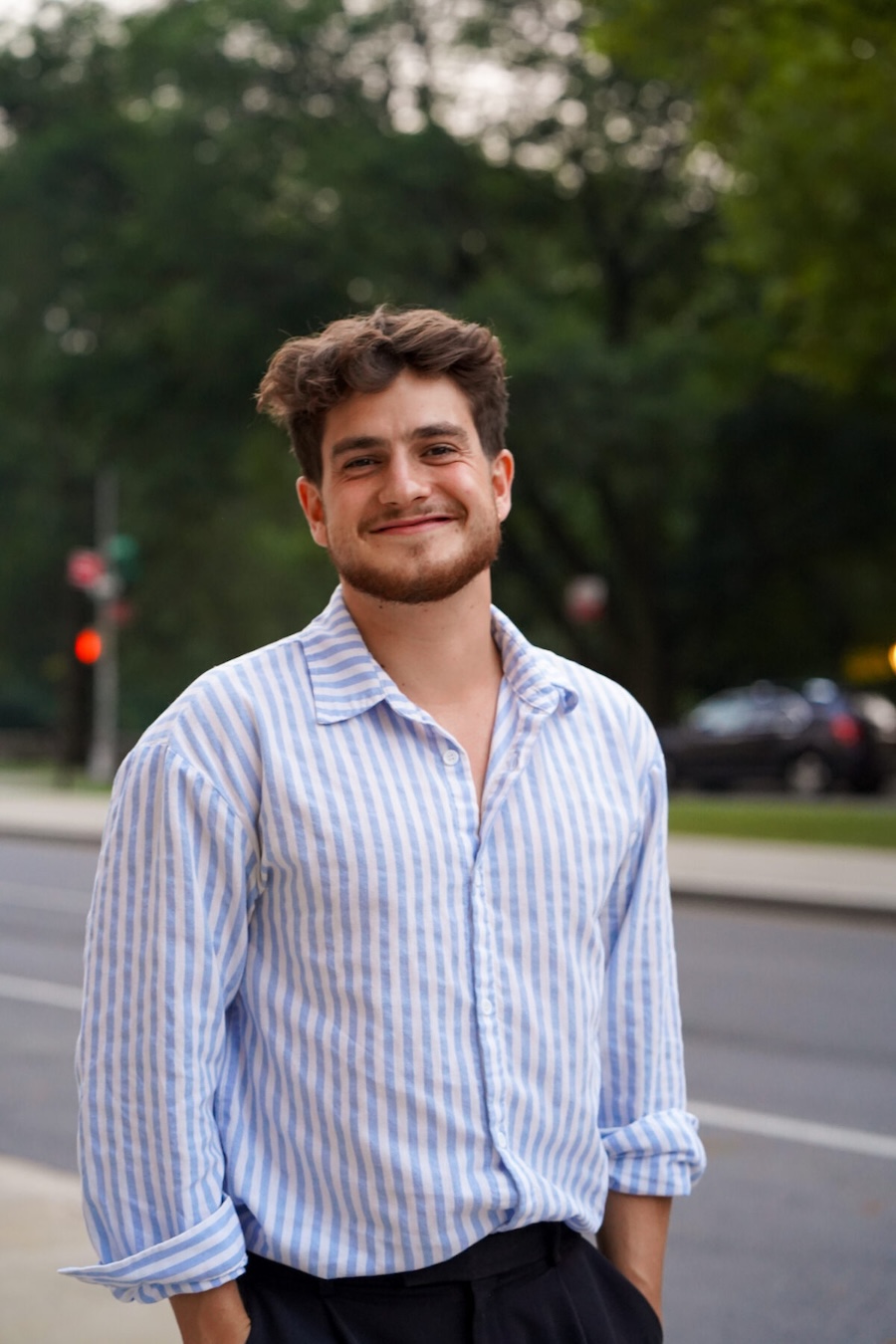
Manuel Scheuernstuhl’s trajectory into journalism is anything but conventional. Starting as a child voice actor in major international productions, including lending his voice to Bran Stark in Game of Thrones, he developed an early sensitivity to narrative, tone, and the collaborative mechanics behind storytelling. That foundation would later evolve into a more autonomous creative path, as he transitioned from being one component in large-scale productions to orchestrating his own as a video journalist. Today, his work reflects that dual perspective with a deep respect for storytelling craft combined with a sharp understanding of how stories are built, framed, and delivered to audiences.
Now based in New York, Scheuernstuhl operates at the intersection of politics, economics, and culture, producing content for global outlets including BBC, ARD, and DW. His academic journey, spanning Stuttgart Media University, Syracuse University, and Columbia University as a Fulbright Scholar, mirrors the international scope of his reporting. He approaches each story with a global lens and clear editorial intent.
We spoke with Manuel Scheuernstuhl about how his approach to storytelling has evolved within international newsrooms and how he navigates the demands of producing content for audiences that consume news across multiple formats and languages.
You began your career as a German voice actor and even voiced Bran Stark in Game of Thrones. How did that early experience in performance shape the way you approach storytelling as a journalist today?
When I was ten, I started voice acting. Working on American shows and movies, including my first lead role as Hugo in Martin Scorsese’s Hugo, connected me with the American film industry. This job taught me the sensitivity you need for details in telling a story, understanding what message the actor, the director, the writer, and other people involved want to convey. I learned who the stakeholders are, how decisions are made, and what a media production process looks like. As a video journalist, I now produce my own video reports and documentaries, and I set up the production process myself. Luckily, I can also use the voice-over skills that I learned as a kid for my videos now as well.
You moved from Munich to New York to pursue journalism. What motivated that transition, and how did the move influence your perspective on global reporting?
Honestly, when I was a kid, I always dreamed of living in the US, in New York or LA, for a while. I then got lucky to get a full scholarship for my master’s in the US. New York is THE place for journalism, though I didn’t initially know I wanted to become a journalist. I liked making films, I was interested in the media economy, and I was curious about politics. The combination of those fields matched the curriculum at Columbia Journalism School in particular. What motivated the transition as well was that, as a voice actor, I was an important wheel but a small one in a huge production. When I was a teenager, I started my own video production company, producing music videos and corporate films. There, I could work in various roles at the same time. I could put my creativity into it, organise it, and execute it. Carrying the responsibility for the whole production process—that’s what I wanted to do, and that’s what led me to video journalism.
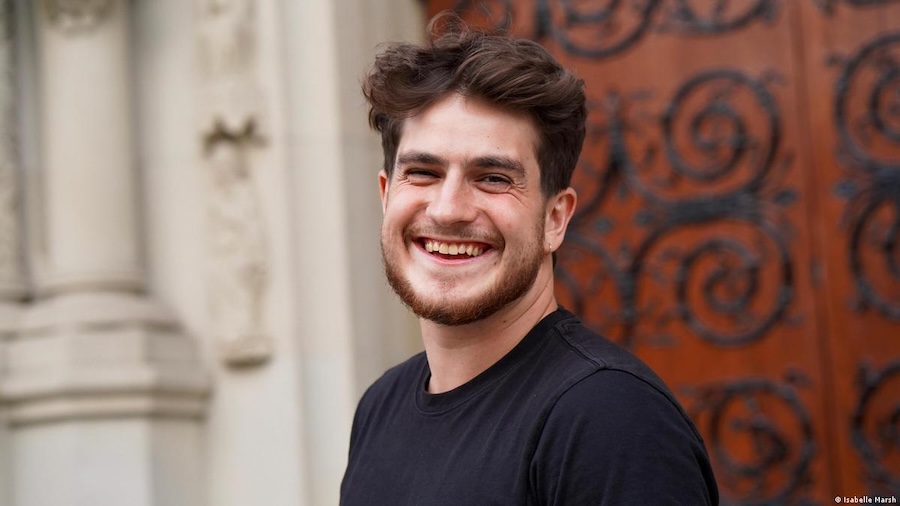
Your academic path includes Stuttgart Media University, Syracuse University’s Newhouse School, and Columbia University as a Fulbright Scholar. How did each of those institutions contribute to the development of your journalistic voice?
At Stuttgart Media University, I studied media economics. My bachelor’s gave me a broad understanding of the media landscape, from accounting to journalism basics, media ethics, and management. This was important because it helped me understand how the system I am part of works.
At Newhouse, I learned about the American side of the media landscape, and I also took classes at the Maxwell School of Citizenship and Public Affairs. It deepened my understanding of transatlantic political alliances and our place as part of global communities and the issues we face, which made me more interested in politics on a global level.
At Columbia, I narrowed down what I’d learned before to one specific area. It honed my skill set for being a journalist with a media economics background, with a specific focus on video. All together, these institutions shaped my work as a video journalist and multimedia producer with a global approach, a focus on politics and culture, combined with entrepreneurial interests.
You’ve reported on politics, economics, and culture for outlets like the BBC, ARD, and DW. How do you decide which angle or narrative will resonate most with an international audience?
It really depends on the role I have in the project. For BBC, I’m often the producer and host; with ARD, the reporter; and with DW, often the cameraman. The approach differs depending on my role. With BBC, we have an understanding of what works for our audience. I also ask: what’s interesting now, what other outlets are or aren’t covering, what feels like a good story, and what’s unique? What’s the character I follow, and what is the narrative arc? Different topics matter for different outlets because their audiences differ. In the end, I work with the newsroom to find the right angle.
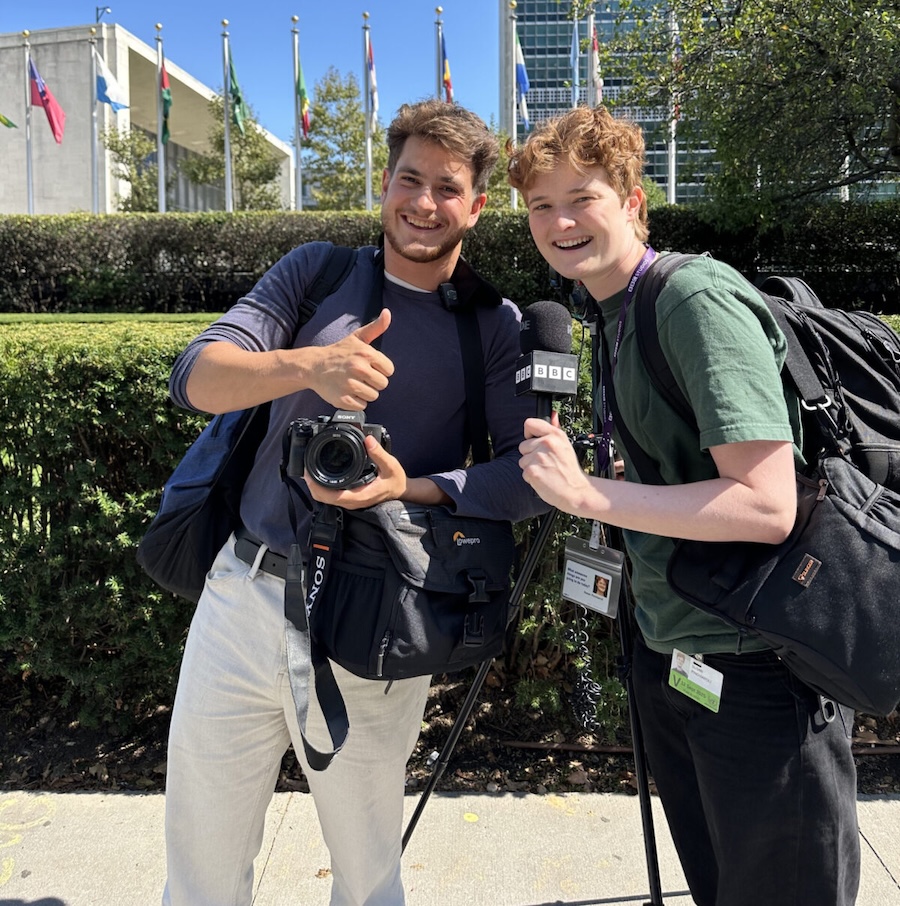
For the BBC feature on the solar eclipse over Patagonia’s Glacier Leones, you produced and edited the project. What were the biggest challenges in producing this visually driven story?
Last year, I pitched a story about photographer Liam Man and his photo series to my editor. After it got approved, I interviewed Liam. I found that discussing his project at Glacier Leones was what really excited him. He and his team had done the amazing work of planning, filming, and financing it, but it hadn’t been picked up by any media outlet yet. I pieced it together with an interview, licensed the material from Liam Man, and gave it context in a proper package. I was fortunate that it was shared across the BBC and BBC World Service, reaching millions in multiple languages.
Overall, the biggest challenge was finding such amazing stories and footage in the first place. Identifying compelling stories and having the opportunity to report on fascinating characters and their journeys, combined with capturing beautiful visuals, was really the core of the job.
Your reporting has taken you from the United Nations to U.S. presidential inaugurations. What have these experiences taught you about covering institutions that operate on a global stage?
First of all, it’s hard to get access to those places since they are highly secure. The high-level week at the United Nations is particularly interesting because heads of state from all over the world are there to discuss global issues. You need to work around situations, see what’s happening, identify where opportunities arise, and always be prepared. It’s also good to be connected within those organisations, but you need to understand your privilege and responsibility as a journalist in covering them.
You produced several reports on Zohran Mamdani’s rise in the New York City mayoral race. What did that story reveal about the evolving political and cultural dynamics in New York?
New York is one of the most diverse and dynamic cities on Earth. There’s constant change everywhere you go. Covering Zohran Mamdani’s mayoral race taught me how political movements form, translate from social media to real life, and affect different communities. I also gained insight into how his campaign was organised and how the media operates, particularly new media, which also played a major role during his final rally at Forest Hill Stadium before he was elected mayor. Now we’ll see if he delivers on his voters’ expectations over the next four years.
As someone working in a digital-first environment, how do you adapt your storytelling for different platforms such as broadcast, vertical video, and social media?
You need to consider different approaches for each medium. You can’t film the same way for broadcast and then just use it for social media. When you film, you need to shoot in a wider frame so you can cut it down to vertical videos.
Vertical videos can be standalone or a cut-down of a larger broadcast, depending on the project. The basics of storytelling are similar whether it’s vertical or horizontal and long-form, but you develop a sense for what works across different platforms for different audiences.
You usually identify early on which platforms you want to distribute to, and then you consider different languages, too. For example, the glacier video in Patagonia makes sense for BBC Mundo because it’s set in South America. So you have to consider not just media, but languages and the channels you have available.
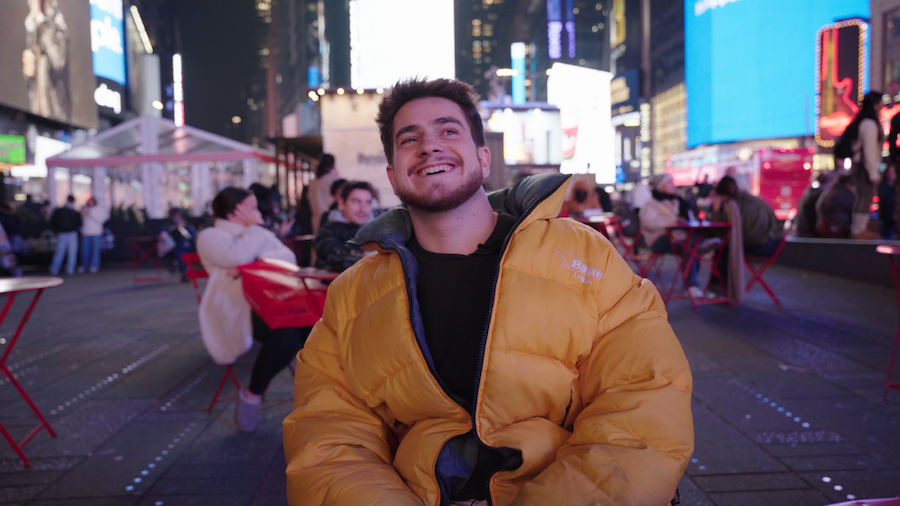
In your BBC piece about the origins of the United Nations headquarters, you gained rare filming access inside the UN complex. How important is access in journalism, and how do you maintain editorial independence while working with major institutions?
Access is crucial; it often makes the story. But you must maintain editorial independence, collaborating with PR teams while setting clear boundaries. That’s how we differentiate from AI. We’re on the ground, and we can get physically inside things to get information.
There’s always a PR team or media office, and you have to collaborate in some way, but you have to make sure your coverage itself is independent.
Your work reaches millions of viewers across multiple languages and platforms. When producing a story with that kind of global reach, what responsibility do you feel as a journalist shaping how audiences understand complex issues?
Of course, it has to be accurate. You have to check sources again and again and make sure to capture the full story. Our videos can end up in a classroom of kids, spark conversations within families, or shape public debate. You need to stay aware of that responsibility while telling the story as compellingly as possible.
Connect with Manuel Scheuernstuhl.
