

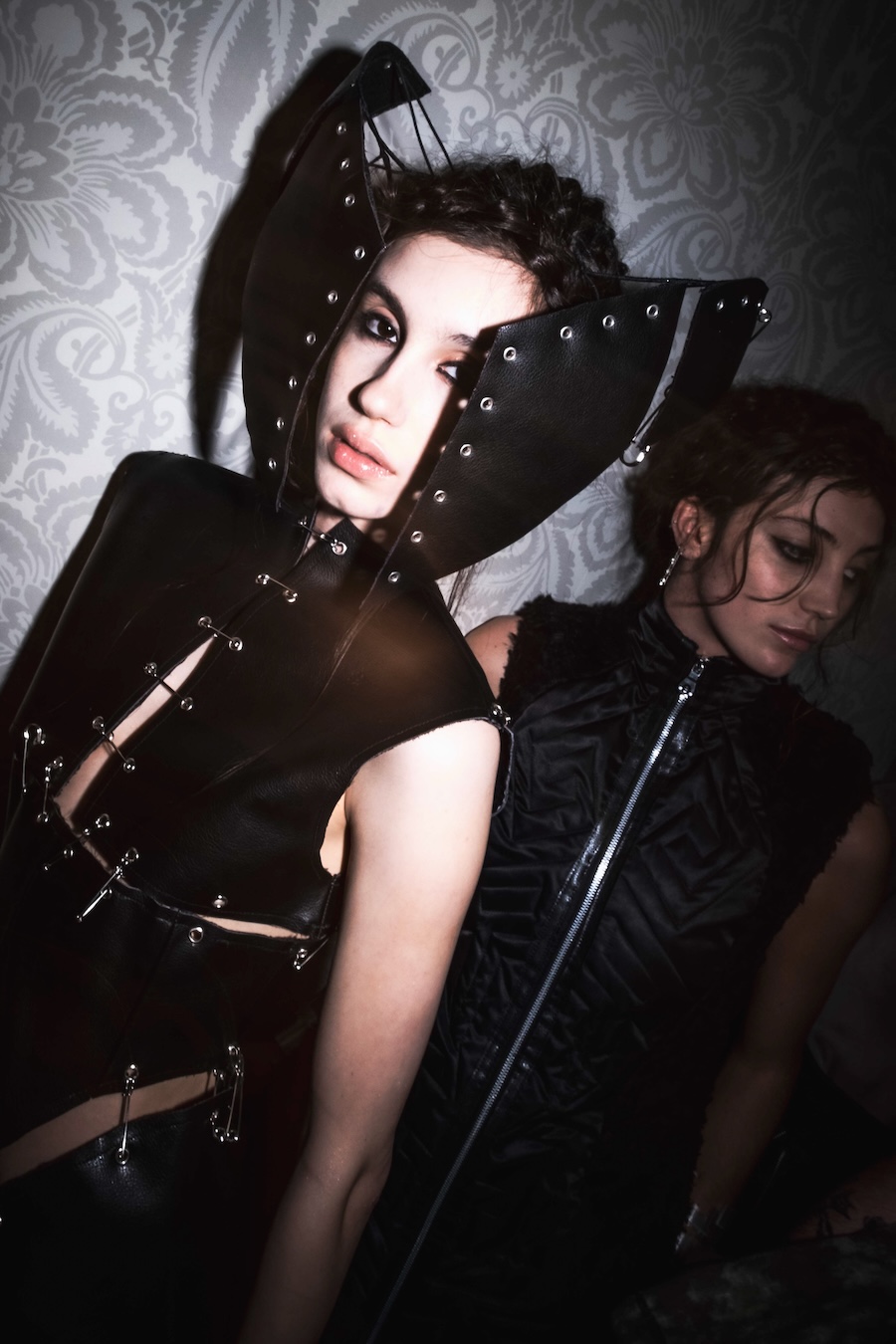
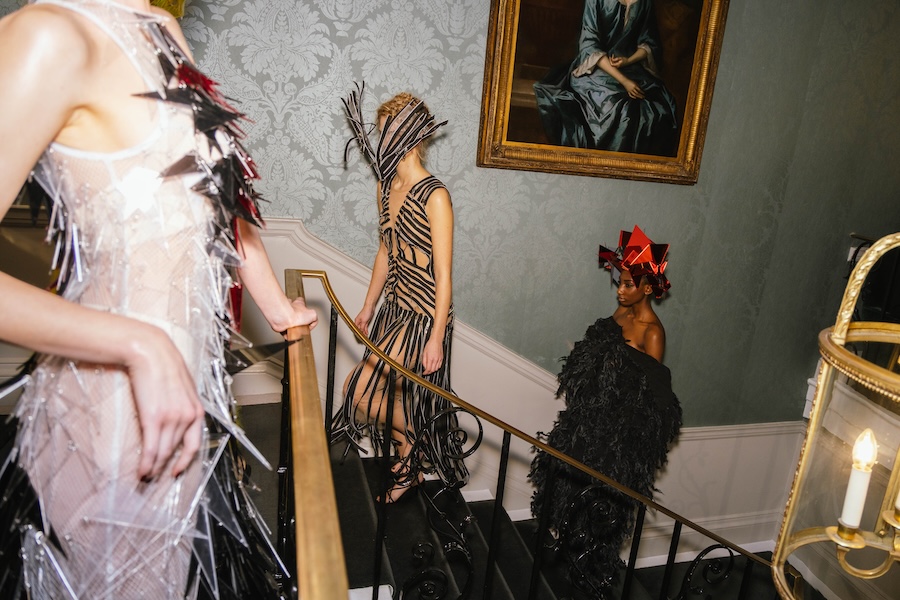
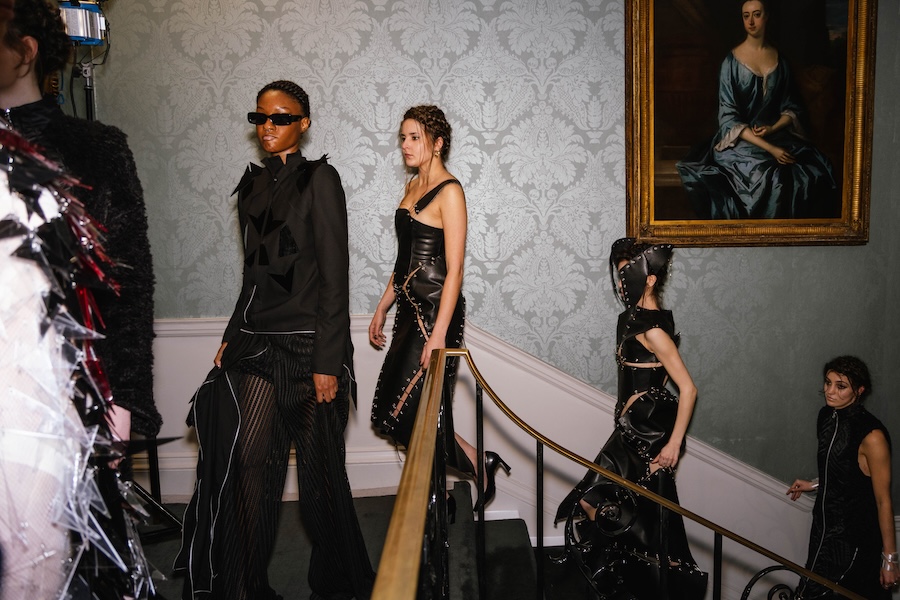
At London Fashion Week on February 22nd, Peruvian designer Genaro Rivas presented a collection titled A Glass to Break, a study in rupture, control and the fleeting beauty that lives in the moment just before impact.
Beginning with two quiet yet striking moments in Berlin: a photograph of a glass pane marked by a bullet impact, and, weeks later, shattered glass discovered on the ground during a walk with his astrologer. Genaro Rivas built a collection rooted in destructive beauty and regal wounds. The collection consists of 26 predominantly womenswear looks, with selected menswear silhouettes, exploring the act of rebuilding from what has been broken. It marks a decisive evolution for the designer, whose recent run of shows across fashion capitals has sharpened both his aesthetic and his resolve.
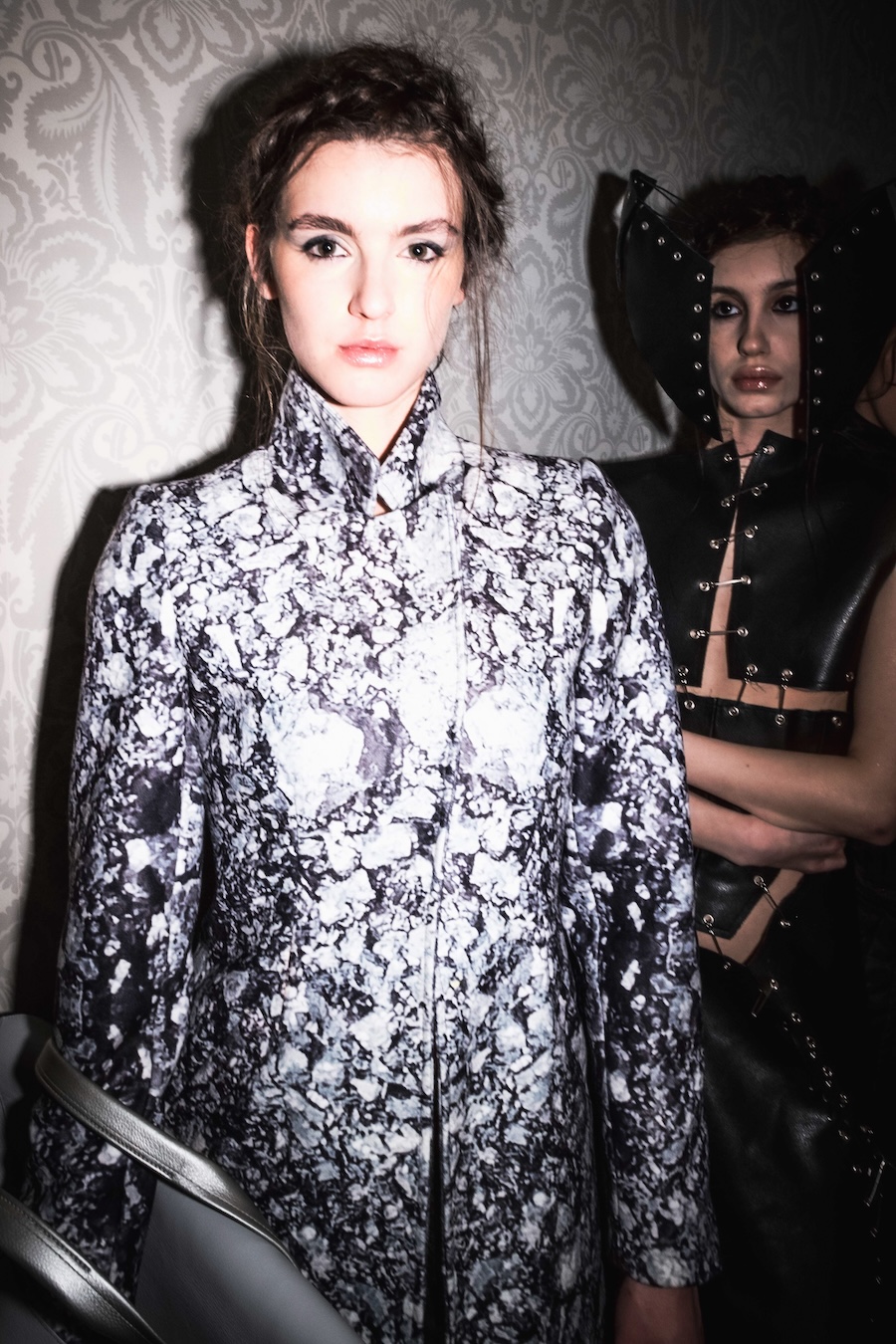
“Evolution is survival,” Rivas says. “Everything shifted after Alchemy of Ashes. Since then, I’ve been moving relentlessly. Four shows, two major fashion capitals, pressure, refinement. When you move that fast, you either lose yourself or you distil yourself.”
He pauses.
“I chose distillation. I chose refinement.”
London, he explains, has been catalytic. “It stripped me down. It forced me to confront my own skin, and to finally start inhabiting it.” The result is a collection that feels markedly more precise: silhouettes pared back, statements sharpened. The editing process was ruthless. “I cut two looks the night before the show. Without hesitation. Editing can be violent, but necessary violence. I’m less afraid now. And fearlessness sharpens the blade.”
Despite its conceptual depth, A Glass to Break doesn’t shy away from spectacle. Sculptural pieces punctuate the runway alongside striking red-carpet moments, yet Rivas insists he never begins with categories.
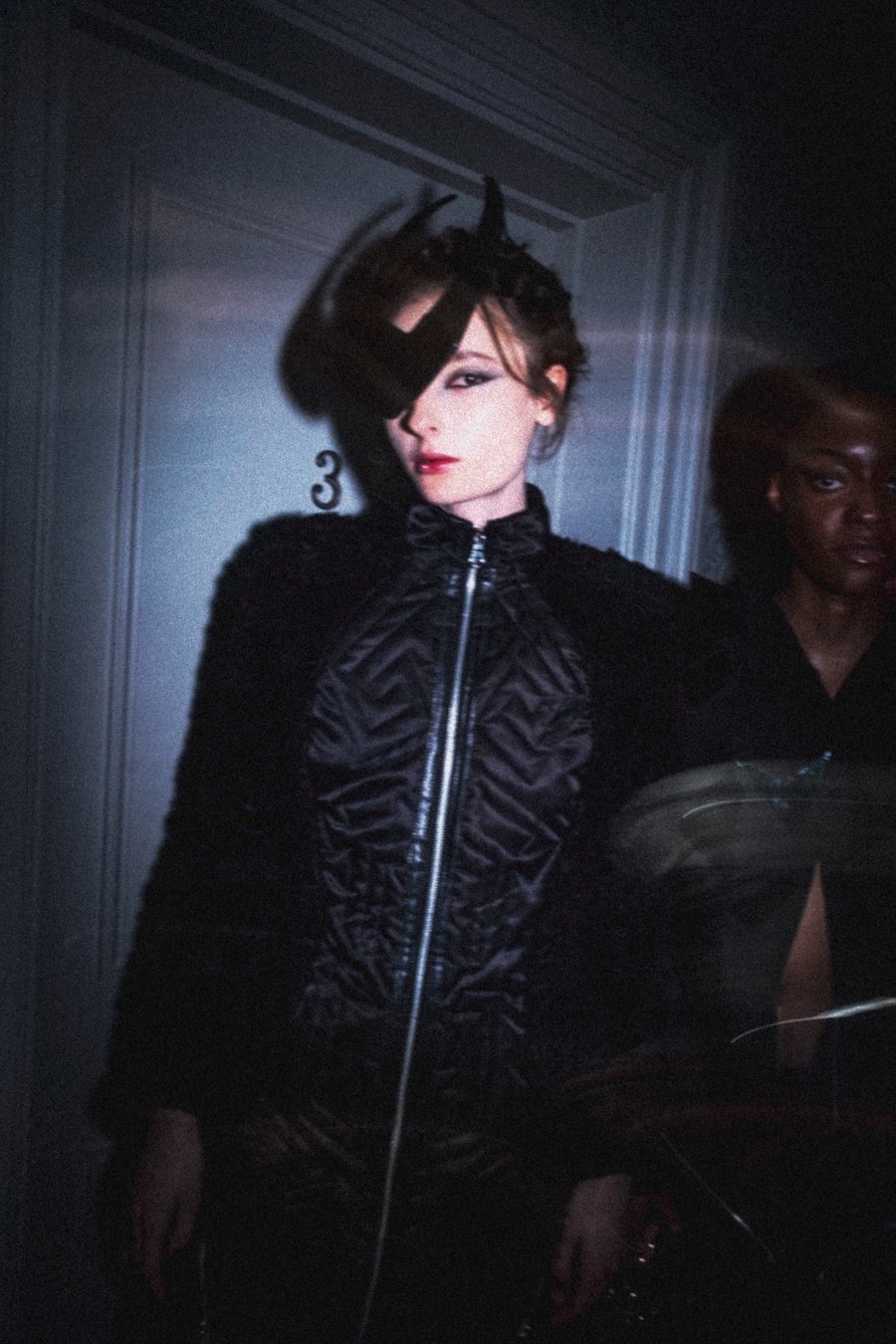
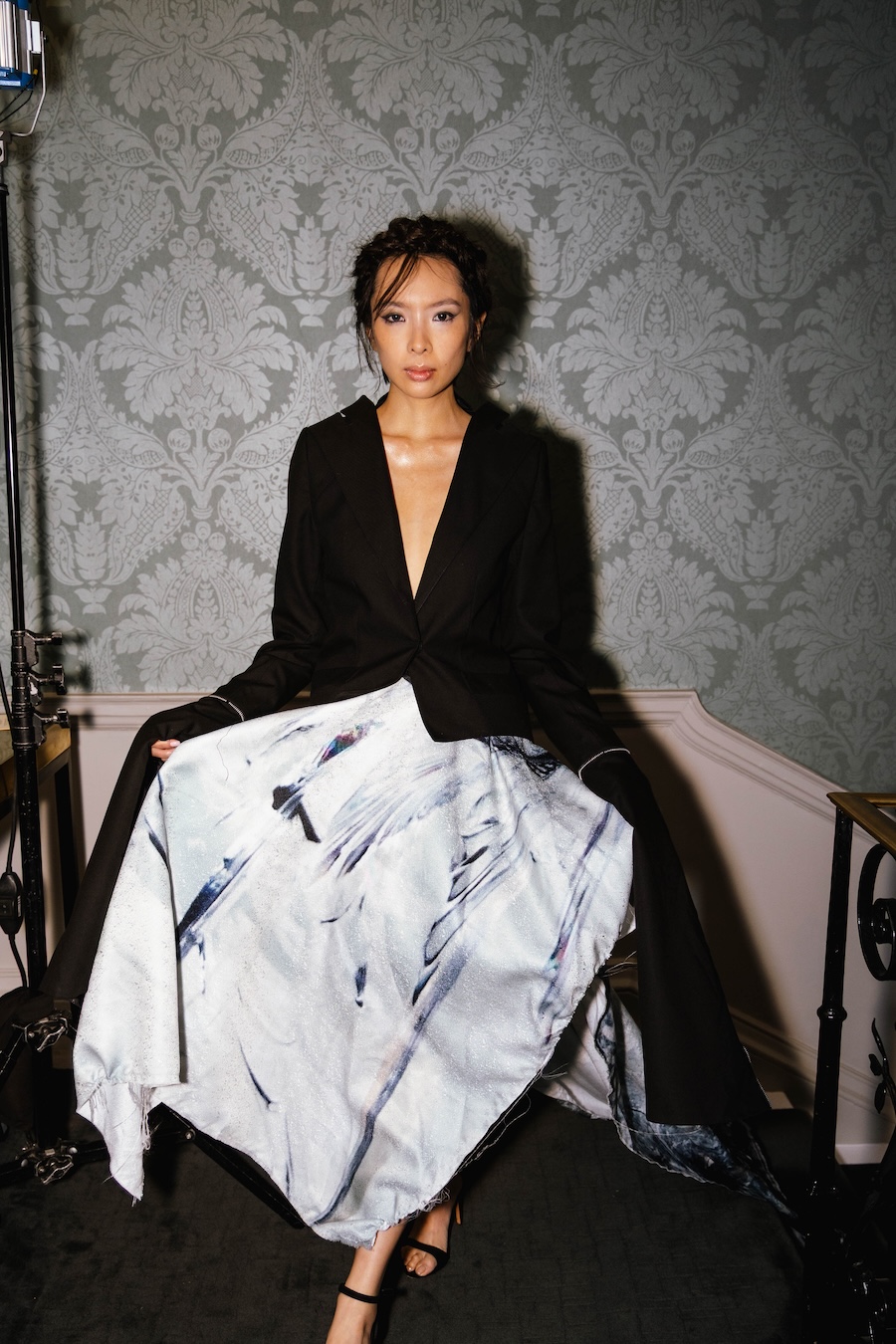
“I don’t think in categories. I think in impact,” he says. “A collection should move like a soundscape or a perfect score: tension, rupture, silence, crescendo.”
Among the theatrical moments were objects that felt almost ritualistic. An “airport bag,” for instance, was inspired by Rivas’s own life in transit between continents.
“Luxury today must be sustainable, must be cool, must seduce, but it must also function,” he explains. “Control and chaos. That was intentional from the first line I sketched.”
Innovation has long been part of Rivas’s vocabulary. The designer previously created the first 3D-printed dress in Peru and Latin America, and this season, he continued pushing technical boundaries.
Most notably, the runway debuted the world’s first bio-based fur developed by BioFluff under its Savian line.
“That mattered,” he says. “Not as a headline, but as a shift.”
Sustainability threads through the collection in quiet but deliberate ways: regenerated nylon spun from ocean plastic, banana-based leather developed by the Indian venture Banofi, and innovative insulation from the wetlands-restoration initiative Ponda.
“But sustainability for me is not a marketing angle,” Rivas says firmly. “It’s an ethical baseline.”
The silhouettes themselves carry a distinct tension: constricted yet fluid, protective yet seductive.
“I’m interested in garments that feel like armour, yet expose vulnerability,” he explains. “Tight, but breathable. Seductive, but sharp.”
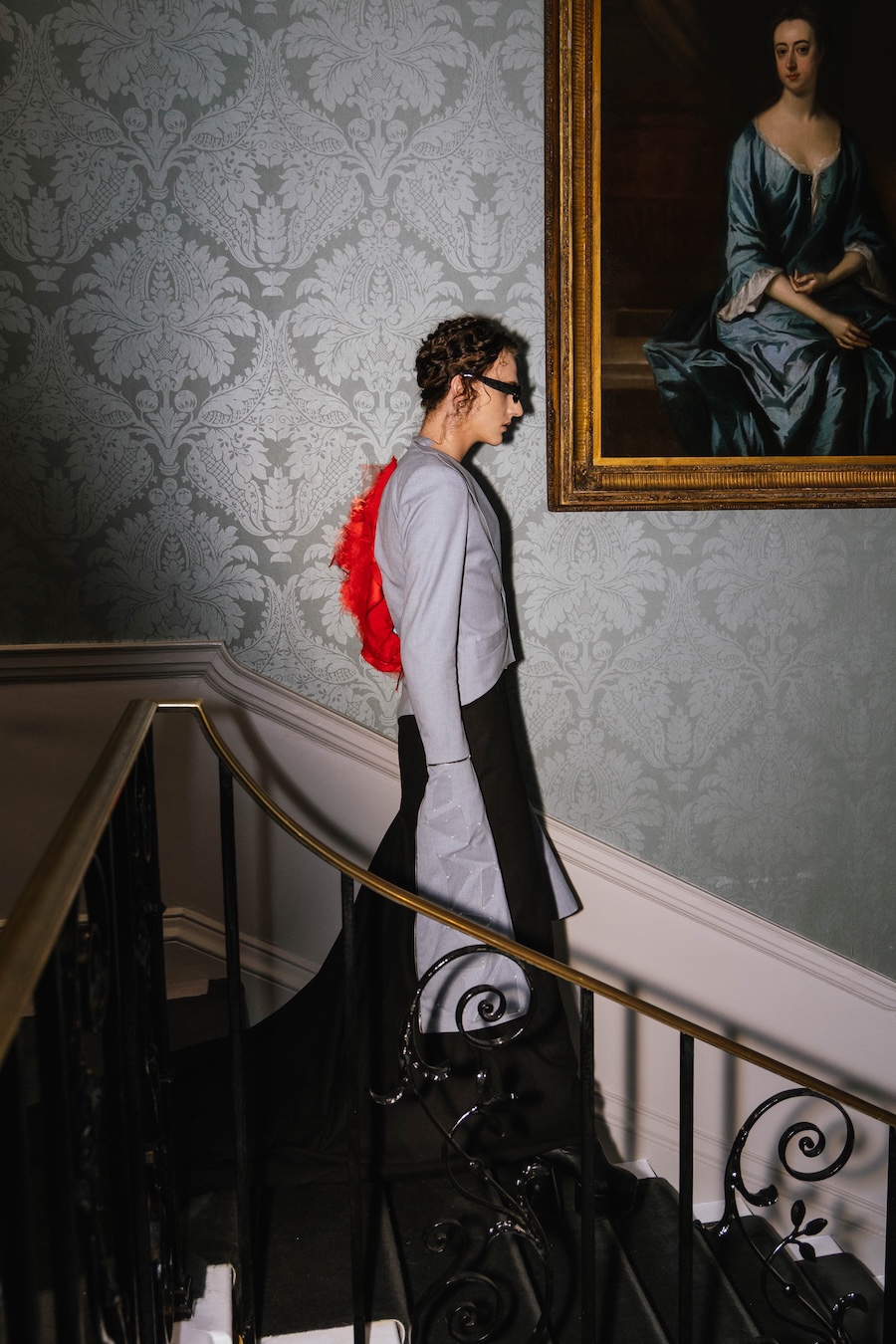
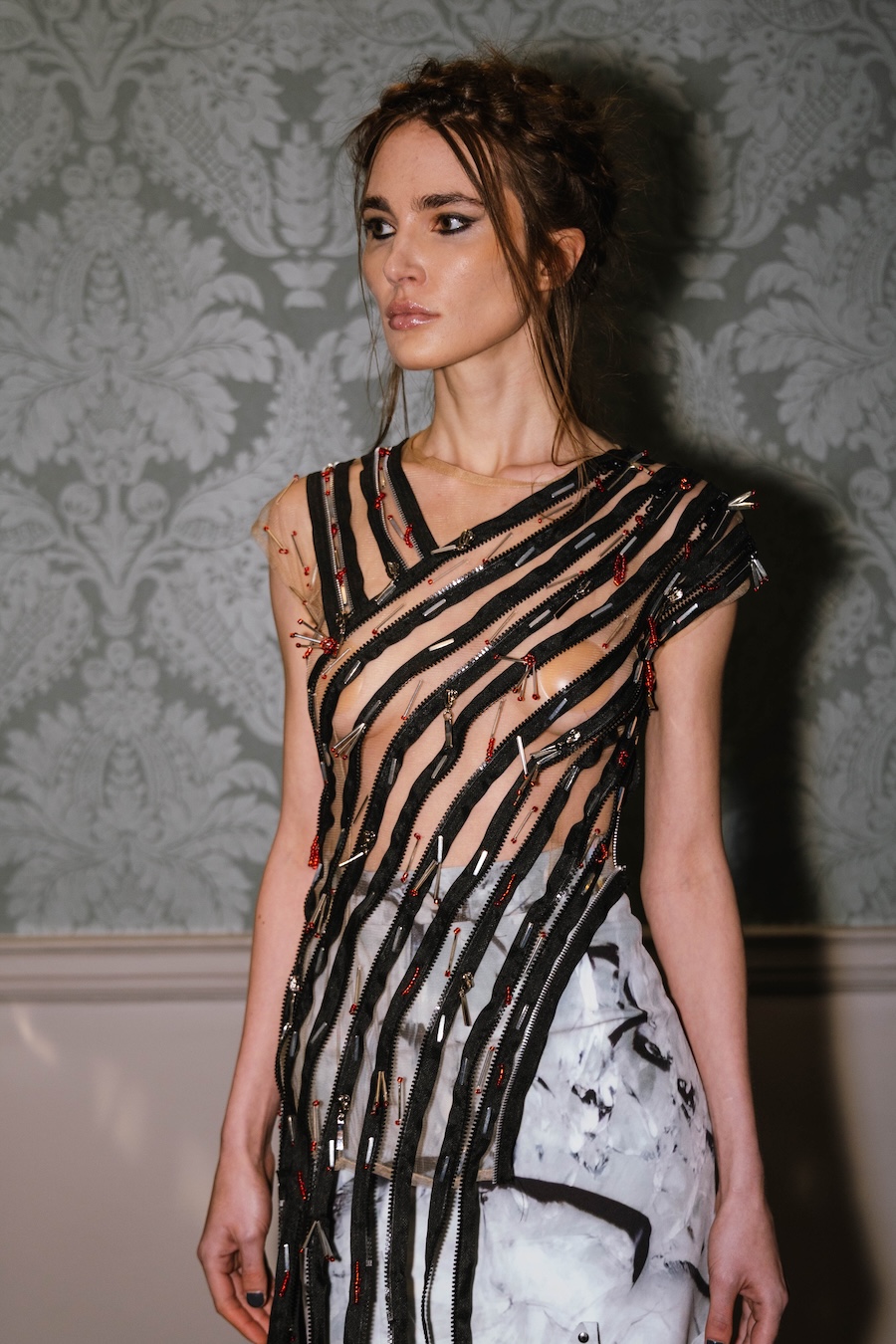
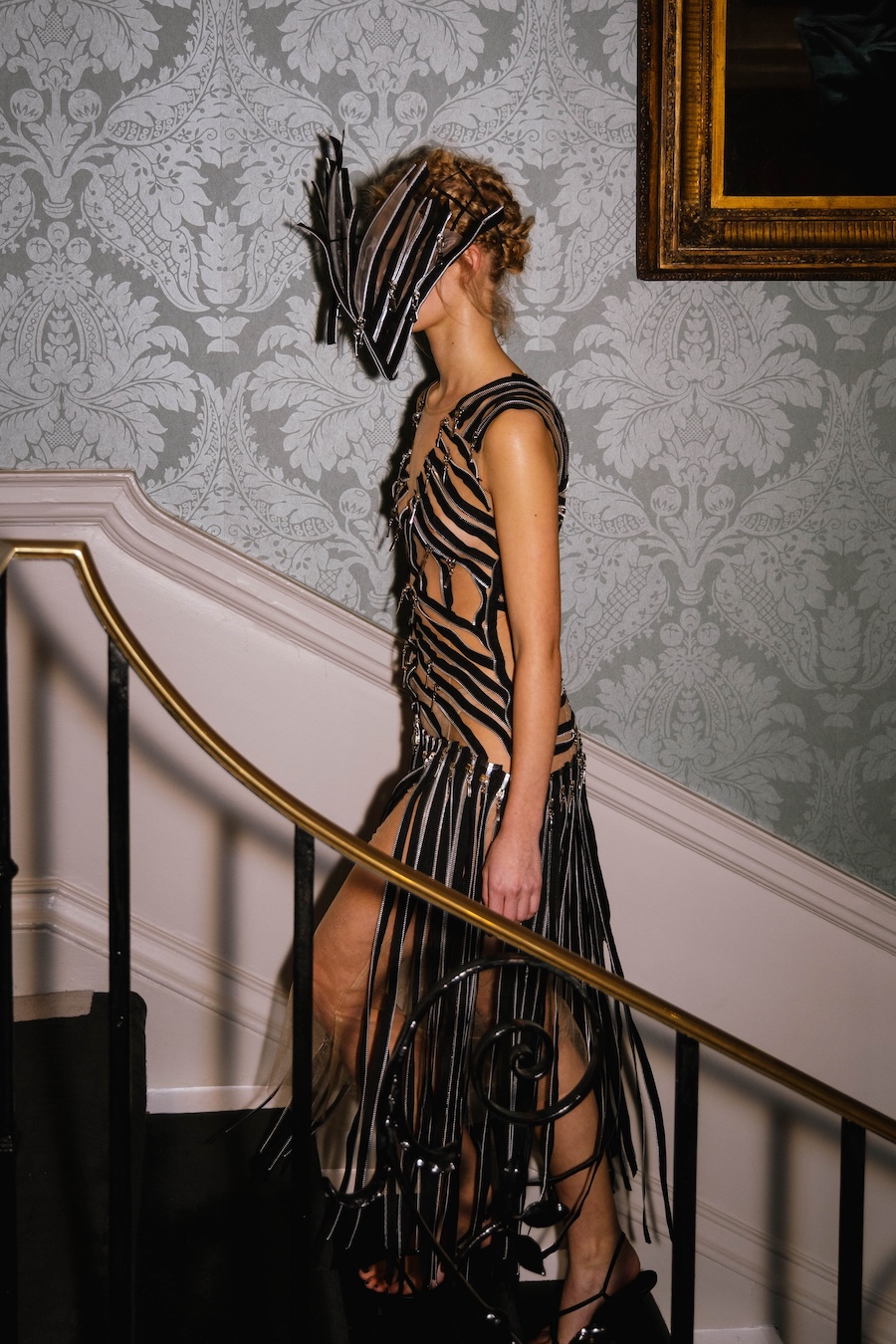
Elements from previous collections return here in evolved form. Zippers, introduced last season, have become almost architectural.
“They became part of my vocabulary,” he says. “This season, I made them symmetrical. Surgical.”
One central zipper dress was completely dismantled and reconstructed after the prototype fell short. “It lacked precision,” Rivas recalls. “It was too fragile, too imperfect. So we began again. The discarded fabric was reborn into other garments. Nothing disappears. Nothing goes to waste; everything can be transformed.”
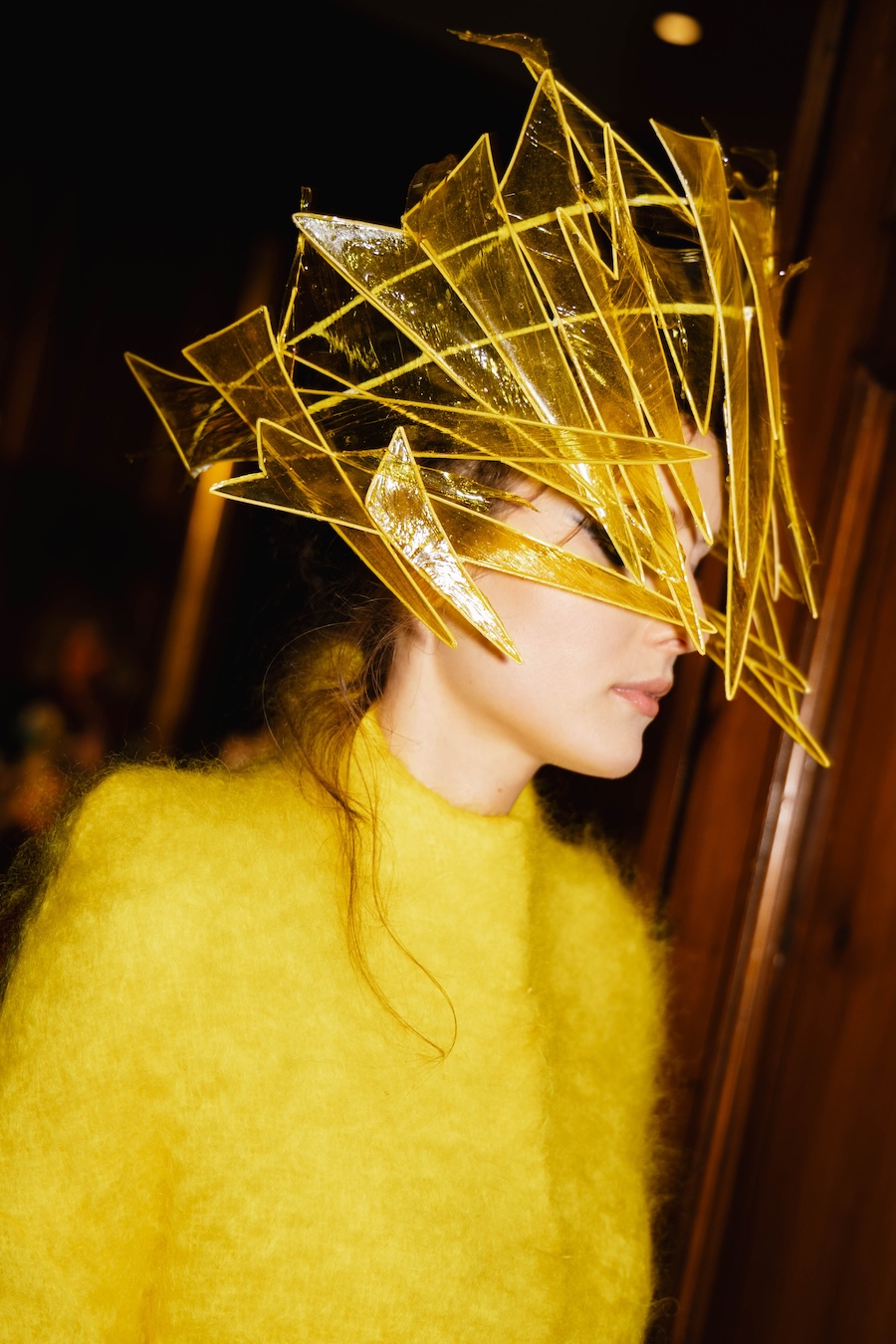
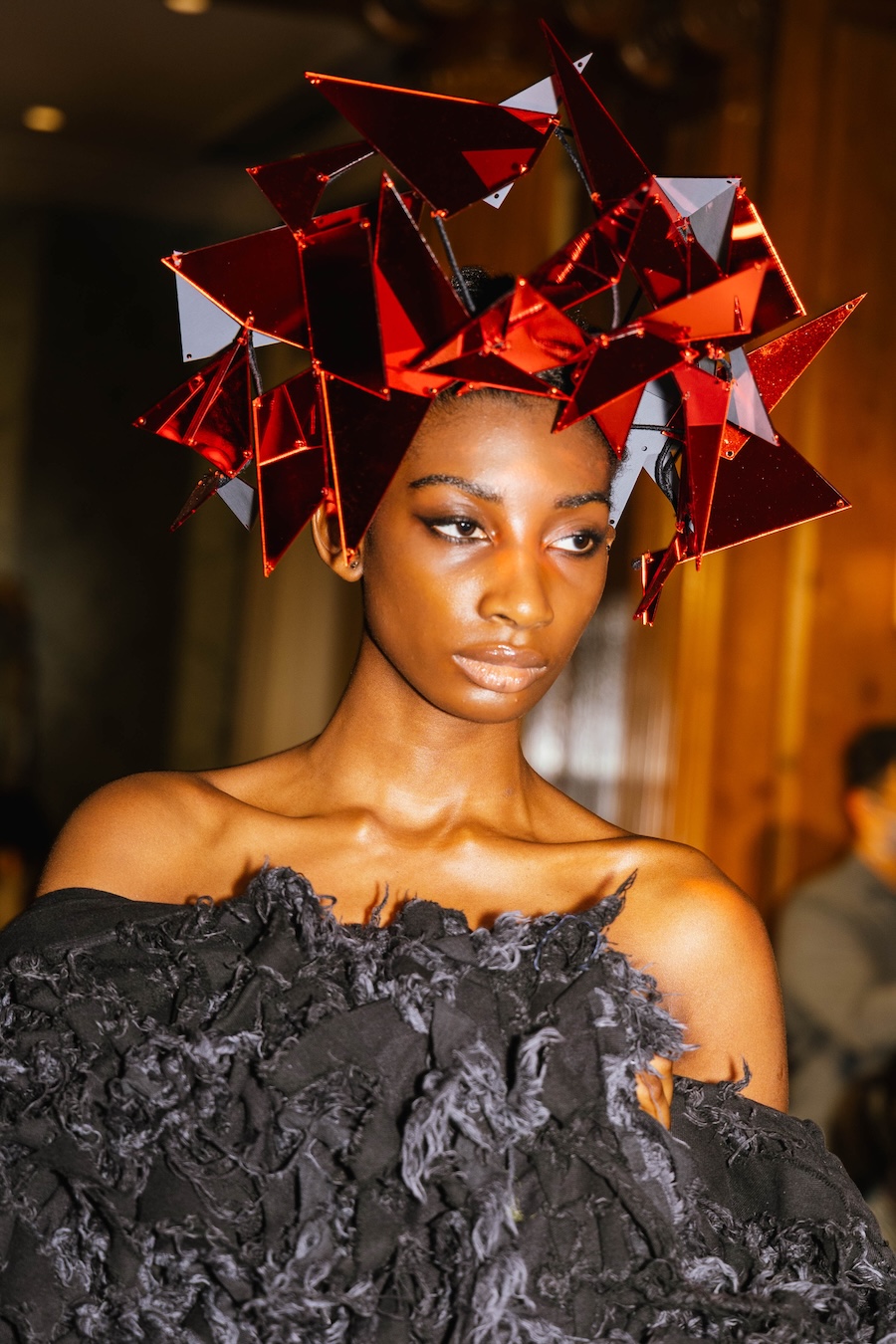
The theme of shattering extended beyond clothing. This season, Rivas collaborated with milliner Roberta Cucuzza to create headpieces that mirrored the collection’s fractured energy.
The partnership began casually, like most interactions do, with a simple Instagram message that led to coffee and, eventually, creative alignment.
“Her discipline is extraordinary,” he says. “The collection revolves around shattering, so the headpieces became extensions of fracture.”
Two pieces were crafted from bioplastic, their translucent forms bent into sharp, tension-filled structures. “It was less collaboration,” Rivas reflects, “more co-creation. A collision.”
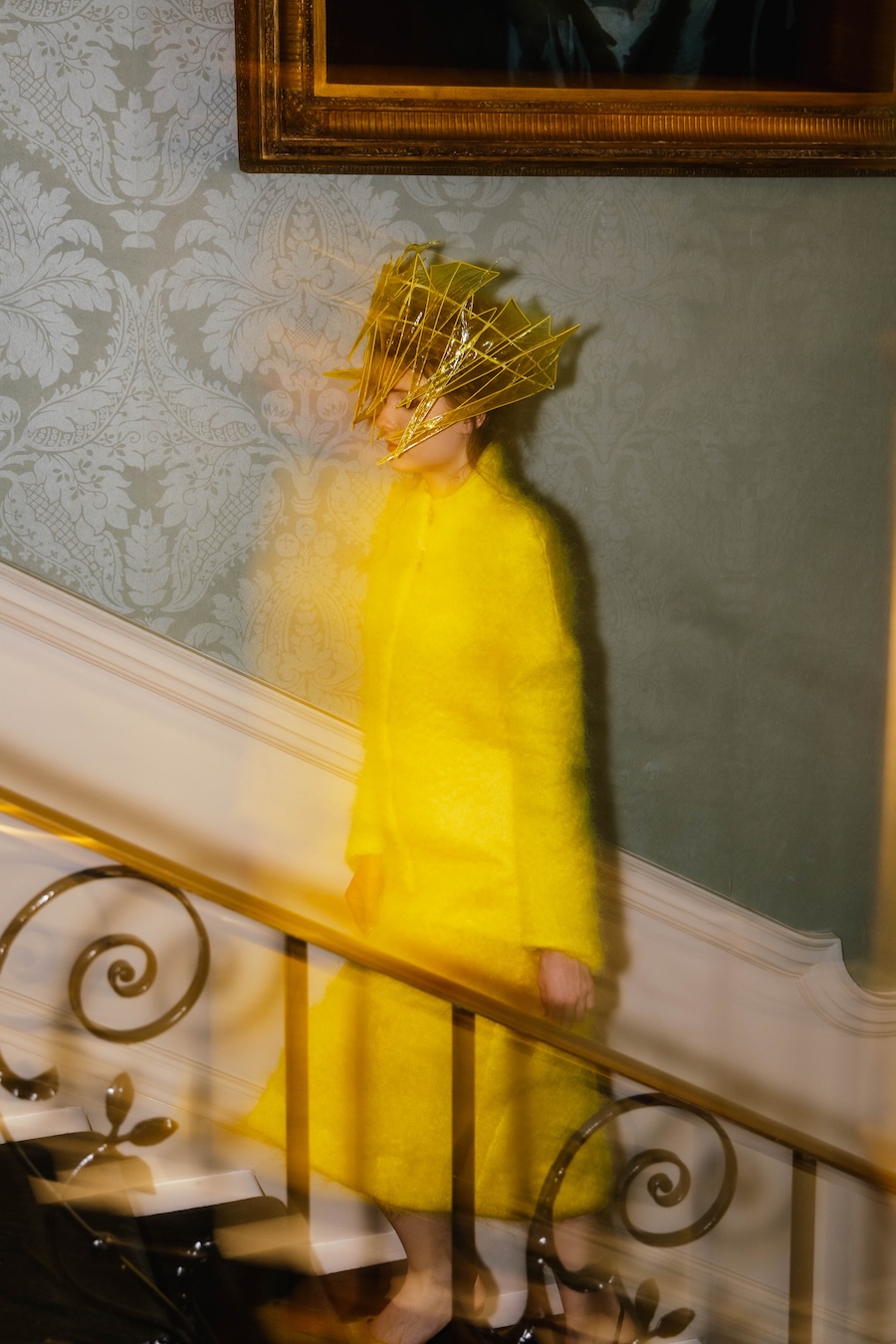
Amid the collection’s darker tones came a sudden, electric flash: a monochrome yellow look anchored by the Patica Coat, named after Peruvian artist Patica Jenkins.
“We found that yellow together in London,” Rivas says. “It felt radioactive. Alive.”
Originally paired with hand-painted denim inspired by Jenkins’s studio attire in Barranco, the look evolved during fittings as the Rivas elongated the coat and allowed the colour to dominate. Styled with mohair and cashmere footwear in the same tone, it became a fully chromatic statement.
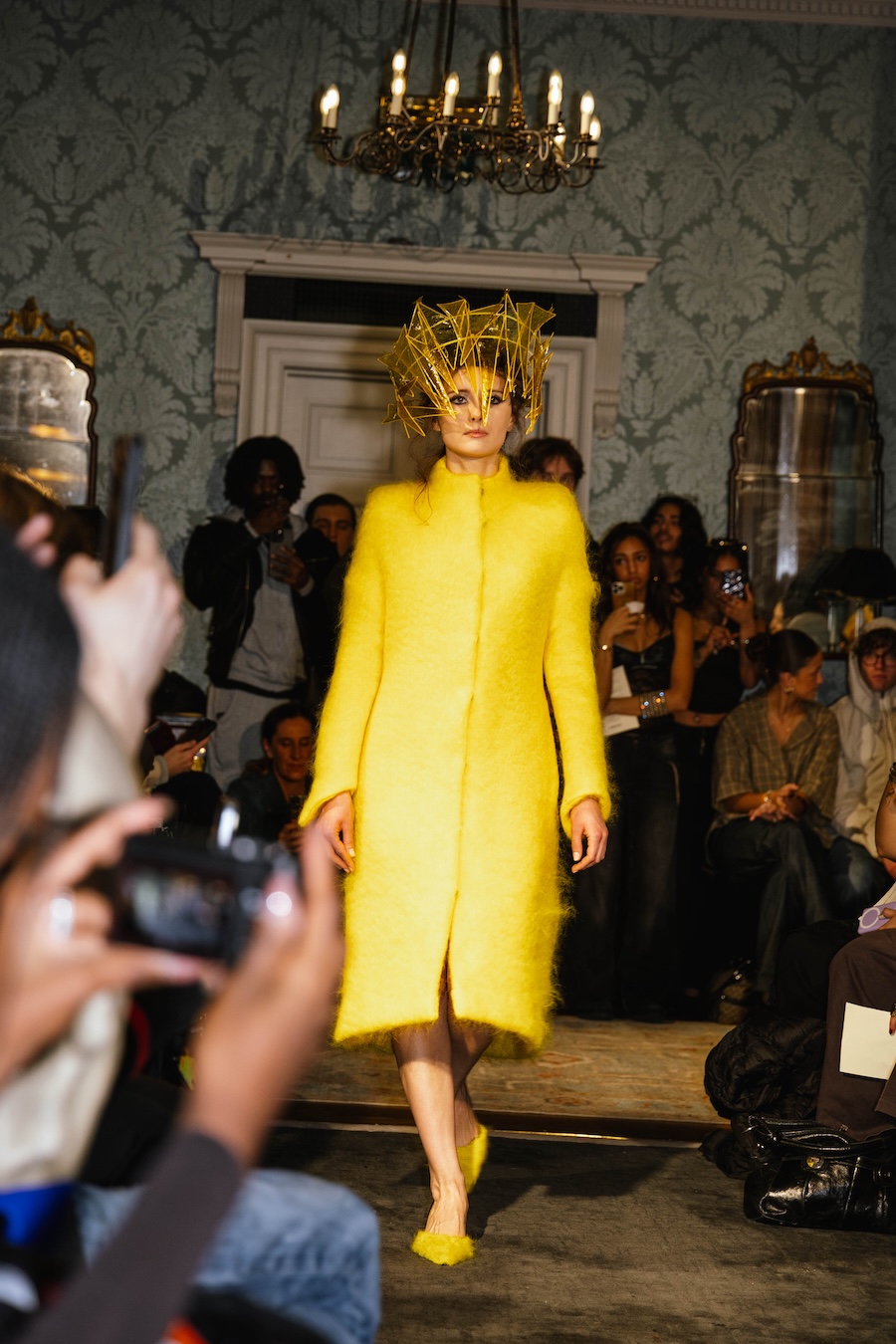
“Yellow, in this collection, is not optimism,” he adds. “It is defiance.”
As with every Rivas show, the soundtrack was as carefully constructed as the garments themselves. Music, often with a distinctly rock-inflected edge, plays a crucial role in the atmosphere.
“I think a show is a ritual,” he says.
This season opened with a track from Deftones, a longtime personal obsession. The full soundtrack was produced by Peruvian producer Nico Politano and built like architecture: atmosphere, distortion, collapse, ignition.
At the collection’s climactic moment, the now-signature shard dress appeared as the music fractured into Back to School by Deftones.
“Sound should cut,” Rivas says.
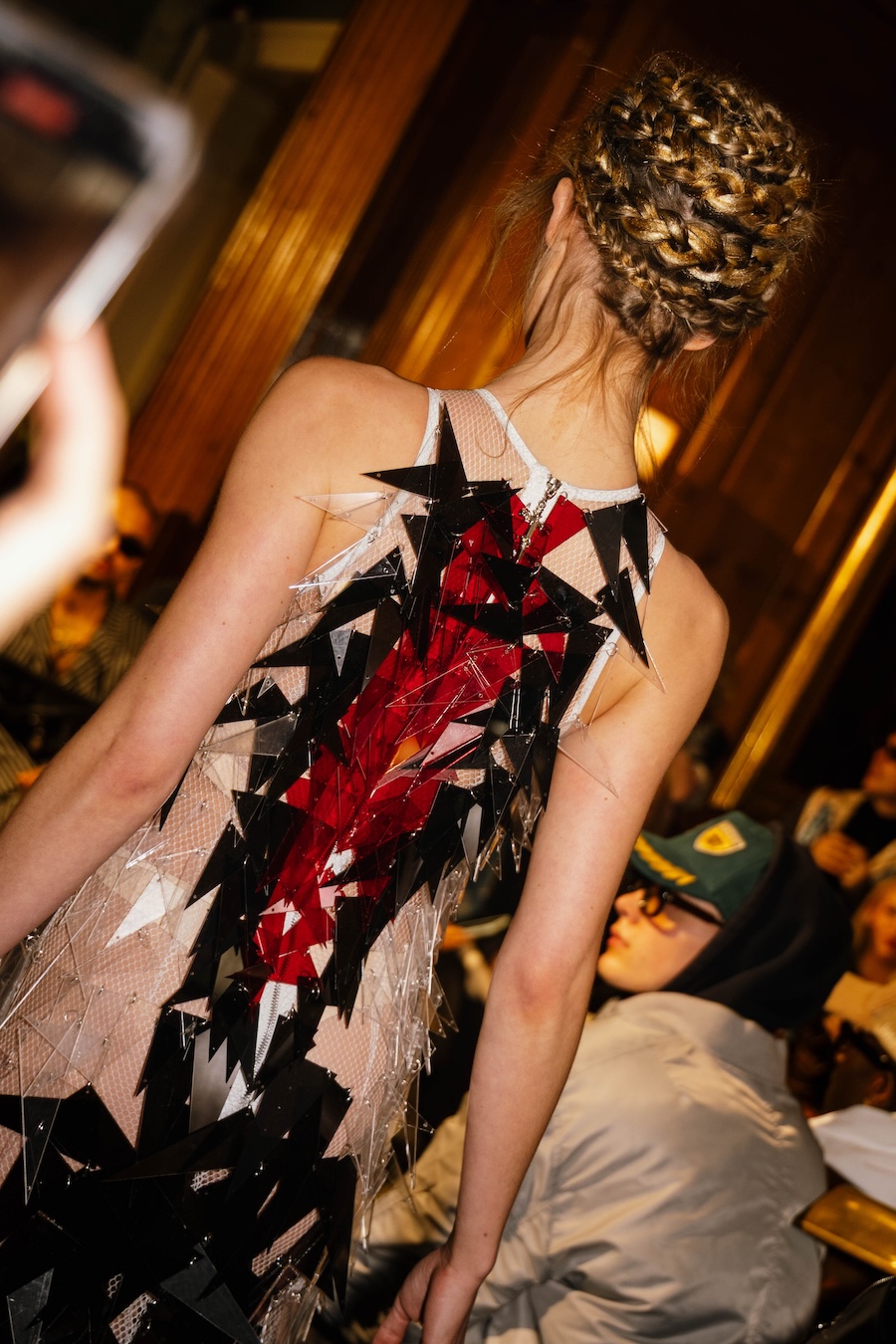
If A Glass to Break had a defining image, it was that extraordinary shard dress, an explosive structure suspended in motion.
“I wanted to freeze an explosion,” he explains.
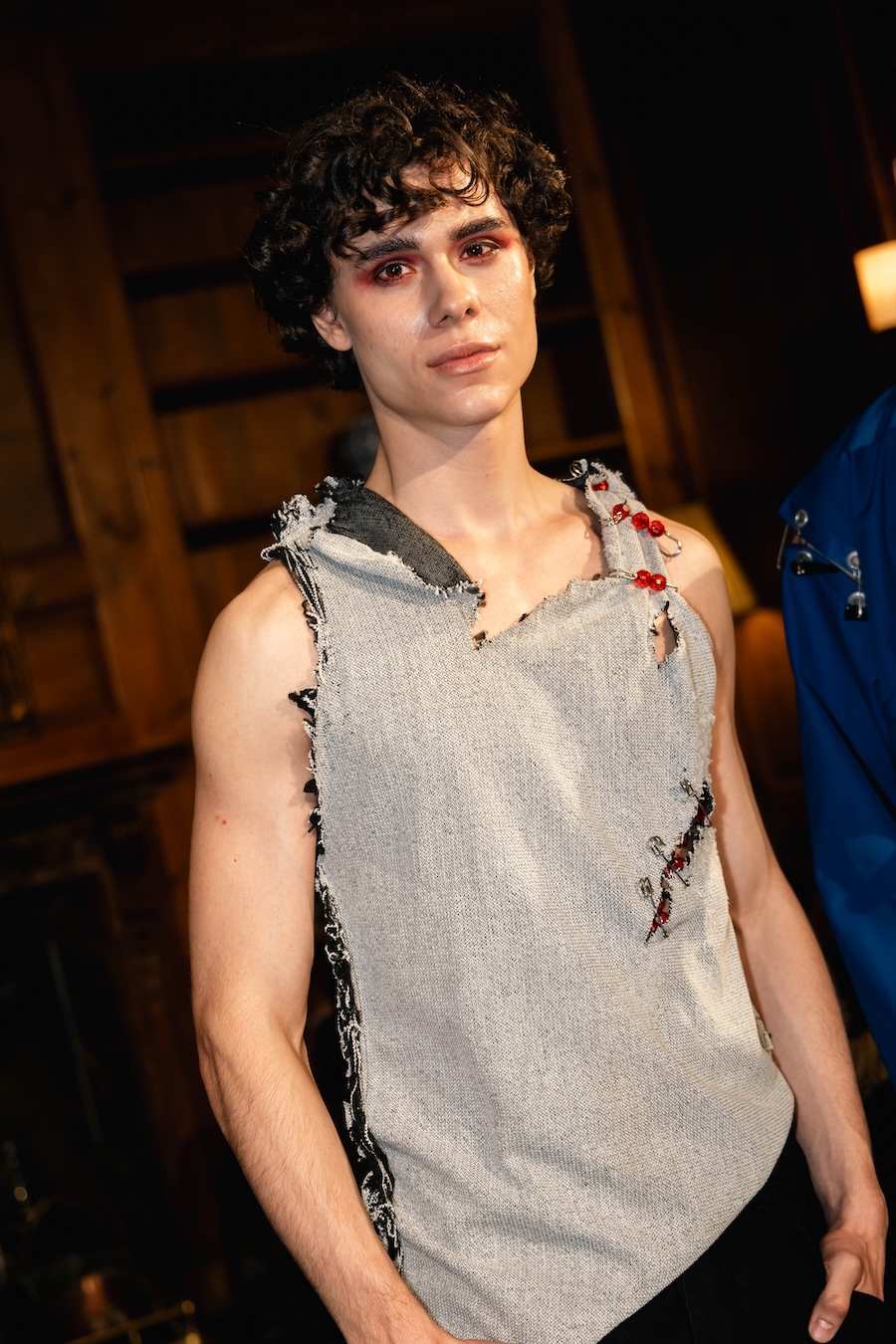
Throughout the collection, wounds appeared as motifs: slashed seams, openings, and embroidery tracing ruptured lines.
“Did you notice them?” he asks.
We did, of course. It was very hard not to.
“The shard dress is that wound crystallised. Suspended. Monumental. Fragile, yet commanding, like glass seconds before it breaks.”
In that moment, he believes, lies the essence of beauty.
“Beauty lives in that second,” Rivas says. “Beauty is ephemeral. You enjoy it while it lasts.”
Though primarily known for womenswear, Rivas hinted at a broader expansion after several men’s looks appeared in the audience.
“Tick, tock,” he says with a smile.
For now, his focus remains on the thrill of creation, the moment imagination becomes tangible.
“When something that existed only in my mind begins to breathe under lights,” he says, “that transformation, from thought to structure, feels almost violent. But it’s addictive.”
Asked to summarise A Glass to Break in three words, Rivas doesn’t hesitate.
“Rupture,” he says. “Control. Aftermath.”
“‘A Glass to Break’ is a defiant collision of light and dark, a collection that doesn’t just
acknowledge the glass ceiling but dares to shatter it.”
Words by Lewis Robert Cameron
Designer @genarorivas
genarorivas.com
Head Pieces x @robertacucuzzamillinery
Backstage photography by Priya Germaine @priyagermaine_photography and Katarzyna Danaj @budziszyna
Pr @i.deapr
Hair @richardphillipart
Lighting Design @leelightingservices
Make up @castroomua
Music @nico.politano
Production Team @ria_bhalla_ @luanaasolanoo @sarita.reed
Talent @anothermotherldn @flowmodelslondon @wokemgmt
Vids @eventcontentbytaz
Special thanks @30knightsbridge
