
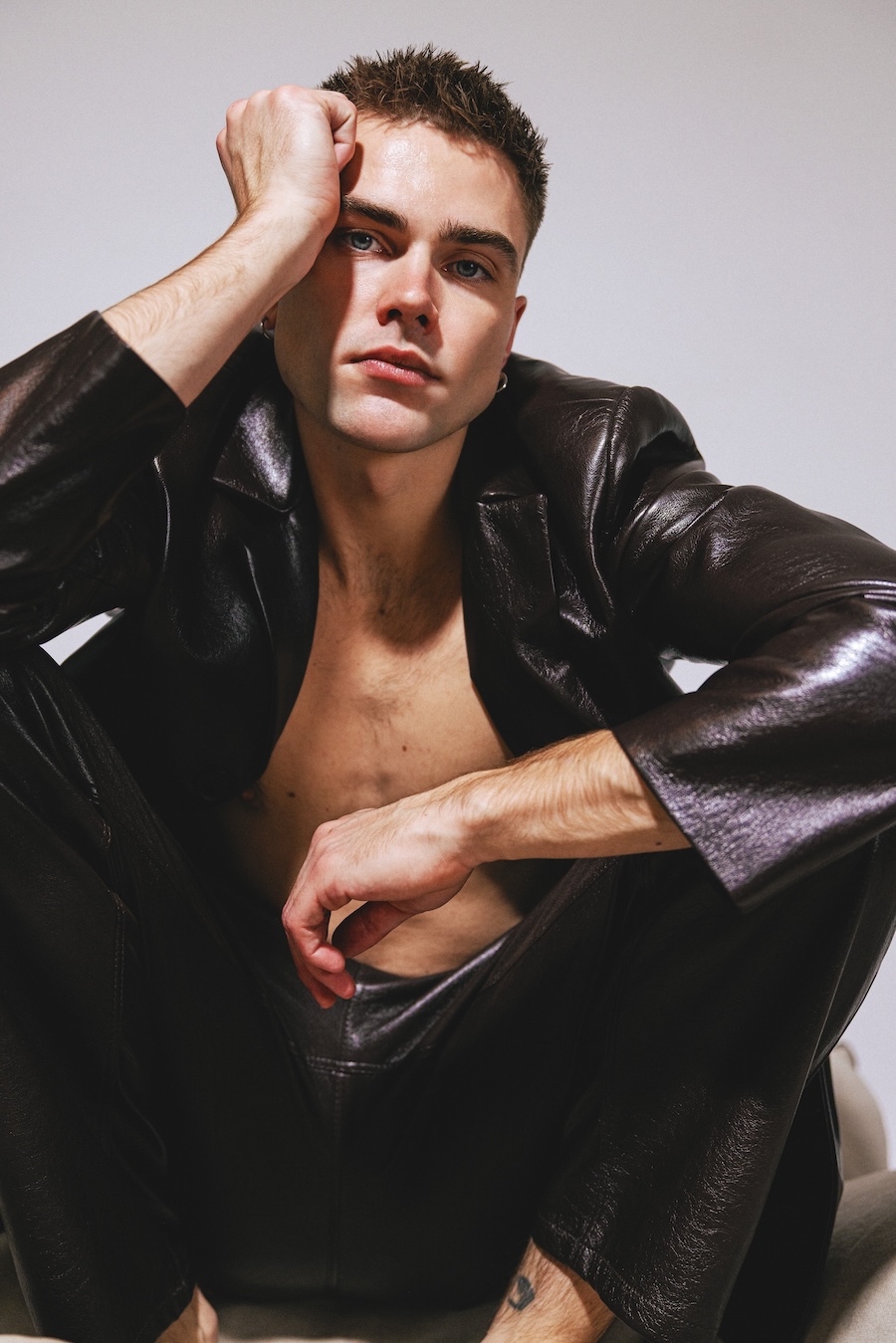
Since its beginnings in Berlin’s underground in the early 2010s, Pornceptual has grown into one of Europe’s most talked-about cultural phenomena – far beyond a single party or art project. What started as an online gallery exploring erotic imagery quickly evolved into a collective, immersive platform, blending techno, queer expression, performance, visual art, and radical sexual freedom. Pornceptual challenges mainstream perceptions of pornography, reframing it as inclusive, artistic, intimate, and respectful rather than exploitative or taboo. Photography by Nora Maafa. Video by Dominik Berberich.

Transformation, and what it means to live close to radical openness.
Its events, from Berlin to international stages, bring a sex-positive, body-inclusive ethos to nightlife. Strict consent practices, no-photo policies, and spaces designed for authentic self-expression create a rare kind of freedom – one that allows visitors to explore identity, desire, and intimacy without judgment.
But a movement like this is more than the vision of its founders – it lives in the people who carry it forward, evolve it, and give it new life, showing the creators the full reach of their work. For Malte Bossen, being part of Pornceptual has been a personal journey into the core of desire, vulnerability, and self-understanding. Not a founder, but a participant, partner, and custodian of the collective energy, he has experienced how proximity to such a space can reshape perception, challenge taboos, and fundamentally transform the way one sees the world – and oneself.
This conversation dives into how living within a movement like Pornceptual changes the mind, the body, and the way intimacy is understood, exploring the lessons, freedoms, and self-discoveries that come from being part of something bigger than oneself.
Who were you before Pornceptual existed – not in terms of career, but emotionally? What did your inner world look like at that time?
I was 19 when I moved to Berlin. Everything felt new. Growing up in a small village, you don’t really know what the world can offer you or who you’re allowed to become. I had a good childhood, but being gay made me realise quite early that I needed to leave and find a bigger space for myself. When I arrived in Berlin, I was young, excited, a bit innocent, but very open. My inner world was full of curiosity. I wanted to experience things, understand myself better, and finally feel a bit freer.

Looking back, what was missing in your life before you became involved with Pornceptual?Was it expression, community, freedom – or something more difficult to name?
Community was definitely missing. And freedom. But also the feeling of creating something meaningful together with other people. I didn’t really have a space where my queerness and my curiosity could exist without being questioned.
Did you ever feel “out of place” growing up – in your body, your sexuality, or the environments you moved through? How did that feeling manifest?
Yes, very much. Growing up as a queer kid in a small village, I often felt out of place. I was bullied from fourth grade until tenth grade. It took a long time until I could really start accepting my queerness myself. Not knowing if it would ever be accepted, not knowing where I could go or who I could trust, that stays with you for a long time.
How safe did you feel expressing yourself? Where did you hold back – and why?
As a child, I didn’t always feel safe expressing myself. I was outgoing, but there was always a risk attached to that. Clothing was one thing I always held onto. Dressing how I want was and still is very important to me. Not to impress, but to feel good and confident in myself. Emotionally, I did hold back for a while. Berlin, and later Pornceptual, helped me open up more. I’m still learning how to be kinder and more loving with myself. Pornceptual was founded by Chris Phillips and Raquel Fedato, yet it has grown through the people who carry it forward.
How did you first enter the space – not professionally, but personally?
I still remember the first time I went to Pornceptual, back when it was still at Prince Charles. It was something I had never experienced before. One moment that really stayed with me was a fisting performance happening at the party. I had never seen anything like it before. It completely opened my mind. At that time, Pornceptual even had a big stamp with “PORNCEPTUAL” written on it, around ten to fifteen centimetres. I remember thinking it would actually be funny to have that as a tattoo. Being deeply involved in the movement comes with its own dynamics.
How do you understand your role within Pornceptual today, and what has it asked of you personally?
I’m very grateful to be part of Pornceptual. It’s exciting to learn so much by helping run events in different countries. I started with social media and the website, and slowly learned more about the event world itself. Today, I’m involved in different aspects, mainly marketing and darkroom creation. Personally, it has asked me to take responsibility, to listen more carefully, and to constantly reflect on how visibility and care work together.
I also see a lot of division within the queer community itself. Sometimes it feels like we’re turning against one another, fragmenting into smaller and smaller camps, instead of standing united against the forces that are actively trying to silence or erase us. That internal friction can be just as damaging as external censorship, because it weakens our collective voice. In the end, indifference – whether from society at large or within our own circles – feels like the greater long-term threat.
Have there been moments when you questioned your own position of power within the space you help carry? Moments of doubt, discomfort, or necessary self-critique?
Yes, definitely. Working in a space like this means you have to question yourself again and again. Your perspective, your privileges, and the impact of your decisions. I’ve learned that discomfort is often a sign that something needs attention. Self-critique is important if you want a space like Pornceptual to stay honest and inclusive.
What has being part of Pornceptual revealed to you about your own relationship to shame?
It opened my eyes in many ways and made me appreciate openness a lot more. Of course, there are people, including parts of my family, who don’t fully understand what we’re doing or why. But it strengthened my belief that everyone should feel free and comfortable in their body. There is still a lot of stigma and shame around sex-positive spaces, and I hope that will change over time.

Is there a part of yourself that still feels fragile, despite working in a context that celebrates radical openness?
Yes. I still feel insecure around some sexual topics, and there are days when I feel insecure about my own body. Modelling can make that stronger. Before a job, I suddenly work out more, eat less, and become very critical of myself. It’s ironic, because these are the moments where I should actually feel proud. I’m aware of it, and I’m working on it. Many people describe a sense of relief or freedom once they stop treating their desires and fetishes as something taboo.
What kind of freedom, if any, did you experience when you allowed yourself to fully acknowledge your own sexuality?
When I was younger, I often felt ashamed after having sex. That changed over time, especially through my work with Pornceptual. If you want something and you’re consensually in it, you shouldn’t feel ashamed. Feeling ashamed never really helped me. You can reflect and do things differently next time, but the past is the past. I’m still not completely free of this. After long nights, I sometimes feel a sense of remorse. But I’m working on it, and it’s getting easier.
How do you protect your inner life when your work constantly negotiates intimacy in public spaces?
People often think that what they see on social media is the real me. But that’s only a part of me, and it’s curated. There is much more to me than that public image. I can come across as quite reserved at first. But once I trust someone, I open up a lot. I’ve learned that I don’t have to be fully accessible all the time.
Do you believe sexuality today is freer – or simply governed by new, less visible rules?
I think sexuality looks freer on the surface, but there are still a lot of rules. They’re just less visible now. Algorithms, platforms, expectations. You feel them even if no one says them out loud.
What worries you more currently: censorship or indifference?
Indifference worries me more in the long run. Censorship of queer topics is definitely growing, often in subtle and systemic ways, and that’s alarming. But what frightens me even more is when people stop caring altogether – when outrage fades into apathy and important conversations lose urgency. I also see a lot of division within the queer community itself. Sometimes it feels like we’re turning against one another, fragmenting into smaller and smaller camps, instead of standing united against the forces that are actively trying to silence or erase us. That internal friction can be just as damaging as external censorship, because it weakens our collective voice. In the end, indifference – whether from society at large or within our own circles – feels like the greater long-term threat.
Looking back at your time within Pornceptual, what has been one of the most beautiful or moving moments for you – and, if you’re willing to share, one of the hardest or most challenging moments?
One of the most beautiful things for me is the trust Raquel and Chris place in me and my work. Being part of this really means a lot. The hardest part has been balancing Pornceptual with my other work. There were times when I worked full-time for other projects and still flew to different Pornceptual events every weekend to then get straight back to work on Mondays. Even today, I juggle several jobs. It’s exhausting, for sure. But when you love what you do, it doesn’t always feel like work. At least most aspects and others become rewarding.
Is the Malte behind Pornceptual different from the Malte who goes home at night? If yes, where do they meet, and where do they remain separate?
Today, I’d say it’s mostly the same Malte. At events, I’m often in work mode, which can make me seem distant. There are also days when I don’t feel great inside, but still show up. I show up for others but also for myself. Then, even if you’re sort of pretending to be happy, you get to the point after a couple of minutes. I would say the difference is mostly about energy, focus and not identity.
What do you need personally when you are not curating, performing, or representing the space?
I need time for myself. I’m still learning how to rest properly and how to slow down. I easily fall back into work mode. I love travelling and meeting people, which is lucky, because that’s also part of what I do with Pornceptual. But finding balance is still something I’m working on. We live in a time of extreme sexual visibility, yet increasing moral panic.
What contradictions do you feel most strongly right now?
Sex is everywhere, especially online, but queerness, kink, and non-normative bodies are still heavily policed. Desire is visible, but only certain kinds of desire are accepted. That contradiction feels very strong right now. We live in a time of extreme sexual visibility, yet increasing moral panic.
Beyond provocation or nightlife, what do you ultimately want people to take with them after experiencing Pornceptual, and in general?
I hope people leave feeling closer to themselves. Questioning what they believe, what they’ve been taught, and what they actually want. And maybe feeling a little freer than before.
What would you wish your own family would understand? Are there boundaries you don’t want them to cross?
My family is very loving and accepting, and I’m really grateful for that. But I sometimes live in a queer bubble. I wish they could better understand the everyday reality of queer life. The hate, the judgment, the discomfort in public spaces. I experience this regularly with my partner. The extent of it is something I don’t think they fully understand.
I think sexuality looks freer on the surface, but there are still a lot of rules. They’re just less visible now. Algorithms, platforms, expectations. You feel them even if no one says them out loud. Sex is everywhere, especially online, but queerness, kink, and non-normative bodies are still heavily policed. Desire is visible, but only certain kinds of desire are accepted. That contradiction feels very strong right now.
If Pornceptual were to disappear tomorrow, what part of you would remain changed forever?
The sense of sexual freedom and radical openness I’ve experienced through Pornceptual would stay with me forever. It fundamentally shifted the way I relate to my own body, to desire, and to other people. It gave me the confidence to exist without shame, to explore without apology, and to hold space for others to do the same. And beyond that, it’s the love and connection to the Pornceptual family around the world that would remain. The friendships, the chosen family, the feeling of belonging in so many different cities —that doesn’t disappear just because a platform or party does. It changed the way I understand community, intimacy, and solidarity. That part of me is permanent.
Photography and interview: Nora Maafa / @nora.maafa
Video and Assistant: Dominik Berberich / @dominikberberich
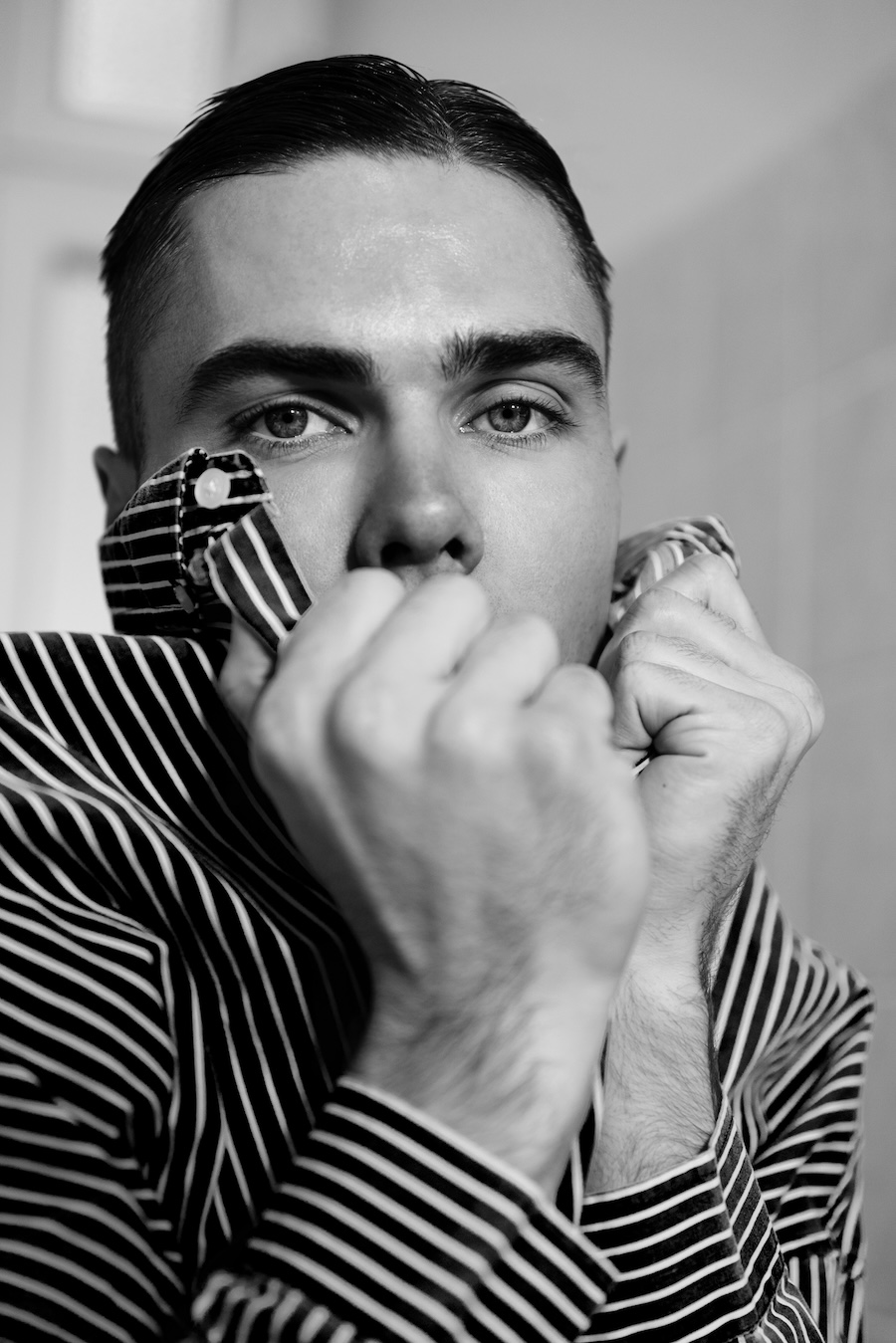
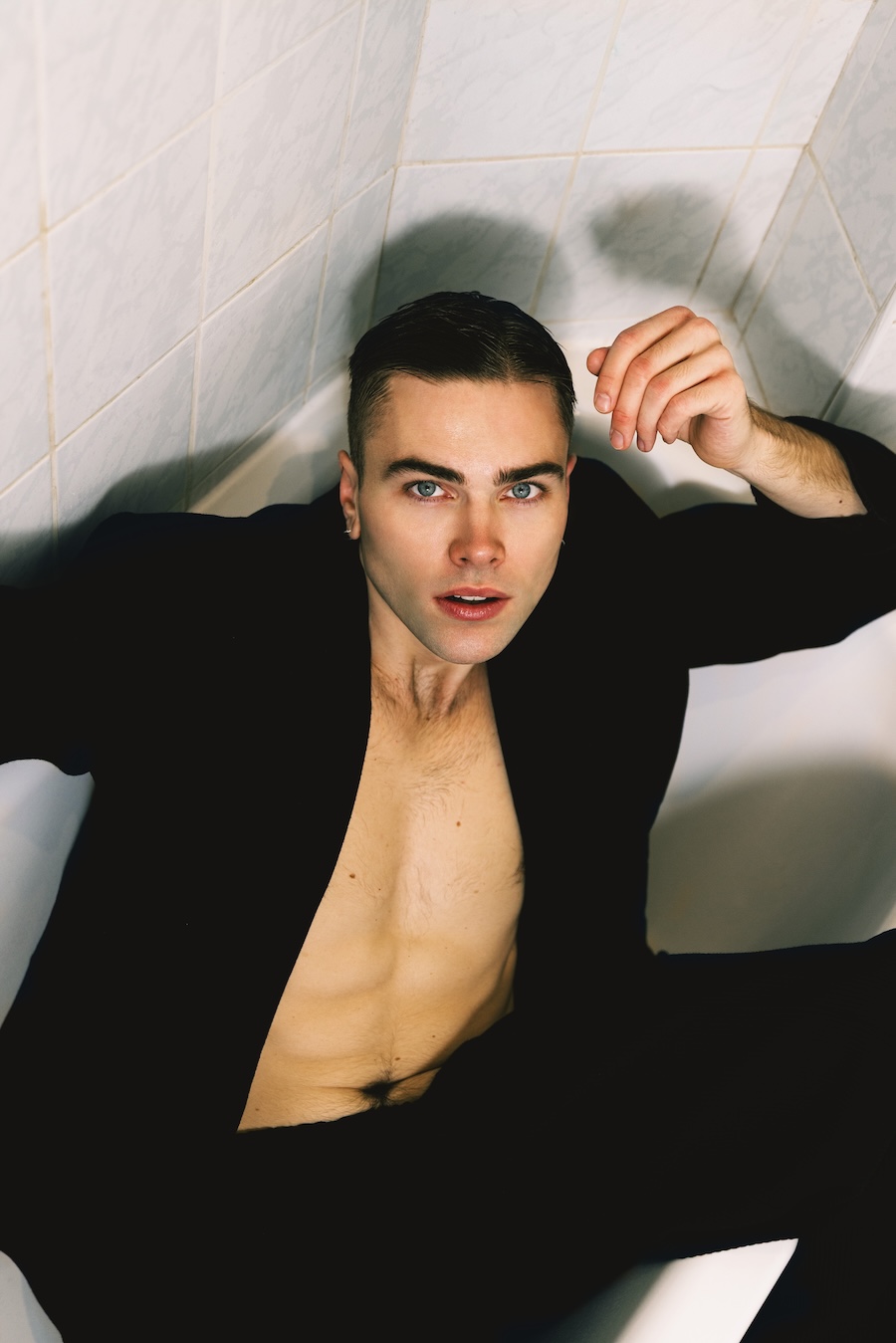
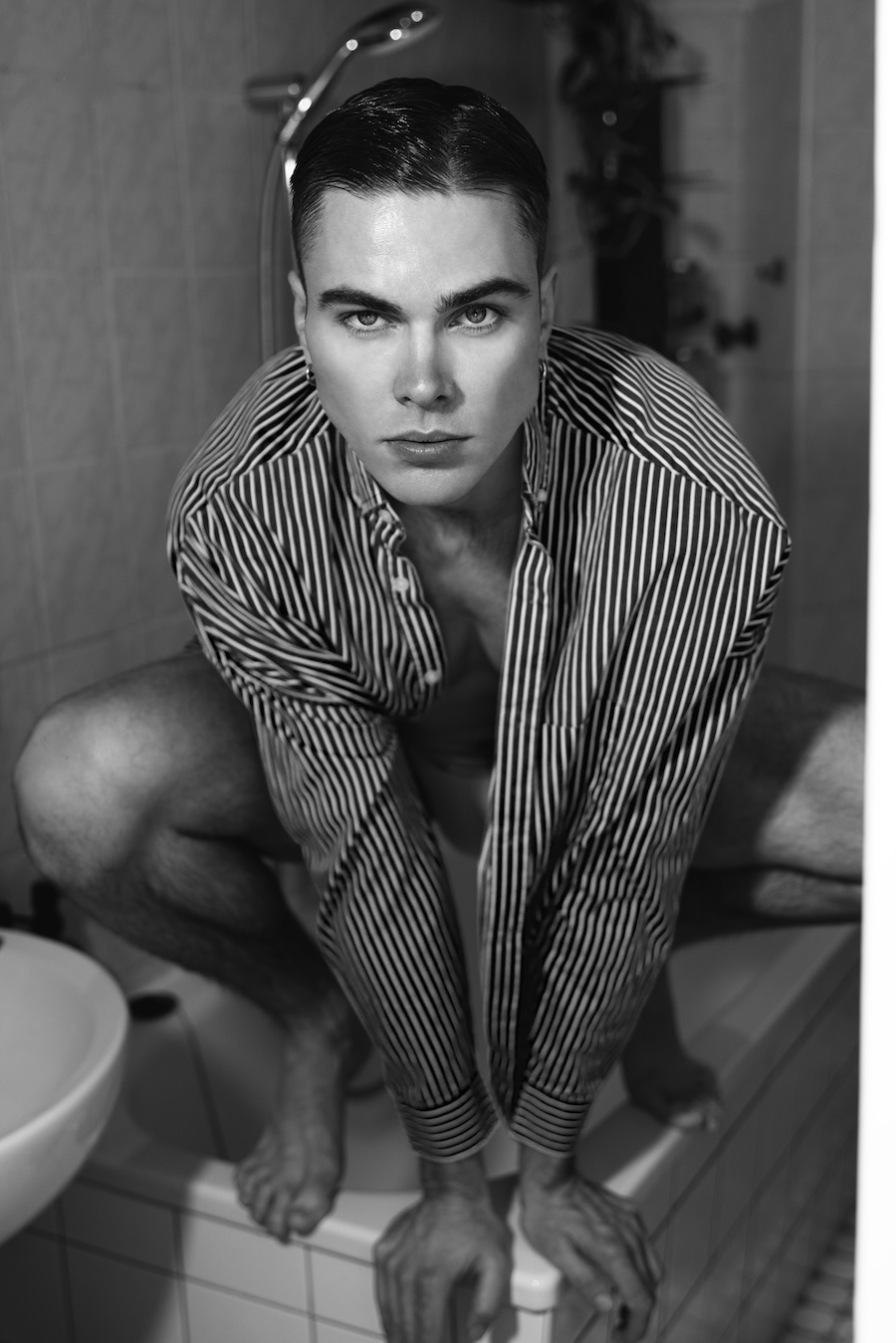
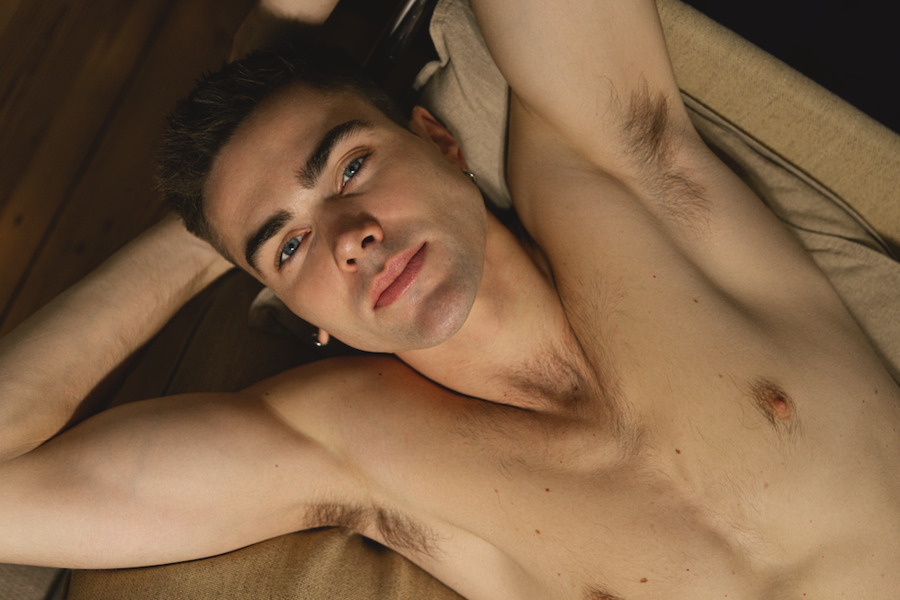
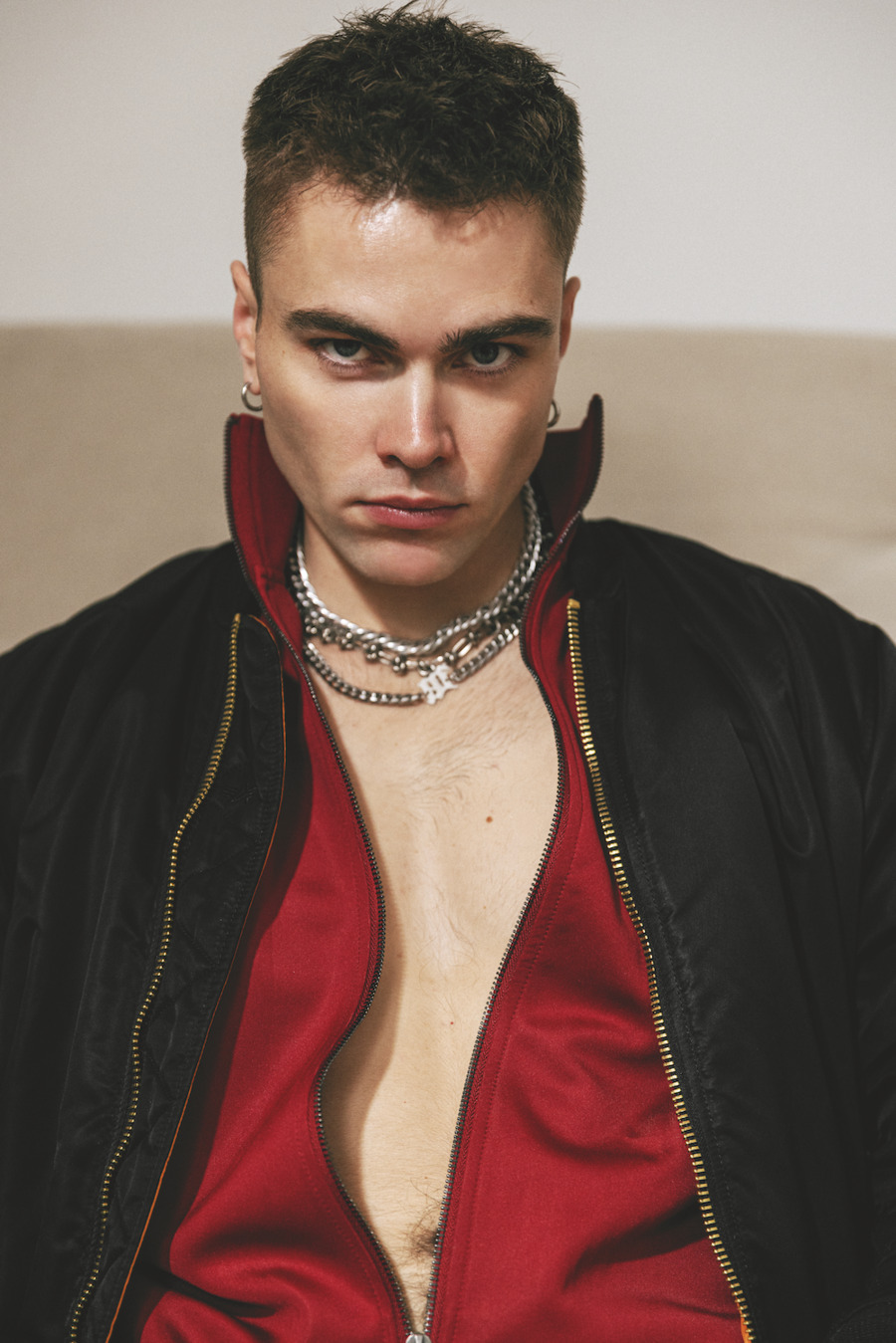
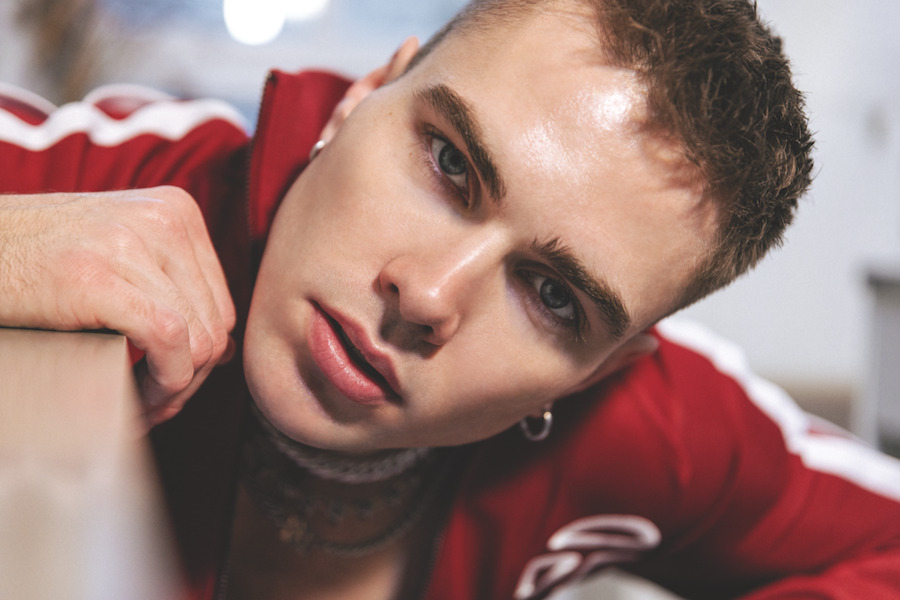
Model: Malte Bossen / @mlt.bsn @pornceptual
Brands: MISBHV / @misbhv – Daily Paper / @dailypaper – TELFAR / @telfarglobal – Alpha Industries / @alphaindustries
