

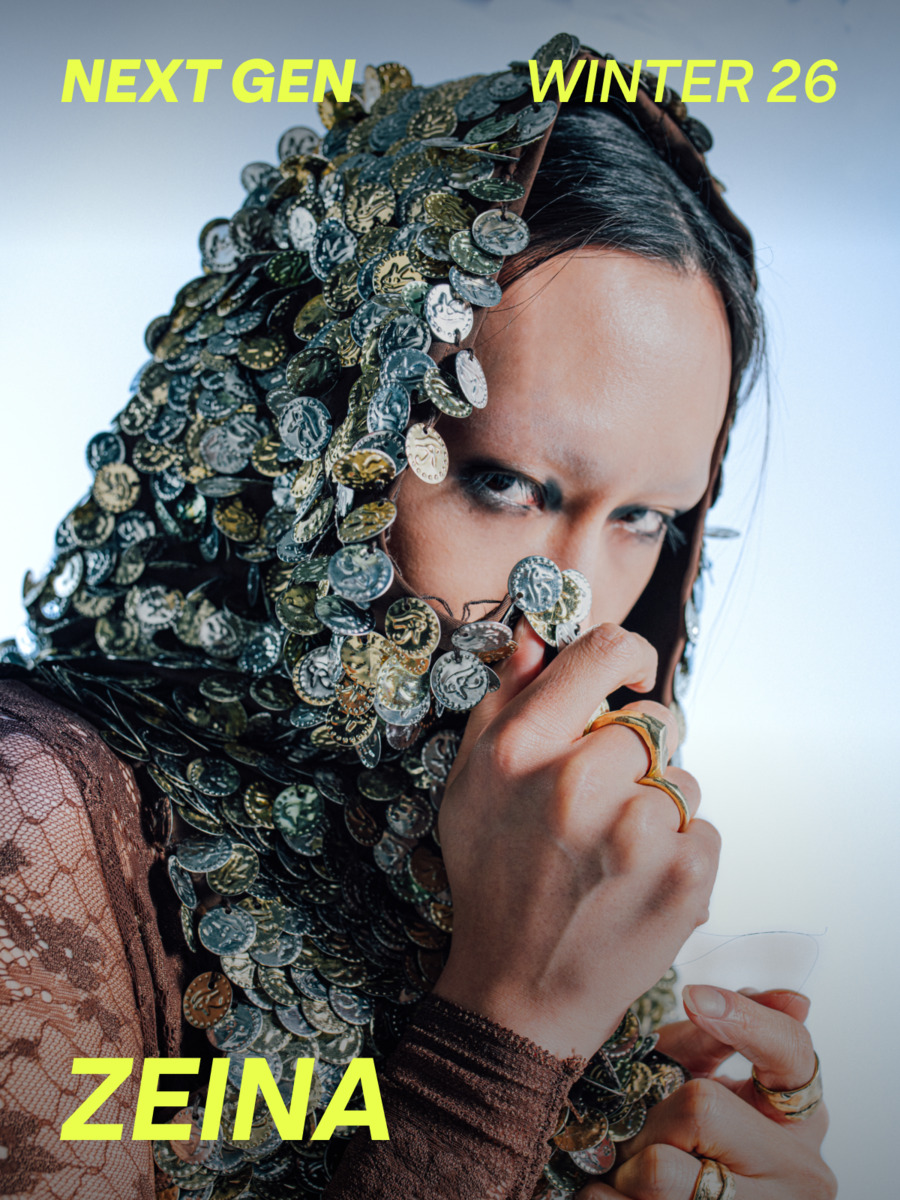
As we continue our exploration of the vibrant Berlin fashion scene, we are thrilled to present Interview Number 5 in our exclusive series. This time, we delve into the creative mind of Zeina, a remarkable designer showcasing her collection, “تراث” (Turāth, meaning Heritage), at the much-anticipated NEXT GEN exhibition during the PLATTE.Berlin event. Running from January 29th to February 14th, 2026, the PLATTE NEXT GEN initiative highlights six visionary designers, handpicked by an esteemed jury that bridges design, sustainability, business, and fashion.
In this special edition, we uncover the inspirations behind Zeina’s work, which serves as a poignant reflection of her heritage, identity, and the ongoing dialogue about belonging in a complex world. Through her artful designs, she challenges stereotypes and invites us to engage with narratives often overlooked in the fashion discourse. Furthermore, the importance of spaces like PLATTE, with its dedication to diversity and creative expression, emerges as a powerful backdrop for the blossoming of emerging talents like Zeina.
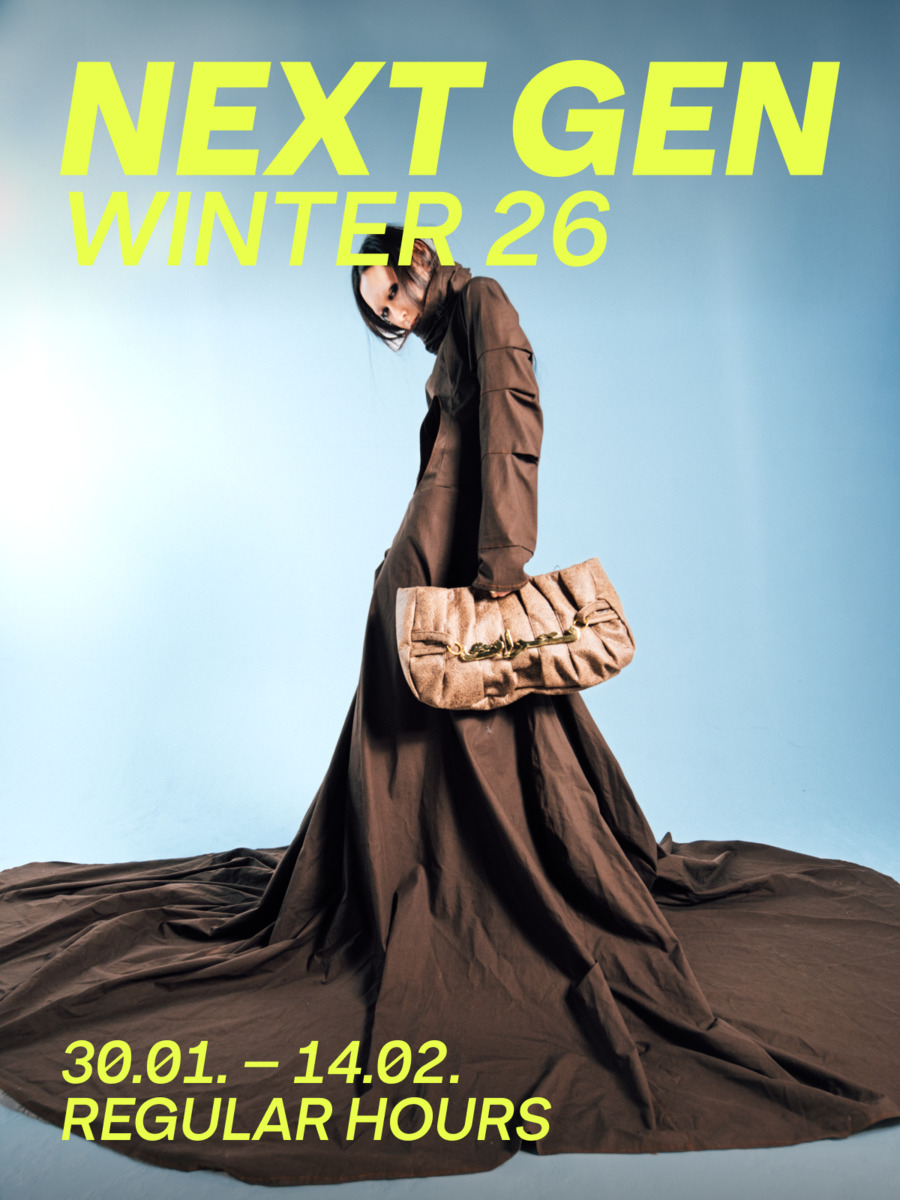
@svenmarquardt / @platte.berlin
Follow:IG: @studio.zeina – @zeina_abouelmaaty
Photography by @arnaud.ele
Interview @marcel_schlutt
Join us as we immerse ourselves in a conversation that not only celebrates innovative design but also thoughtfully addresses cultural narratives and the future of fashion. Prepare to be inspired by a journey that is as much about personal identity as it is about the evolution of an industry.
KALTBLUT: Can you tell us about the inspiration behind your current collection showcased at the NEXT GEN exhibition in Platte Berlin?
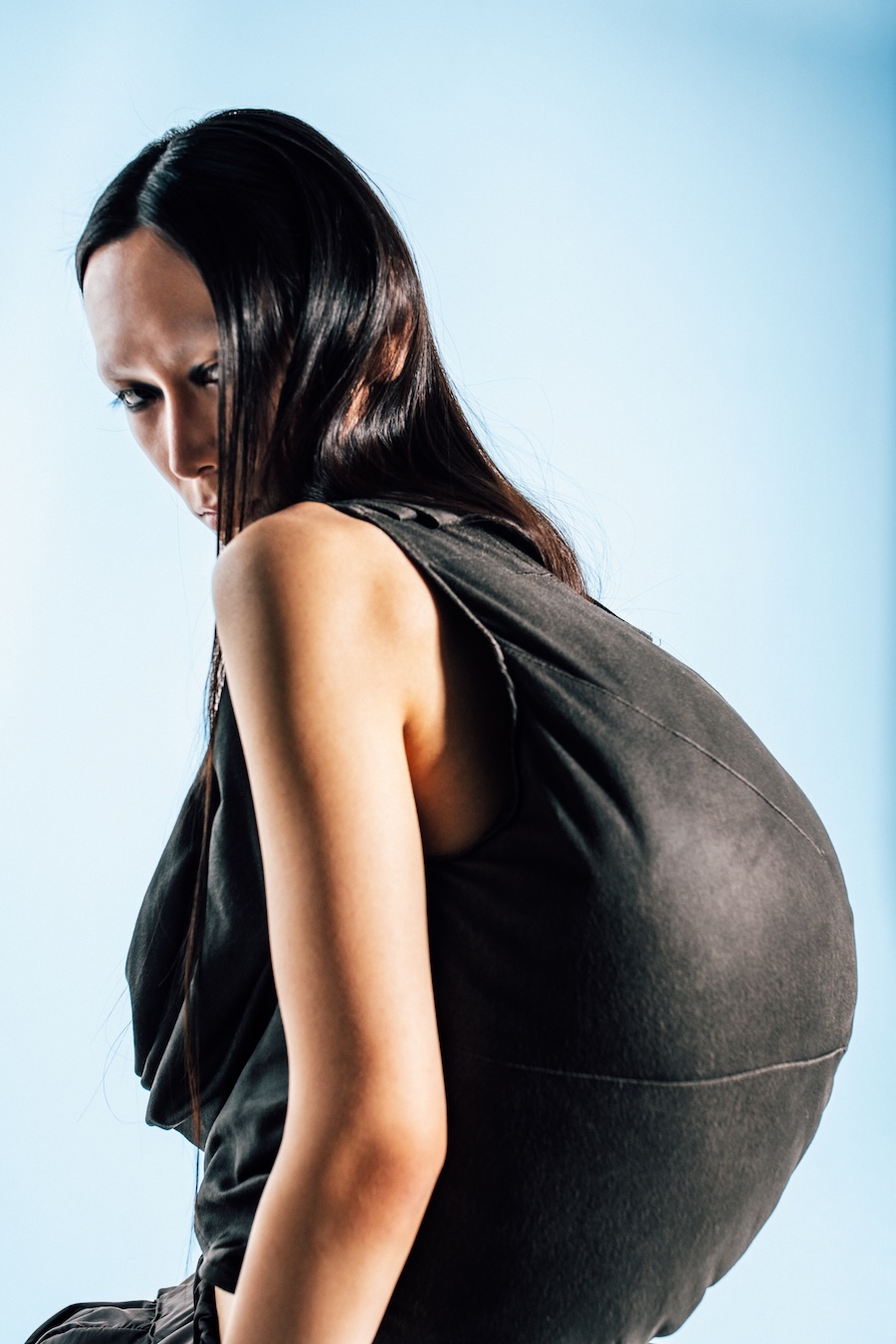
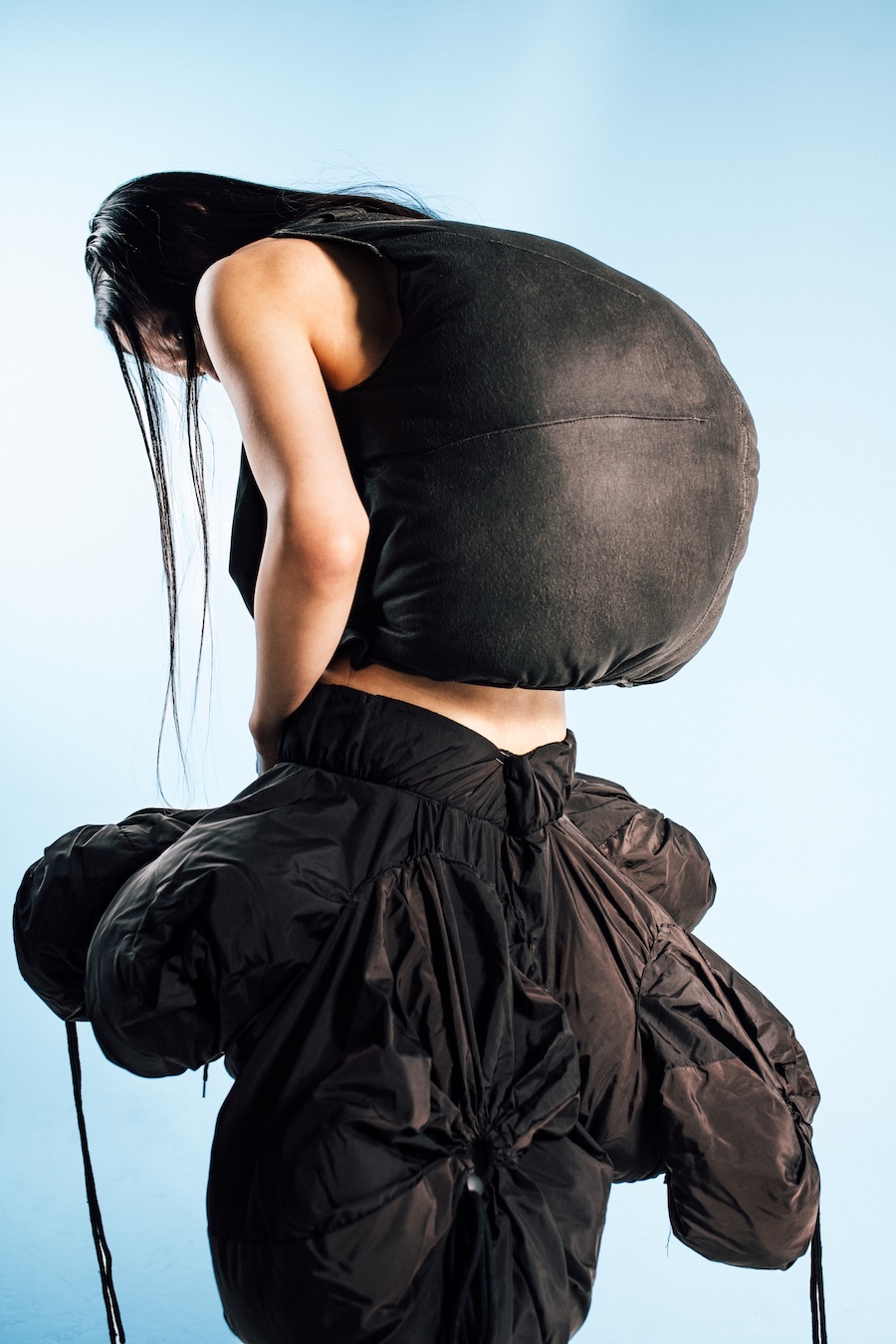
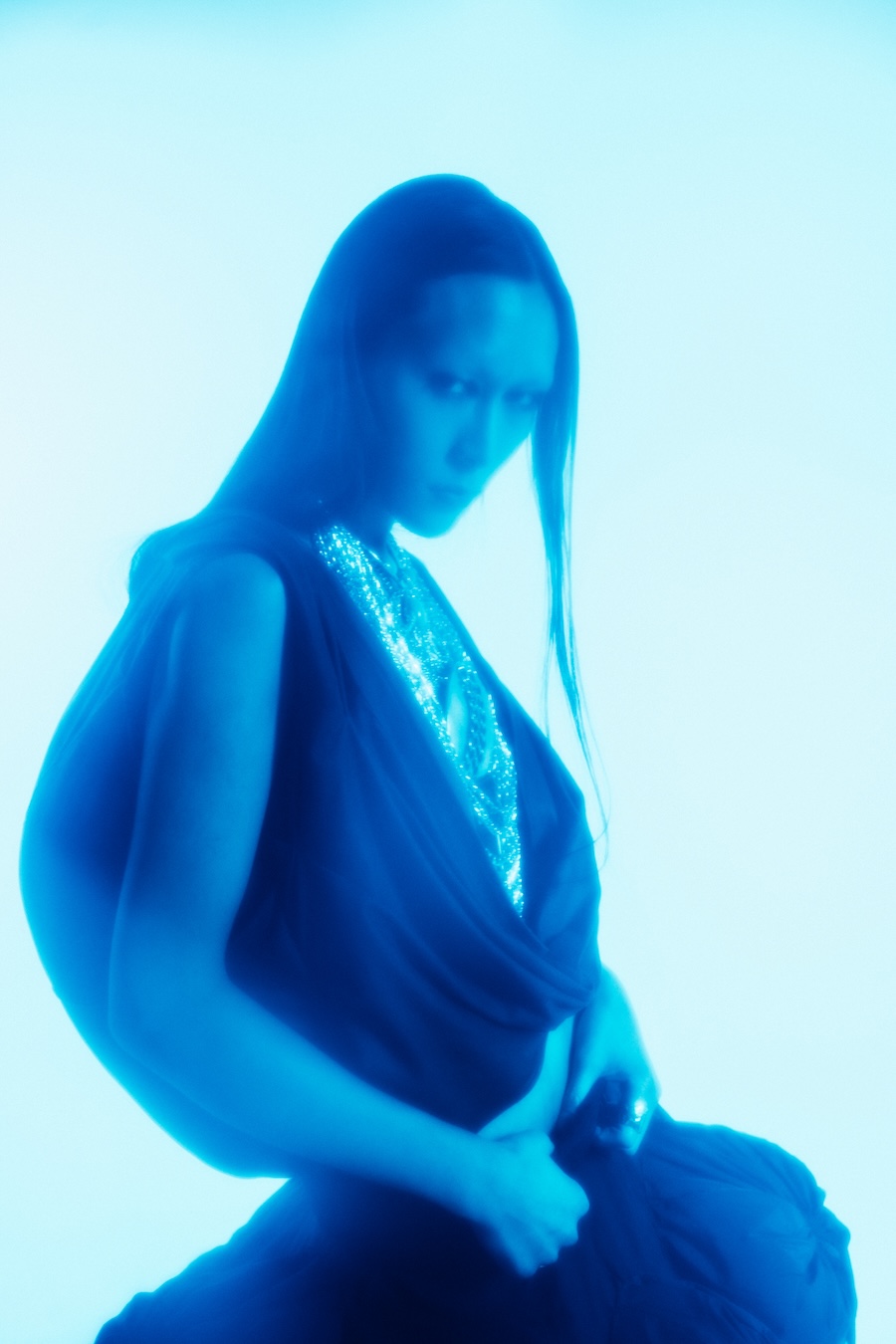
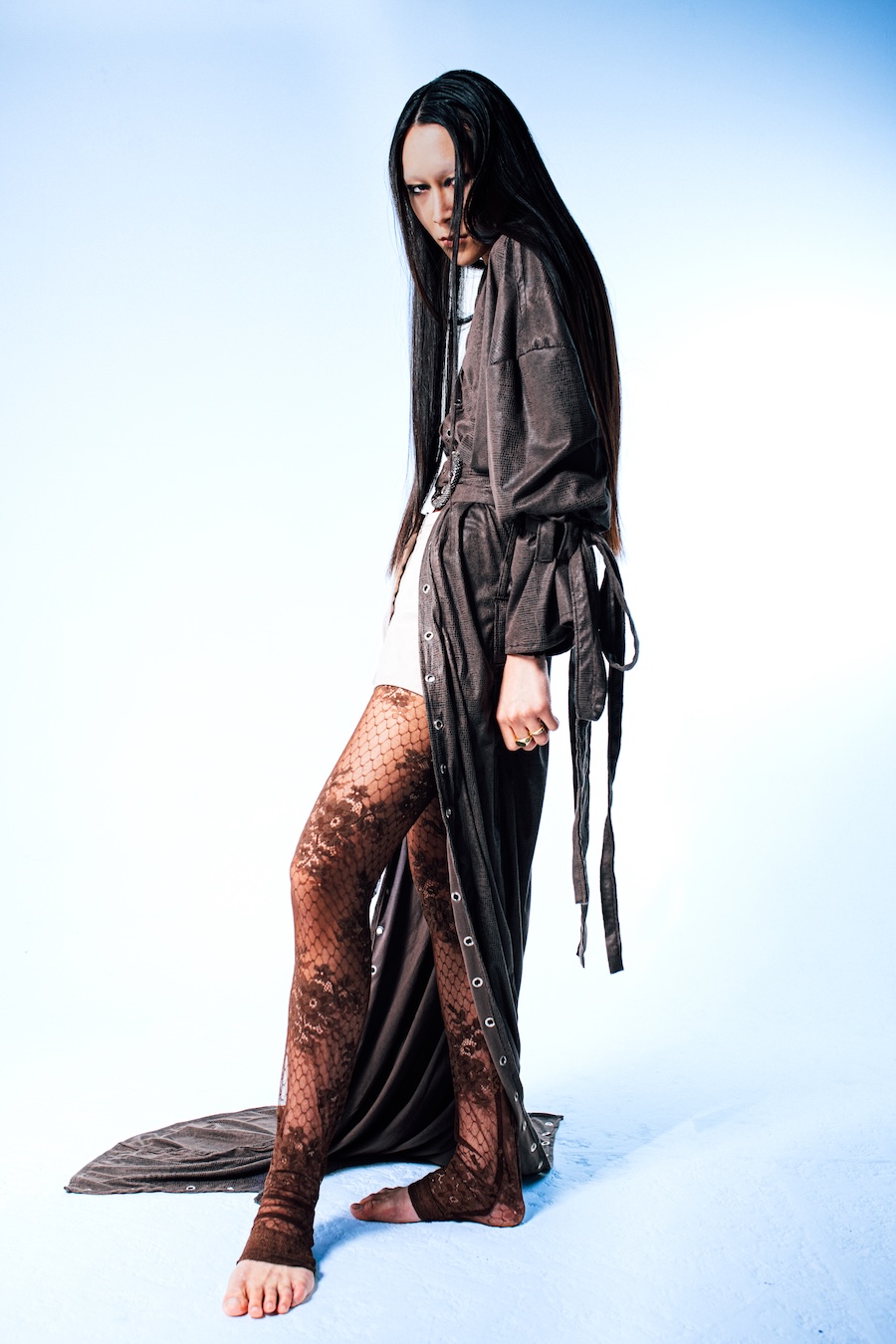
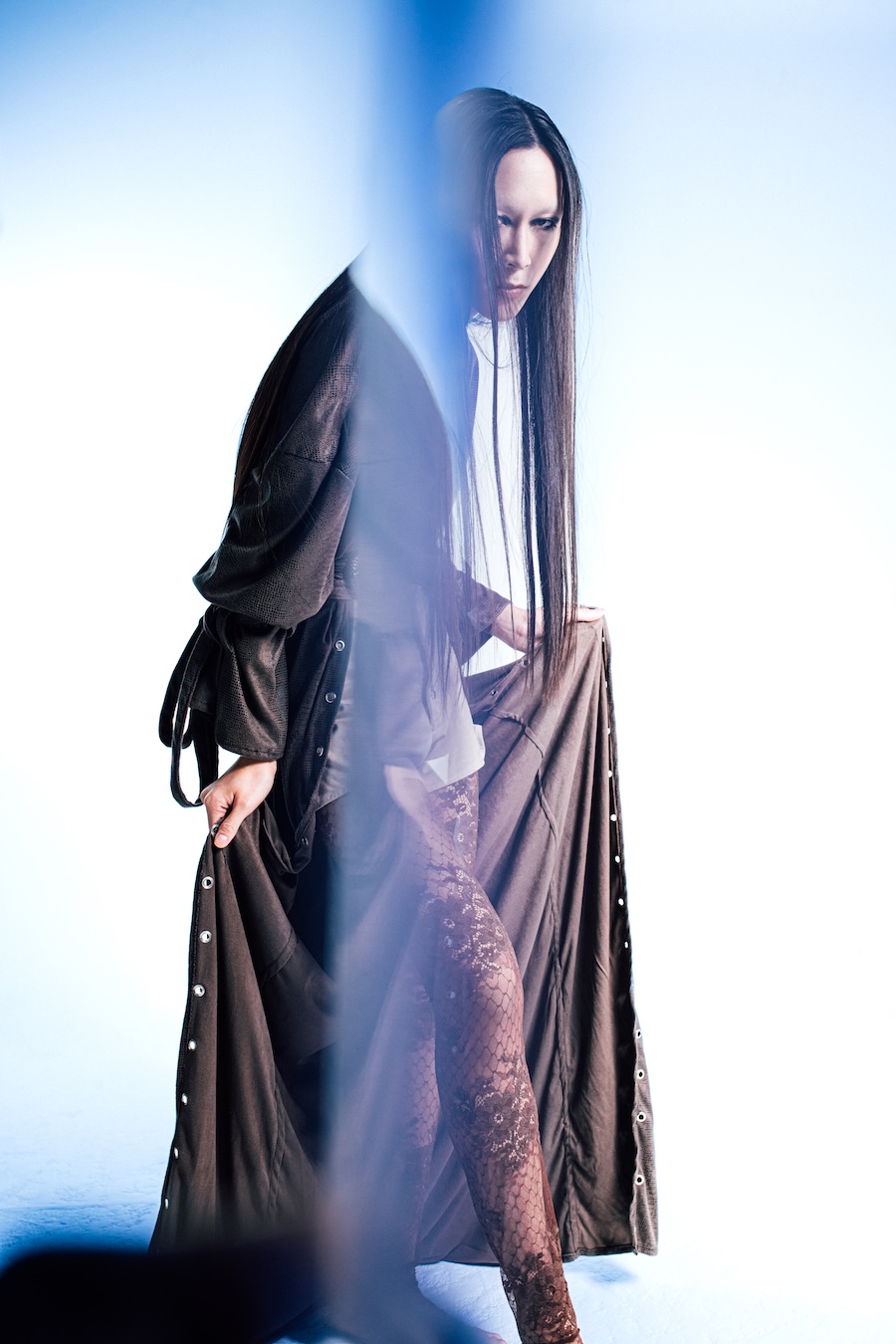
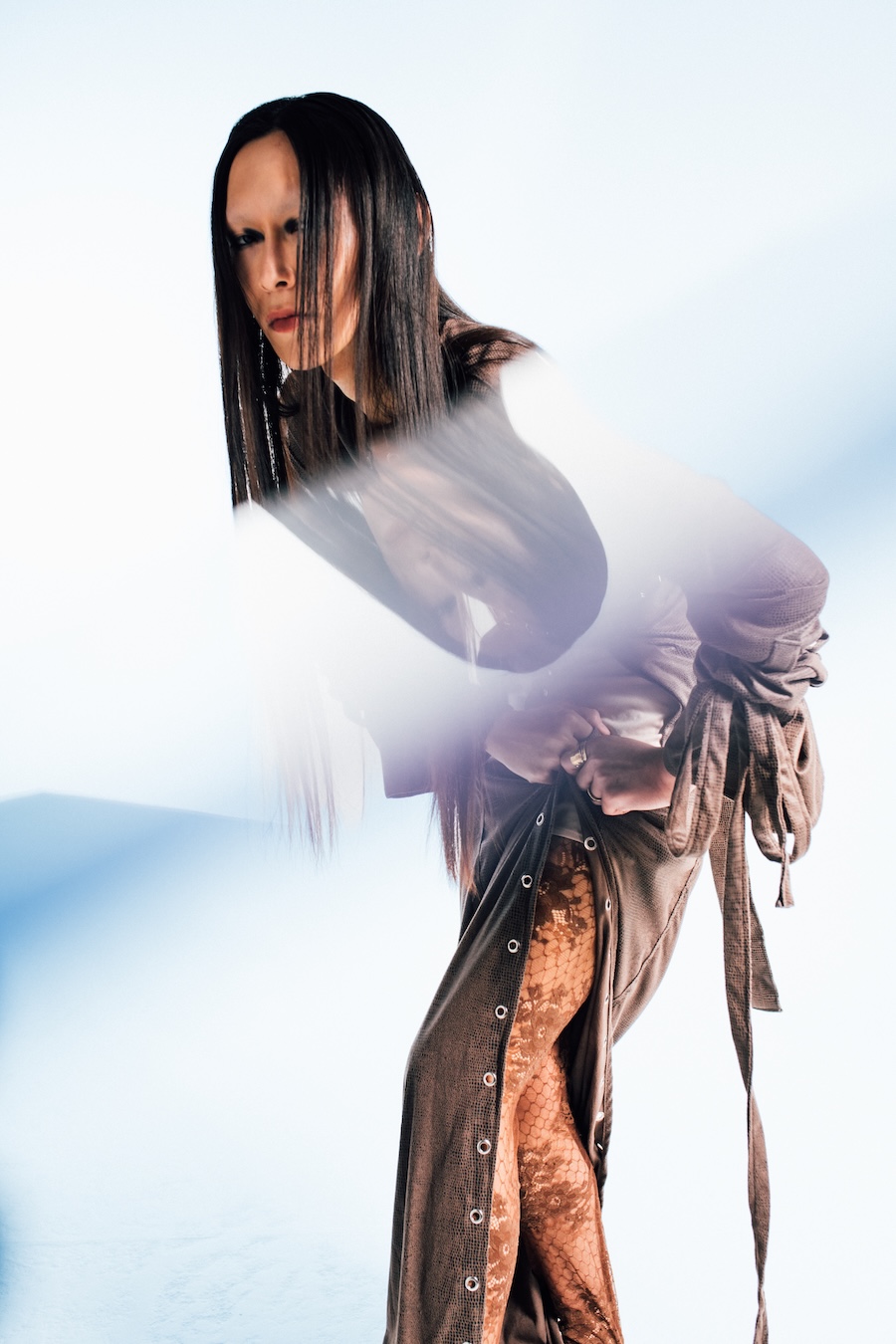
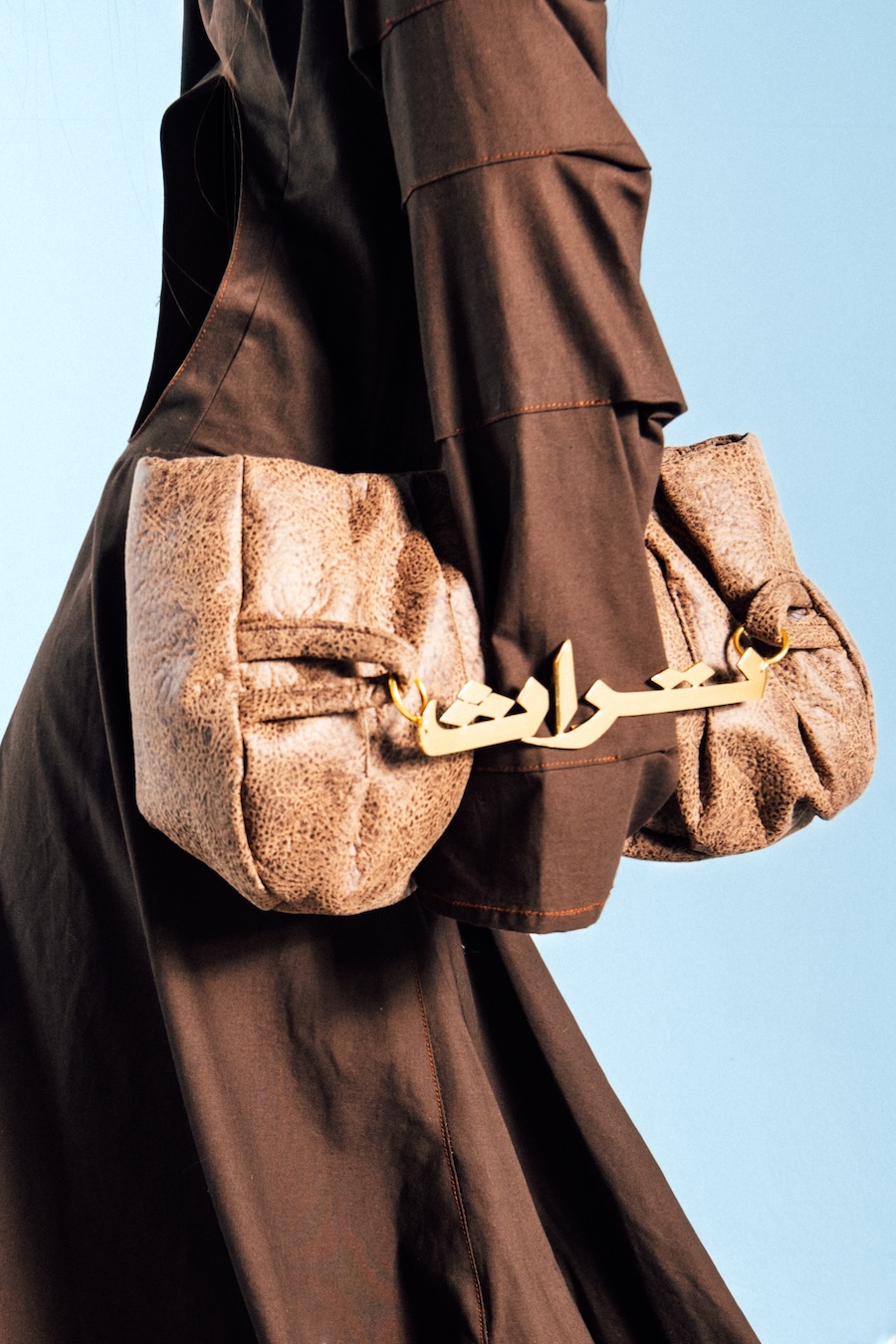
Zeina: Titled “تراث” (Turāth, meaning Heritage) with the subtitle “Love Letters to Home,” the collection is deeply personal. It is a collective of my life’s experiences and heritage, translated into fashion. I work with clothing as a language — one that speaks about identity and memory. The inspiration behind this collection comes from my relationship with home, identity, and what it means to be Arab in a world that often misunderstands or marginalises that existence. Entering the fashion world, I wanted my first debut to be vulnerable and a reflection of who I am and where I come from.
At the heart of my work is the Arab identity, not as a stereotype, but as a living, evolving experience. Each piece translates identity and cultural inheritance into form, fabric and silhouette. Growing up with different cultural influences and living abroad for my bachelor’s studies, I have constantly navigated through the tension of holding onto my heritage and feeling pressured to dilute it. In a world that praises diversity, I often feel like an exception. The Arab identity is still filtered through fear and stereotypes. My work comes from watching that identity evolve, reshaped by colonisation, displacement, and stigma, yet never erased. This collection channels that journey, born from a deep need to find peace in my own skin and to reflect on what it means to belong without apology, even when the world refuses to make space.
Rather than presenting heritage as something fixed or nostalgic, I explore it as something resisting and continuing to exist despite external pressures. This collection is my way of reclaiming narrative. It challenges the stereotypes imposed on Arab identity and instead offers an intimate perspective that centres dignity, complexity, and the power of belonging. This collection is an ode to home that is not bound to a place, but to the life and identity I carry within my own skin.
KALTBLUT: How do you integrate sustainability into your design process?
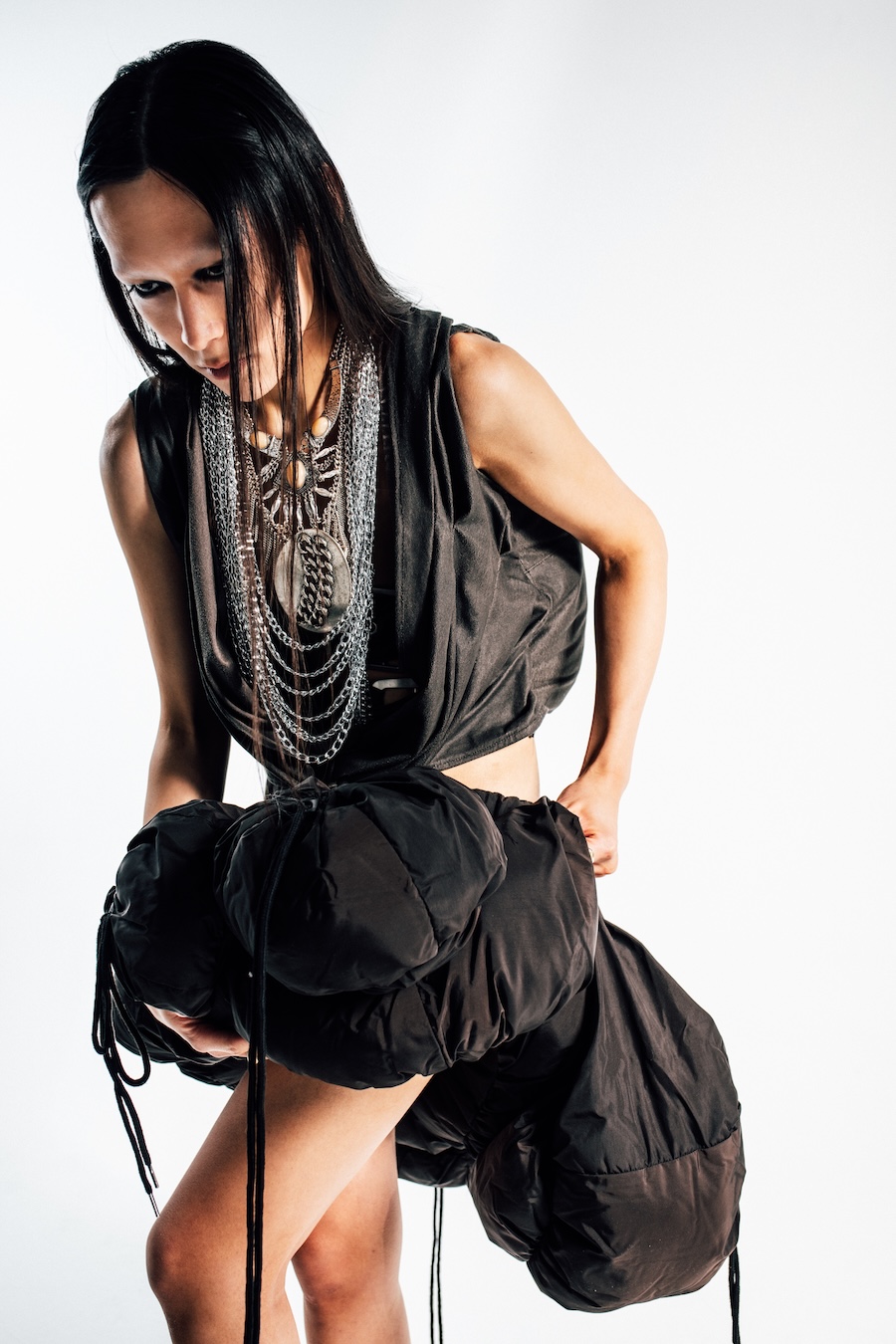
Zeina: Aside from the practical steps I take, such as choosing fabrics consciously, sourcing materials responsibly, avoiding unnecessary waste, and utilising deadstock whenever possible, I approach sustainability in a different, deeper way. “تراث” is rooted in social and cultural sustainability, where preservation goes beyond tradition to become an act of resistance, reclamation, and continuity. This collection sustains Arab identity by safeguarding memory and lived experience in the face of marginalisation and global homogenisation. Through design, heritage is not frozen in the past but revived as a living language that honours resilience, self-determination, and cultural pride. Each garment serves as an archive, holding stories of resistance, reinforcing the right of Arabs to define their own narrative.
My design vision embraces the complexity of the Arab self — the tension between belonging and alienation, heritage and evolution. By reinterpreting historical moments and traditional craftsmanship through contemporary silhouettes, I create a dialogue between past and present that reflects an identity constantly adapting yet deeply anchored in its roots. The collection becomes a visual and emotional map of the Arab experience, expressing grief, intimacy, and rebellion as equally vital layers of cultural truth.
At its core, “تراث” challenges imposed narratives and reclaims space for authentic Arab representation within global fashion discourse. Its sustainability lies in empowering visibility, nurturing collective pride, and fostering cultural continuity for future generations. Through this work, fashion becomes a vessel for storytelling, sustaining not only aesthetics but the soul of a culture that refuses erasure.
KALTBLUT: How important is a space like Platte Berlin for you as a designer?
Zeina: A space like Platte Berlin is incredibly important for me as a designer because it creates room for voices and perspectives that are often overlooked globally. Platforms like Platte shouldn’t be an exception or a luxury – they must exist everywhere. Spaces like this give emerging designers and artists the freedom to grow, experiment, and express themselves creatively. Platte embodies everything Berlin stands for: diversity, authenticity, cultural awareness, and a home for art and creative expression. For me, it’s not just a platform. It’s a space that validates and amplifies voices that might otherwise go unheard.
Beyond that, Platte has built a community where creative minds can meet, exchange ideas, and learn from each other. It’s a place where perspectives intersect, sparking collaboration, experimentation, and innovation. Spaces like this become incubators for progress, where diversity isn’t just celebrated – it drives the work forward. In a world that often isolates or silences emerging voices, Platte is a home for creativity, dialogue, and cultural growth, and that makes it invaluable for designers like me.
KALTBLUT: How would you describe Platte Berlin if you can use only 3 words?
Zeina: If I had to describe Platte Berlin in three words, they would be: diverse, authentic, essential.
KALTBLUT: What challenges have you faced as an emerging designer in the Berlin fashion scene?
Zeina: As an emerging designer in Berlin, one of the biggest challenges is not knowing where or how to start your career. There is very little guidance and few platforms that provide real support for newcomers. Even if you want to join an established label and gain professional experience, most positions available are internships, which I understand are meant to help accumulate experience, but the reality is that the pay rarely reflects the hours, effort, or skill required. Often, it’s very little or no pay at all, and simply being allowed to work in fashion is treated as a privilege rather than a responsibility of the industry to fairly support its talent.
At the same time, credit is not always given to the people doing this work, especially interns who are essential to a label’s functioning. Many accept these offers because there simply isn’t another way in, which results in people being overworked and underpaid. The system is failing its talents, and there have to be measures taken to change this. There must be more opportunities for upcoming generations of creatives and stronger advocacy for their rights – only then can the industry become sustainable and equitable.
While I speak here about Berlin, I believe this is a universal problem in fashion globally. I understand how many would refrain from speaking out, scared of losing a position or opportunity, but the more we do speak up and the more we unite under this advocacy, the clearer the vision becomes of making this industry a safer, fairer space for everyone.
KALTBLUT: How has participating in the NEXT GEN program influenced your growth as a designer?
Zeina: Participating in the NEXT GEN program has been a big step forward in my growth as a designer. This moment feels urgent because conversations around identity are louder than ever – yet they remain selective. Berlin is a city that understands rupture, rebuilding, and cultural resistance; it holds space for complexity and contradiction. With that being said, presenting my work at NEXT GEN, at Platte in Berlin, is something I am deeply grateful for, because it brings an Arab voice into a global dialogue that often speaks about us, but not with us. It allows me to express myself to a wider audience, build connections, and foster a community that resonates with my values and creative language. For emerging designers, NEXT GEN can be the start of exposure and meaningful change.
NEXT GEN has also given my collection the chance to not be consumed quickly. Each piece is intended to sit with the viewer and invite them into an open conversation about identity. Visitors can experience garments that carry memory and reflect vulnerability and resilience. I hope they don’t just see clothing, but feel the weight of belonging, displacement, and pride, and perhaps question how fashion shapes the way we perceive entire identities. Exhibitions like this resonate with people on a deeper level. They experience the pieces for themselves and allow their own reflections and reactions to shape the dialogue.
KALTBLUT: In your view, what role does collaboration play in the fashion industry today?
Zeina: In my view, collaboration is one of the most vital forces in today’s fashion industry. Innovation rarely happens in isolation. It emerges when creative minds come together to exchange ideas, perspectives, and techniques. Collaborations can take many forms, from designers working together to partnerships with artists, photographers, musicians, or creatives from entirely different fields. It’s in these moments of exchange that simple concepts can transform into something powerful, fresh, and unexpected, reaching a wider audience and creating work that resonates on multiple levels.
Working with Platte Berlin, for example, is a form of collaboration in itself. It brings emerging designers to a professional and diverse platform, amplifying their stories, visions, and voices. Platforms like this not only provide exposure but foster an ecosystem where ideas can intersect, grow, and inspire one another and that, to me, is where the true innovation of fashion lies.
KALTBLUT: Who are your biggest influences or mentors in the fashion world, and how have they impacted your work?
Zeina: For me, my biggest influences come from my surroundings, upbringing, and culture, the archives of my life and heritage that my mind has been subconsciously absorbing for years. Beyond that, I am inspired by creatives who may not necessarily work in fashion but use their mediums to explore cultural inheritance and life as a form of archival storytelling.
A particularly strong influence for me is the Middle East Archive. I have always been drawn to the way they capture the everyday life and lived experiences of the Middle East and North Africa with honesty and intimacy. Seeing how they source photographs from the past and turn preserved memory into emotional heritage has shaped how I approach translating my own life, ancestry, and identity into garments. What I love most is how unapologetically authentic they are, celebrating culture without filtering it through expectations or stereotypes. Their work has inspired me to think of fashion not just as clothing, but as a way to carry memory, emotion, and cultural stories forward.
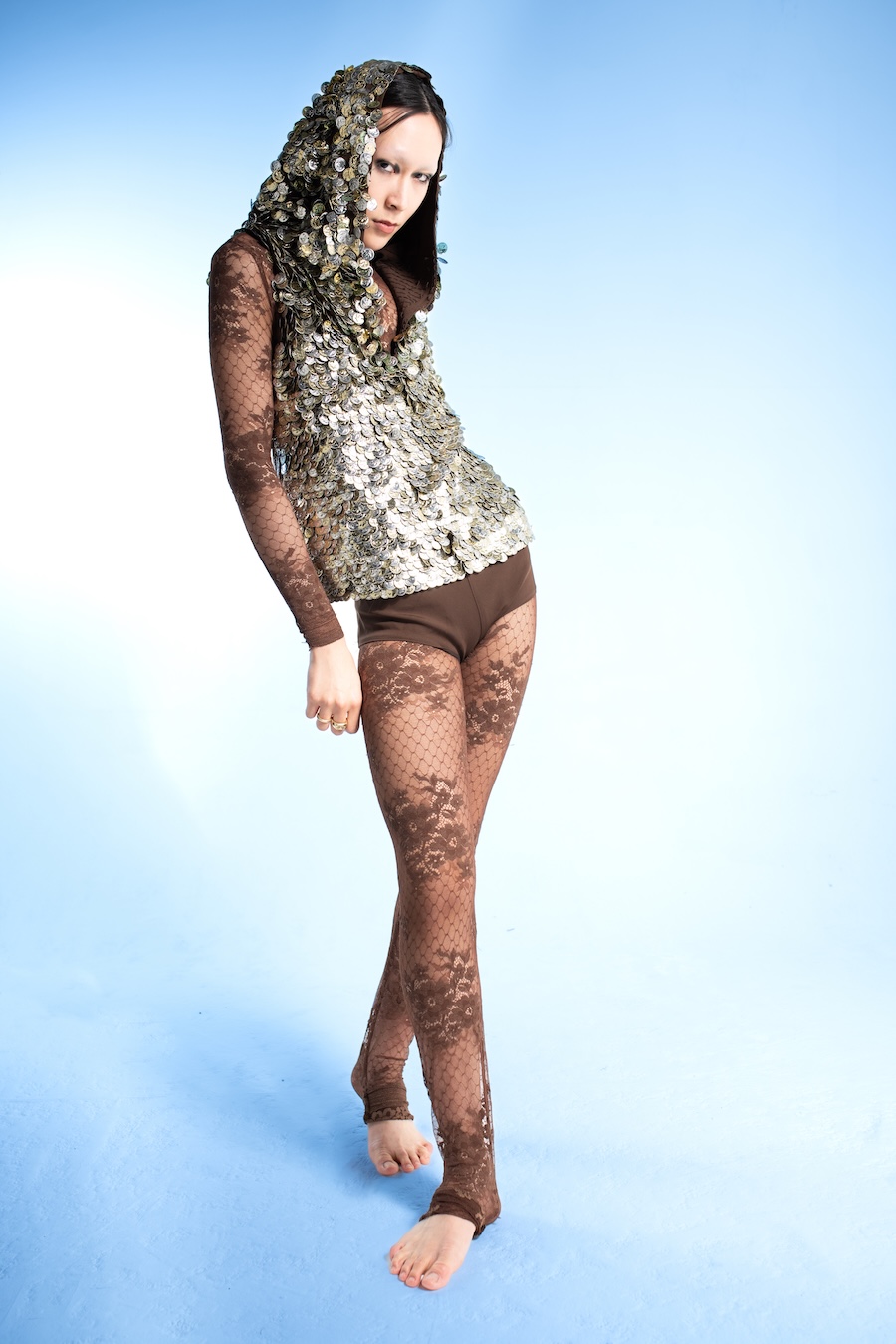
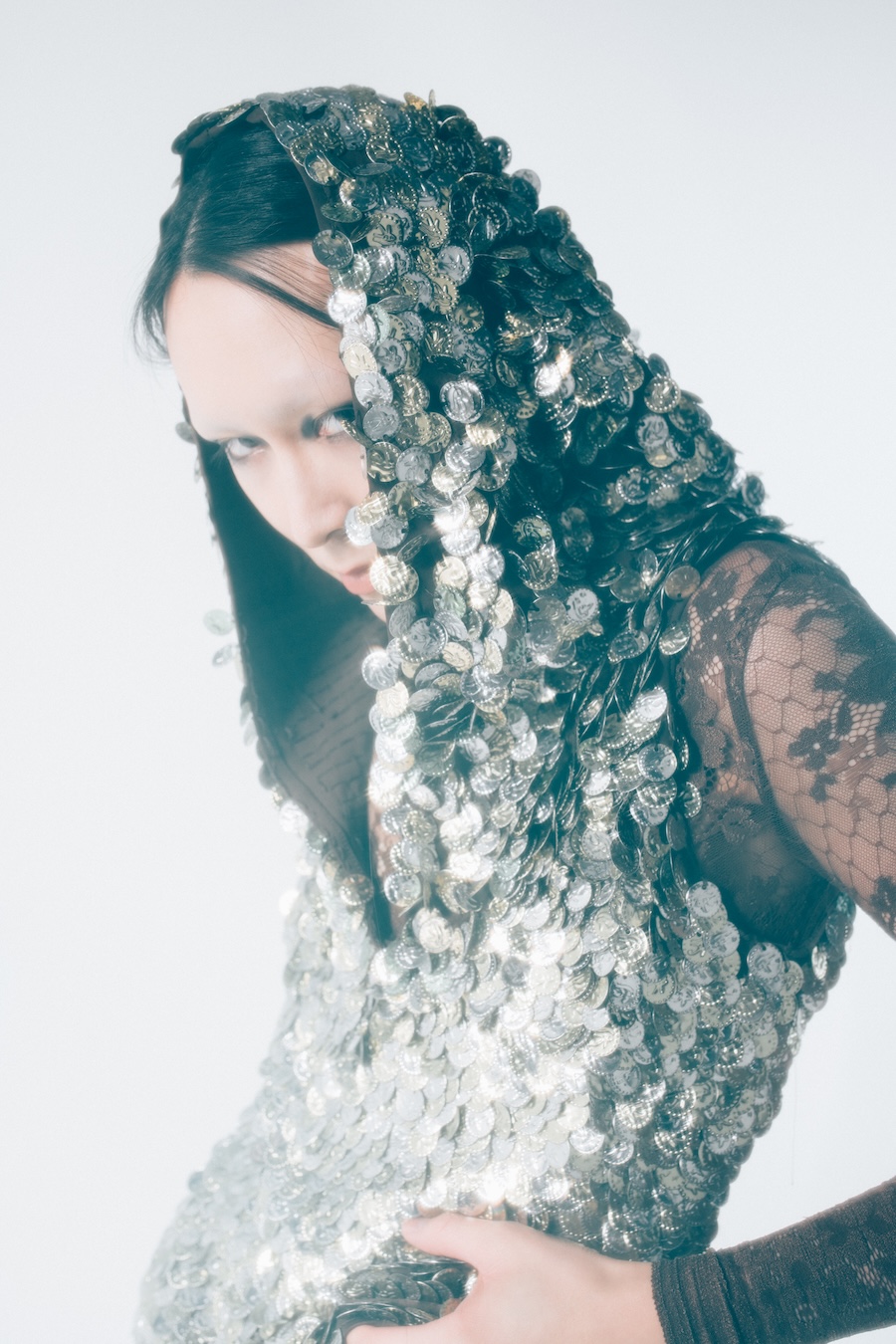
Of course, I also draw inspiration from designers within the fashion world. A huge influence for me is the emerging brand Nazzal Studio. I love how she transforms historical photography and lived experiences into garments and silhouettes that speak more powerfully than words ever could. My own look, “The Arab Self” (النفس العربية), is my interpretation of one of her iconic coin looks that has resonated with me on a deep level. I felt a creative urge to reimagine it in my own way. She remains authentic to herself and her culture, and in my view, she is one of the industry’s most important designers right now, a talent everyone should keep on their radar.
I also take inspiration from Arab pop culture and other creative mediums, whether it is the music of Fairuz, the storytelling of Egyptian cinematography, or Arabic literature and poets such as Mahmoud Darwish. These influences feed into my understanding of narrative, memory, and identity, and they continue to shape how I translate culture into fashion.
KALTBLUT: Can you describe the creative process you went through while developing your latest pieces?
Zeina: My creative process for this collection began with grounding myself in my roots and finding my own skin. It was a journey of cultural awareness, rediscovering who I am and where I come from, and realising that home isn’t tied to a place but exists within yourself, in what you carry and who you are.
I drew inspiration from a rich tapestry of references, including my upbringing, the Arab pop culture I grew up with, and the aesthetics of Cairo, the city where I was raised. On a deeper level, I explored the history and resilience of generations of Arab civilisations, their diversity, and the ways they have endured and adapted over time. This process was deeply personal and vulnerable, and it became a journey of self-awakening.
Through this collection, I wanted to translate that journey into clothing that carries memory, cultural heritage, and belonging. It is an unapologetic expression of the Arab identity – bold, authentic, and unfiltered. The designs are meant to provoke dialogue, celebrate resilience, and inspire pride, not only in myself but in fellow observers, especially Arabs, who might see their own experiences reflected in these pieces. This collection is more than fashion. It is a declaration of identity, perseverance, and the quiet power of belonging in one’s own skin.
KALTBLUT: What message do you wish to convey to your audience through your designs?
Zeina: Through my designs, I want to challenge the stereotypes that continue to surround the Arab identity and expose how deeply misunderstood it often is. This collection is about reclaiming our narrative and telling our stories on our own terms, honestly and without filters, away from imposed stigmas and simplified images.
I hope my work creates space for Arab representation within fashion, not as a trend or a token, but as a voice that carries history, complexity, and lived experience. It is important to me to bring an Arab perspective into a global conversation that so often speaks about us rather than with us.
At its core, my message is an invitation. An invitation to question how we perceive certain identities, to reflect on what diversity and inclusivity truly mean, and to consider fashion as a powerful tool for dialogue rather than decoration. If my work encourages viewers to engage more openly with identity, representation, and the value of letting people tell their own stories, then it has fulfilled its purpose.
KALTBLUT: How do you envision the future of fashion, particularly in the context of emerging designers and sustainability?
Zeina: I see the future of fashion as complex and at a critical crossroads. We speak a lot about inclusivity and creating space for emerging designers, but it is important to honestly question whether this is truly happening. The industry has become oversaturated and extremely fast-paced, driven by constant trends and rapid consumption. In that noise, the essence of fashion can easily get lost. At its heart, fashion is a form of storytelling and self-expression, and its impact weakens when only the same voices are heard repeatedly. Moving forward requires slowing down, reflecting, and actively making room for designers who treat fashion as a cultural language rather than just a product.
When it comes to sustainability, it has at times been treated like a trend instead of a long-term commitment. While there was a period of heightened focus, it often fades under the pressure of speed and profit. Sustainability must be approached more holistically. It is not only about conscious material choices or repurposing, but also about fair labour practices, transparent supply chains, and ethical production. Equally important is social and cultural sustainability, creating an environment where creatives feel supported, valued, and free to evolve without exploitation or constraint.
With all that being said, I do not believe the industry is losing its vision entirely. Fashion will always exist as a mirror of society and as a powerful tool to drive cultural and social change. It continues to inspire, challenge norms, and push our modern age forward. There will always be people within the industry who understand this responsibility and work toward a more conscious, equitable, and meaningful future.
KALTBLUT: What advice would you give to aspiring designers looking to make their mark in the fashion industry?
Zeina: My advice would be to stay focused on what gives you purpose and passion, and let that guide your work. Keep creating, keep learning, and allow yourself the space to grow. As an emerging designer, it’s easy to feel lost or discouraged when things don’t go as planned, but uncertainty and setbacks are part of the process. They are not failures; they are lessons that shape your voice and your direction.
Believing in yourself is essential, even when it feels difficult. If you don’t trust your own vision, it becomes hard for others to do the same. Create space for yourself and stay true to who you are, rather than forcing yourself into a certain image just to access opportunities. If something doesn’t align with you, it’s okay to let it pass. The right opportunities will come when the timing and values are aligned.
Most importantly, slow down. The industry often pushes us to move fast and constantly prove ourselves, but growth also comes from reflection. Take time to acknowledge how far you’ve come and take pride in the work you’ve already done. Even if it seems small from the outside, you know the intention, care, and effort behind it. And above all, never stop creating.
KALTBLUT: How would you describe the local fashion scene/industry in your hometown/country?
Zeina: I’m from Cairo, Egypt, and I think the local fashion scene is often misunderstood and underestimated globally. There is still a widespread stereotype around Arab fashion, largely because the region is poorly represented and rarely covered in international fashion discourse. From my experience, especially when speaking to people in Berlin, the reality of the fashion scene back home is often the complete opposite of what people imagine.
Cairo has a deeply rich and dynamic fashion culture rooted in history, craftsmanship, and bold creative expression. Designers such as Okhtein and Azza Fahmy, among many others, have built strong identities that merge heritage with contemporary design, showing that innovation and tradition can exist side by side. At the same time, the industry still has room for improvement. It lacks the right platforms that allow emerging designers to rise, showcase their work, and reach a global audience. Despite these challenges, there has been meaningful progress in recent years, creating more space for young voices to experiment, innovate, and transform the scene to its full potential. Seeing this growth has always inspired me and made me consider exploring the fashion scene back home in the future.
What makes Cairo’s fashion scene so powerful is its cultural depth, creativity, and resilience. It is expressive, daring, and constantly evolving, shaped by its social context and lived experiences. I see my own work as a continuation of this environment. I am, in many ways, a product of this scene, and it has influenced my vision, aesthetics, and the way I approach storytelling through clothing. I hope that more global platforms engage with and amplify the creative voices coming out of the region, because there is so much happening beyond what the world currently sees.
KALTBLUT: If your brand were ice cream, what flavours would it be?
Zeina: This is actually a really fun question. I would say chocolate mint ice cream. The contrast between these two seemingly opposite flavours coming together in harmony reflects the complexity and layers of my work. It’s an unexpected blend, much like how my designs merge cultural heritage with fashion-forward, contemporary design. Just as chocolate and mint surprise the palate when combined, my collection brings together different cultural elements in a way that feels fresh, dynamic, and cohesive.
KALTBLUT: What was the last music track you listened to?
Zeina: It was “عندي ثقة فيك (Indi Thika Fik) by Fairuz.
KALTBLUT: Finally, what can we expect to see from you in the near future?
Zeina: I don’t think I will ever stop creating. It is my passion and my true purpose. I can only create what feels authentic to who I am and what I believe in, and I could never let go of that. For me, fashion is not just a career. It is a way to explore myself and the world around me, and I let that guide everything I do.
Looking ahead, I plan to continue creating and expanding my practice. I hope to collaborate more with other artists, combining visions to bring something fresh and meaningful to the creative landscape of our time. Ultimately, I want my work to keep evolving while staying true to the stories, cultures, and experiences that inspire me most.
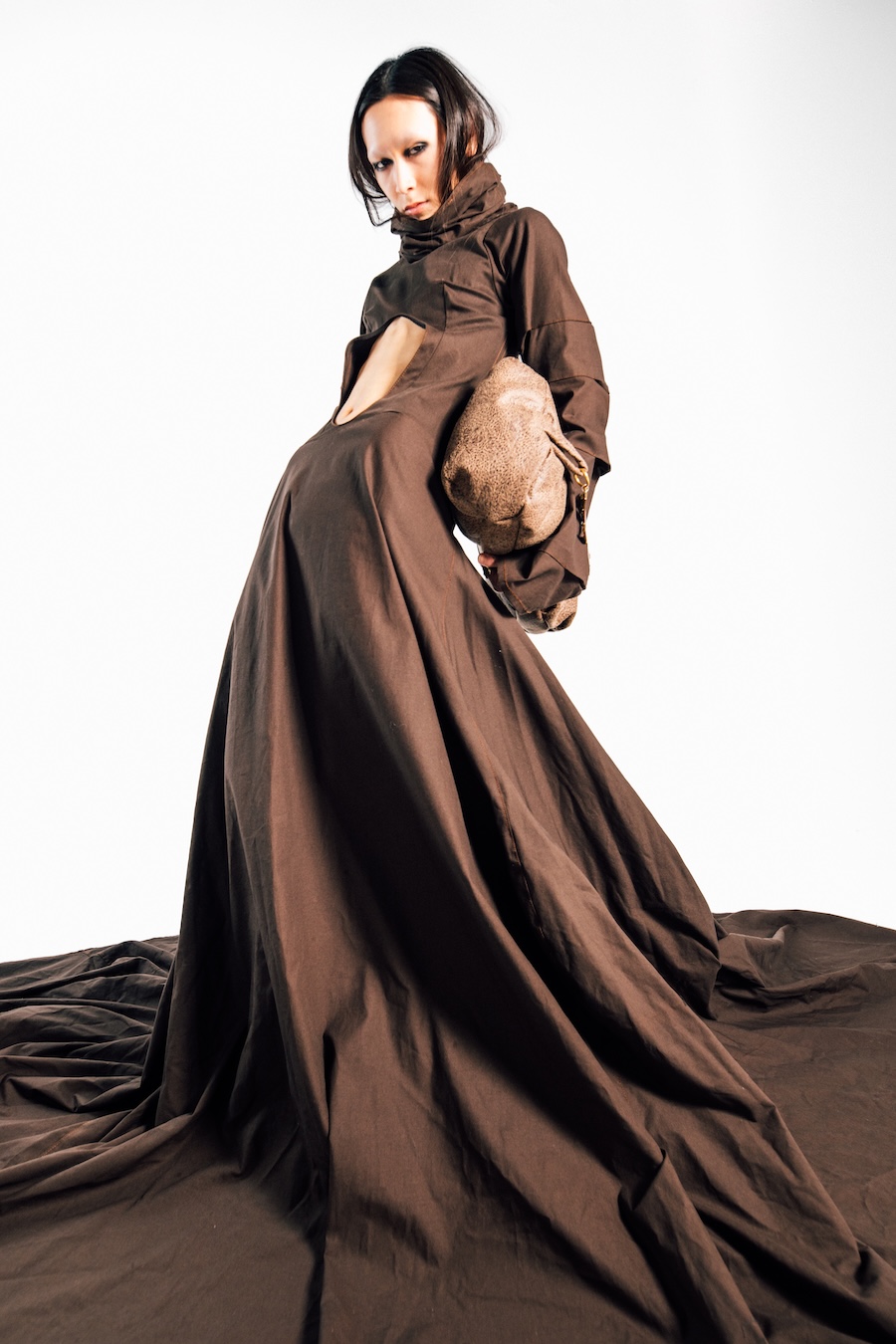
Creative Direction by Katharine De Siqueira @martin.de.siqueira
PHOTOGRAPHER Arnaud Ele @arnaud.ele
Light Assistant Lea Comprelle @ghostlyours
Production Lead Annika Malz @anni.mlz
Production Assistant 1 Evren Santiago Kukul @evren.santiago
Production Assistant 2 Aliya Krause @aliyakrs_
BTS Hayden Vassilkov @alchem7st
BTS Kevin Kurth @kevinkurthh
HMU Sue Eder @sue_eder
STYLING Julian Stamm @julianstamm
MODELS
Model 1 Arthur Kloens @arthur.kloens
Model 2 Marie Zechiel @mariezechiel
Model 3 Angelita Fortres @angelitasfortress
Model 4 Elizabeth López @_lizlpz
