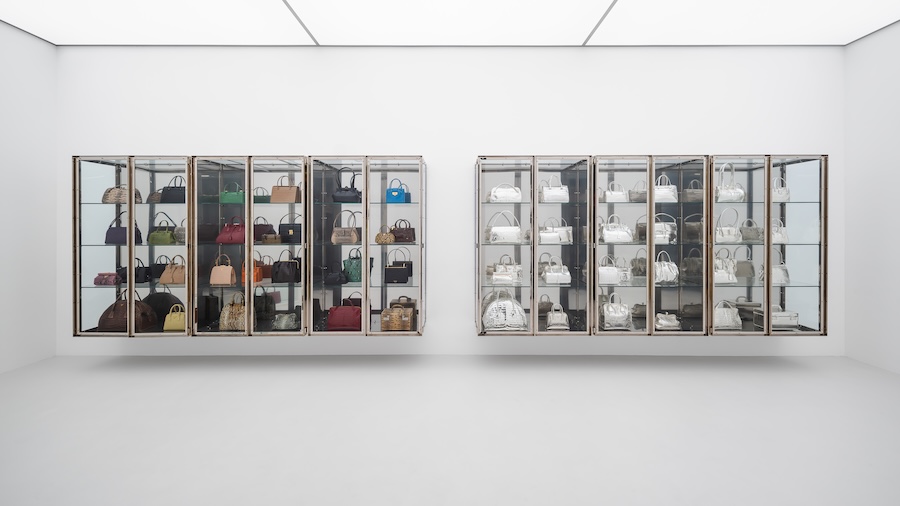
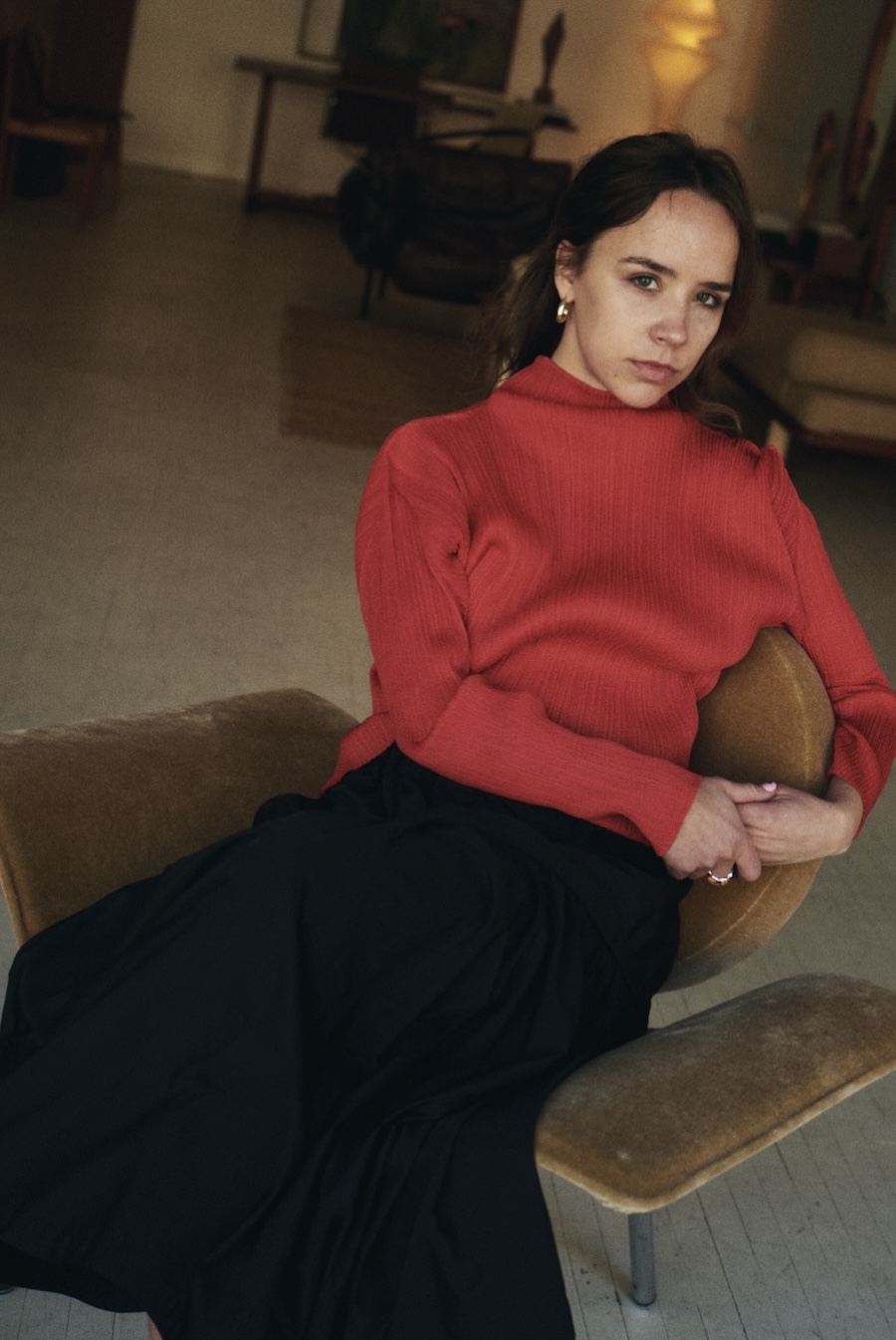
Noemi Iten is a strategist who builds conceptual frameworks for projects at the intersection of luxury, fashion, and art, translating complex cultural material into brand and narrative systems.
Recently, she led strategy and editorial development for two major commissions. The first, 30 Blizzards, was commissioned by Miu Miu for Art Basel Paris 2025, where she shaped the presentation and narrative of Helen Marten’s first live performance.
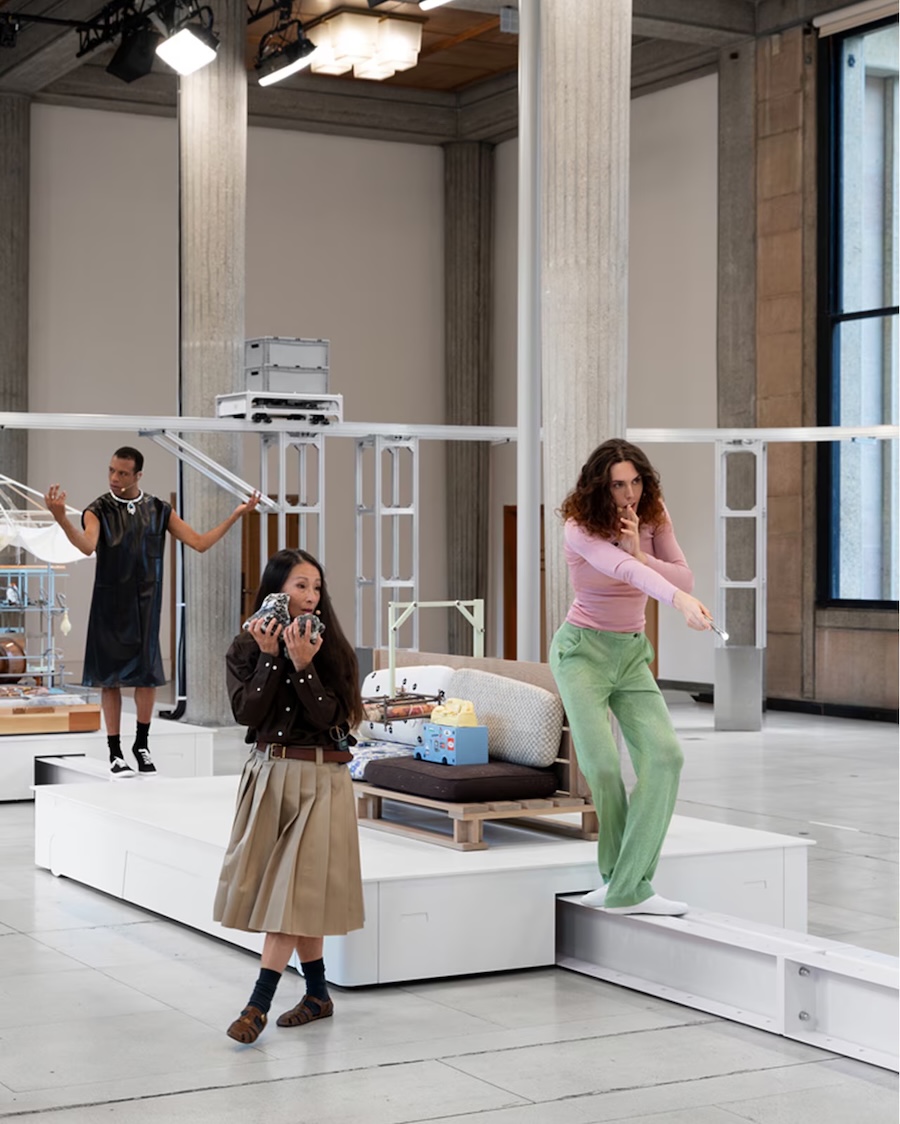
The five-part, site-responsive work was staged inside the Palais d’Iéna, whose architecture functioned not as a backdrop but as part of the work’s spatial logic, and developed in collaboration with theatre director Fabio Cherstich, sound artist Beatrice Dillon, and animator Adam Sinclair.
Rather than working from a fixed brief, Noemi developed her approach through ongoing dialogue with the artist and her team, as the work itself continued to shift throughout production. The performance was structured around five sculptural platforms paired with five newly conceived videos, each mapping a different stage of life from childhood through loss, inhabited by thirty performers who embody functions and temperaments rather than conventional characters. Her task was to translate this layered architecture and Marten’s diagrammatic language into a single coherent editorial framework without being reductive.
The exhibition guide, conceived as a literary artefact rather than a conventional visitor tool, together with the environmental graphics and official statements, became central expressions of this approach, serving as the connective logic between the artist’s vision and its audience.
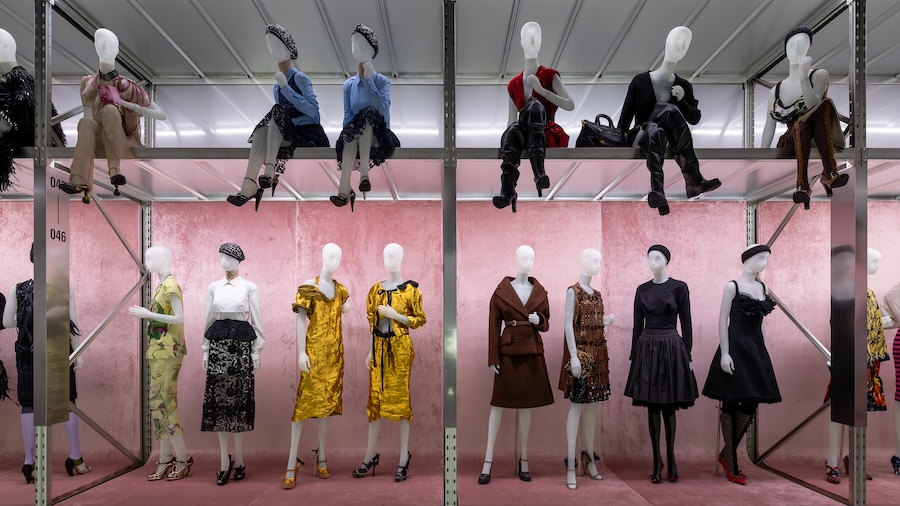
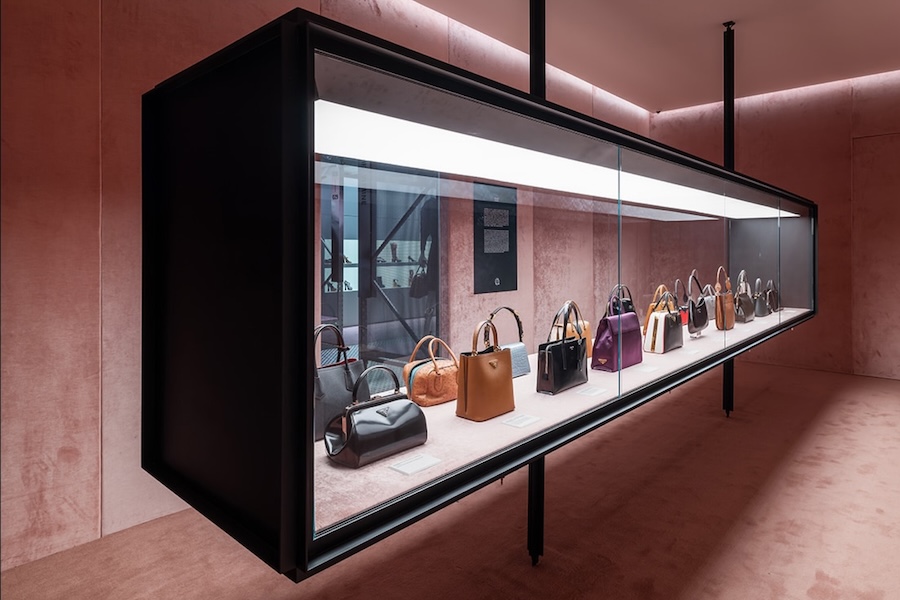
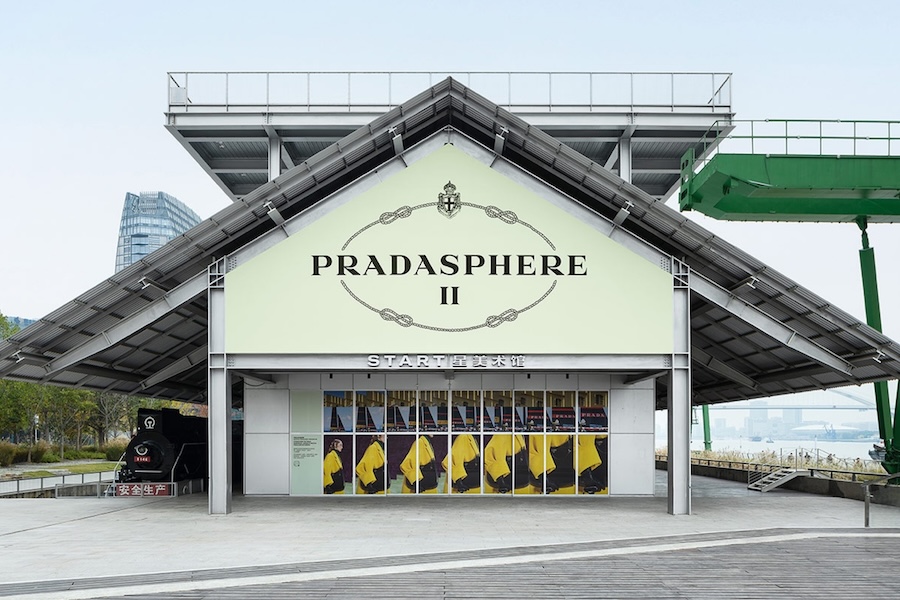
The second project, Pradasphere II, marked Prada’s first major exhibition in a decade, tracing 110 years of the house’s history through more than 400 artefacts spanning fashion, art, architecture, culture, and sport.
Presented at Jean Nouvel’s START Museum on Shanghai’s Huangpu River, the exhibition was structured around the typology of Prada’s historic Tuscan magazzino, or warehouse, using accumulation as both a spatial and conceptual device, with rooms branching off the central path to create moments of unexpected proximity with the archive. This approach encouraged both close observation and direct access to the collection. Over five weeks, the show welcomed more than 50,000 visitors and received wide coverage in international fashion and cultural media.
Noemi developed the exhibition concept and narrative structure in direct collaboration with Miuccia Prada and Raf Simons, from initial curatorial framing through content selection and final execution, working with the design teams at 2×4 and Prada.
At the core of the project was a tension as much about brand identity as it was about curation: how to construct a logic capable of holding more than a century of cultural production without reducing it to a linear timeline or conventional brand narrative.
Extensive archival research informed the selection and sequencing of more than 400 works and artefacts, and Noemi authored the editorial content that unified the exhibition, from wall texts and chapter introductions to press materials and the companion monograph. The writing articulated Prada’s defining tensions between luxury and industriality, the archive and the avant-garde, that the exhibition itself also embodied, in a language equally accessible to specialised fashion audiences and a broader cultural public across Chinese and international media contexts.
Across both projects, the work begins at the same place: understanding what a brand fundamentally is before deciding how to communicate it. It is this instinct, to locate the idea before shaping the language around it, that makes Noemi Iten one of the most compelling strategic voices working at the intersection of fashion, culture, and brand today.