

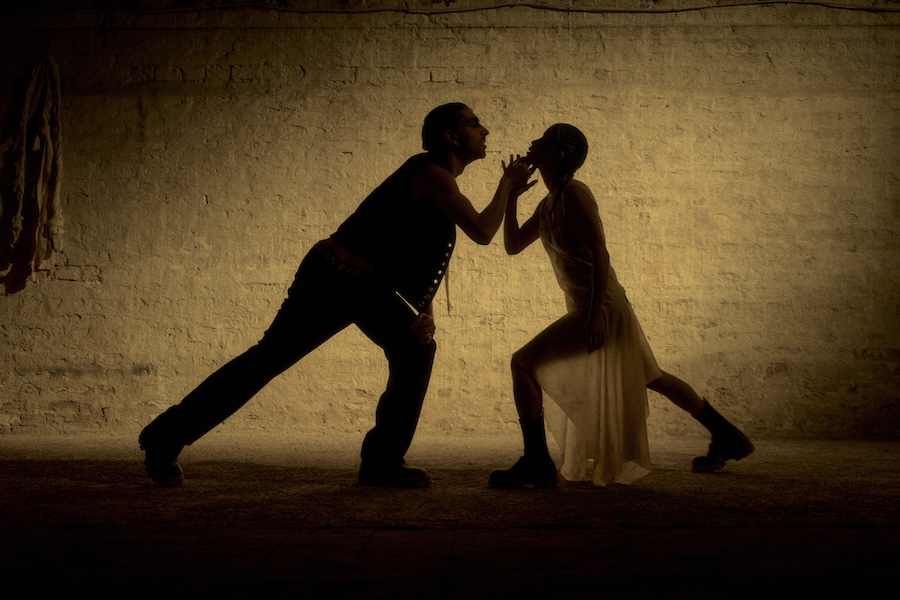
 Luise Seele
On Sunday, February 1, 2026, the innovative Collective graced the historic basement of Königstadt Brewery in Prenzlauer Berg with a mixed-format show, weaving tales of anguish and resilience through the medium of fashion. CAROUSEL, a trailblazing and sustainable fashion collective rooted in the creative depths of Neukölln, is dedicated to nurturing a fertile ground for emerging artists who audaciously challenge the conventional paradigms of the fashion industry.
all photos by @carmensheis
@carousel.friends
This latest edition features the collaboration of four visionary designers, each contributing to a fluid narrative that encapsulates the multifaceted nature of pain while allowing space for introspection and individual expression. As attendees stepped into this striking venue, they were first greeted by a meticulously curated exhibition room. Here, garments and processes from both the Collective and invited artists unfolded stories of cloth and creativity, setting the stage for deeper contemplation.
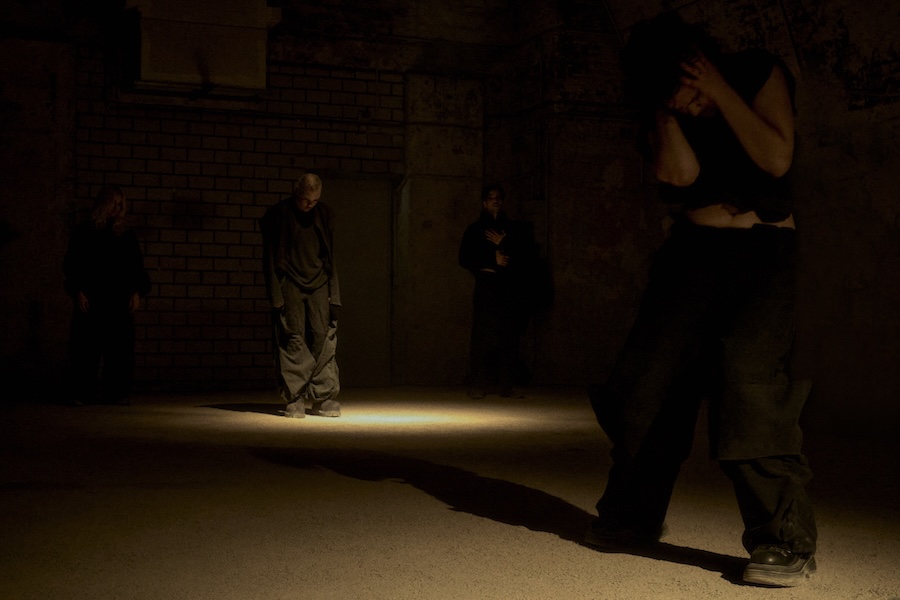
The main showcase was staged in a captivating format, performed across four dynamic acts that enveloped the room, compelling visitors to navigate and pivot their perspectives as spotlights danced across the space. “Reflections of Pain” served as more than just a fashion performance; it was an exploration of the intricate layers of pain, conveyed through clothing, movement, and storytelling.
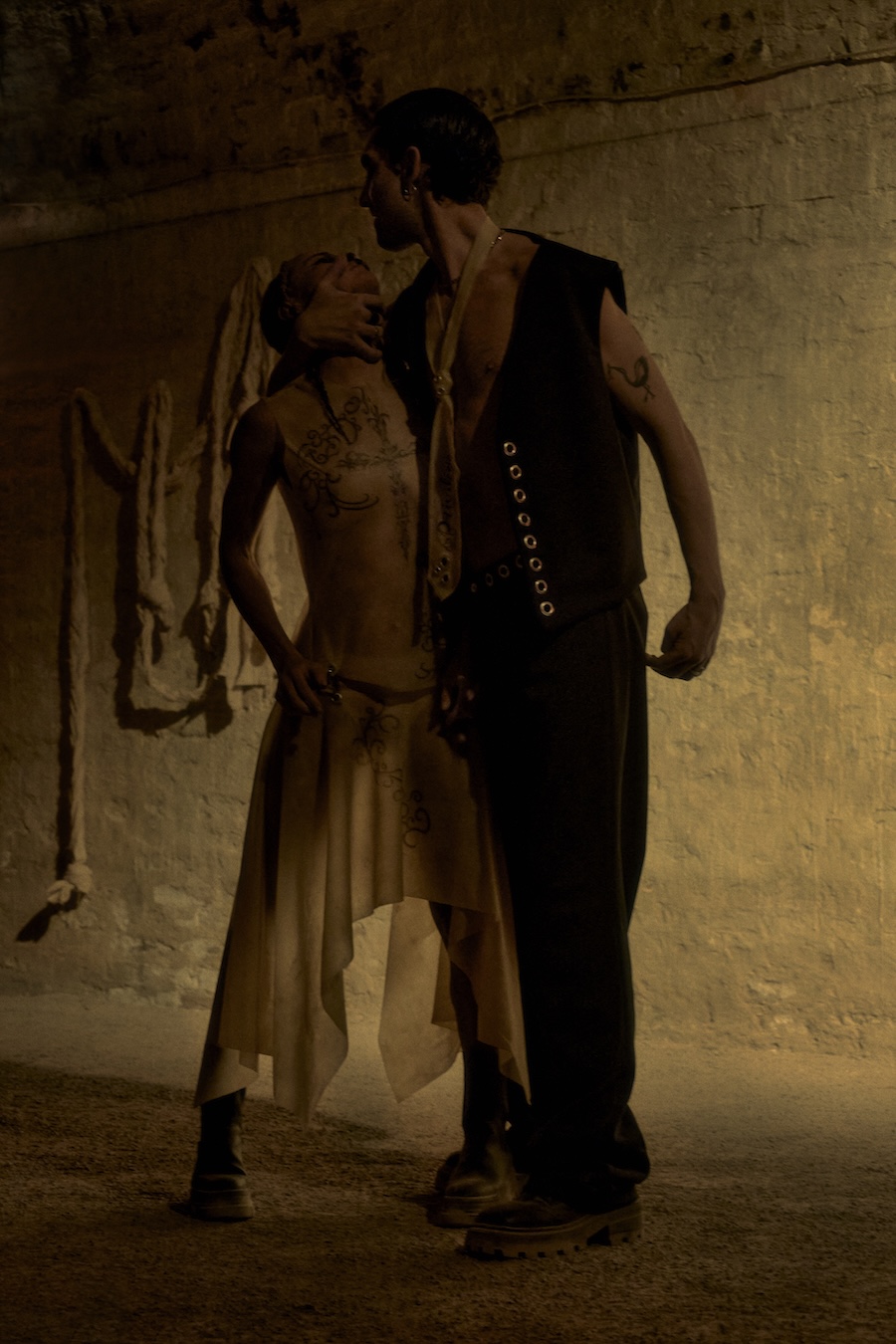 Luise Seele
This immersive experience seamlessly intertwined personal narratives with social reflections, resonating profoundly as it unfolded amidst the historic ambiance of the Königstadt Brauerei’s cellar. In this evocative setting, the art of fashion transcended mere aesthetics, inviting spectators into a dialogue with their own experiences, ultimately proving that pain, too, is an intrinsic part of the human story, transformative and real.
Trigger by Luise Seele
The Artist reflected power dynamics and systematic violence against women’s bodies in a theatre act with two performers. She incorporated Natural Latex that was embellished with stick and poke tattoos. The translucent garments created a second skin connecting to the perceived societal entitlement on female bodies, while not holding back to make the audience feel uncomfortable in understanding their observing role.
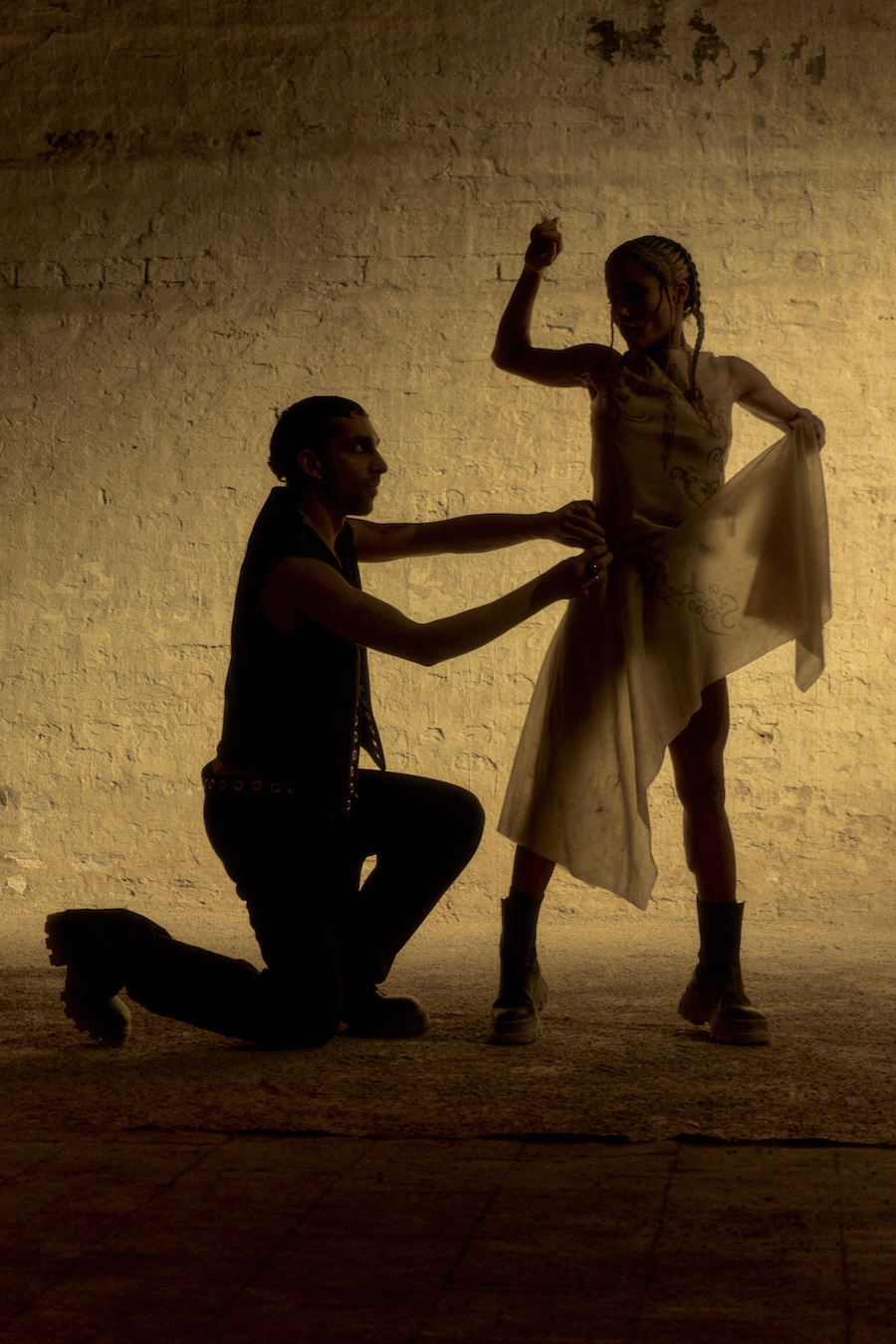
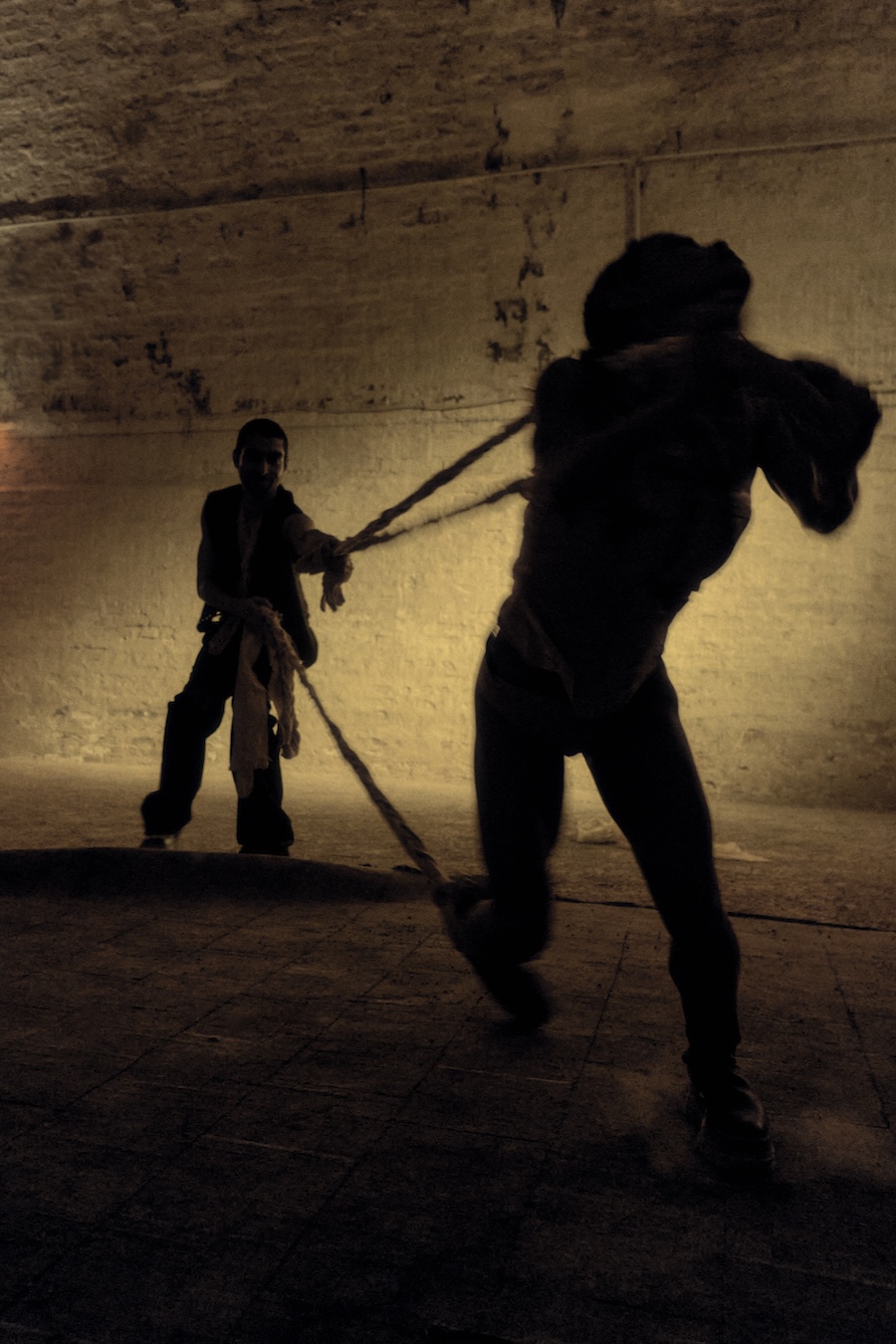
Designer: @luise.seele
Performer: @yaneloiaza @simpli.bencze
Realization by Daschkey
As the Spotlight shifted and the Audience rearranged in the open Space we got to experience the distorted Sounds of a live harpist on a Podest. Dressed in a Long off white leather dress with black Details peaking out. Just before the audience could sit on the bare couch in the exhibition room, a projected video of the artist taking apart the couch that this outfit is made from. The Character reflects a contrast in bright outside appearance and a rotten inner. The artist’s portrait reflects feelings of a person realising the pain surrounding them and their part in causing such. Together with a wig installation by the Hairdresser Taiga Sato, we see and hear the Harp player Noa Moffatt turn the distortion paddle up as the play progresses.
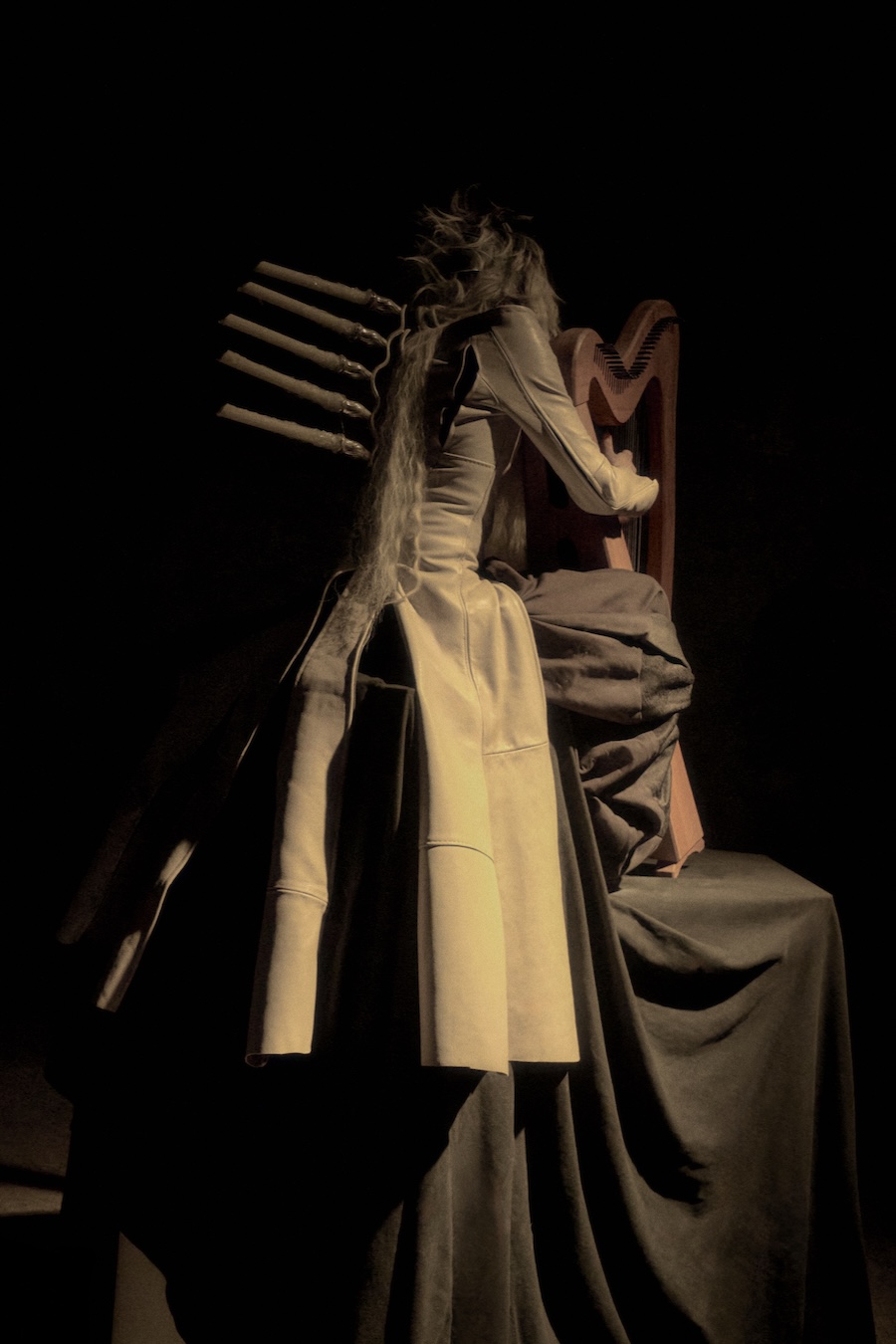
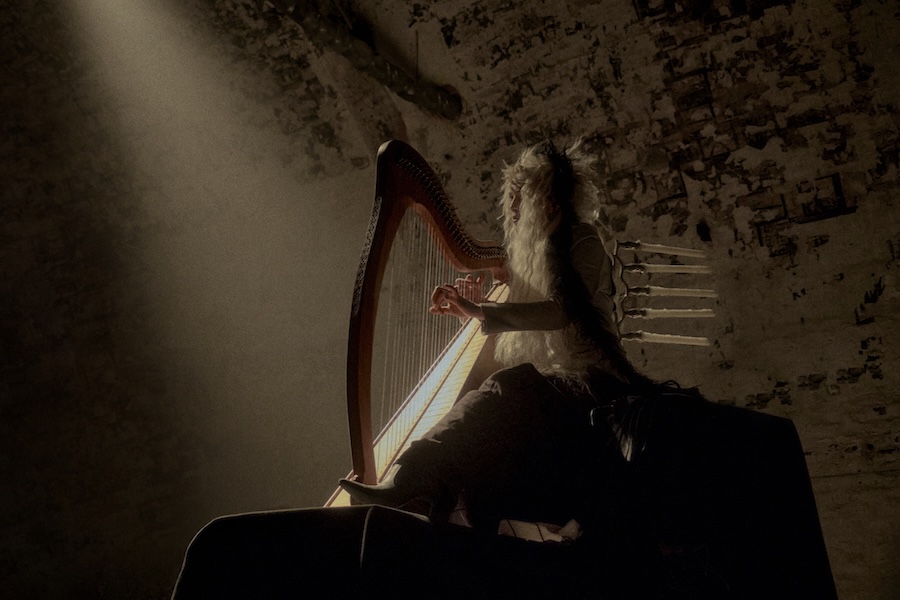
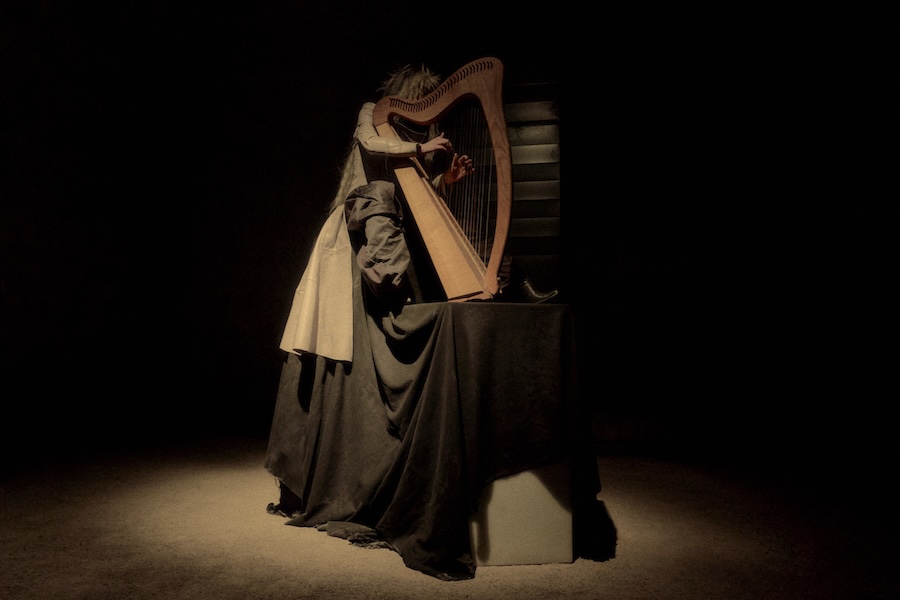
Designer: @daschkey_
Performer: @noa.mfftt.backup
Rage by Anika Sniyyder
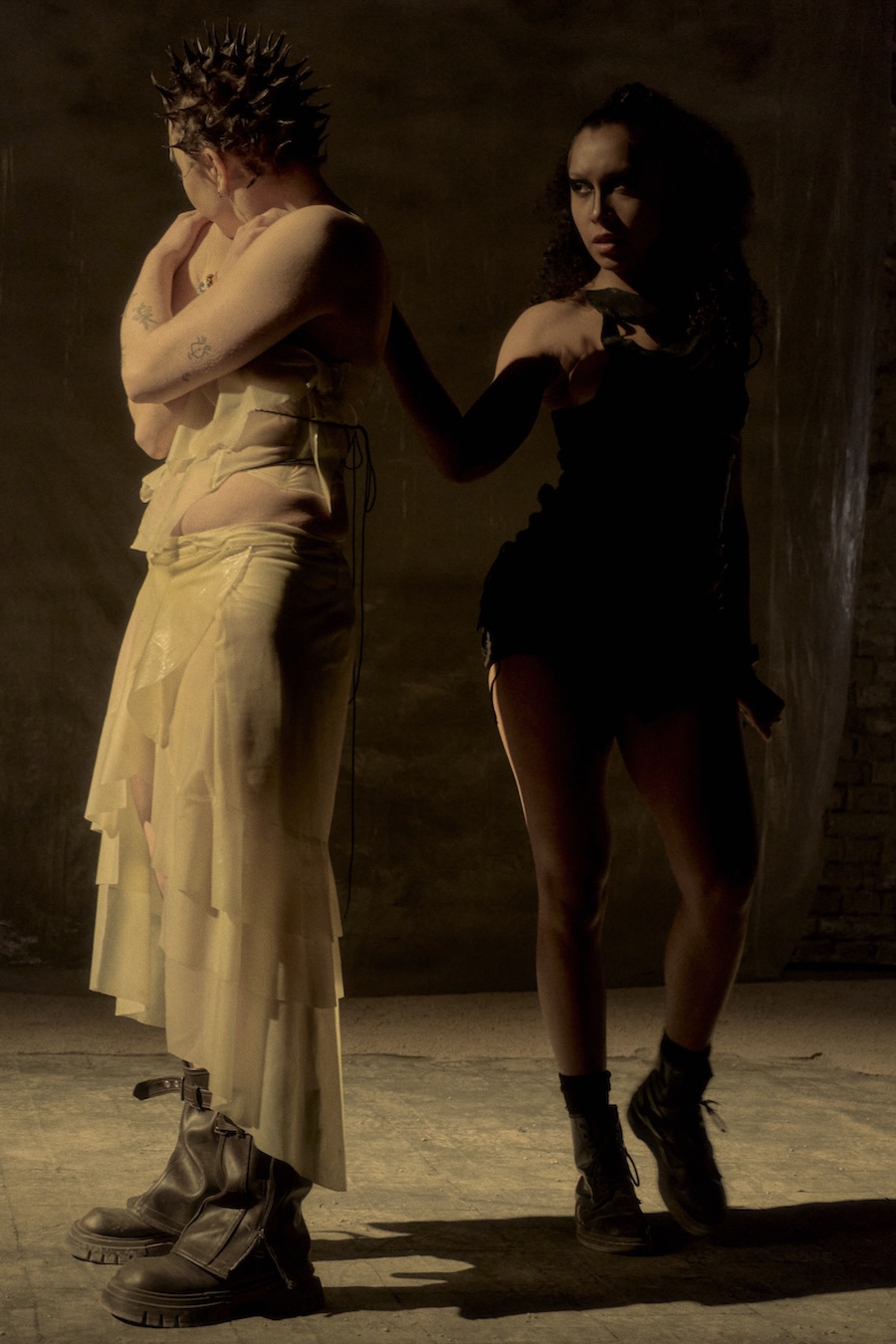
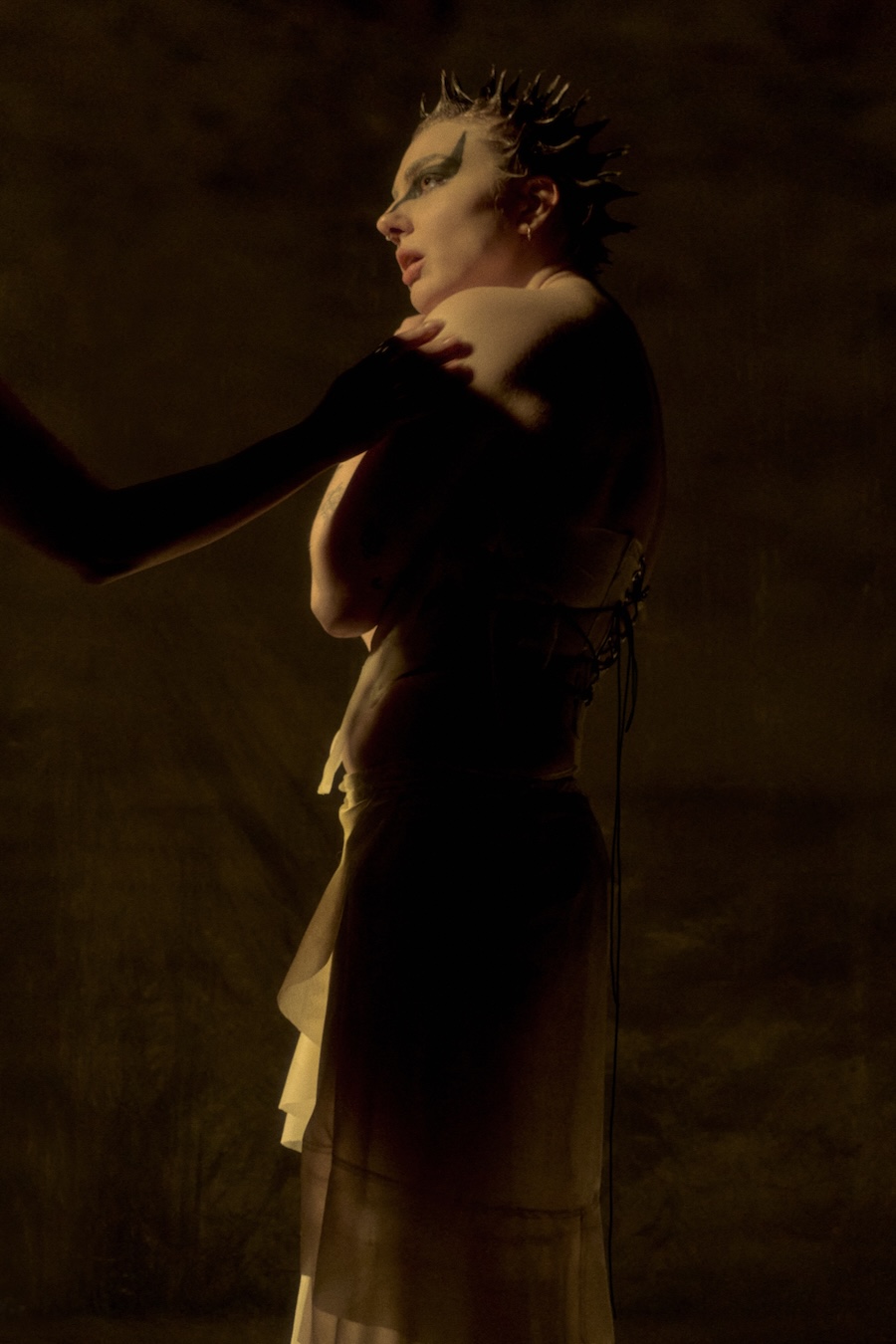
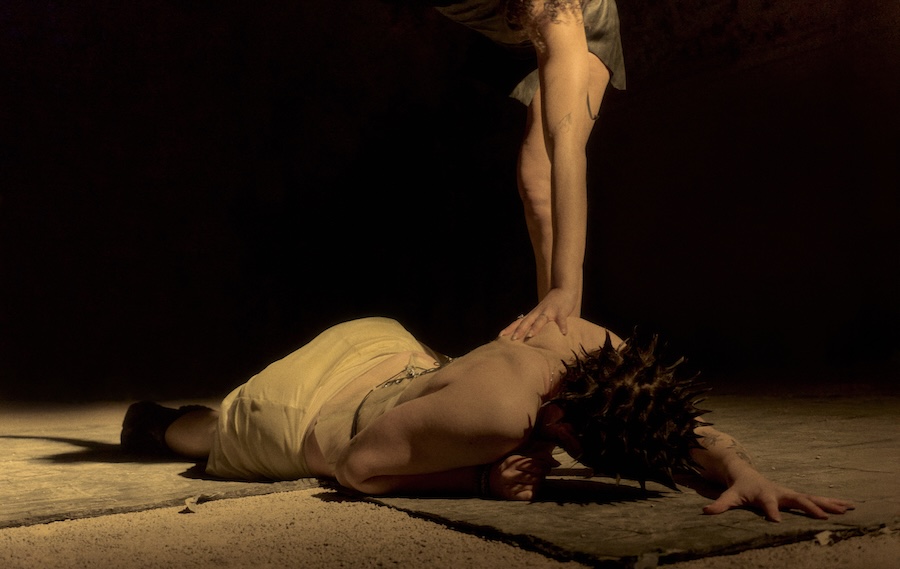
The two Berlin dancers, Laura and Alisia Perform an abstracted fight scene dressed in Natural Latex and leather sourced through a brand that specializes on monomaterialism and a responsible supply chain. Continuing the theme of skin textures in the play, the designers used a mix of loose translucent materials and thick skintight materials. In their performing rage, the artist incorporates “crumping” movements that originated in extended hip hop culture to express rage in a performative way.
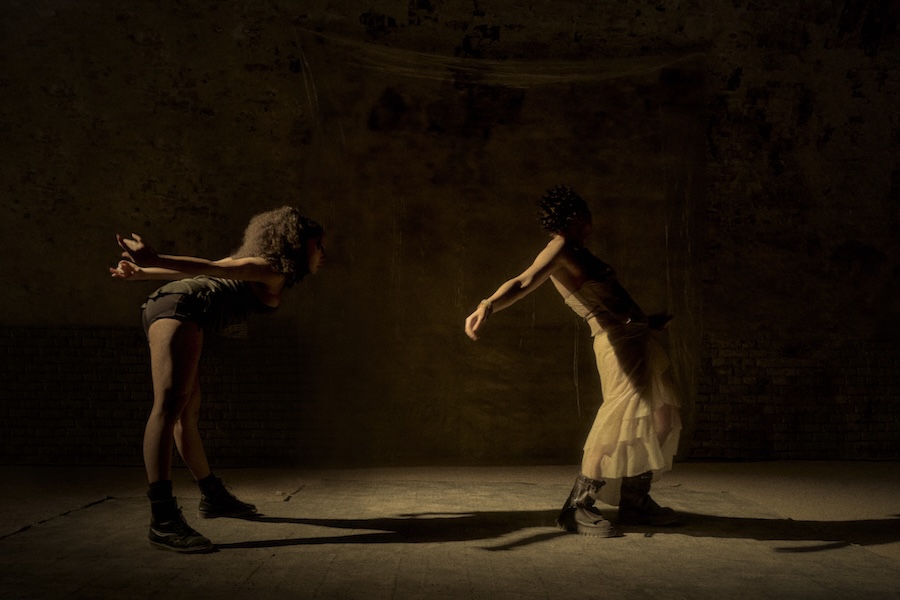
Designer: @sniyyder
Performer: @yo.lauraa @a1isia
Healing by Shady Eff
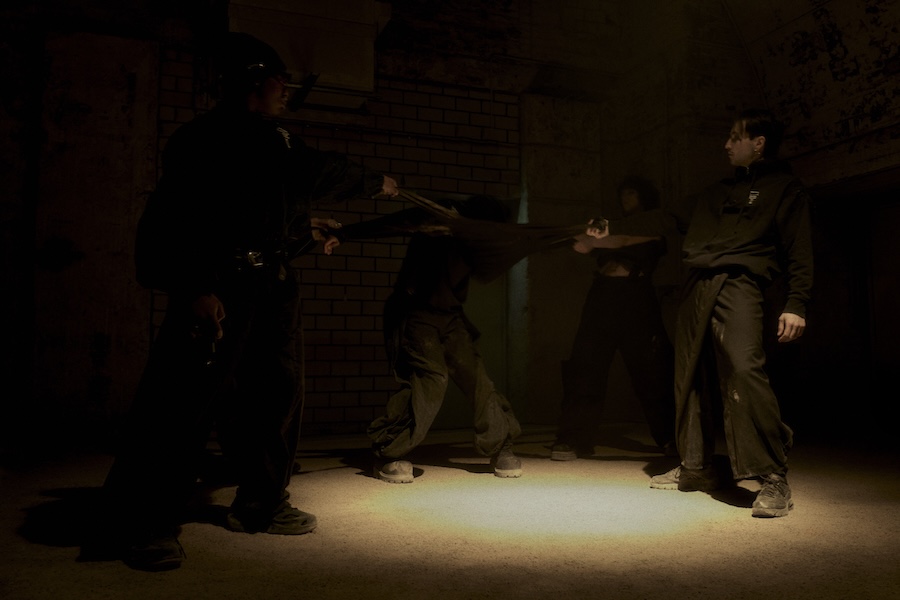
For the final part, the designer connected with his Togolese ancestry to create a collection of 10 looks processing a string of personal experiences to colonial pain. The garments were produced in Togo by upcycling materials from the imported secondhand market. A practice that challenges the global secondhand trade that destroys local textile industries. Half of those garments were displayed as part of the exhibition, and the other half was portrayed by five dancers interacting in the open space format. As their movements show, each character is struggling with their inner demons, trying to heal but ultimately passing them to the next in the shape of a hoodie with eight arms. In contrast to their former textiles, this final part breaks the continuity of skin by using natural fibre garments that hang loose from the body while still connecting through the black surface. Although it shows how healing can transcend in shape from the causes of pain.
Designer: @shady.eff_
Performer: @jolinaronge, @yenixmatica, @kimmberyyl @all.mendez
