
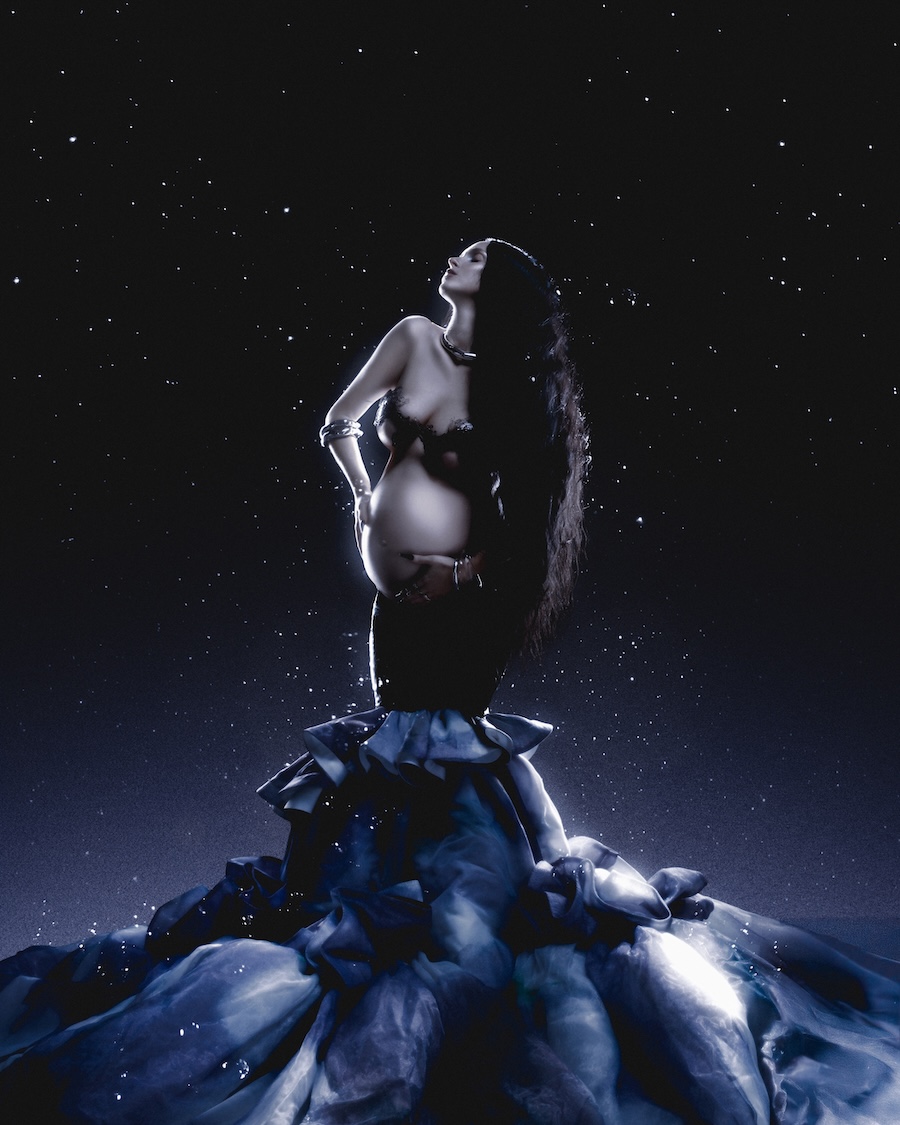
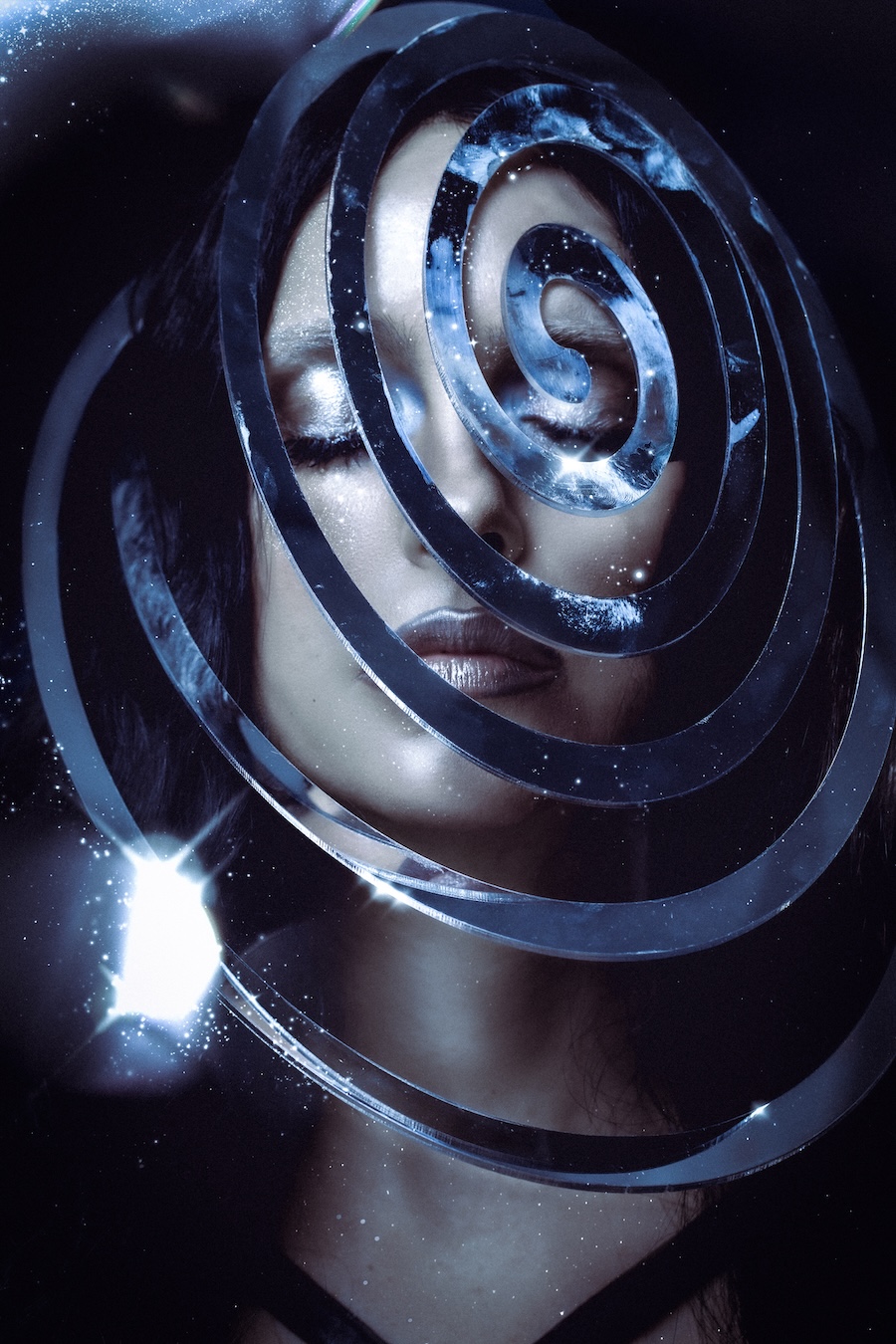
A KALTBLUT exclusive. Photography by Hope Glassel. Art direction, creative direction, text and modelling by Odie Senesh. Styling by Jingjing Jia. Makeup by Clara Rae. Hair by Takayuki Umeda. Nails by Stephanie Hernandez. Production by Liya Eliezer. Brands used are byeCarol, Alexis Bittar, nausicaa, Harlot Hands, Destroyer of Worlds, Quine Li, double standards, Amplituda, JIAQI Studio, and Sideara.
“The pregnant body is so visible,
yet so invisible at the same time.
We see it everywhere, but we don’t really see it;
We see the idea of it, sanitised and safe.” Iris Marion Young, 1984.
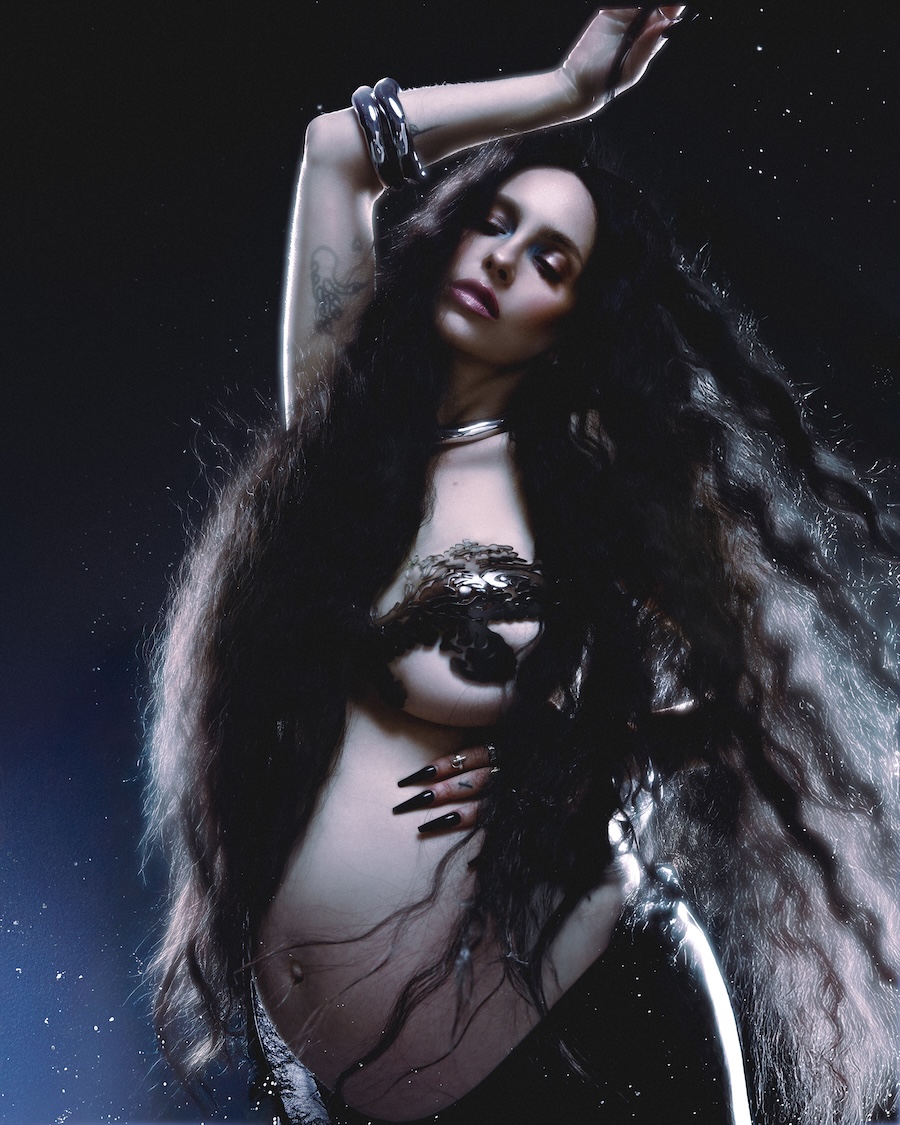
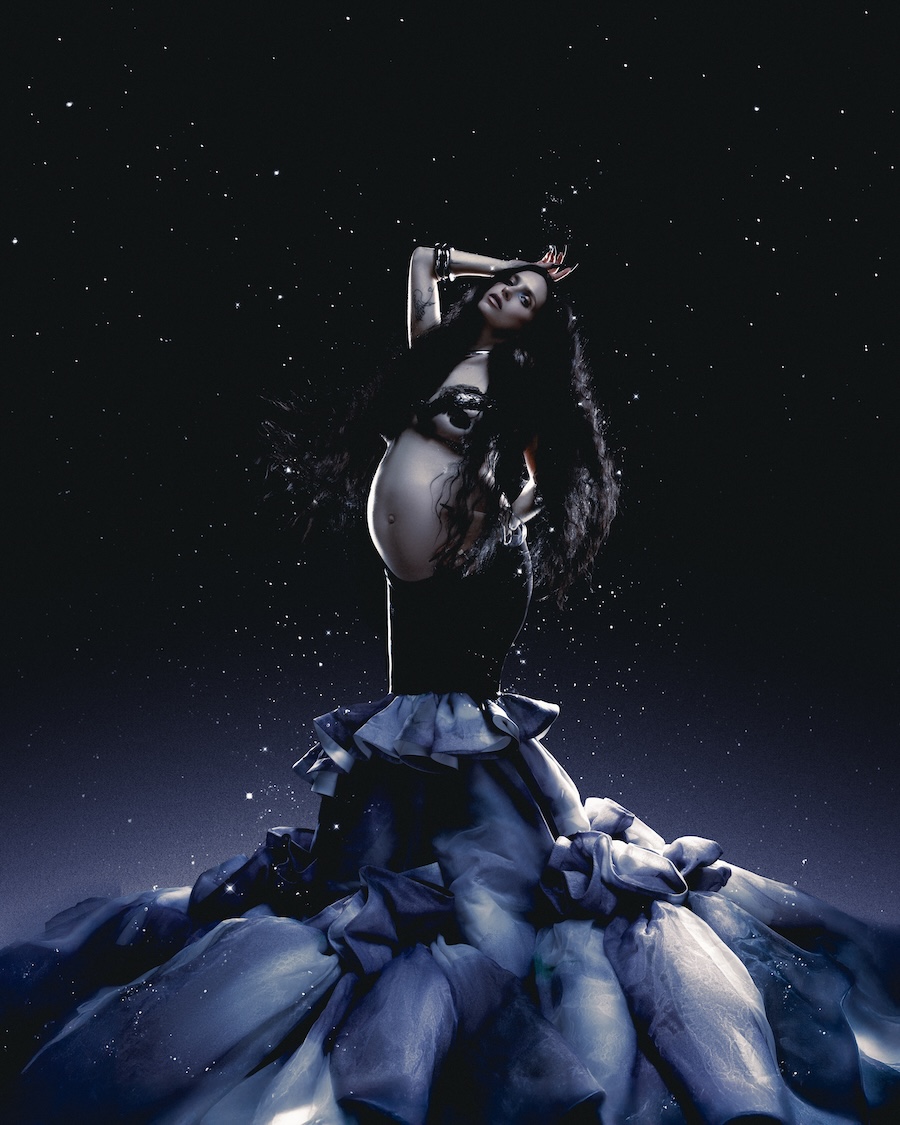
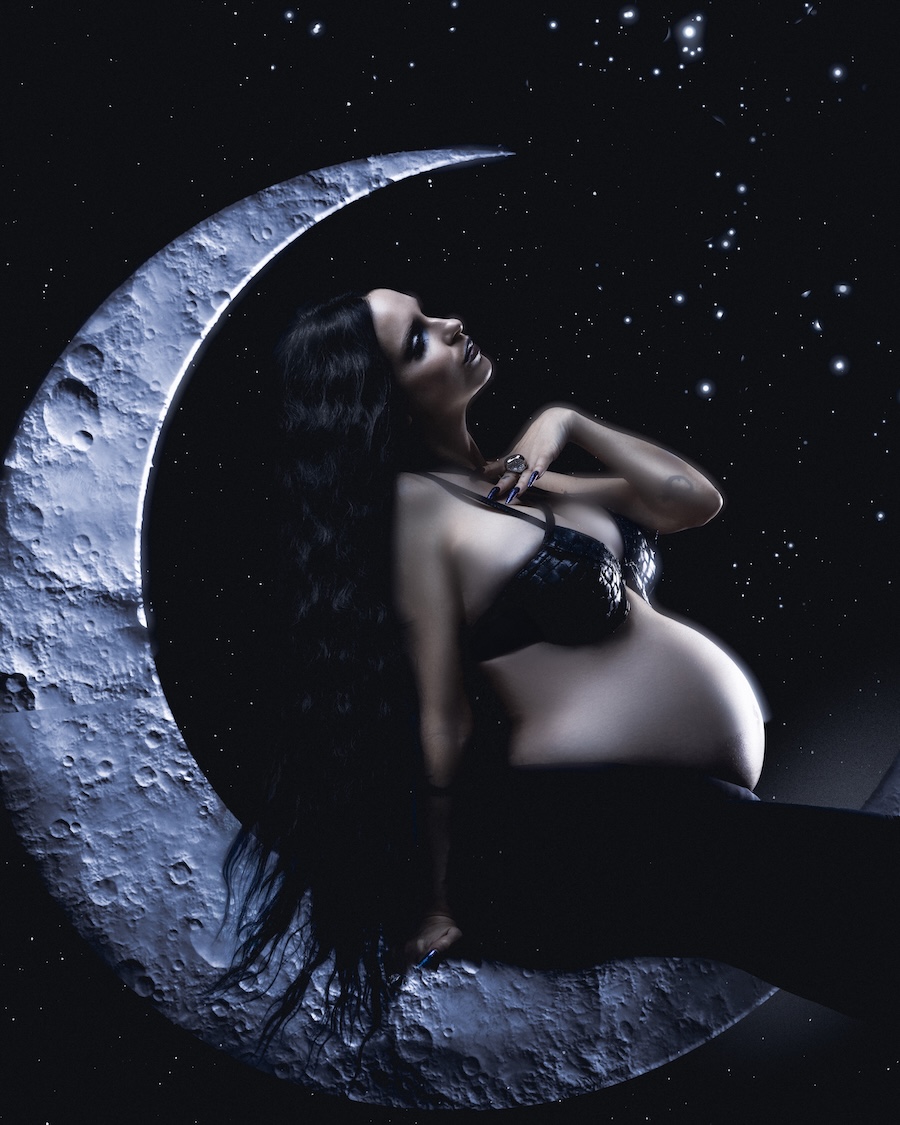
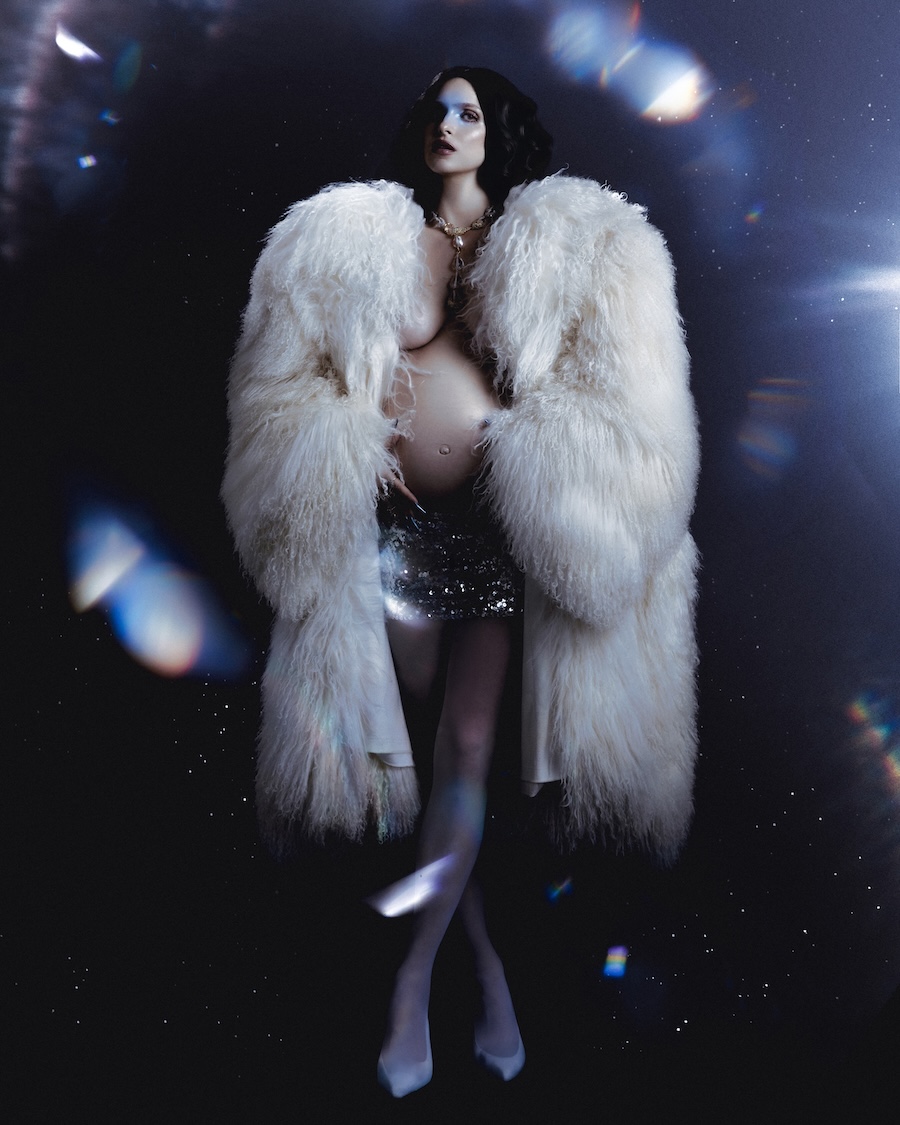
“Forty years later, not much has changed. Pregnancy remains one of the most misrepresented experiences in contemporary visual culture and fashion. The body refuses to behave; it swells, it leaks, it takes up space in ways the industry never designed for. So, instead of waiting until I’m past it, until I’m “back”. Here is a world where my pregnant body will exist freely.
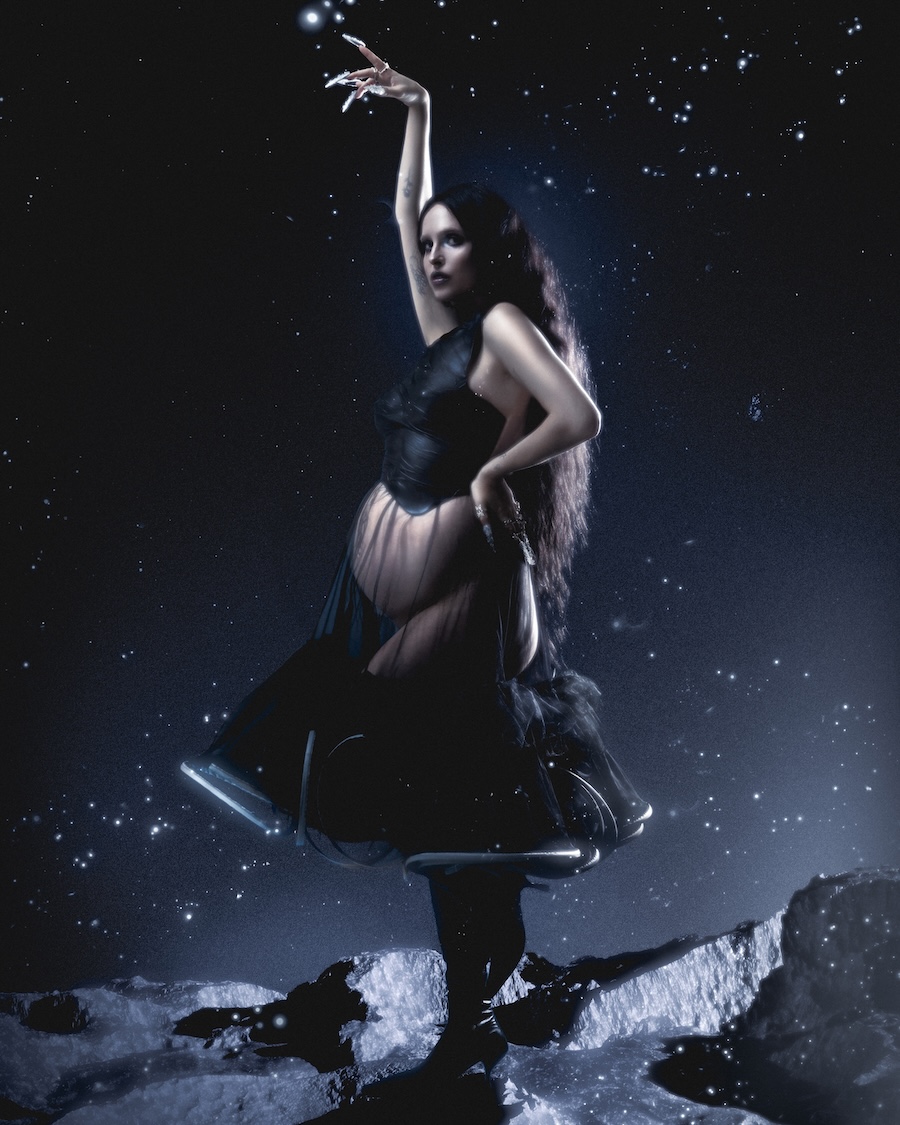
I wasn’t interested in being only documented. The body itself is an author. And so am I. A vision to welcome the storyteller to the performance, to shift from being the subject to being the storyteller and the performer. And this story lives at nighttime. Because that’s when we stop apologising, when women’s bodies are liberated in an ancient, horror-tinged, mysterious way. Pregnancy is physically demanding. A freak whose enigma contradicts its deep nature.
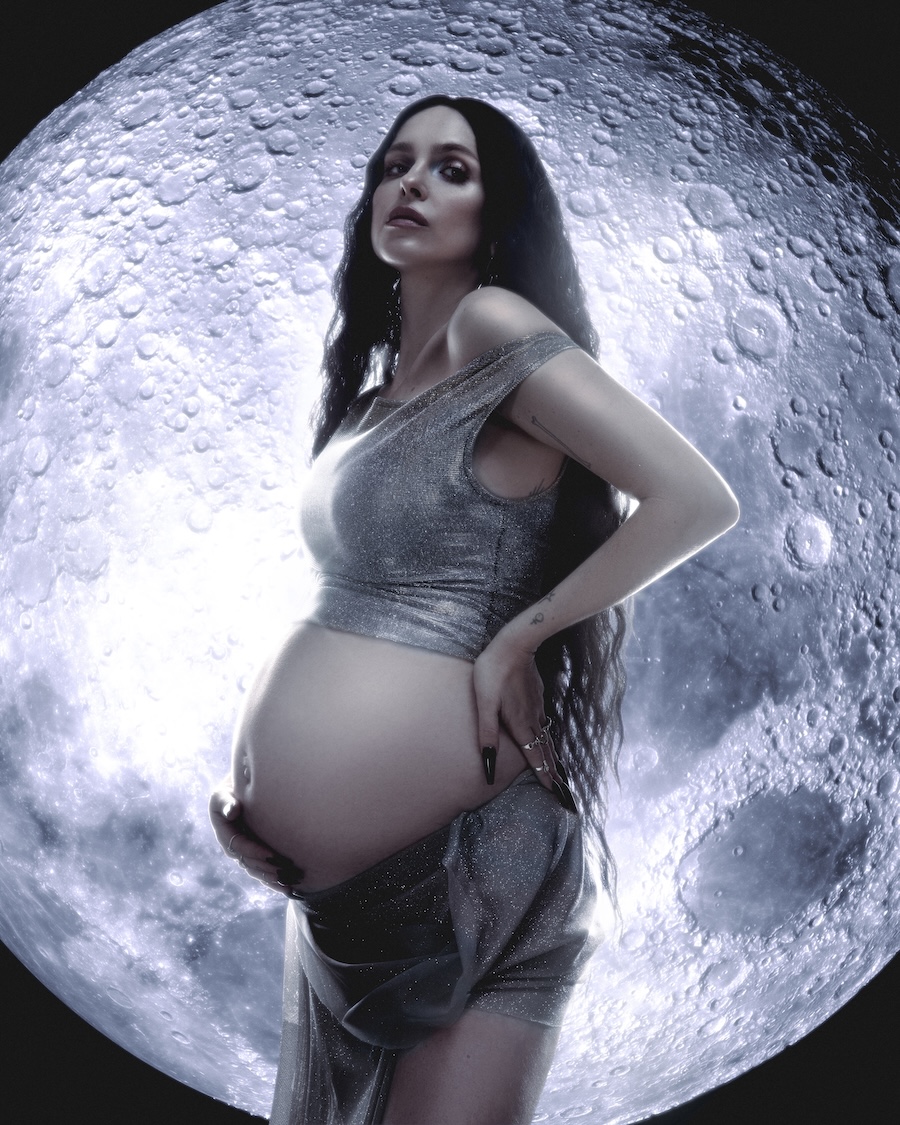
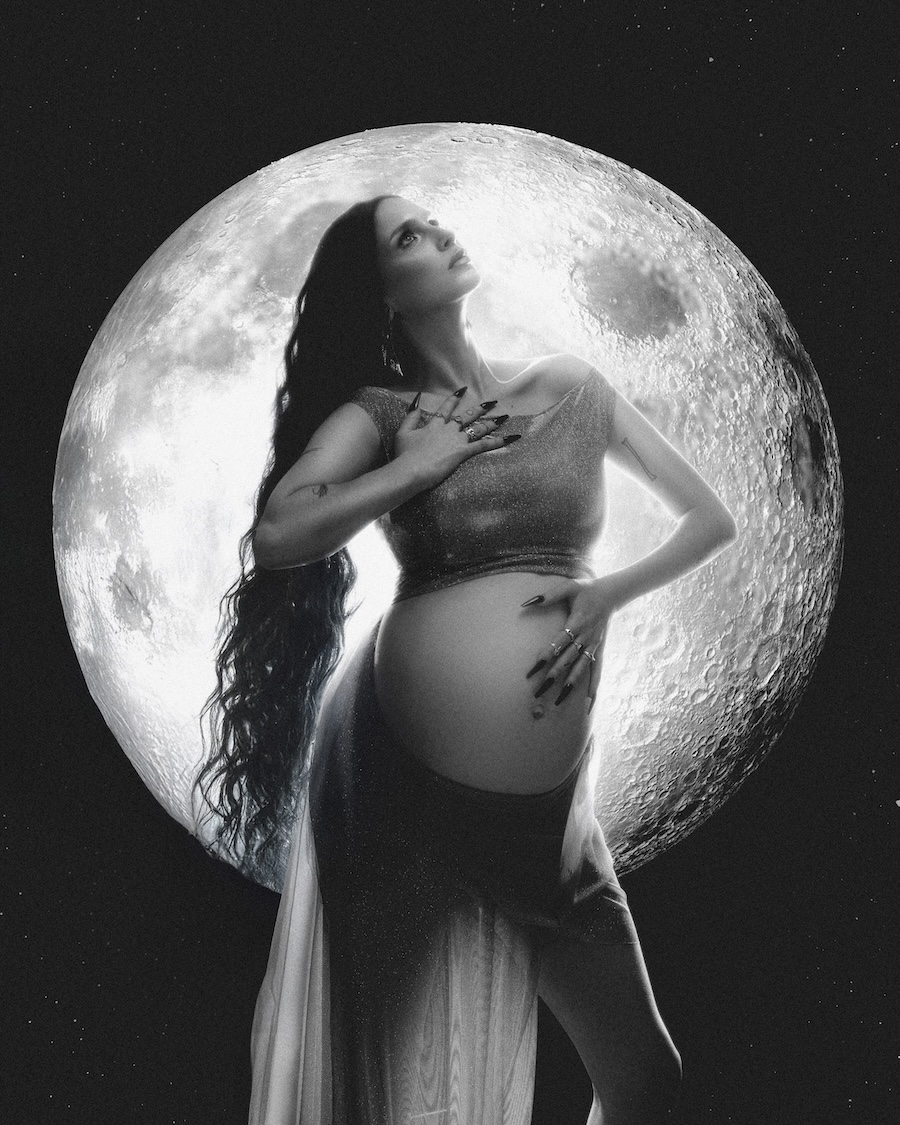
Our bodies belong to cycles, tides, darkness, and light. cycles that wax and wane with our moon. In Hebrew, “the levana” means “the white,” and she is feminine. She knows we don’t want to hide our bellies. She understands roundness and constant change. She loves me as I come, shining toward me.
Mythology and feminine characters from folklore have always been my biggest inspiration. Not as a trend (she will be an Aquarius), but as a source of narratives and visual language, strength, ancient knowledge, Mother Nature. I can step into it, borrow from it, reshape it. A symbolic vocabulary that lets me narrate my body and my message through art. Selene, the Greek personification of the moon, her silver chariot marking time itself across the night sky. Tsukuyomi, the Japanese moon god who rules the night with quiet power. Ixchel, Mayan jaguar goddess of medicine and birth, wielding fertility and destructive floods as dual forces. Yemoja, Yoruba ocean mother, commanding tides, cradling stars, birthing all of motherhood.
The belly shifts proportions. It interrupts the line. It refuses discipline. It feels almost insolent, daring, rebellious, and always political, making a visual statement that’s hard to ignore. And yet, in many ways, it’s still being ignored. The Fashion world is a good example – it adores the feminine body, until it becomes a mother. The pregnant body is too honest. Too wet. Too swollen. Too real. It doesn’t behave like high fashion. And that’s why Rihanna is a fashion icon and a pioneer; she didn’t “normalise” pregnancy in fashion; she weaponised it. She made the bump a crown, not something to hide in oversized outfits.
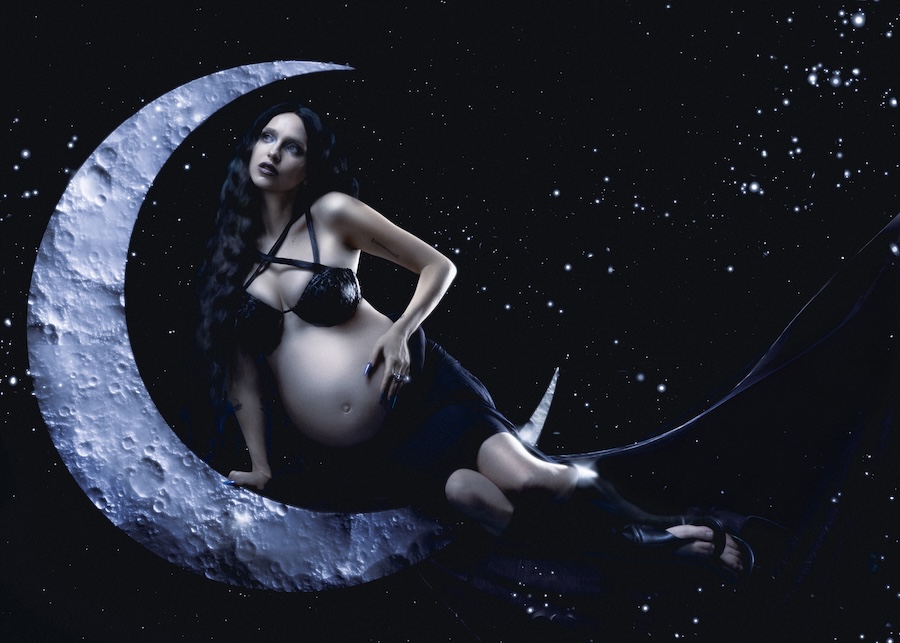
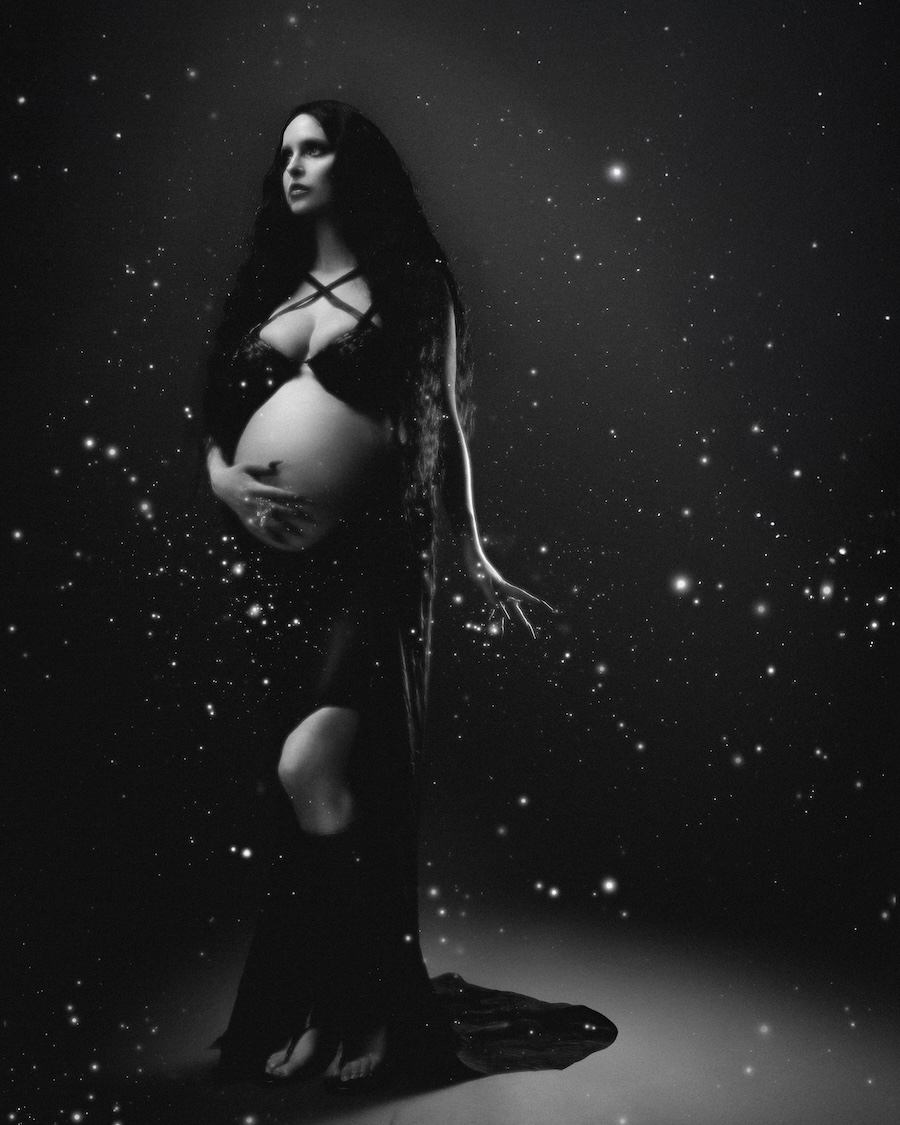
And I felt inspired by my growing body. This shoot is my answer to an industry (and a world) that still doesn’t know how to celebrate, present, and style pregnancy without turning it into either a floral-white “running in a flower field vibe” or a joke. The anticipation and the pain. The sensuality and the fear. The shadow and the glow. I tell the story in full. Including the grief. Not because it’s poetic, but because life doesn’t wait for a clean start.
While my body was growing life, our family was grieving death. My husband’s mother died, and suddenly pregnancy stopped being a concept and became a cycle. Not aesthetic. Not symbolic. Real.
So instead of giving birth and nesting where I live – in Barcelona, I had to give birth in Israel, the country I left around a decade ago. Here, it’s not just a baby that comes out. It’s an entire complex identity. And with that identity comes everything I’ve tried to leave behind. I don’t want to hand my child my inherited fear like a family heirloom. And suddenly you realise: she is next in the chain. Pregnancy in my homeland is never just personal. It’s a social, cultural, historical, and collective project. Fertility becomes a language of belonging, and more than one child is the only fluent dialect. If you don’t move in rhythm, you’re marked as Other. The pressure around childbirth doesn’t feel like a celebration. It feels like a public duty.
So I chose denial as self-defence. I wish I could say I’ve done pregnancy in a sacred, embodied, earth-mother way. But I didn’t. I chose to be somewhat detached: I read less, watched only stupid reality shows, and trapped myself in a bubble of protective ignorance. Growing up in a political, post-traumatic family taught me this survival skill: shut down before you break down. Not because I don’t care, but because I care too much. The pressure to be fully present, to connect deeply with your body and future child, under my circumstances, with my mental health and my grief, felt like a dangerous path. Connection looks different for every mother. For me, choosing control meant I could stay conscious. During pregnancy. During birth. And after, when I raise her. That’s my version of presence.
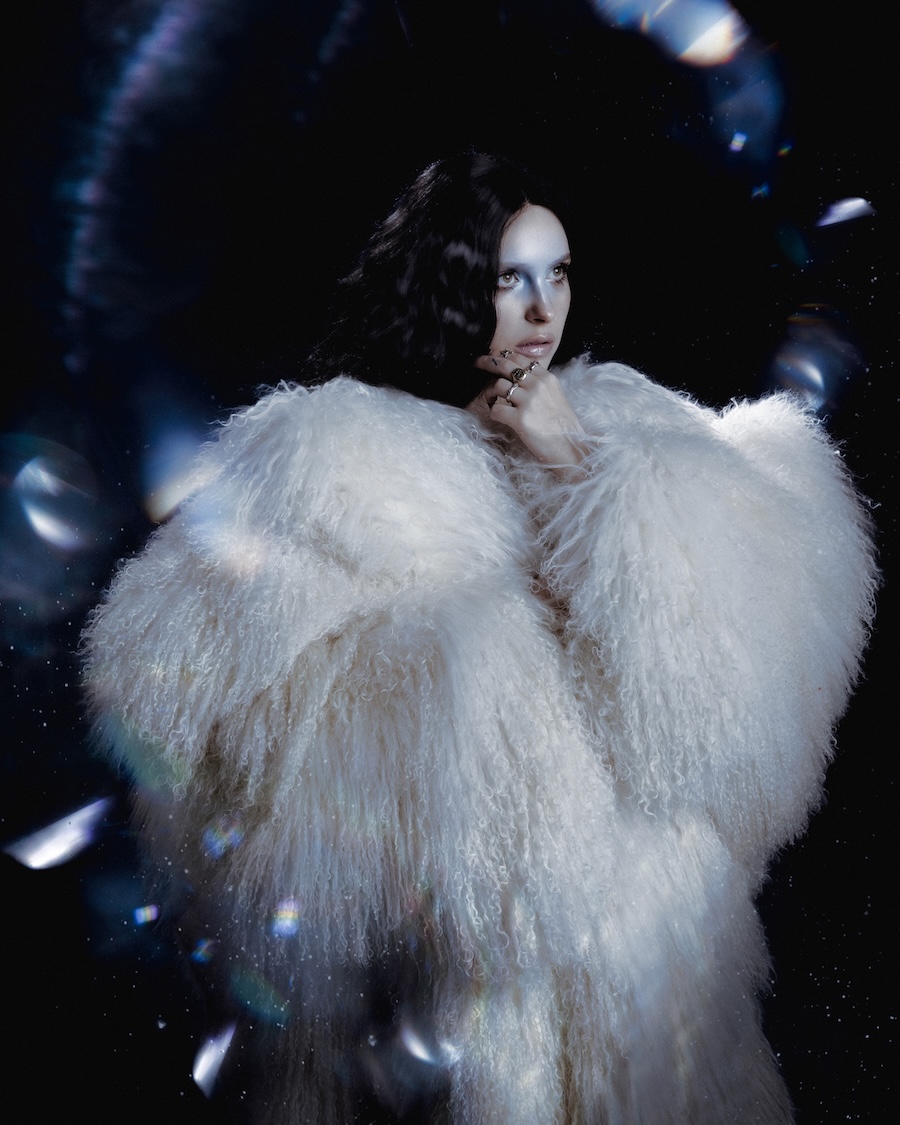

But there’s a cult of “natural” now that only shows one way to be brave. And then there’s me. I chose maximum control: I kept taking my anti-anxiety medication, and I scheduled an elective C-section. For a long time, I didn’t feel brave. I felt like I was avoiding something, like I was failing some unspoken test of womanhood. But while I couldn’t choose where I would give birth, I could choose to have agency over my body, over how I deliver this new human being, over what’s right for me. That meant accepting my history, owning the limitations of my body and mind, and refusing to let them stop me from bringing new life into the world.
I stopped waiting for permission to be seen. I made myself visible in the moonlight. She is my witness now. To change. To cycles. To lose. To continue. To a body that refuses to disappear, even when the world doesn’t know how to look at it or keep it safe.
There’s an image from this shoot where I’m sitting on the moon, belly round and full, suspended in darkness. In Polynesian mythology, Hina is the moon goddess. When the world became too much, she climbed up the sacred banyan tree roots until she reached the moon. And there, she made it her home. She sits on the moon now, serene and untouchable, no longer bound by the world below. She chose where to exist and how to be seen.
That’s what I want my daughter to know: survival means climbing somewhere no one thought you could go and claiming your place there. And in that light, we are not a spectacle. We are women reclaiming authority over our image, our bodies, our minds, our daughters’ stories, and our own.”


Photography by Hope Glassel / Instagram: @hmgphoto
Art direction / creative direction / text / modelling by Odie Senesh / www.odddcreatives.com / Instagram: @odie_senesh
Oddd Creatives / Instagram: @oddd_creatives
Styling by Jingjing Jia / Instagram: @8bit.gurl
Makeup by Clara Rae / Instagram: @clara_rae
Hair by Takayuki Umeda / Instagram: @um_takayuki
Nails by Stephanie Hernandez / Instagram: @clawedbylacreme
Production by Liya Eliezer / Instagram: @liyaeli
Brands used are byeCarol, Alexis Bittar, nausicaa, Harlot Hands, Destroyer of Worlds, Quine Li, double standards, Amplituda, JIAQI Studio, Sideara
Instagram: @byecarol_nyc, @alexisbittar, @nausicaa_nyc, @harlothands, @destroyerofworlds.online, @quine_li_ @doublestandards.nyc, @amplituda_design, @jiaqistudio, @shopsideara
