

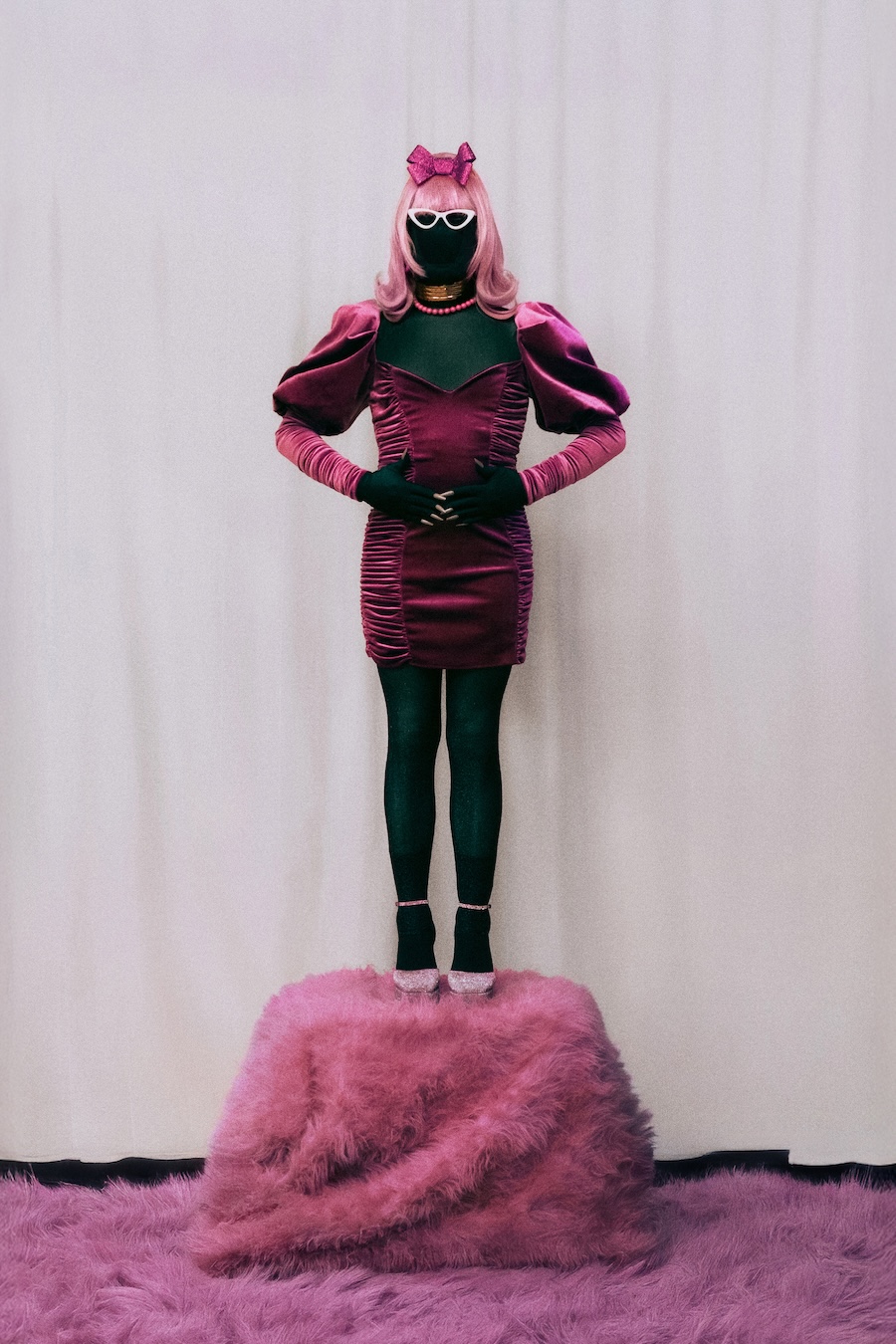
When Hadi Moussally speaks about Salma Zahore, he returns to an image from childhood. A material memory. A body that was not quite human and not quite object. One of the key inspirations behind the character of Salma Zahore comes from the foam mannequins of the 1970s and 1980s.
Hadi’s father was an interior designer and owned a shop, and inside it stood several of these mannequins. Their surfaces were often a single, uniform colour, frequently black, without texture, pores, or visible anatomy beyond the essential outline of a body. They did not aim to imitate life. They suggested it.
What fascinated Moussally was their strange elegance. The way their softness contradicted their function. The way they could be bent, folded, seated, or twisted into almost any pose. They were bodies without resistance. Bodies that accepted every gesture imposed on them.
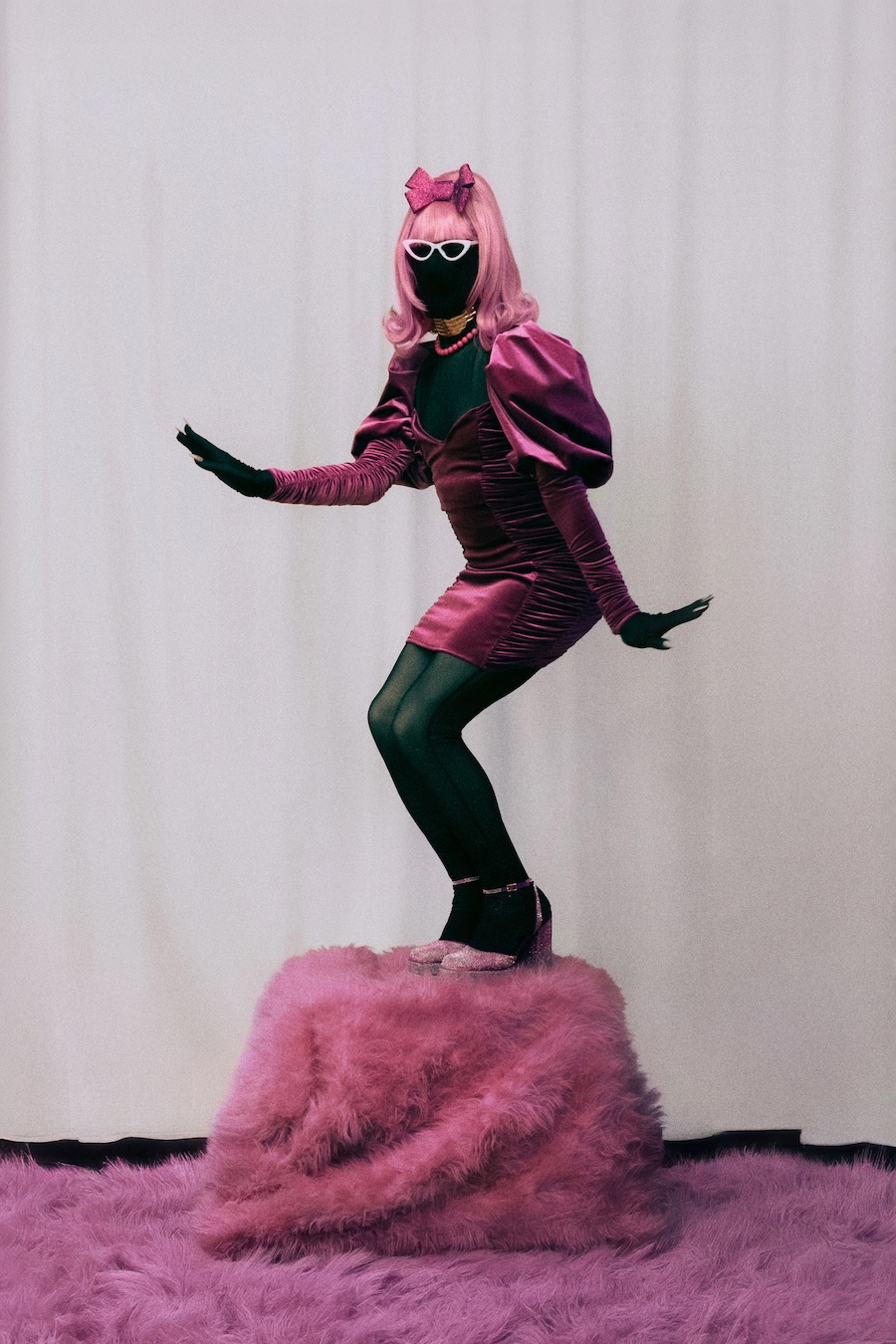
They were often stylised in the simplest ways. A pair of sunglasses placed where eyes might be. A scarf wrapped around the head or just a wig. Earrings pinned directly into the foam. With only these minimal additions, the mannequins acquired a human presence even though their faces remained blank and without features. Identity was not fixed. It was assembled, improvised, and layered.
This physical malleability became an early lesson in how bodies can be shaped by context, by projection, by desire, and by gaze.
For Hadi, this process of dressing, altering, and reconfiguring these figures planted the seeds for Salma Zahore as a character who is never entirely stable, never fully resolved. Salma is not a fixed persona but a surface in motion. A figure that absorbs cultural codes, visual tropes, and emotional projections.
Like the mannequins, Salma Zahore exists somewhere between object and subject, between display and agency. She is stylised, composed, and at times deliberately artificial. Yet this artificiality is not empty. It is charged. It becomes a way of speaking about how identities are constructed, especially in relation to gender, belief, visibility, and performance.
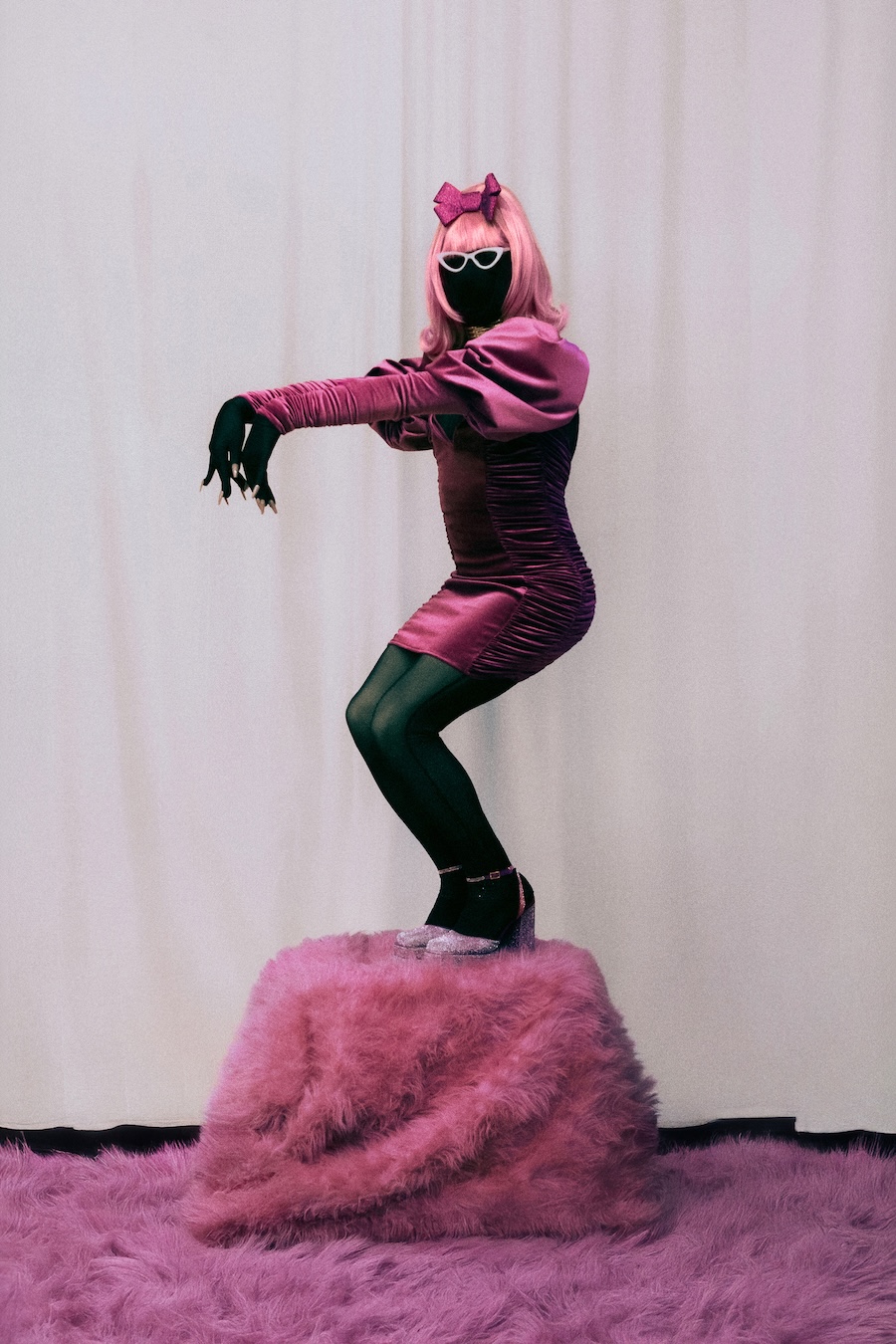
This logic extends into the photographic work created in collaboration with Gabriel Venzi. Together, Moussally and Venzi staged Salma Zahore as a living display. Placed on a pink carpet and framed as if inside a shop window, Salma appears as a real-life mannequin, both present and presented. The photographs borrow the language of the vitrine, of the object on display, while replacing the foam body with a human one.
The result is a subtle reversal. What was once an inanimate body dressed to look human becomes a human body styled to resemble an object. The pink carpet functions as a stage, a pedestal, and a commercial surface at once. Salma is not only being seen, but she is also being exhibited.
The foam mannequins offered a quiet but powerful metaphor. A body that can be shaped. A body that carries no given story, only the stories placed onto it. A body that can be elegant, absurd, sensual, or anonymous, depending on how it is framed.
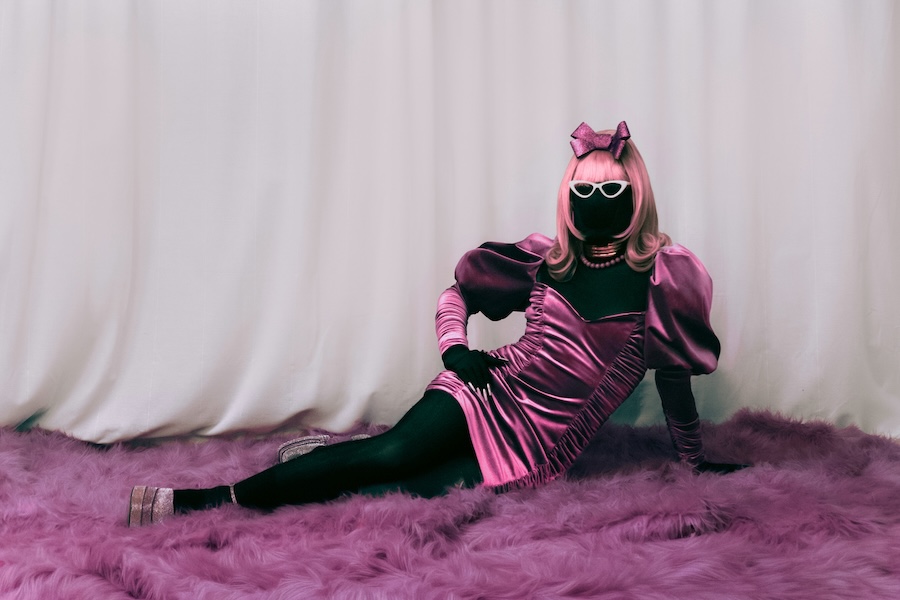
In this sense, Salma Zahore is not only a character but a continuation of that early fascination. A soft body made of cultural memory. A surface where gestures, costumes, and meanings accumulate.
What once stood in a shop window has become a figure on stage and on screen.
A body that is never only a body.
A form that is never only a form.
A presence that invites us to ask who is shaping whom.
Salma is everyone, and everyone is Salma.
Starring: Salma Zahore @salmazahore
Photographer: Gabriel Venzi @gabrielvenzi en.gabrielvenzi.com.br
Artistic Director: Hadi Moussally @hadi.moussally www.hadimoussally.com
Location: La Muriel @lamuriel__
