

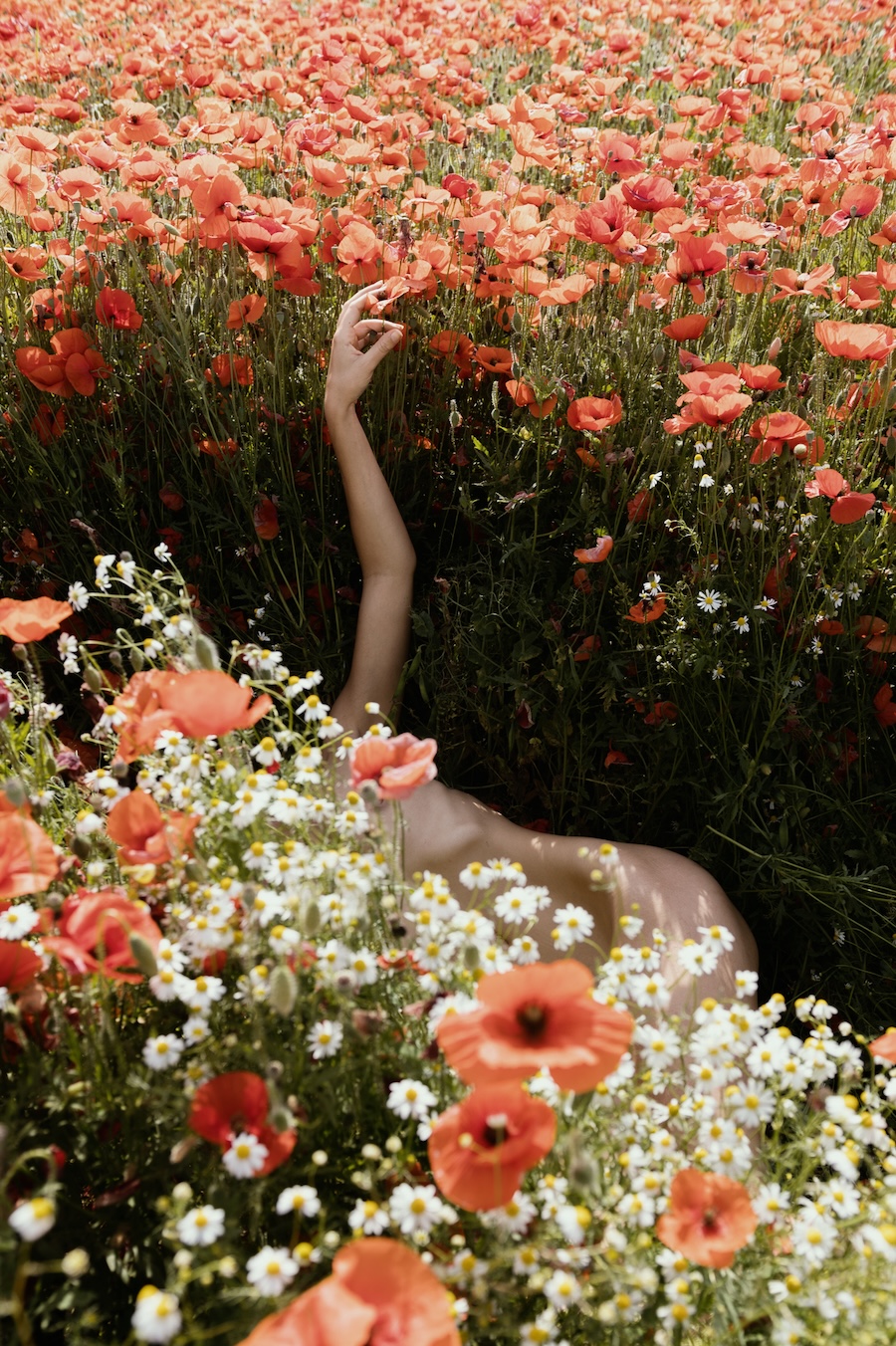
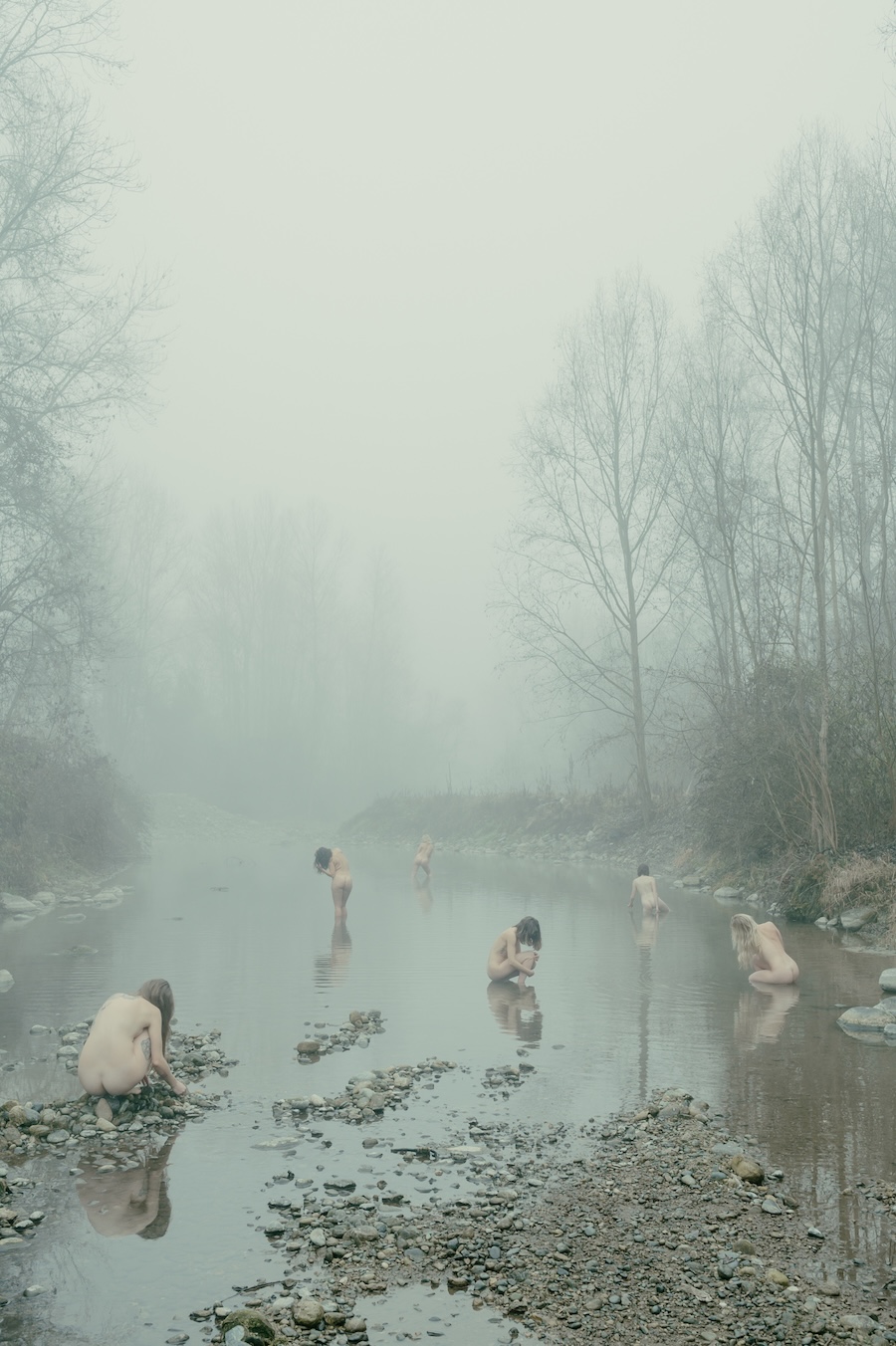
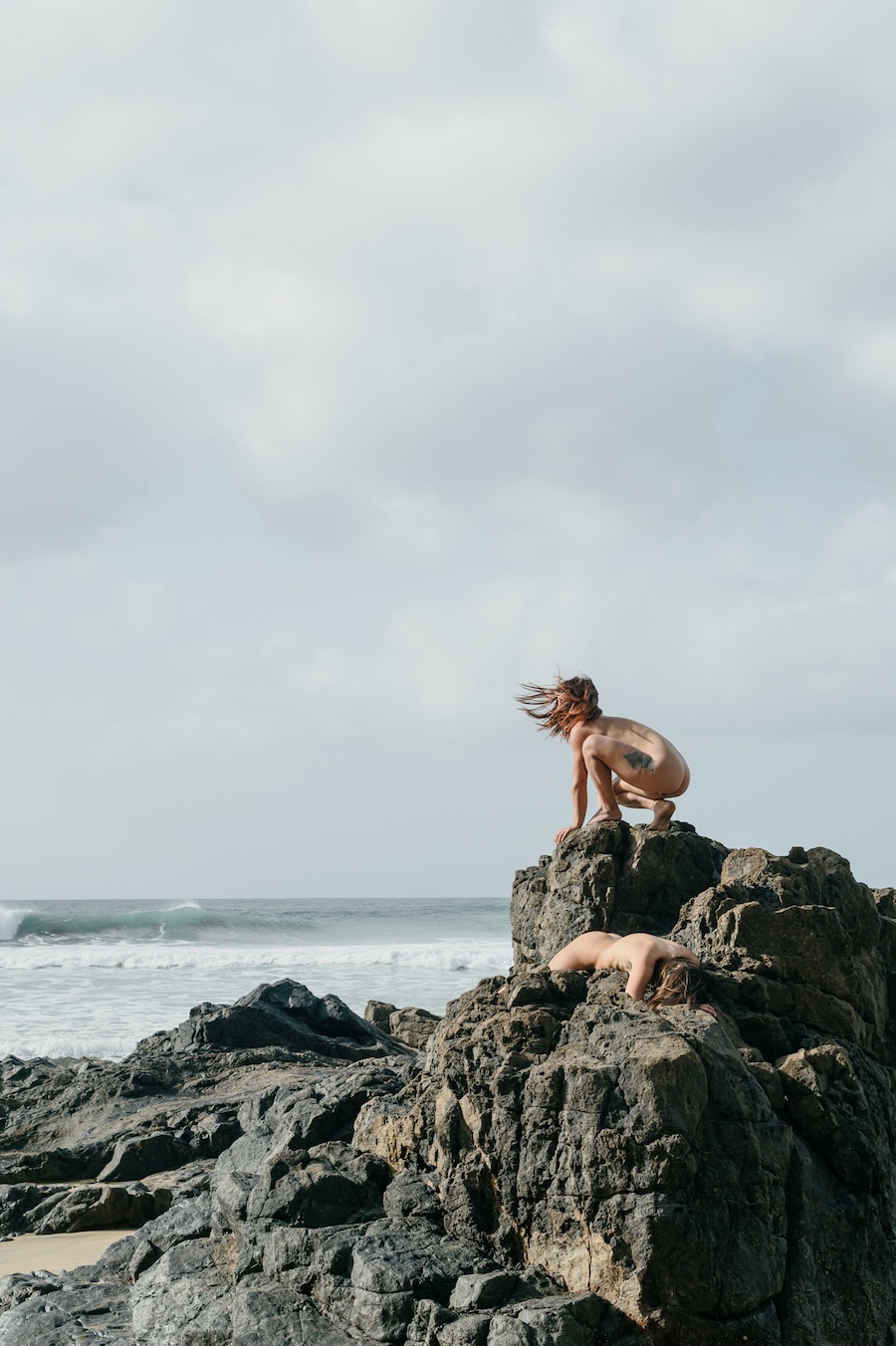
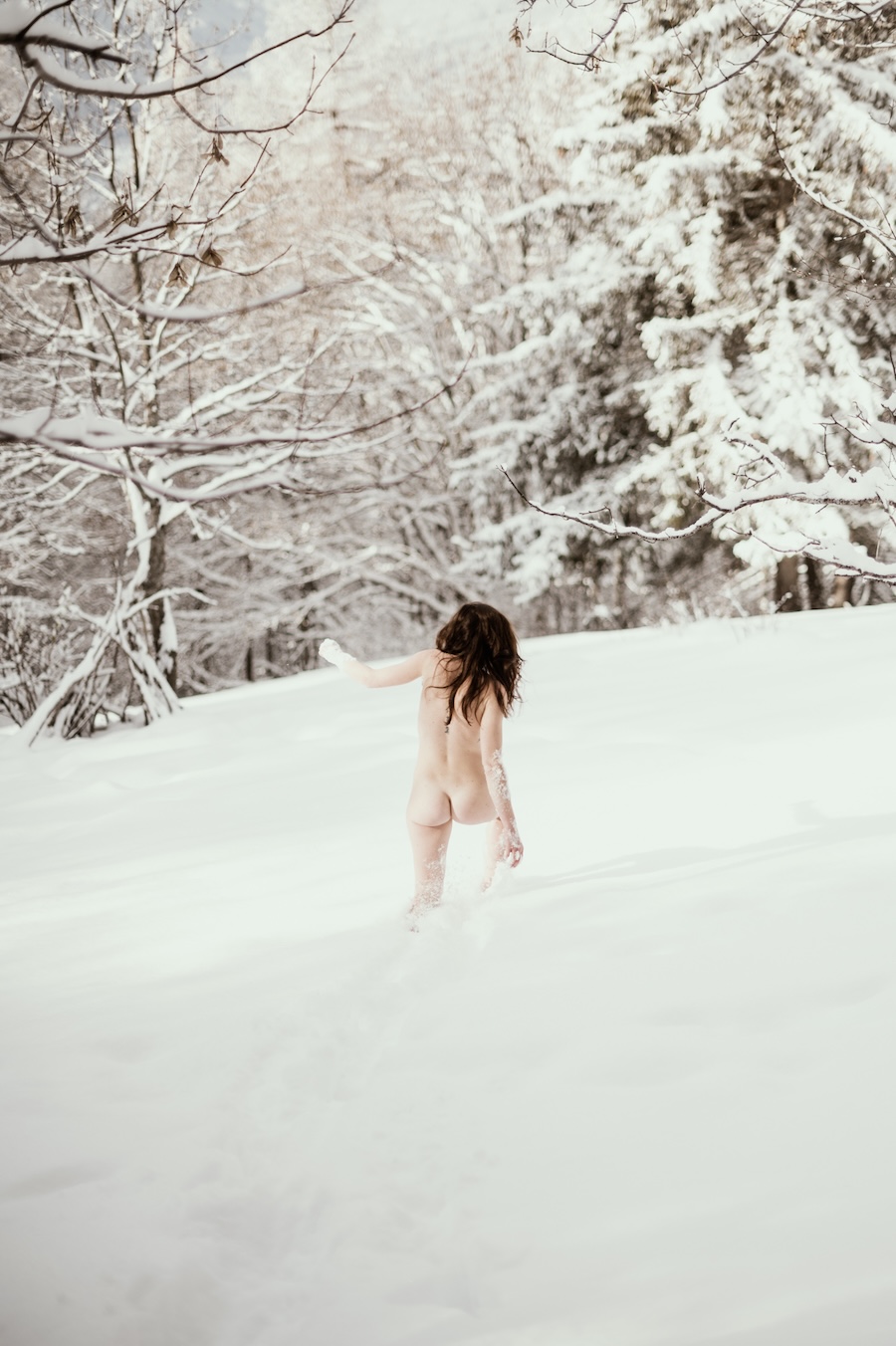
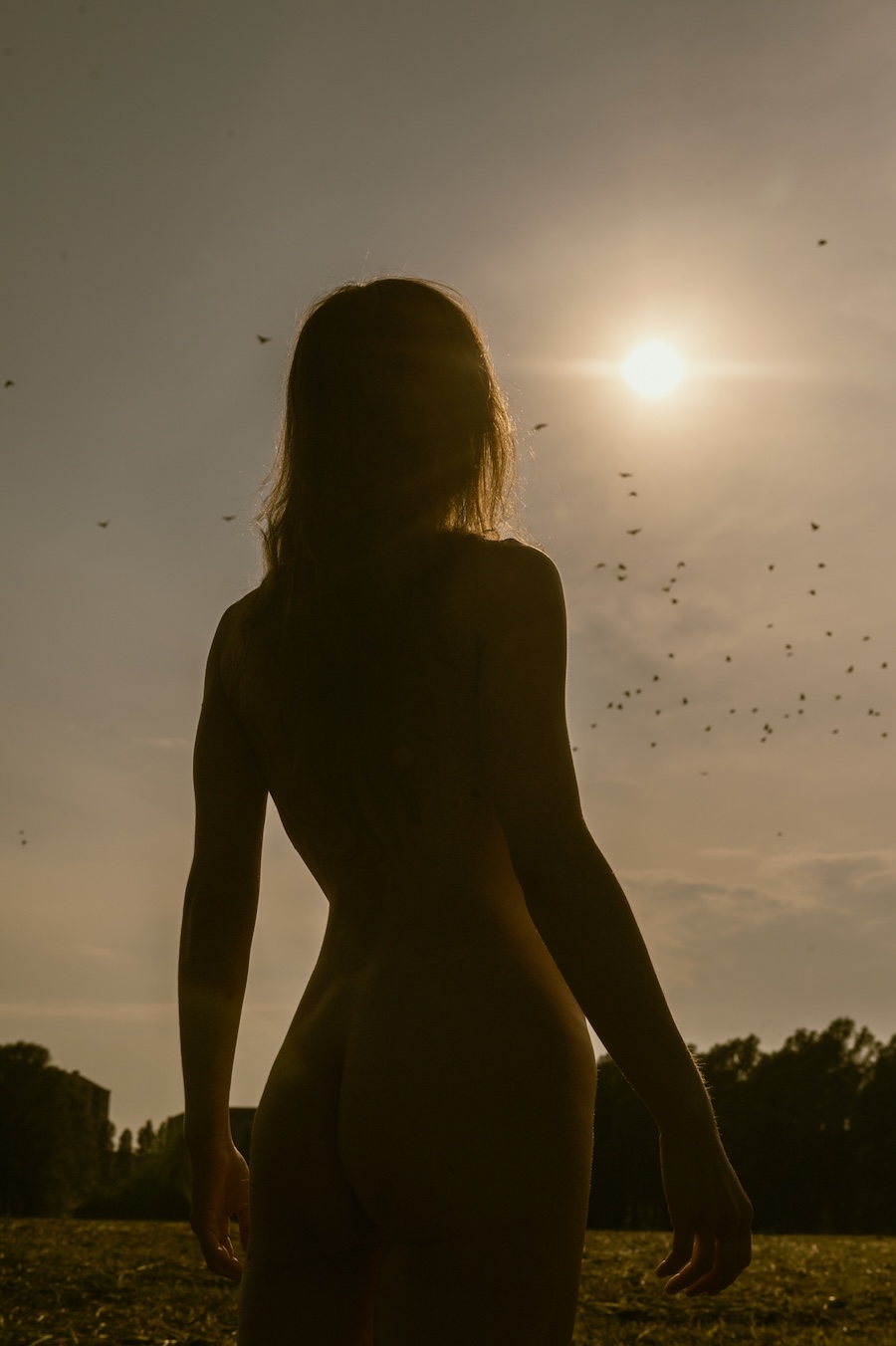
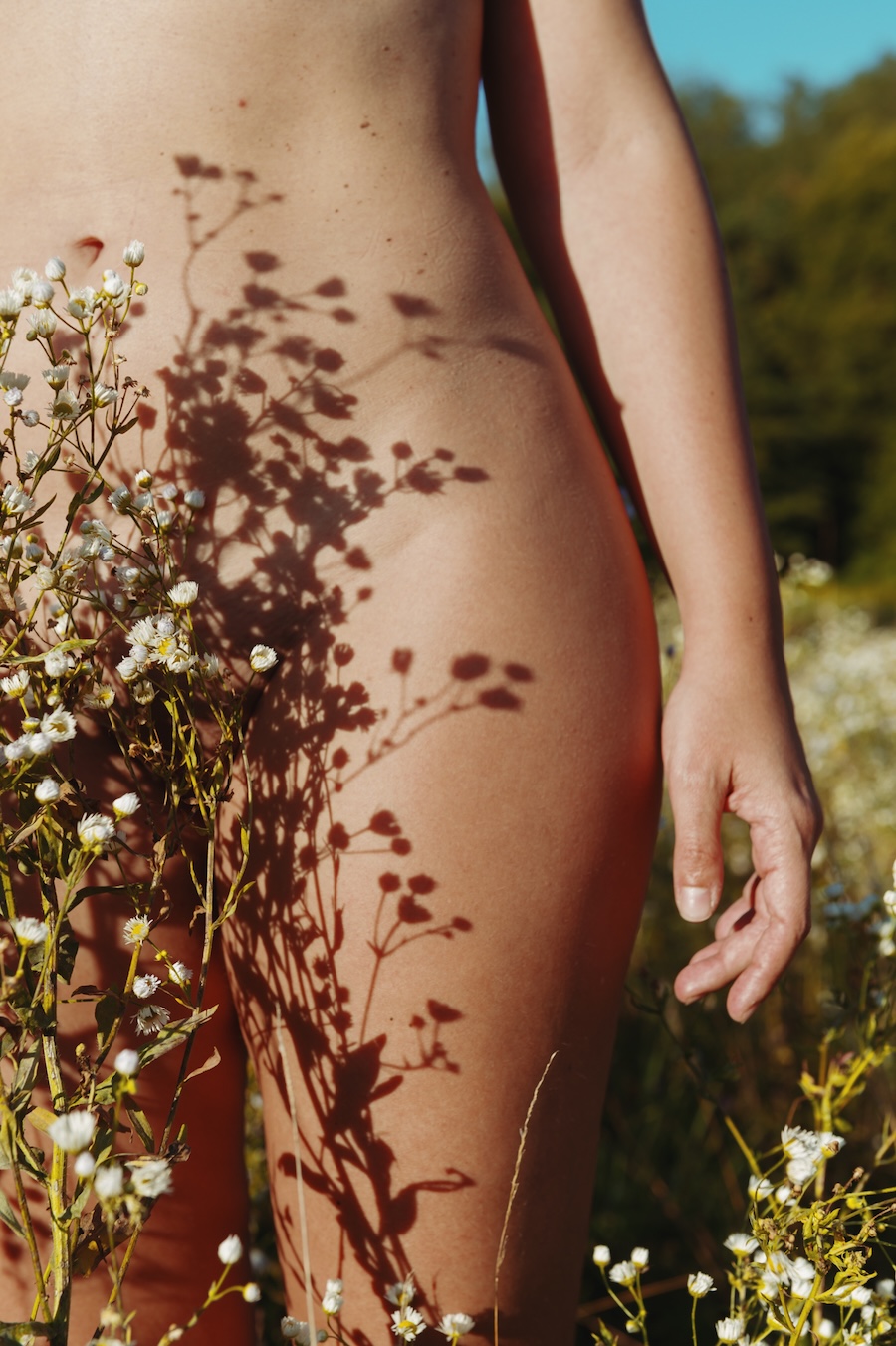
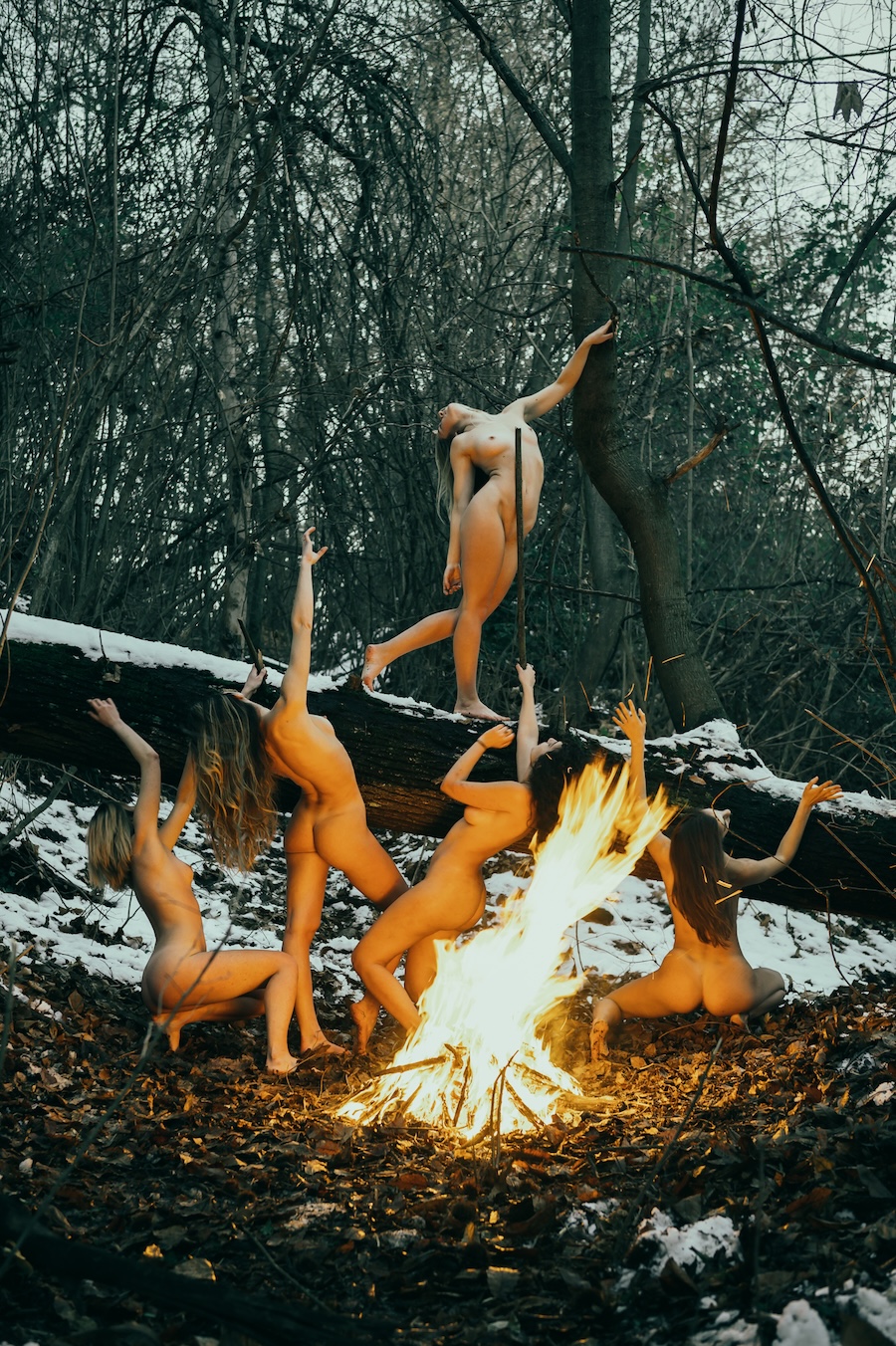
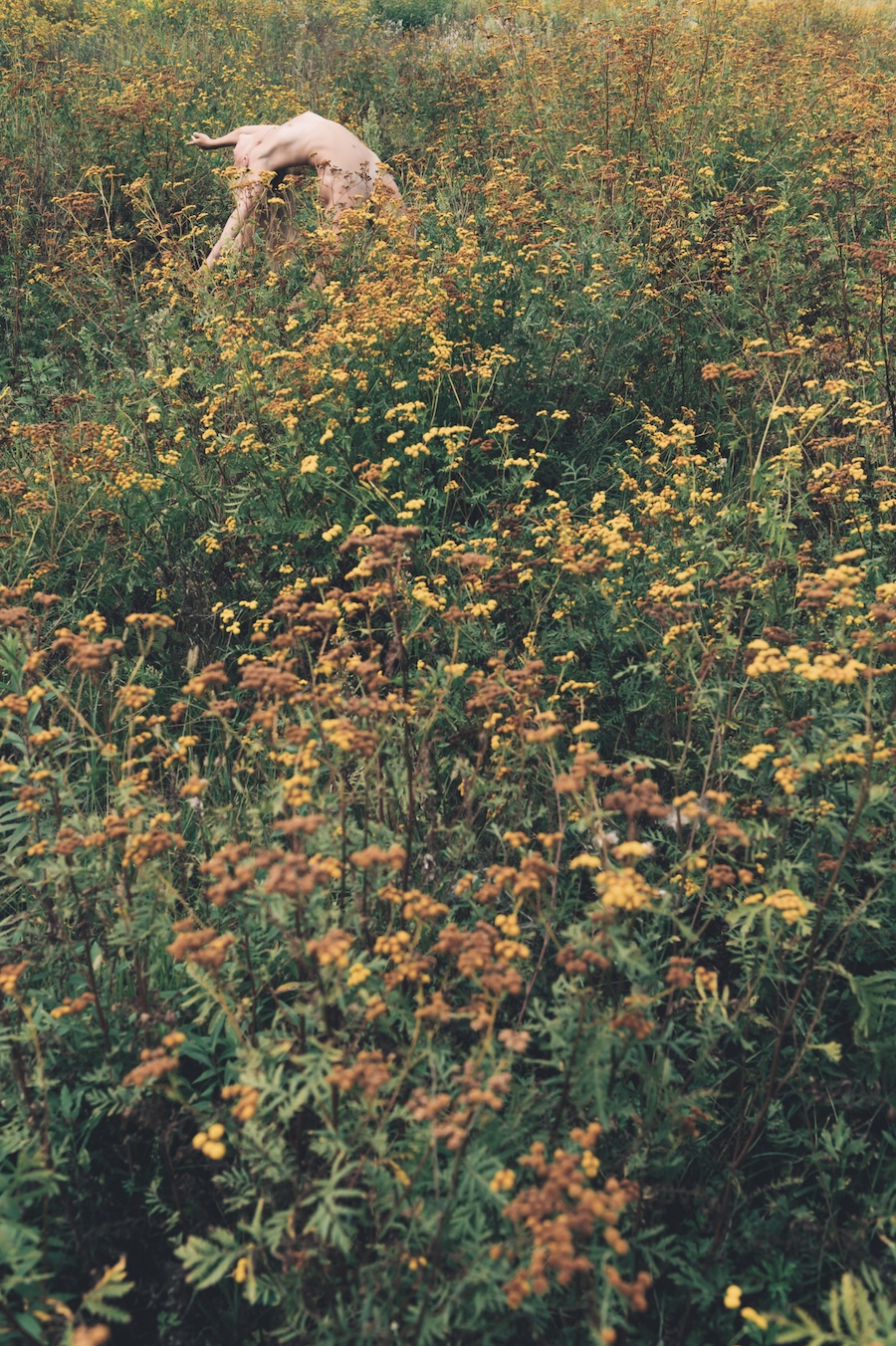
“They Return To Their Earth” is a project born during the Covid-19 pandemic, exploring the humans of the day after. It sits halfway between the dreamlike and the dramatic, shifting from dark, sculptural moments to lighter, more ethereal scenes. It reverses the hierarchy between body and landscape: the figures do not dominate the environment but are absorbed by it, creating a silent narrative about our fragility. The body becomes a trace, a threshold between presence and disappearance.
About the photographer:
Federico Masini is an Italian photographer and artist based in Turin. His work explores the relationship between body and landscape through an archetypal, mythographic lens, drawing from symbolist painting, classical literature, and the sublime tradition. “They Return To Their Earth” is his first monograph, published in 2024, with a critical text by Marco Albeltaro.
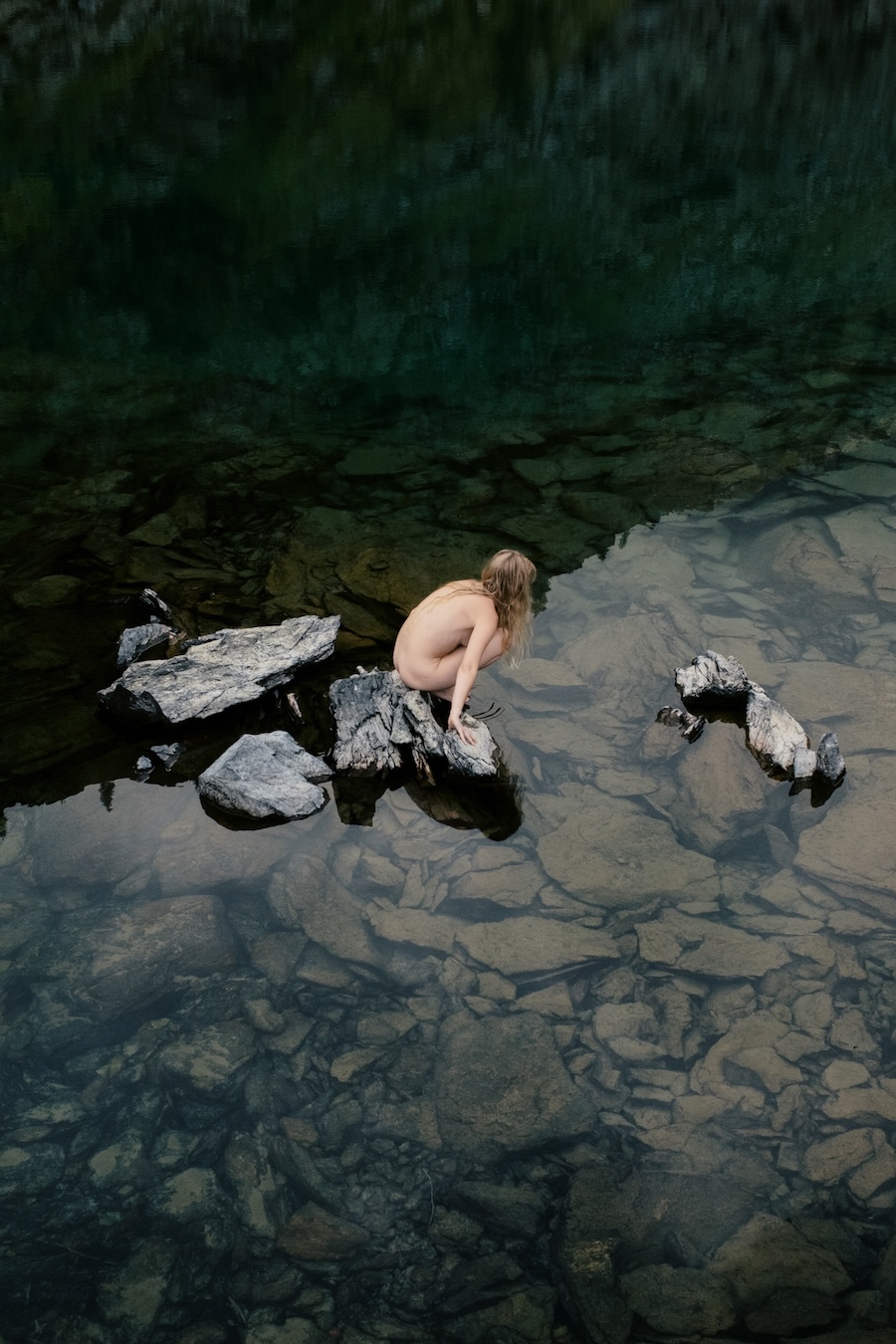
Federico Masini was born in 1988 in Moncalieri, Italy, and is based in Turin. His photographic practice stems from an analytical approach developed during his studies in Medicine and Surgery—a background that continues to inform his investigation of physicality, transformation, and biological processes.
Masini’s work operates through systematic subtraction. His methodology involves removing layers of presence—first the human subject, then functional context, finally visual contrast—to observe what persists when narrative and utility dissolve. This approach treats photography not as documentation but as a tool for phenomenological observation.
His debut monograph, They Return To Their Earth (Selfself Books, 2024), explored the female body as pure biological manifestation, attempting to construct a “neutral, objective representation, almost as if to compile an atlas of new botanical forms.” The work questioned whether representation can exist free from sexualizing or moralizing frameworks.
Masini has received the ImageNation Prize at Liquida Photofestival (2022) and was selected for LensCulture’s Critics’ Choice (2022). His work has been exhibited at East London Photography Festival (2018), Liquida Photo Festival (2022), Imagenation Milan (2022), PHOS (2017, 2022), and Spazio Musa, where he held his first solo exhibition (2022).
His photographs have appeared in international publications including Vice, Monocle, Elle, Scomodo, Corriere della Sera, La Repubblica, La Stampa, and Collater.al. Beyond his personal practice, he works on editorial and commercial assignments, collaborating with various agencies and institutions.
He lives and works in Turin, Italy.
Critical text by Marco Albeltaro:
In the history of art, the relationship between the body and the landscape has been explored by establishing a kind of hierarchy of drama. The body has always been something “historical,” while the landscape has long been granted an autonomous, often idyllic, and at times soothing role—a frame or even a source of pain in certain cases. Because the scapegoat or fetish of drama, or conversely, of utopia, has always been the body: a body on which the observer’s eye is compelled to dwell due to its preponderance, its specificities, whether they are qualities of beauty and balance or decay and transience. In Federico Masini’s work, the paradigm is reversed.
First and foremost, it should be emphasised that for Masini, the female body does not represent eroticism: it is something else. It is a complex entity that involves an exploration of the dimensions of the human, of what manifests itself on the stage of existence and must find its place within a chessboard that is constructed piece by piece, where the human and the natural intertwine and eventually merge into a single narrative. What we find in these images concerns what could be simplified as “a human of the day after,” which emerges when things have already happened and the irreversible (whether positive or negative) has already taken place. The images in this exhibition lie halfway between the dreamlike and the dramatic, between the utopian and the dystopian. In essence, there is the capacity for synthesis that the photographer stages by pausing his gaze where the observer’s gaze begins.
The narrative strategy succeeds in merging two “beauties,” that of nature and that of the body, and blending them into a story that speaks about us, about our existence, about our precarious balance on the constant precipice of the end. Never before has our body, as well as our consciousness, been so called upon to reckon with the finiteness of resources, with an environment that we have always taken for granted, and which, instead, is endangered every day by our own behaviours. And in these images, what would happen—will happen? If we continue like this is precisely depicted. We ourselves, with our flesh and bones, with our physicality, with our aspirations, would find ourselves facing a desertified stage, a solitude in which everything we are would lose its meaning because it would be immersed in a deafening silence.
In Masini’s photographic gaze, a body condenses and becomes universal, representing, even in its references to symbolist painting, an absolute entity that encapsulates the universal in the particular. In these images, which we can describe as unresolved, the entire intention is to stimulate a reflection that can arise from a question: What is my role in all of this? This is the question that those who look at Masini’s photographs end up asking themselves, without finding a shouted answer, but rather a suggestion, a spark that can be received or not. The artist’s task is to provoke questions, to induce an interruption in the flow of everyday thoughts, and to trigger a kind of leap from simplistic reasoning to complexity. In this series of photographs, the simplicity of the body inserted into nature forces us to pause and divert our thinking from a simple descent towards calm harbours to a more winding, less easy, but more meaningful journey.
— Marco Albeltaro
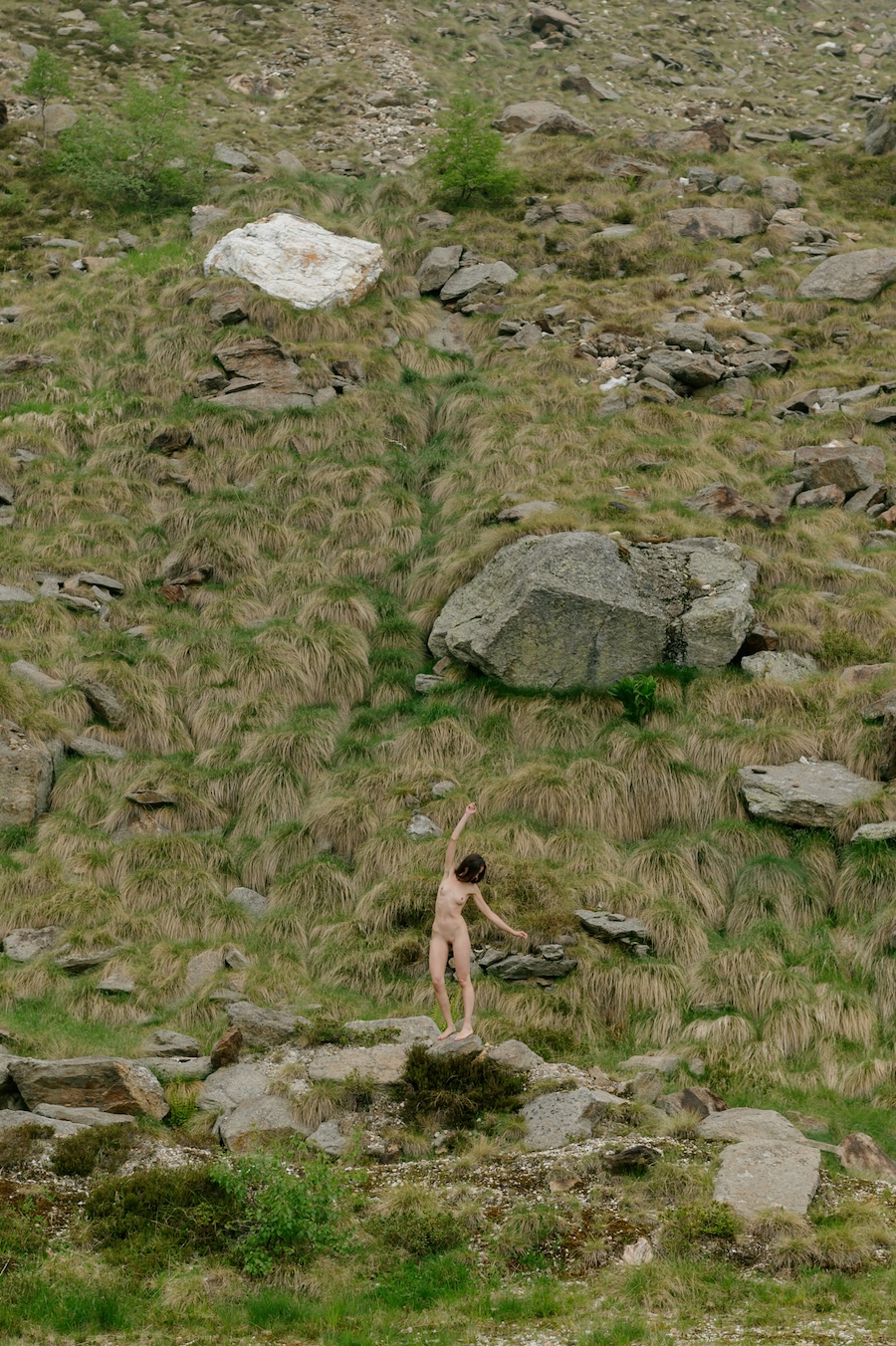
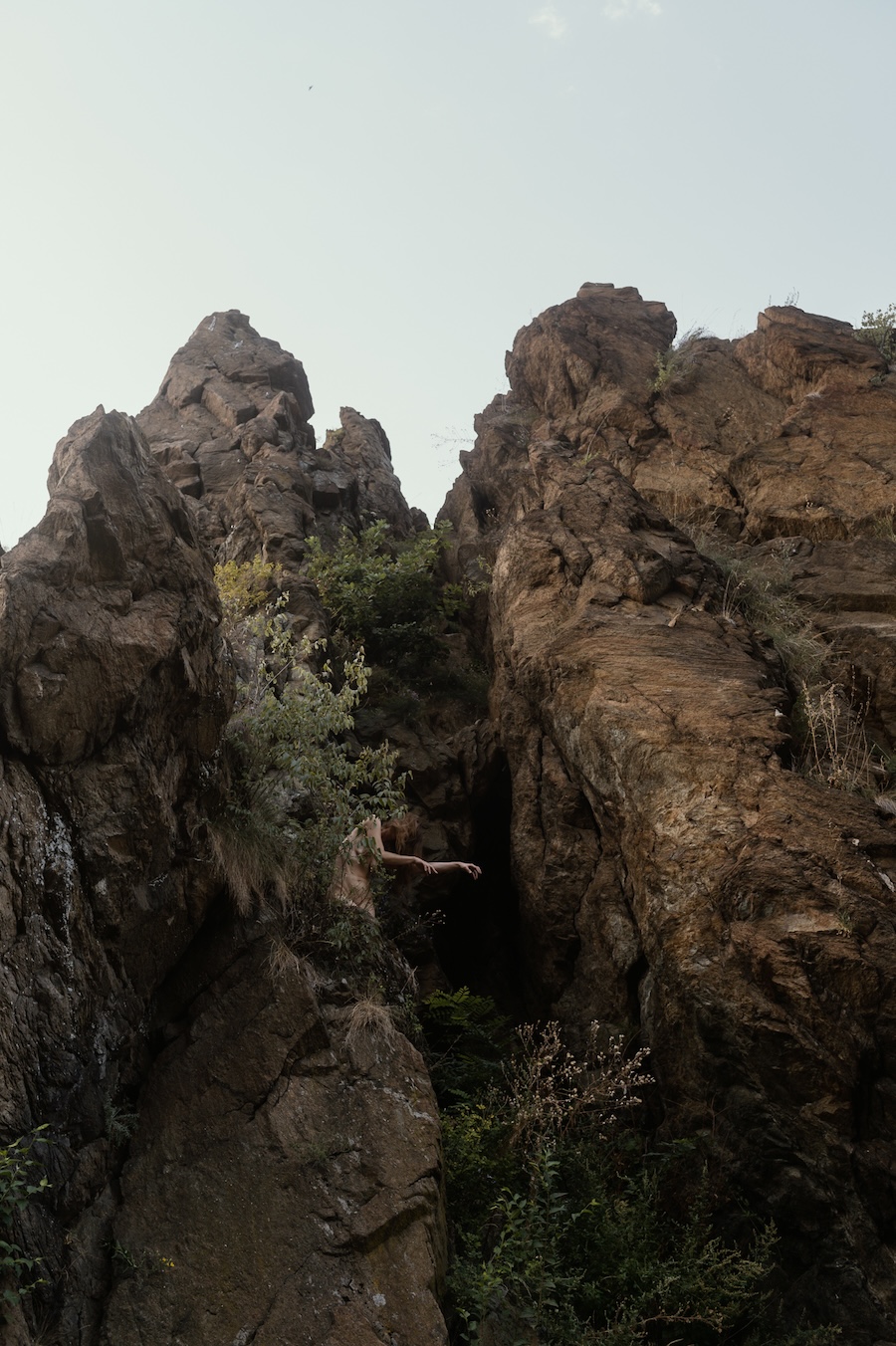
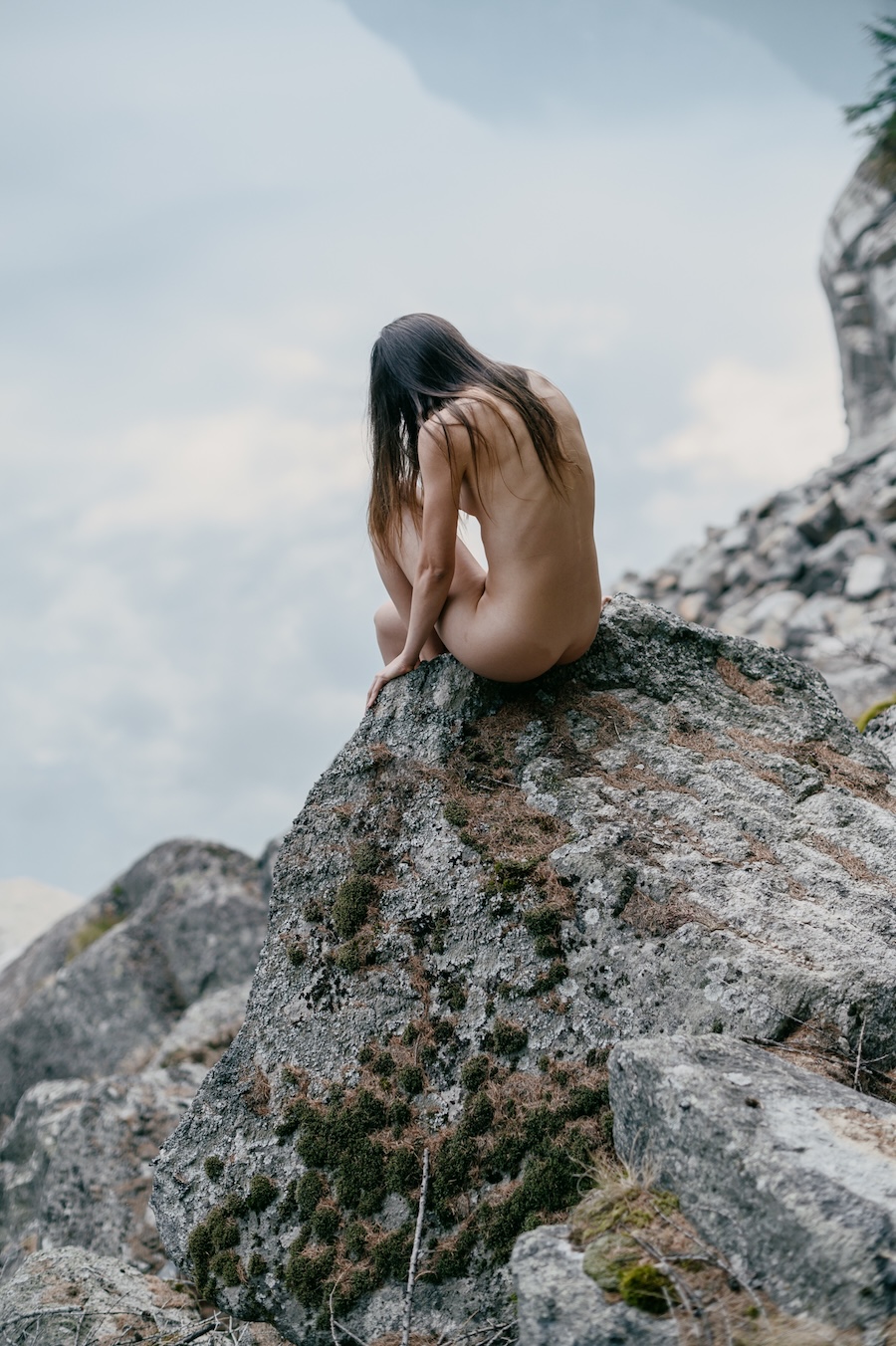
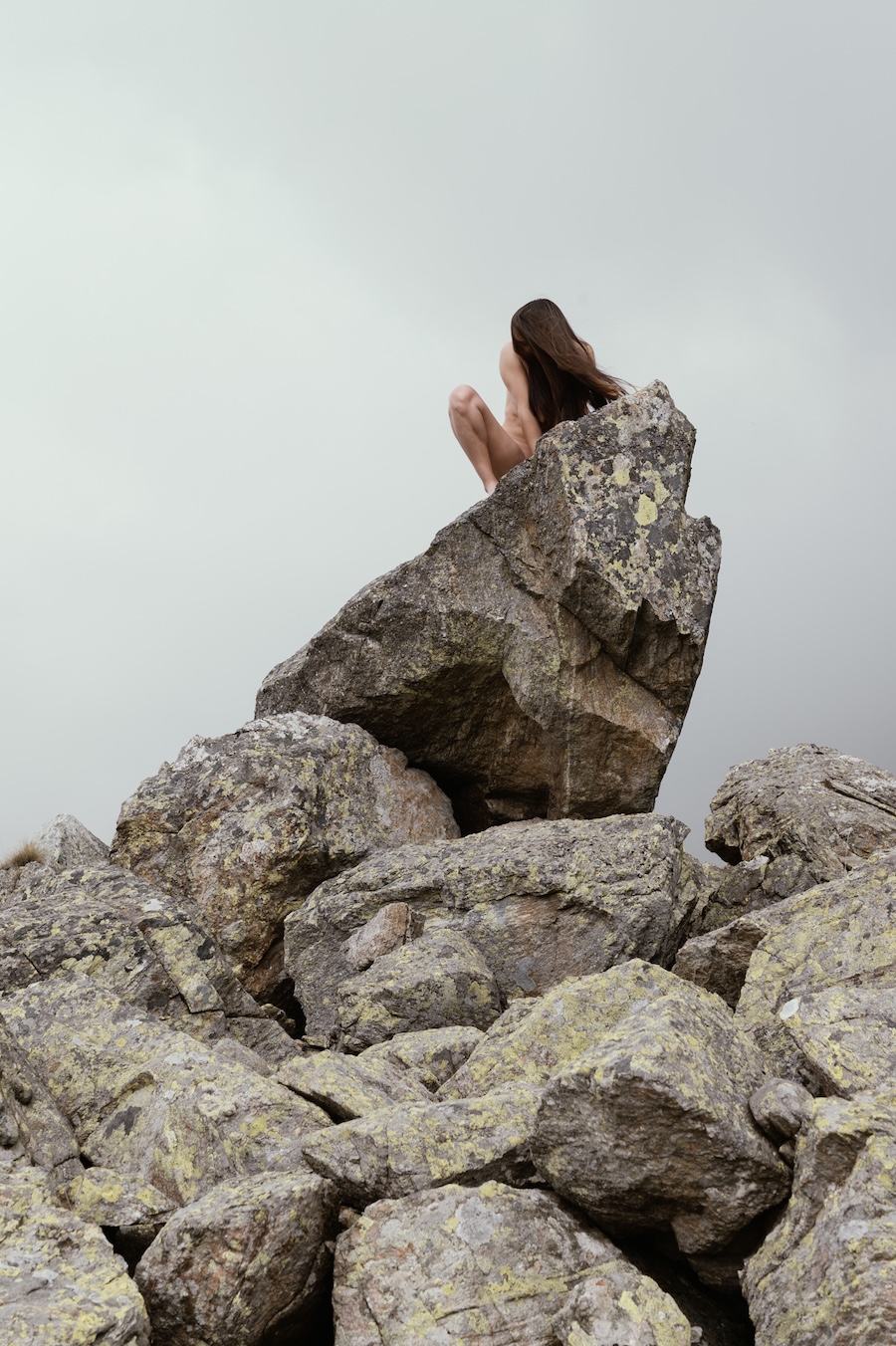
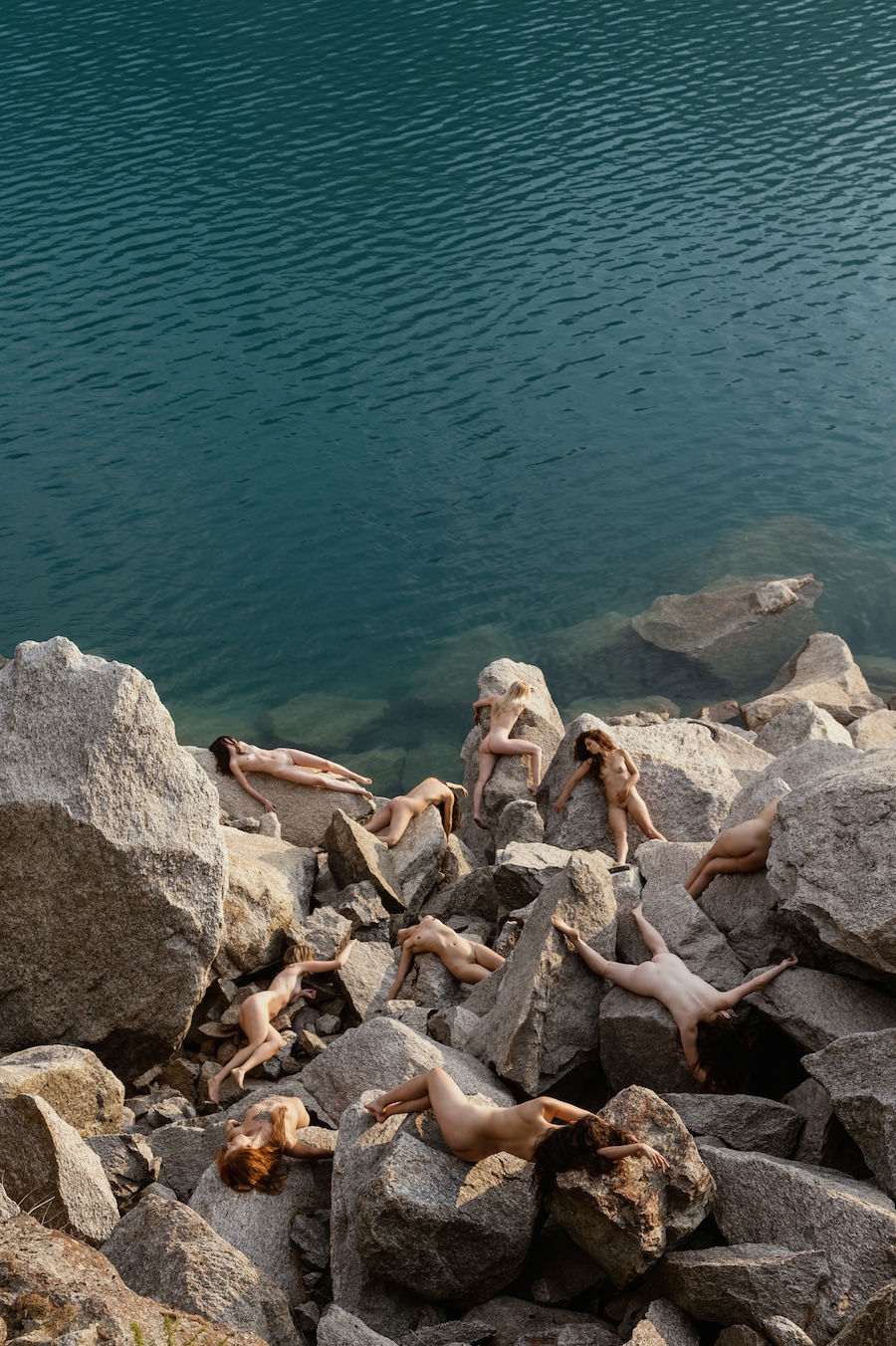
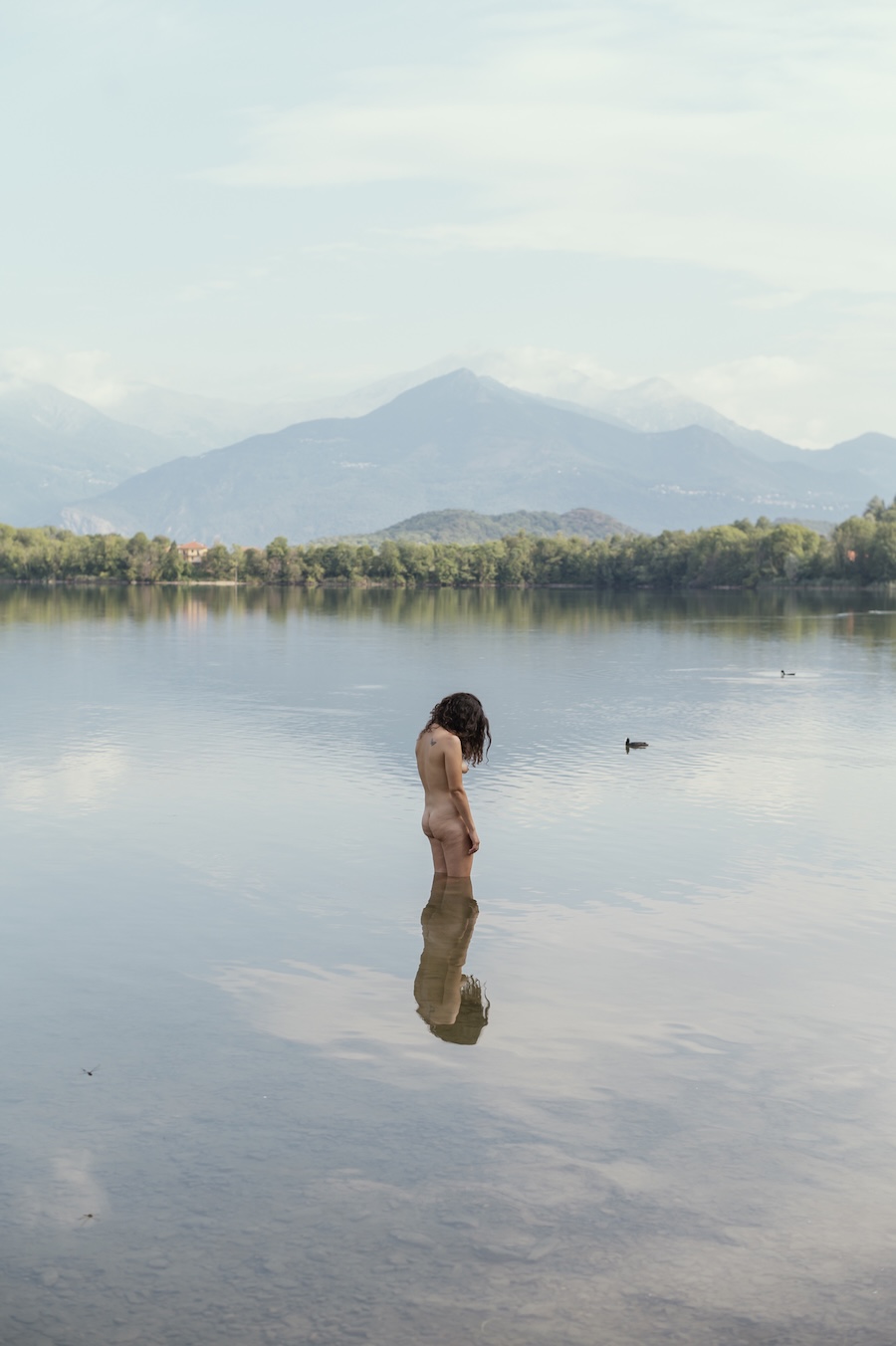
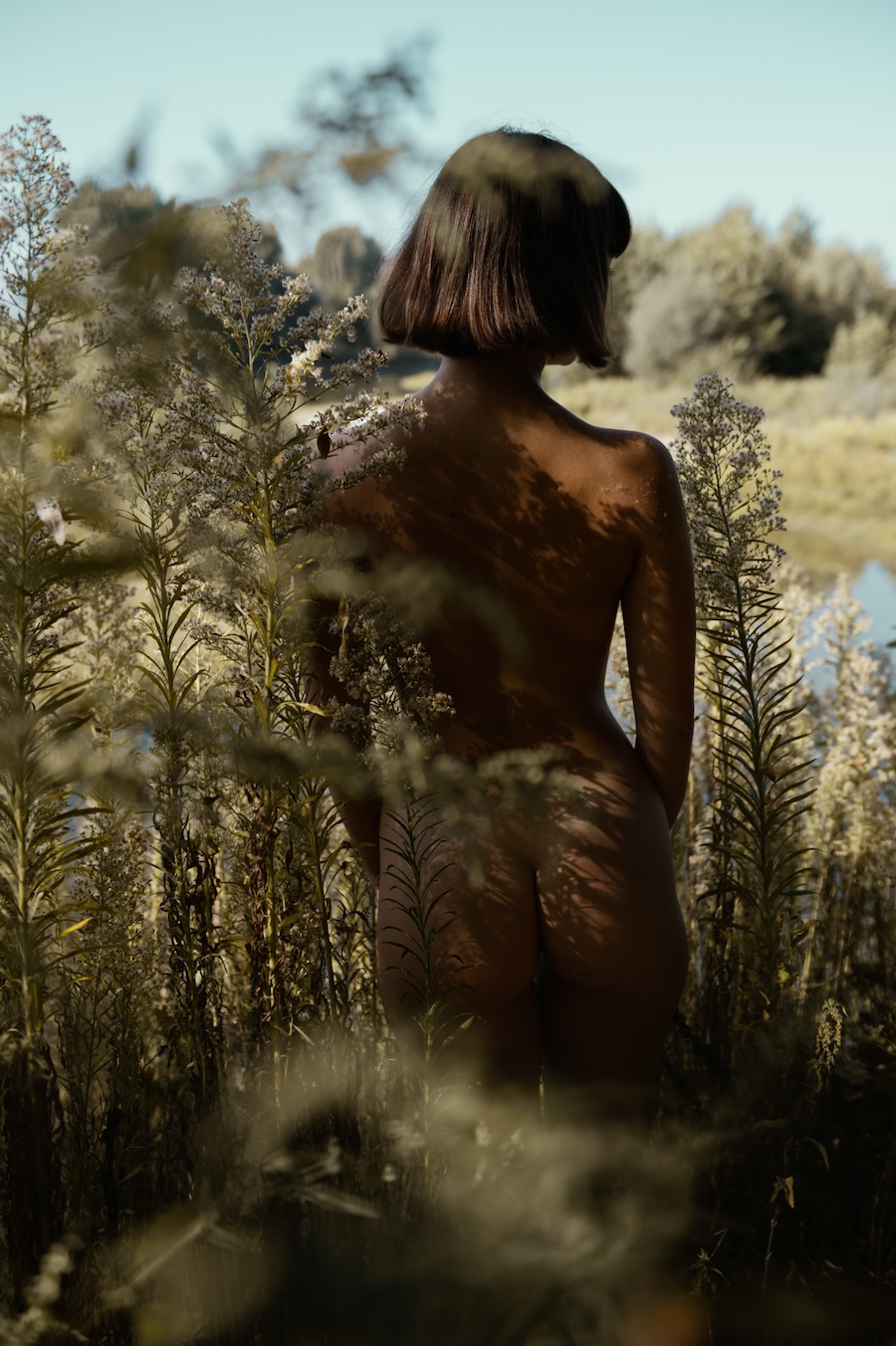
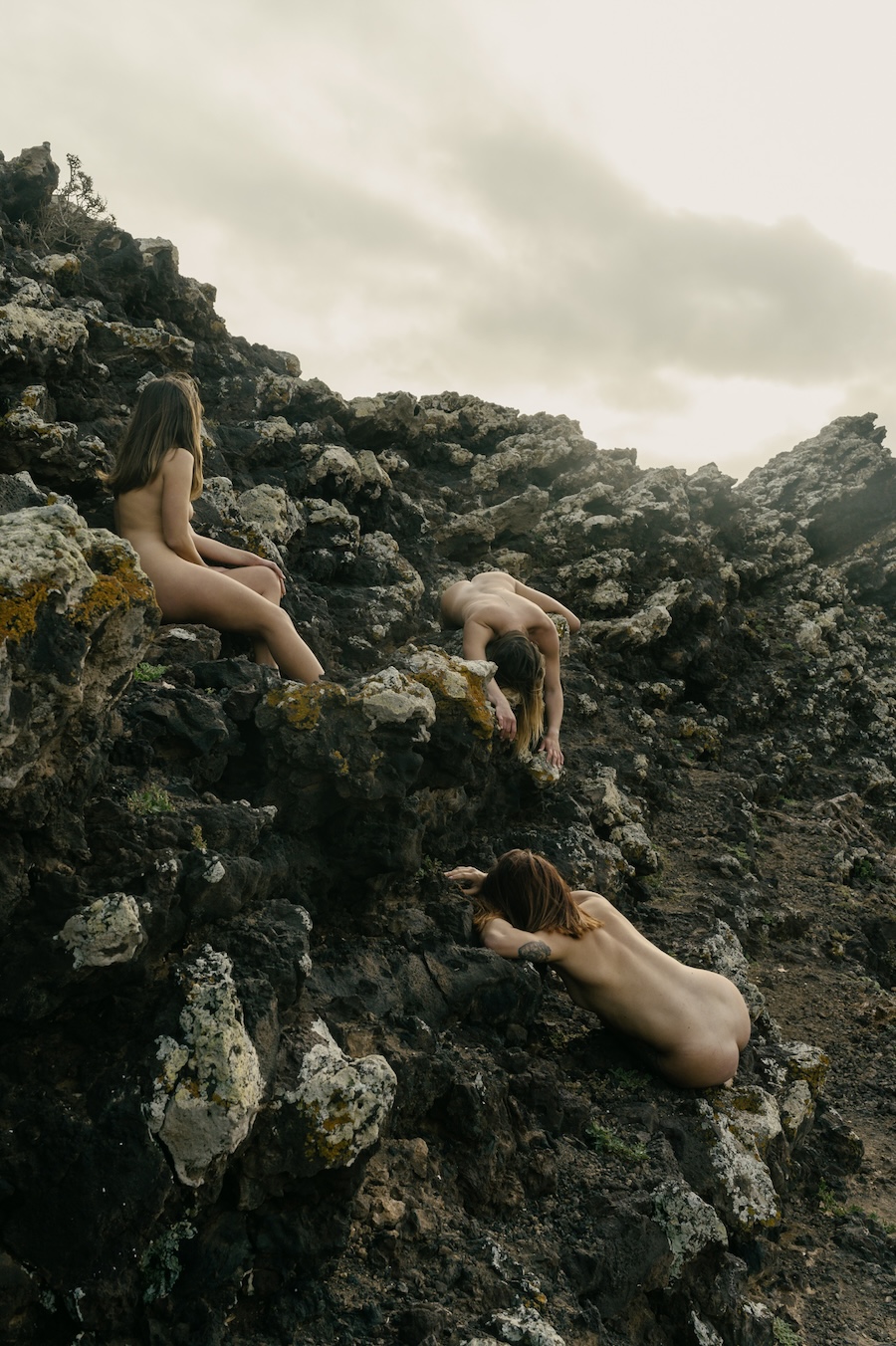
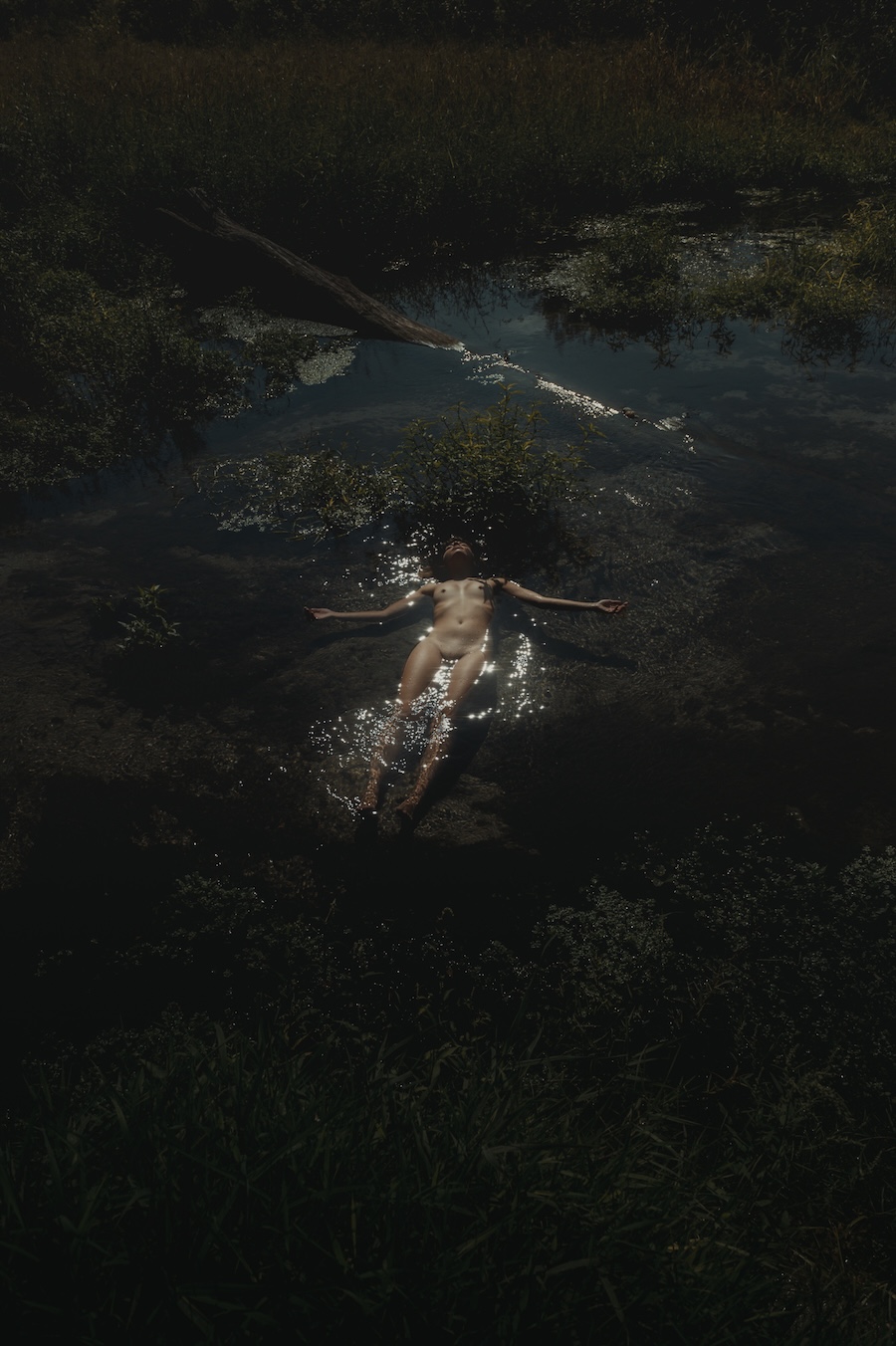
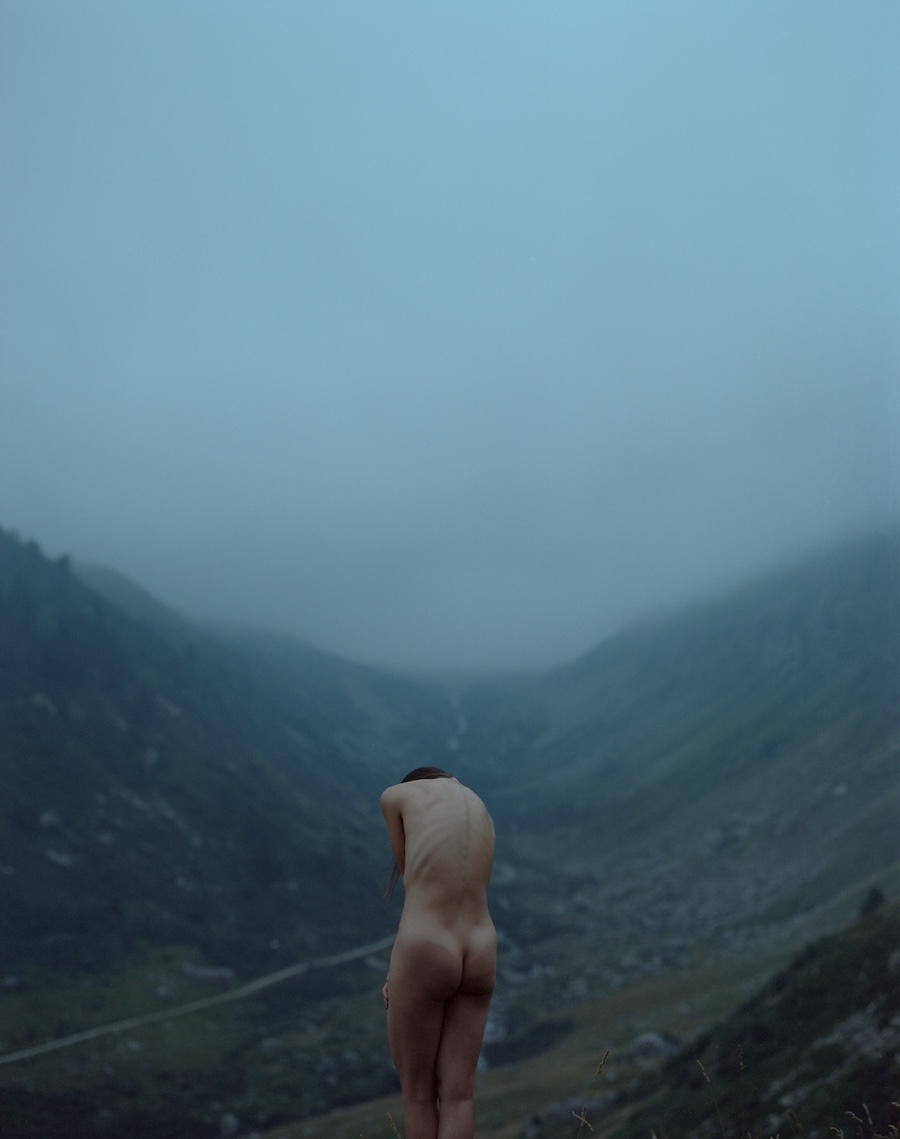
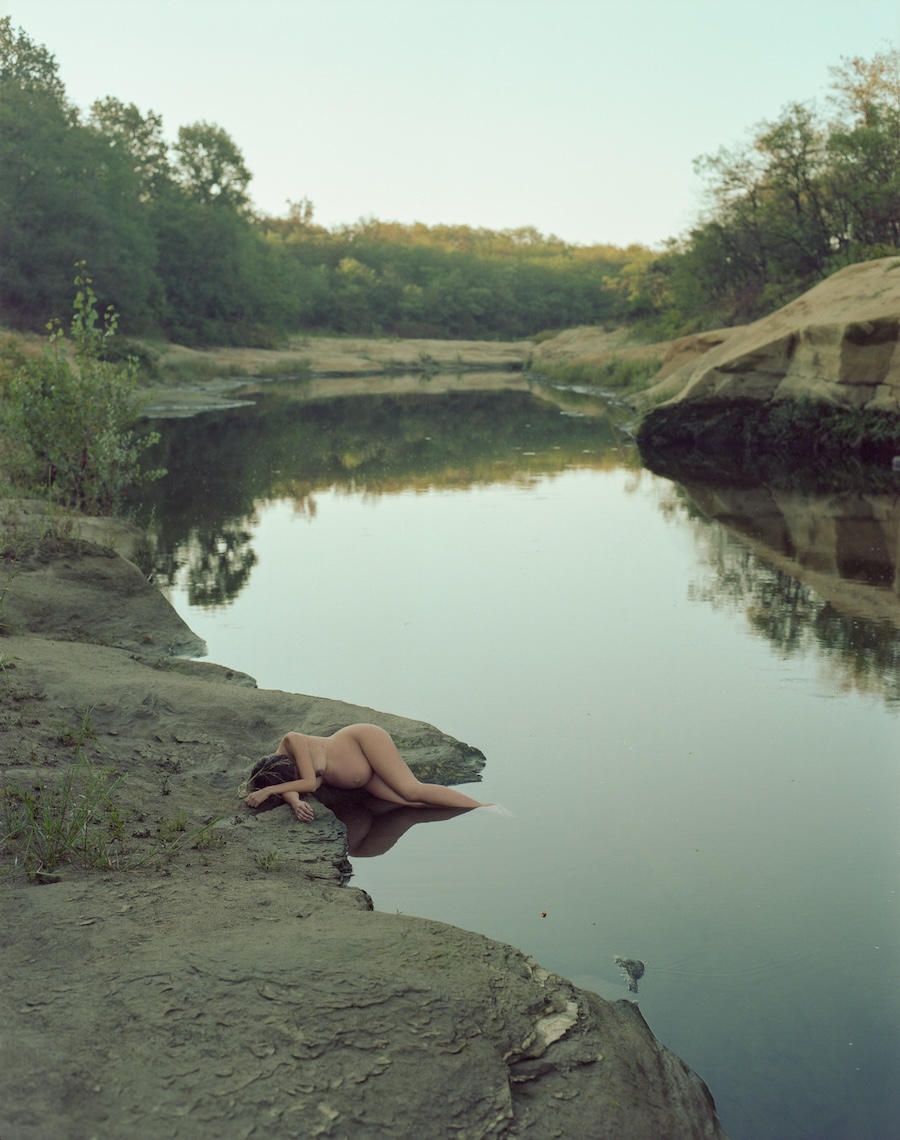
Photography by Federico Masini / www.federicomasini.com / Instagram: @fede.s.masini
Backstage video by Fabiana Cordero / Instagram: @cordero_color
All models in this project chose to remain anonymous. The work treats the body as a universal, archetypal presence within the landscape — individual identity is intentionally dissolved in favour of a symbolic narrative.
