

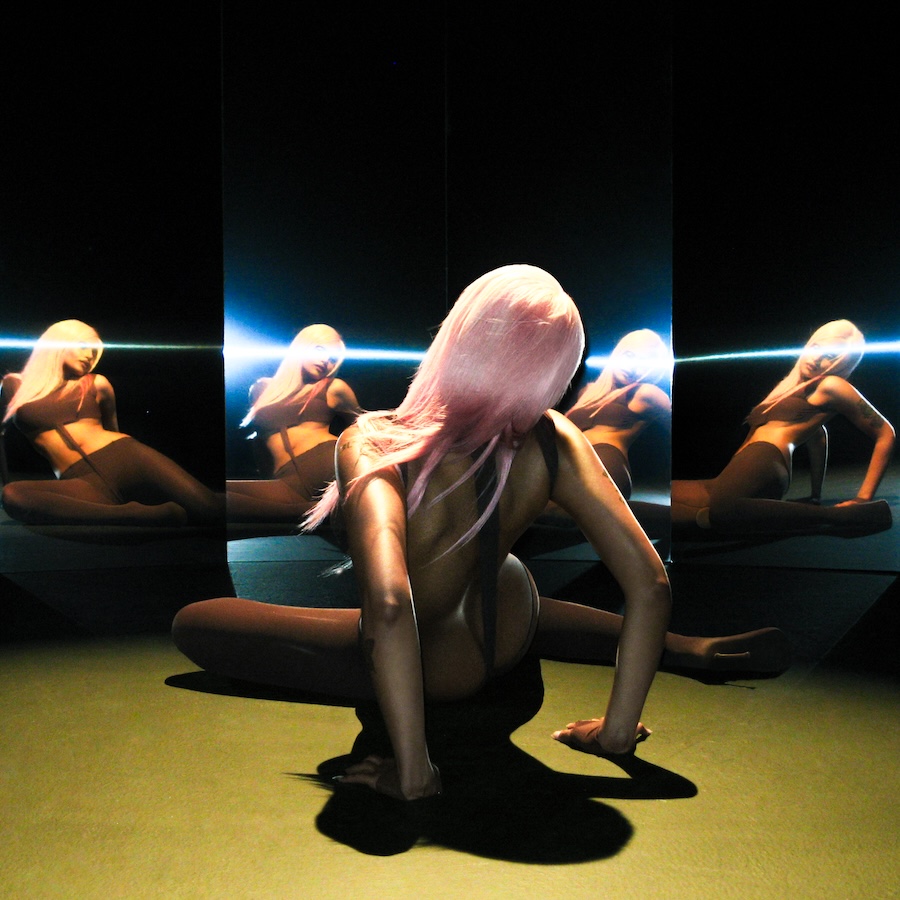
Step into a world of unrelenting energy and frenetic sound as we delve into the mind of Bethlehem, the rebirth of the artist formerly known as DJ Venetta. Hailing from Vancouver and establishing her presence amidst the vibrant underground scenes of New York and Berlin, Bethlehem has carved her name into the fabric of electronic music. Her new persona marks a decisive turn in her career, as she sheds the identity of Venetta and embraces the raw, unfiltered spirit of Doom Pop—an evolution that takes her artistry to thrilling new heights.
Follow: @queenofradiosilence
With the release of her debut EP, “Obsessions & Confessions,” through her own Violation Records, Bethlehem introduces listeners to her serrated soundscape, where the industrial clashes with the glossy allure of electropop, and pop hooks twist into a euphoric chaos that never quite resolves. Written, composed, and produced entirely by Bethlehem, this four-track project is a thrilling fusion of maximalist pop, influenced by icons including Skinny Puppy, M.I.A., and the exuberant maximalism of the early 2000s.
As a self-proclaimed “Queen of Maximalism,” Bethlehem’s musical journey began in her youth, glued to the screens of MTV and MuchMusic, devouring music videos with fervour. Those early days of pop obsession—Britney, Gwen Stefani, and No Doubt—are echoed in her exploration of genres that span from rave and metal to the depths of industrial soundscapes on YouTube. Now, she stands at the forefront of a new era in music, crafting bold and daring tracks that resonate with her distinct vision.
In this exclusive interview, we unravel the layers of “Obsessions & Confessions,” a project defined by its bold exploration of transformation and obsession. Each track serves as a testament to the chaotic beauty of pop, allowing us to experience the multifaceted nature of Bethlehem’s identity. As she prepares to tour in support of her EP in 2026, we explore the inspirations behind her debut single, “If You Know You Know,” and her latest track “, Rev Up,” which captures the EP’s chaotic essence with its glossy production and defiant lyrics.
Join us as we engage with Bethlehem to discover the depths of her artistic expression and the audacious spirit that fuels her journey in the ever-evolving landscape of music.
You describe stepping into Bethlehem as a “rebirth” where you “kill off” DJ Venetta. What did the DJ alias represent that needed to be put to rest, and what new artistic freedoms or responsibilities come with your current identity?:
Bethlehem isn’t a character; she’s just me without the limits I outgrew. Venetta made sense for that environment and that survival mode, but I moved past it. Once I stepped out of that mindset, everything opened up. I could finally take the music exactly where I wanted.
And it wasn’t the DJing that needed to go, I love that shit. What really had to shift was my treating my own songwriting like a side note. I’ve been writing pop forever, but I kept it to myself. One day, during the pandemic, I just caught myself like… what am I waiting for? I wasn’t challenging myself or releasing any of the work I was actually making. Bethlehem is just me claiming what’s mine. I had to get real with myself; you only get one life, allegedly. Fuck it, I need to make the music I want to see in the world, period.
You’ve stated that Bethlehem is “pop for weirdos.” Who is the audience you are trying to reach with this sound, and what are you inviting them to embrace about themselves?
I’ve always been an outsider, so my people find me on their own. I’m not here to teach anyone how to be; I just want you to take the parts of yourself you hide and let them run the show. Perfect is boring. Messy is iconic. Embrace your diva.
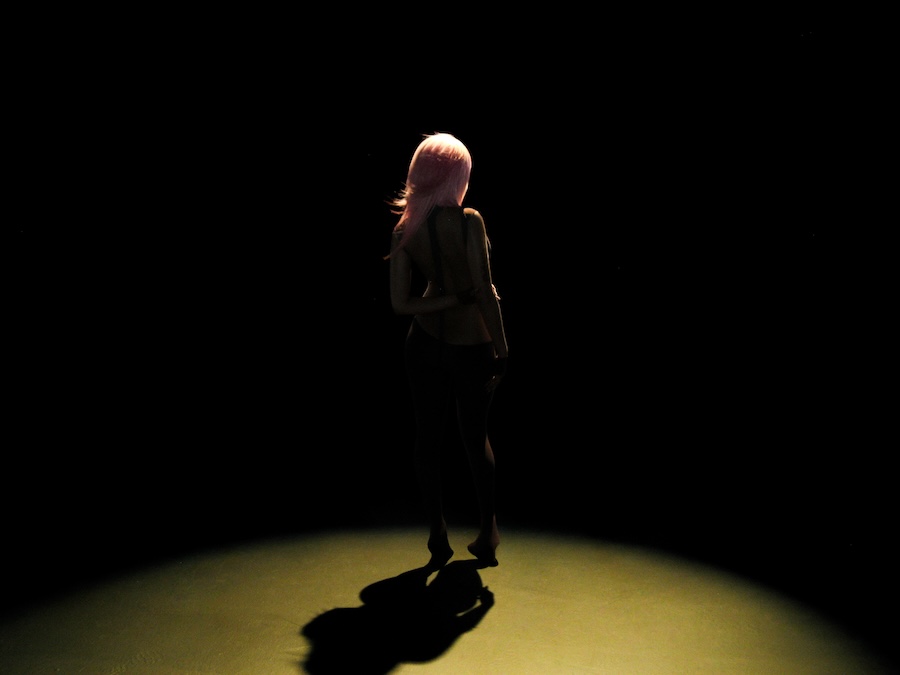
How important are the visual components and aesthetic of Bethlehem to the music, and what was the creative dynamic like working with Viktor Naumovski on the “Rev Up” video?
The visuals are the music; they always have been. If you don’t control your image, someone else will, and absolutely not.
The sound comes first. But I’m picky about the attitude of my writing and the tone of my music. I know immediately when something’s worth taking further. And when it is, I want to blow it out and make it larger than life. Being intentional with visuals gives everything the tension I like. I live for an excuse to make a movie, you know?
I met Viktor in Berlin when he shot me for a campaign years ago, and we kept in touch. When I decided I wanted to pop my music video cherry, he was the first person I called. He saw the vision immediately. Working with him was incredible; he raised the bar. We were in constant conversation: references, ideas, instinct. We both think in images, and at one point he told me he’d already dreamt what the video looked like. He understands how my mind works, which is rare. The dynamic was intense in the best way: very back-and-forth, very hands-on. We take our art seriously, so we gelled instantly.
You’ve staked your claim as “Doom Pop’s anti-hero.” How do you define this sound?
It honestly started as a joke. I wasn’t sitting around plotting some deep archetype. I was just making loud, dramatic, slightly unhinged pop and thought “anti-hero” sounded funny. But the more I sat with it, the more it tracked. I’m not here to make you feel better. I’m here to make you feel something.
Your background involves navigating underground scenes in New York, Berlin, and Vancouver. How did these changes in environments influence your latest EP?
New York put me in a completely different headspace. The city has this ambient anxiety that hangs over everything — and my process reflected it. The music got slower, darker, and extremely emo. Like, emo on steroids. I made a lot of downtempo work during that period. It served its purpose, but that era’s closed.
Then I moved to Berlin and produced most of Obsessions & Confessions there. When you’re constantly hearing the most insane music on world-class sound systems, it alters your belief system. My sound got louder, faster, stranger. All because I stopped overthinking. The real influence was freedom — going out nonstop, getting blown open by whatever I heard, then locking myself in my apartment studio for days and producing like a maniac.
I’d never lived somewhere that made me feel that free. Vancouver never gave me that. It always felt suffocating. Getting far away from “home” is what set the direction for the EP, my sound, and my whole trajectory in general.
The EP title, Obsessions & Confessions, suggests a psychological descent. What emotional thread were you trying to explore across these four tracks?
I wasn’t trying to diagnose myself…. I just felt a lot and turned it into music. It’s love, lust, delusion, ego… the usual mess. I’m dramatic, so everything becomes a confession whether I want it to or not.
You wrote, composed, and produced this debut EP alone. What was the steepest creative learning curve you encountered in owning every single aspect of your sound?
The challenge was trusting my ear enough to let a song be a song. I always have a thousand ideas fighting for attention, and I used to think I had to cram all of them in. This EP forced me into restraint, not like softness or something, but precision. When you write and produce everything yourself, you find out fast whether you actually believe in your own taste. And I do. Maybe too much. Working alone can make me feel insane because I never know when to stop. I’ll spend days obsessing over some tiny detail that no one else would even register. The hardest part was learning when to commit and when to walk away. It kills me to abandon an idea, even when it’s clearly time. If something isn’t working, I take it personally, like I’m having a full fallout with my own session.
Artwork Credits:
E.P. Cover: photographed by Viktor Naumovski
Rev Up: directed by Viktor Naumovski
Click Code Vice: directed by: Claine ‘Gorgoth’ Lamb Blue hair stills: Claine ‘Gorgoth’ Lamb
Black hair pics photographed by Maxime Ballesteros
