


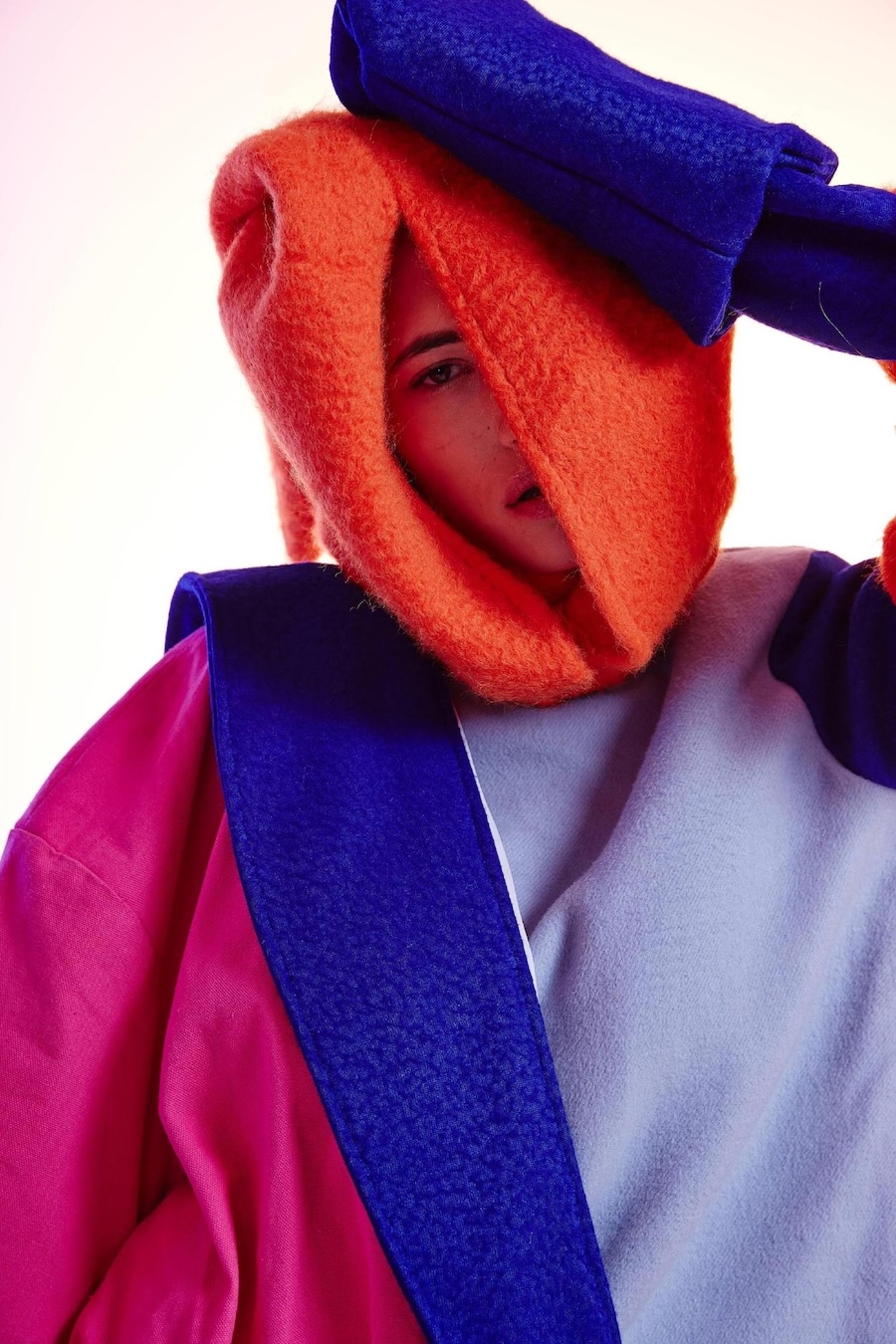
Xinyu Hou designs lived experience into the function and image of fashion. She is redefining the intersection of psychology, physical wellbeing, and fashion in a way that feels both intuitive and considered. Moving across disciplines, her practice remains deeply grounded in clothing, using garments to engage emotional, social, and bodily realities all at once.
Bypassing abstract concepts, she is rooted as much in how we actually live as in how we wish to appear. She often draws from the quieter, chronic tension of the everyday: small frictions, unspoken feelings, and the moments the body falls out of sync with itself. In her work, these layers intertwine with each other.
Contemporary life runs on a relentless metabolism, pushing the body and mind into constant negotiation with space, speed, and themselves. We keep up, or try to, smoothing things over with a quick “ I’m fine. ” That tendency bleeds into how we dress. Clothing can create distance: clean lines and controlled silhouettes become a kind of visual silence that edits out sweat, pressure, and discomfort, leaving only an illusion of effortlessness.
Hou embeds her practice directly within this reality.
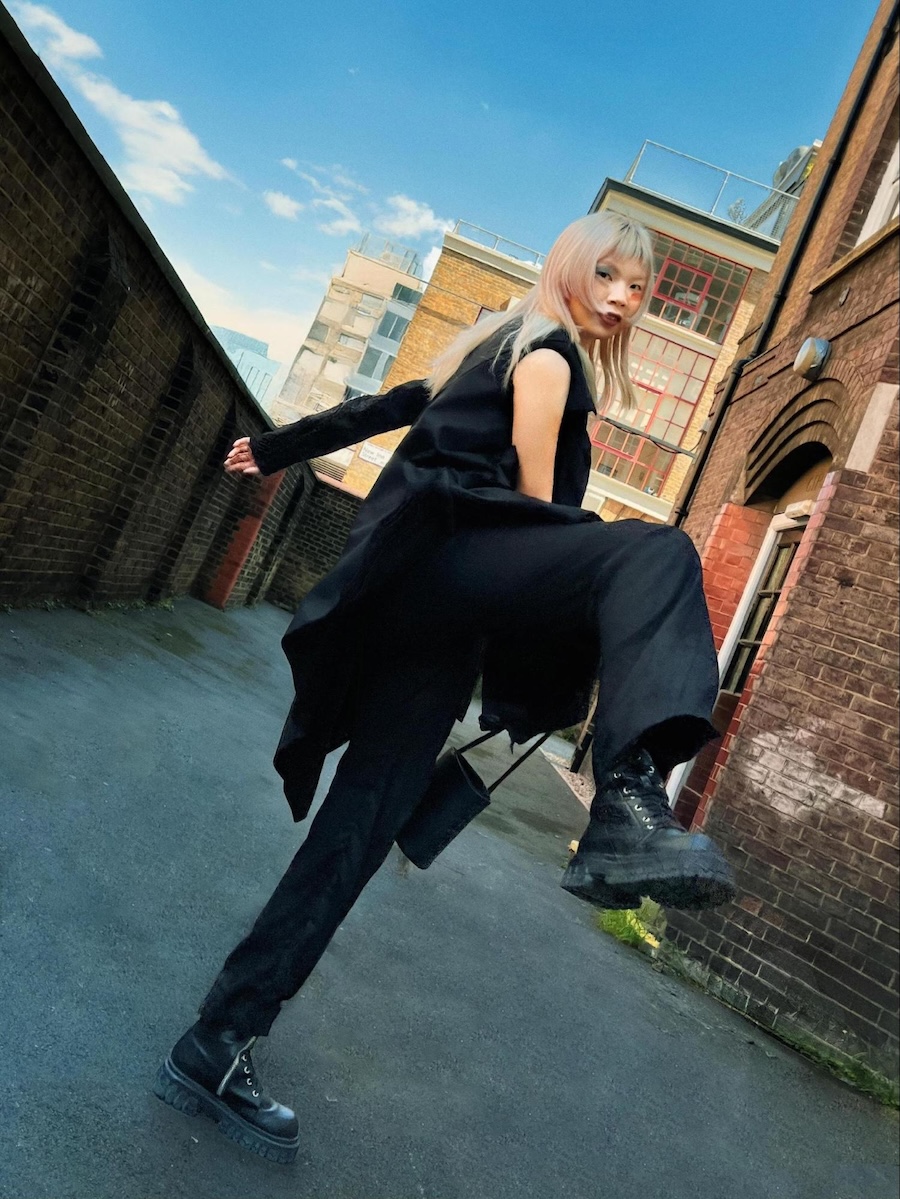
Moving beyond pure visual escapism, she designs for adaptation, working with the body as it actually behaves under stress, rather than how it is only expected to perform for an audience.
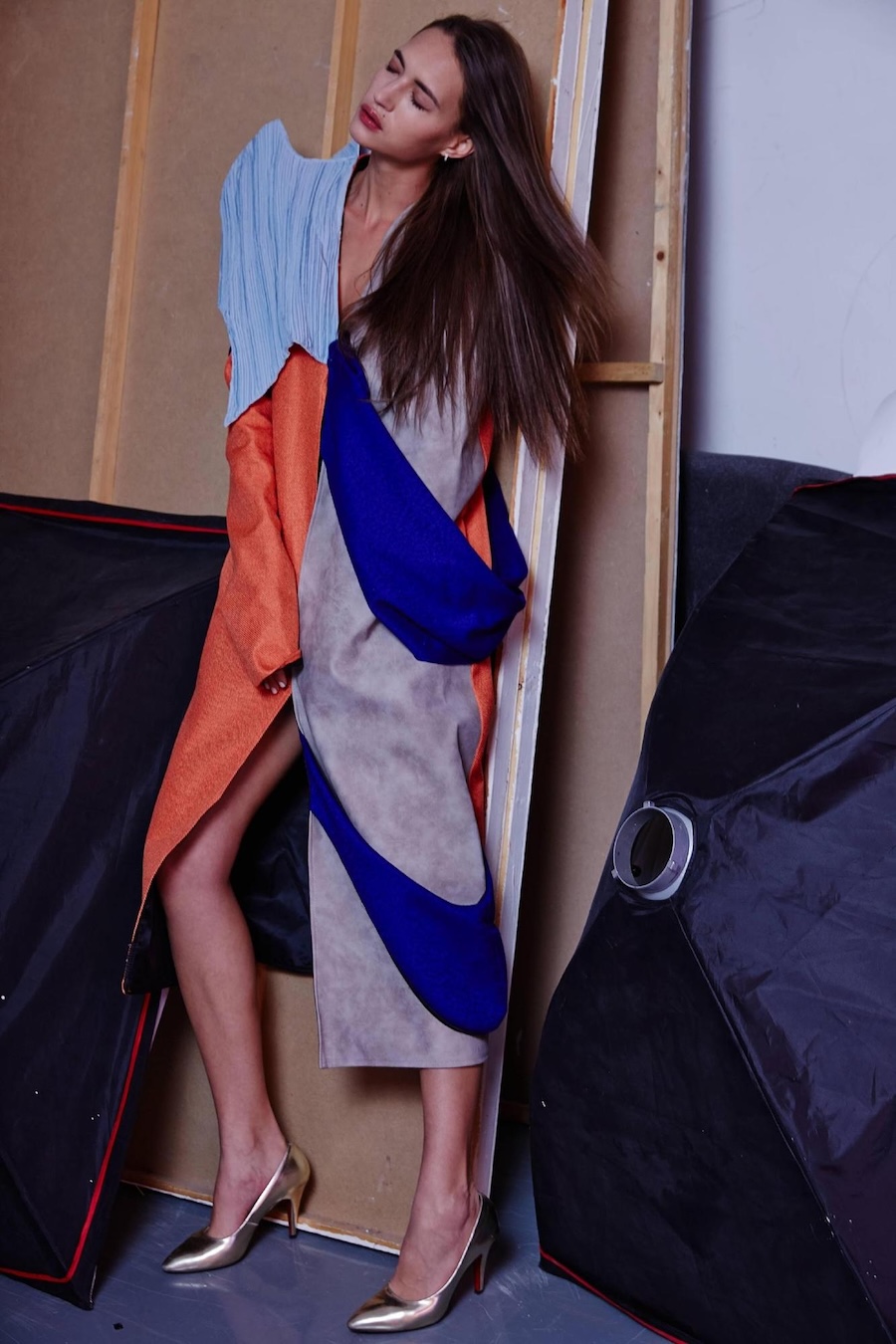
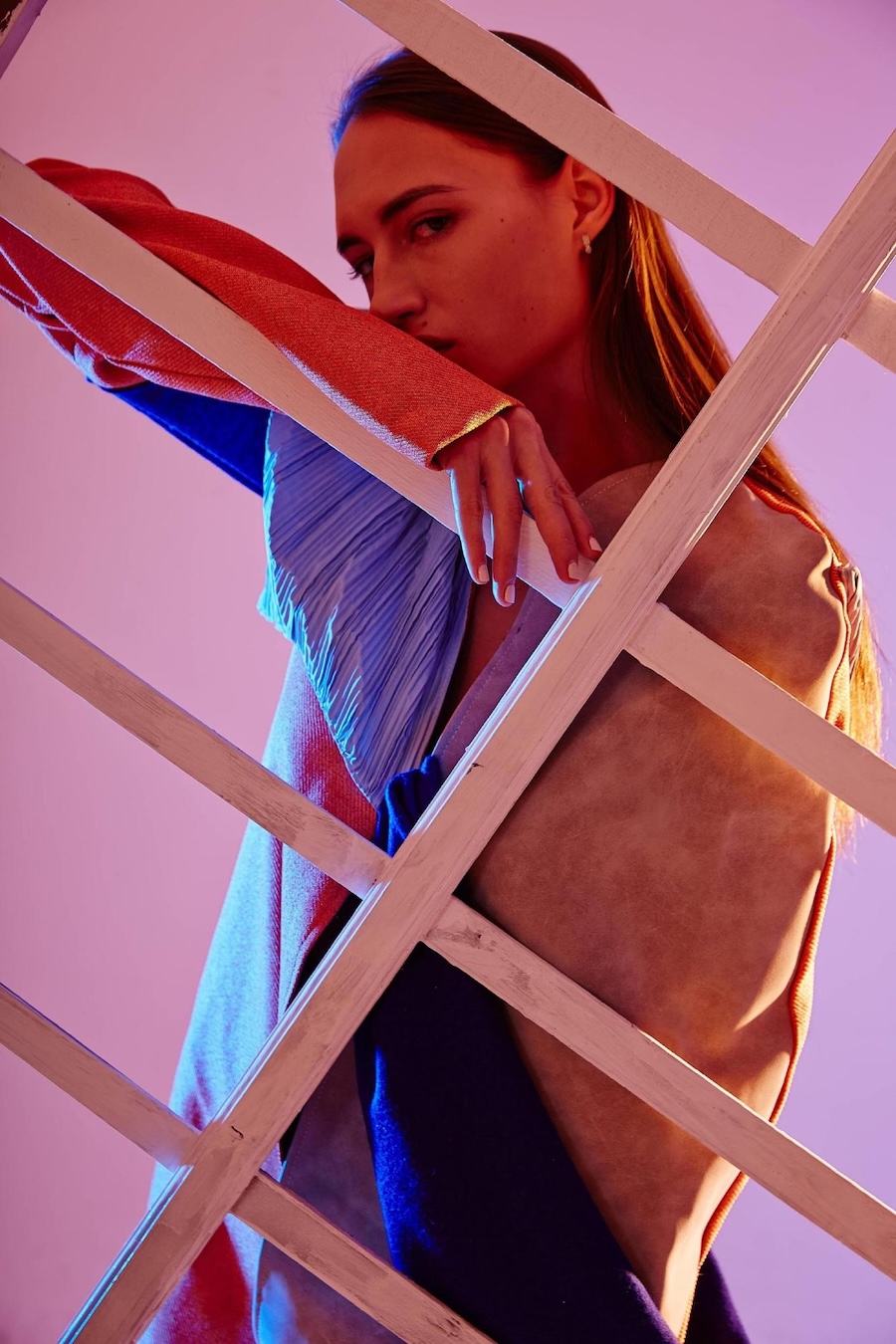
Take the familiar panic of running late. It is as physical as it is mental. Heat rises, coordination slips, and clothing falls slightly out of place as you rush to catch a train. In Just on Time, Hou leans into this fraction of a second. Crimson cuts through black and white; proportions skew, pull, and refuse to settle. What might read as dishevelled elsewhere becomes intentional here, achieved through avant-garde construction and innovative finishing techniques. The imbalance, even the “ mistake, ” is held in place without correction.
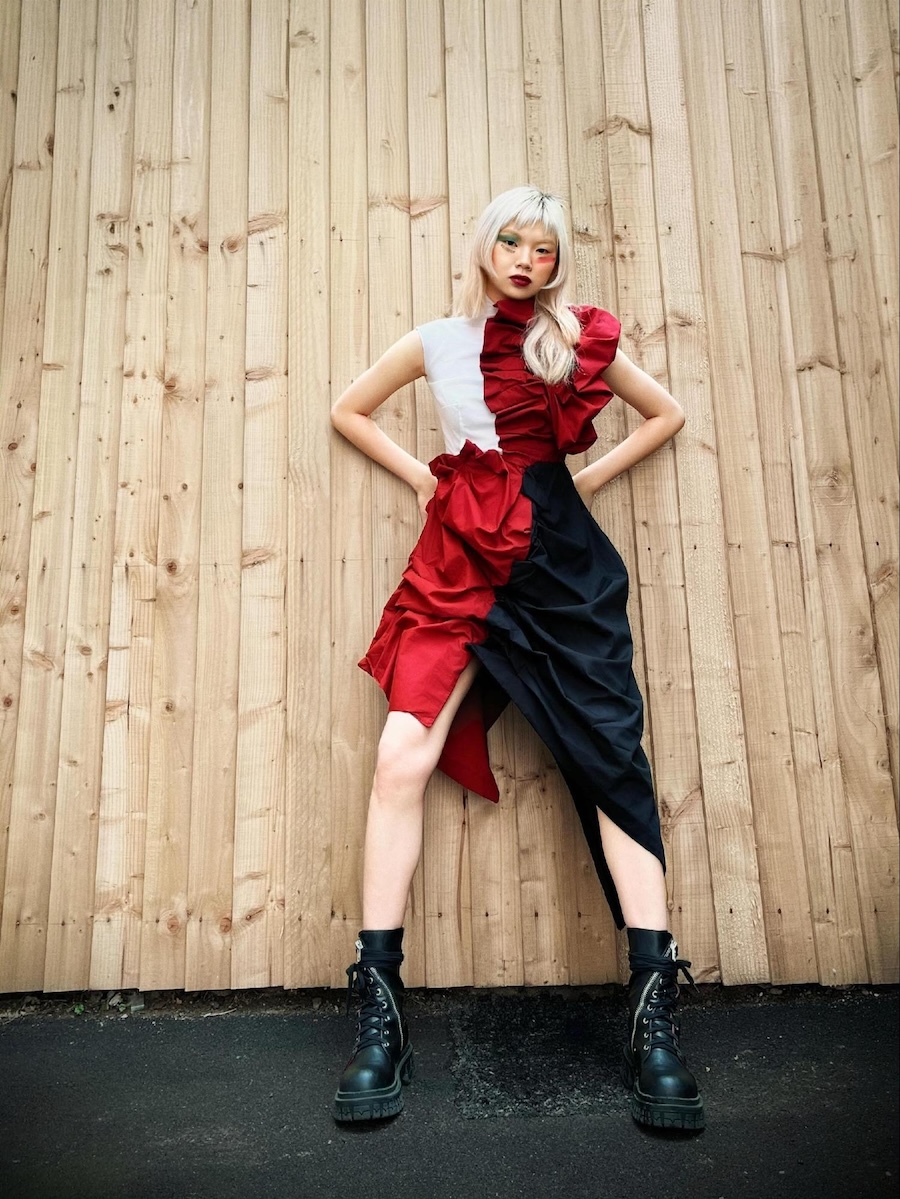
But the work stops being just an image when you look at the fabric and construction. These garments are engineered to manage what the body goes through. Ventilation is placed where the panicked body needs it most, allowing heat to dissipate at points of pressure. It’s a subtle intervention, but it shifts the logic entirely: the clothes do not simply represent urgency; they participate in and manage it. The wearer appears composed within chaos, but that composure is built directly into the architecture of the garments, not assumed.
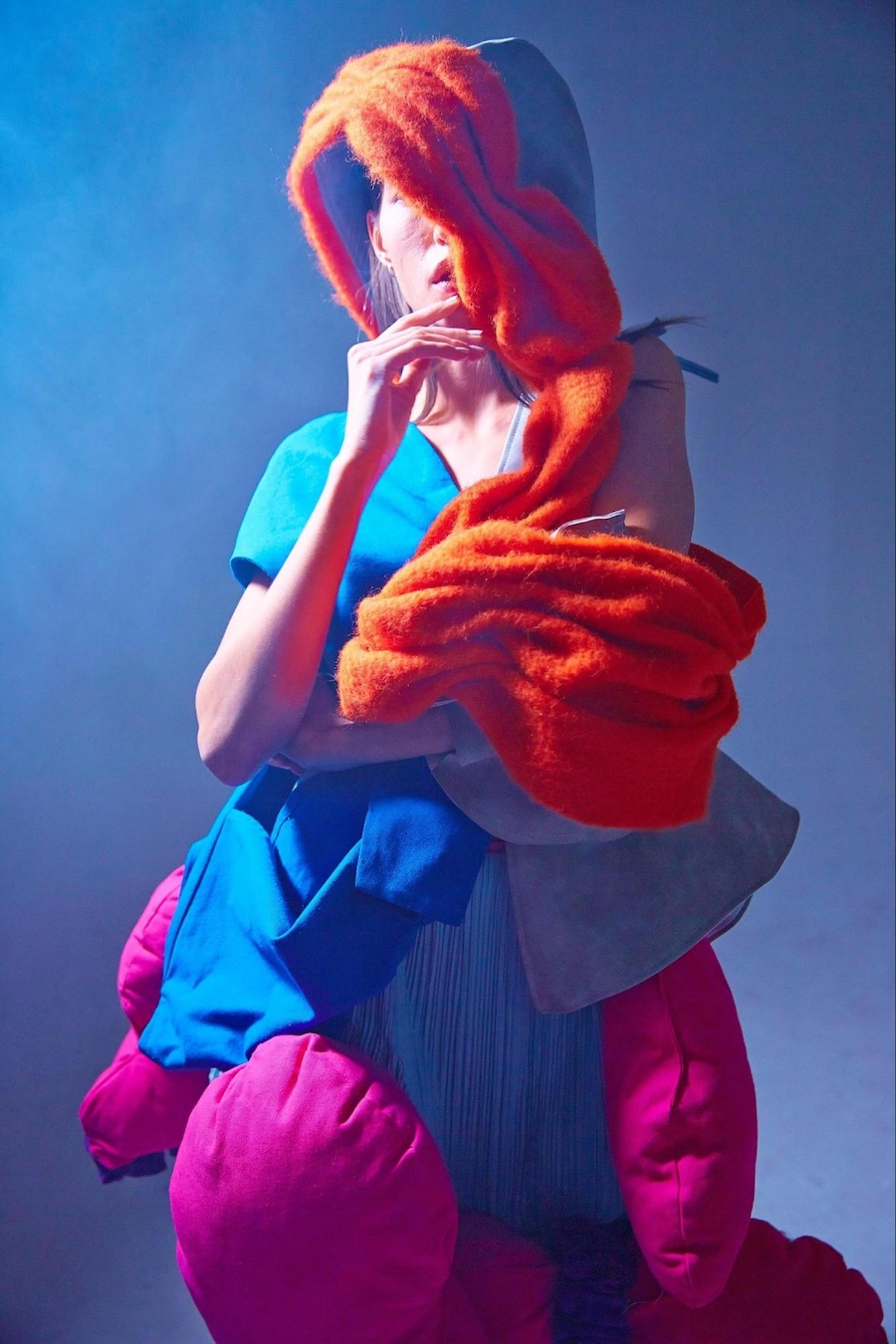
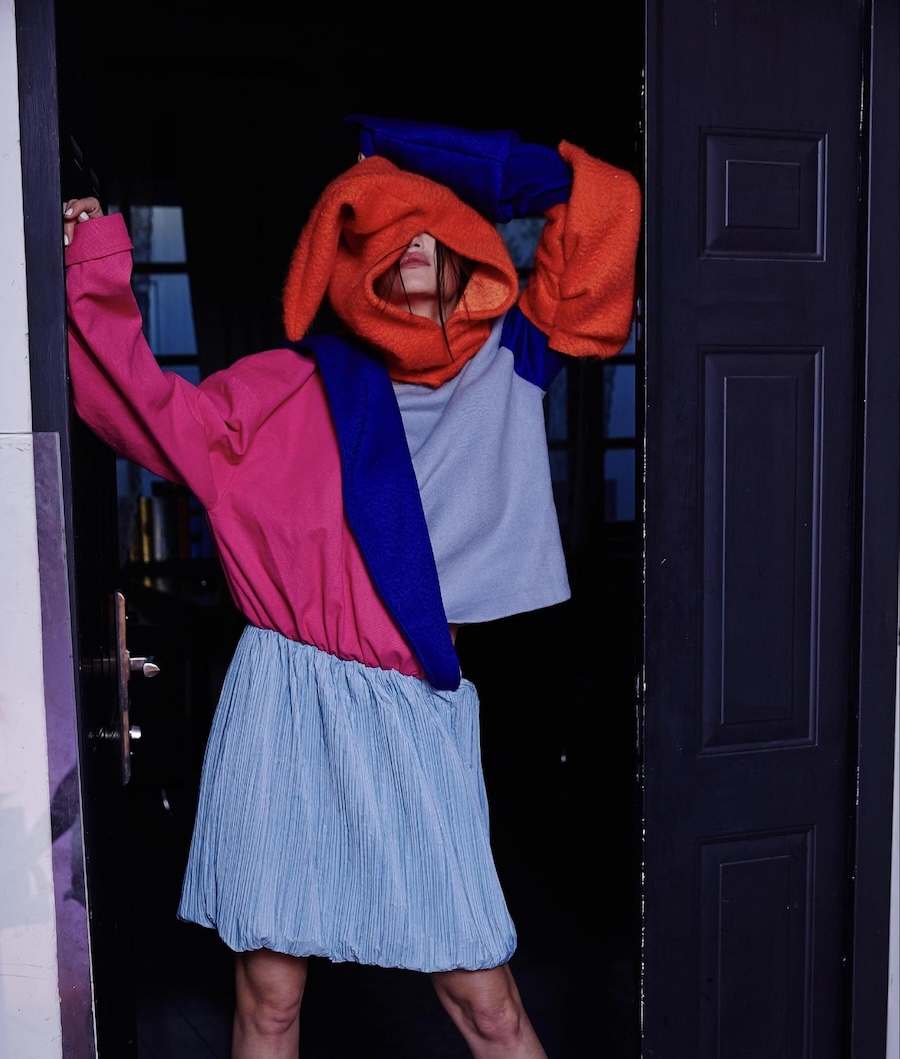
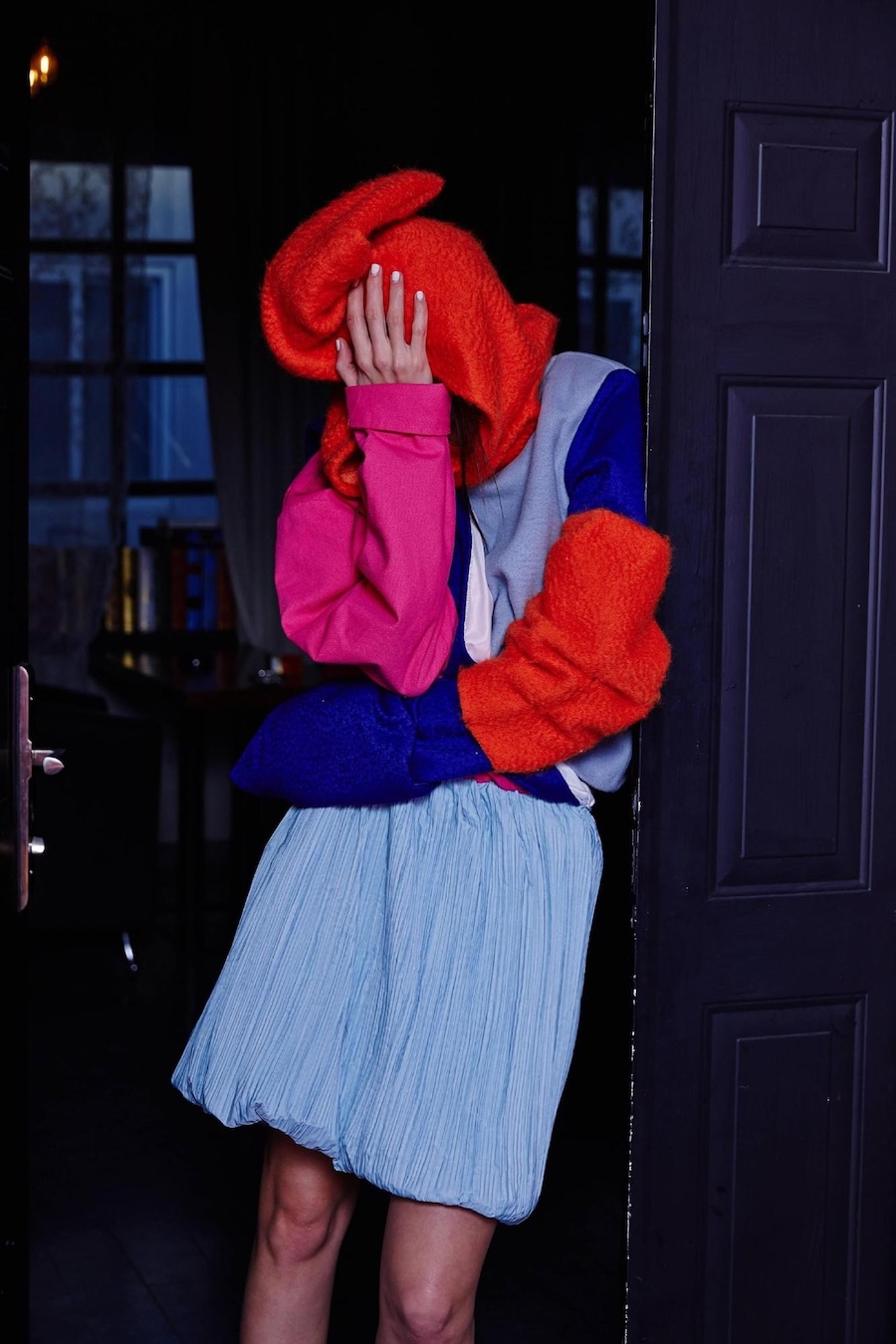
While Just on Time engages the speed of life, Soft Armour turns to density — the quieter, more constant pressure of the city. The demand to shrink, to fold into limited space, and to create distance. Hou pushes back with volume. Exaggerated padding expands the body outward, softly pressing against its surroundings and refusing to yield to them, while oversized hoods obscure the face, creating a self-contained, inward sanctuary.
This is where Hou’s key design tension lies, alongside a brilliant ability to transition states of being. The garments begin from a vulnerable, defensive place, yet finish as a source of agency, carrying a certain directness. The body withdraws and asserts itself simultaneously
Hou’s work integrates both expression and function. It reads as a recalibration of how the body moves, overheats, protects itself, and takes up space. In that sense, she proves that fashion can be more than just an image; it can be a highly intelligent, wearable response and solution to modern life.
By merging psychological awareness with functional design, Hou shifts fashion closer to the realities of the body. The garment becomes a site where internal states and external conditions are negotiated in real time.
Presence becomes something solid. It is felt, and it takes up space.
 .
.
