

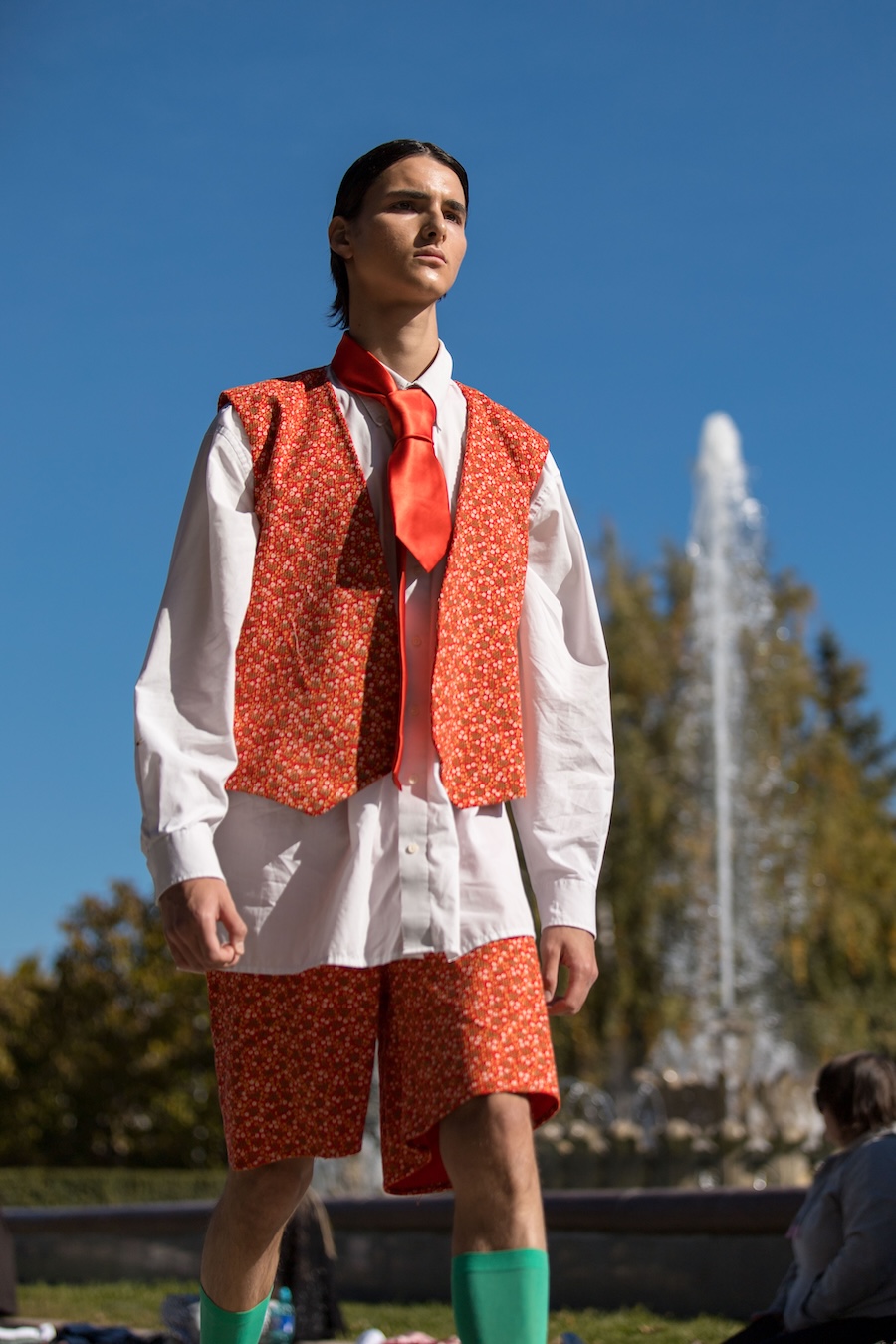
We had the honor of being invited to the eighth edition of Moldovan Brands Runway @moldovanbrandsrunway, a week dedicated to giving Moldovan creativity the international stage and cultural space it truly deserves. Across the schedule, a new wave of independent voices stood out for refusing to imitate Western fashion clichés, instead grounding their work in raw local reality, community spirit, and fearless experimentation.
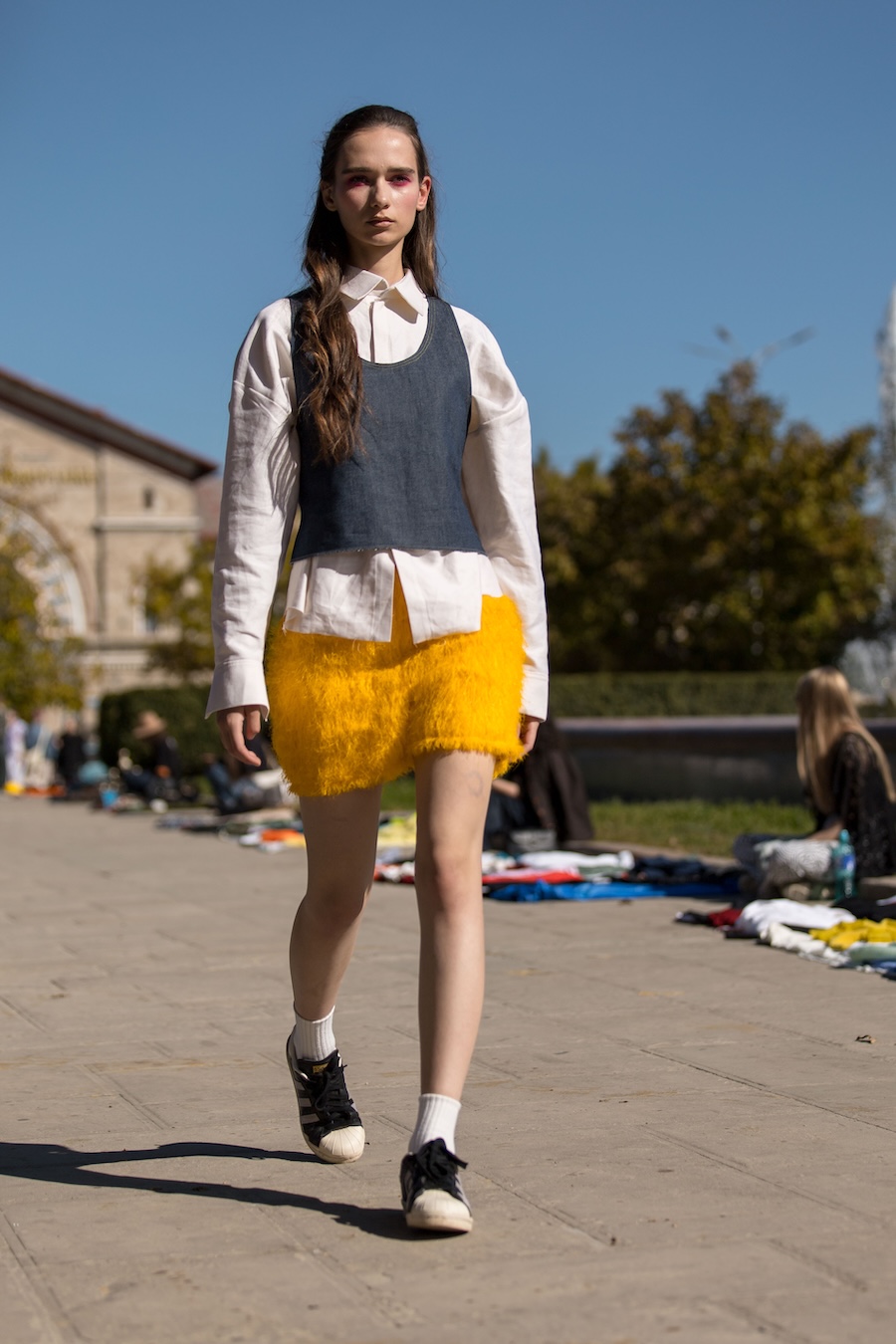
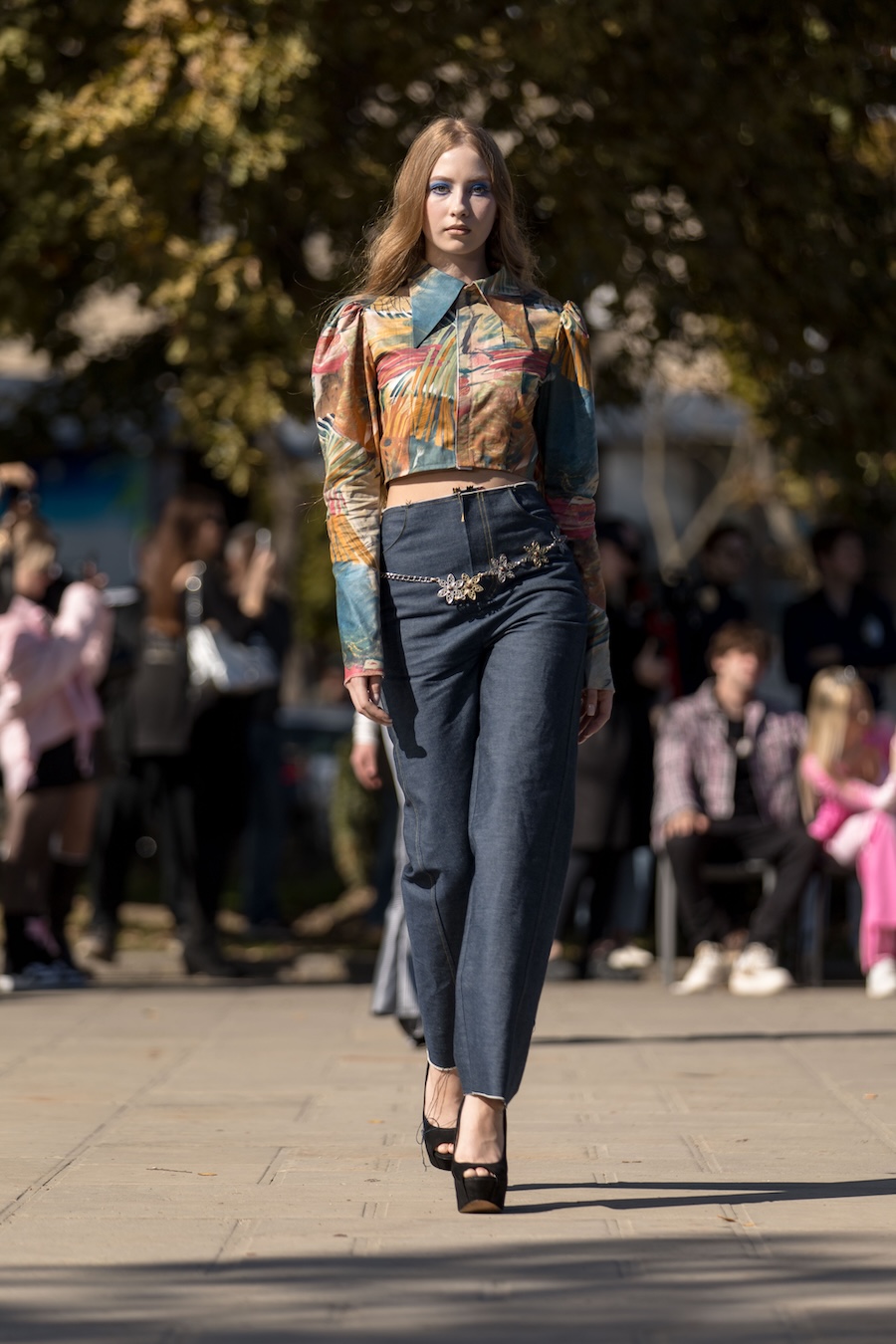
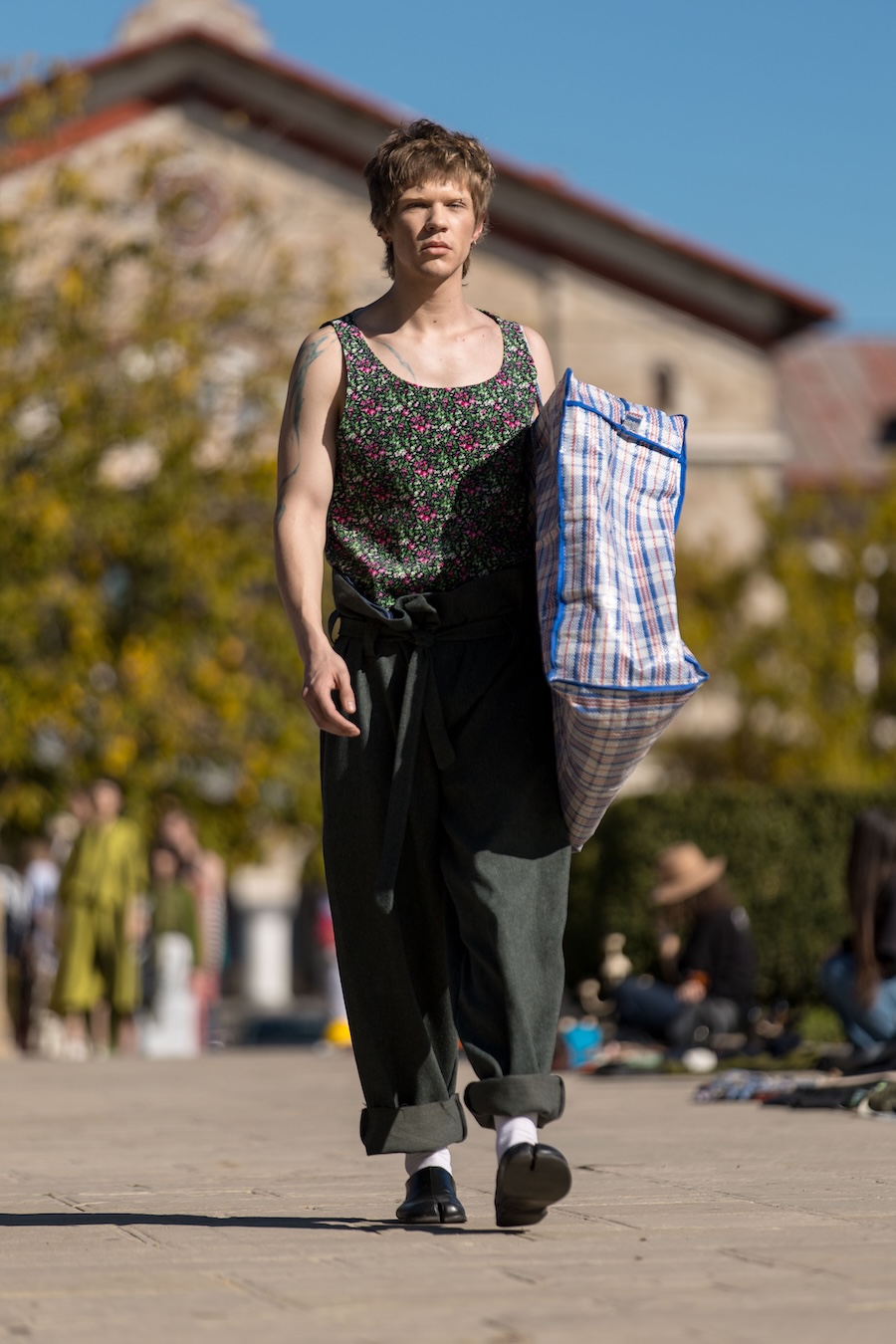
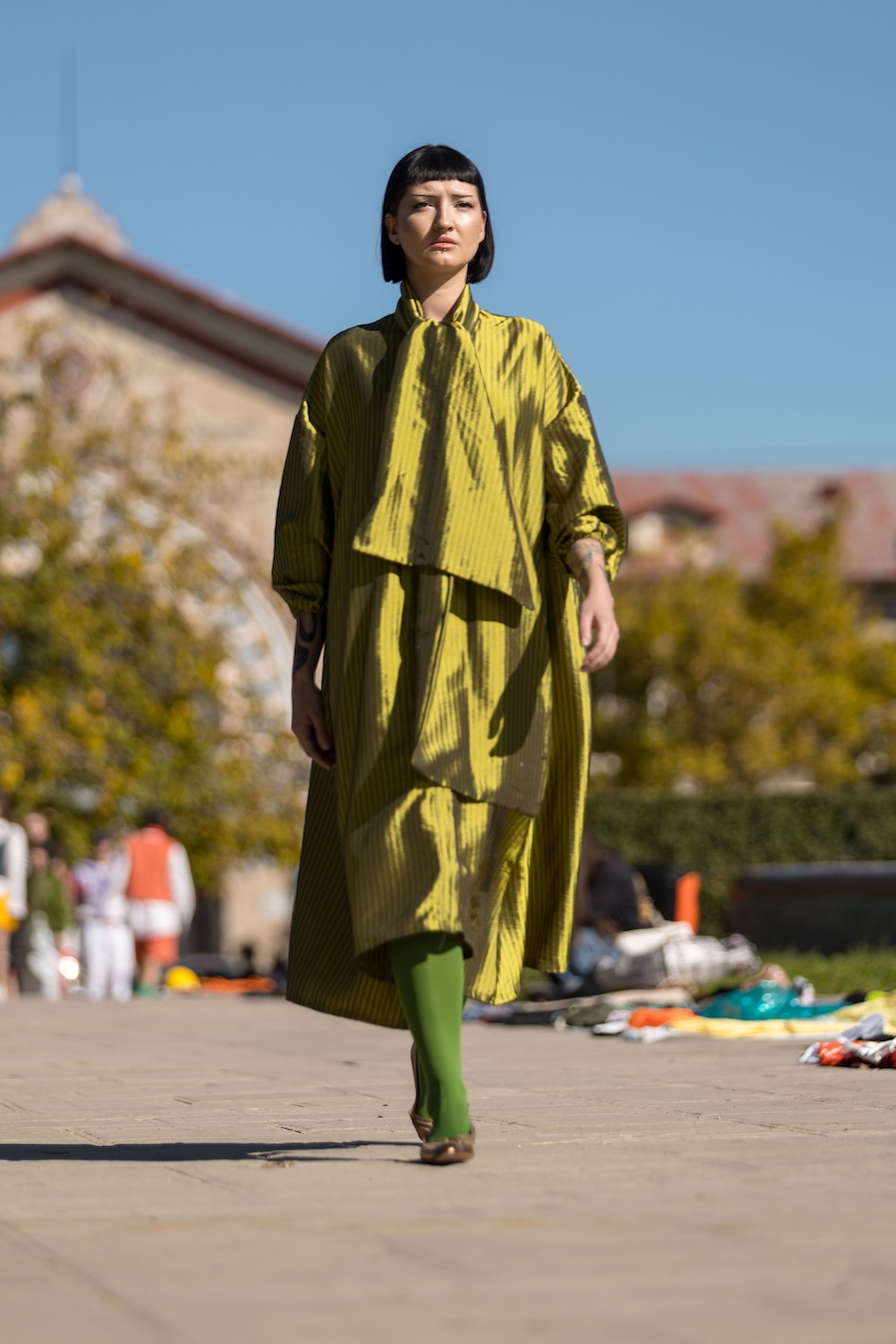
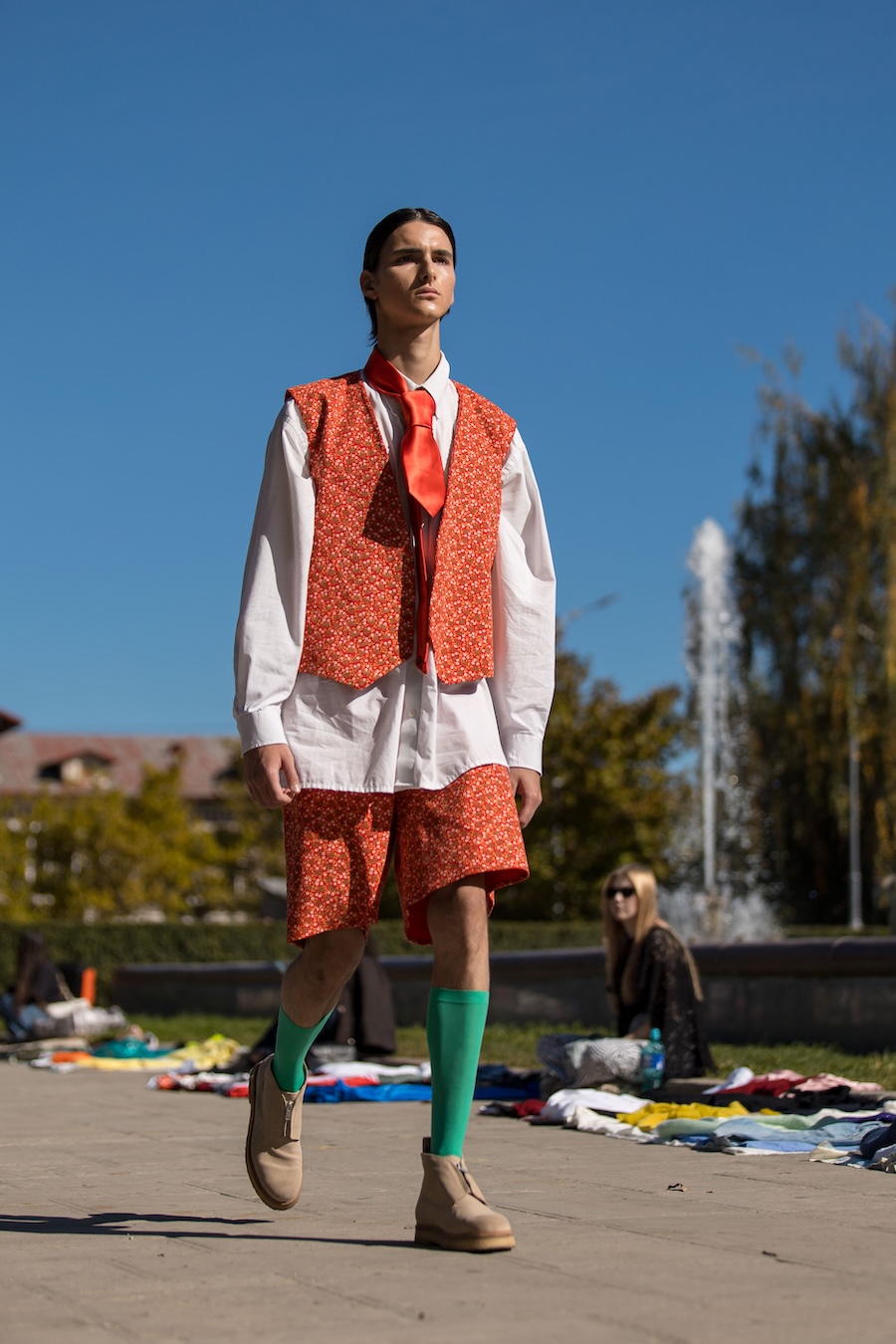
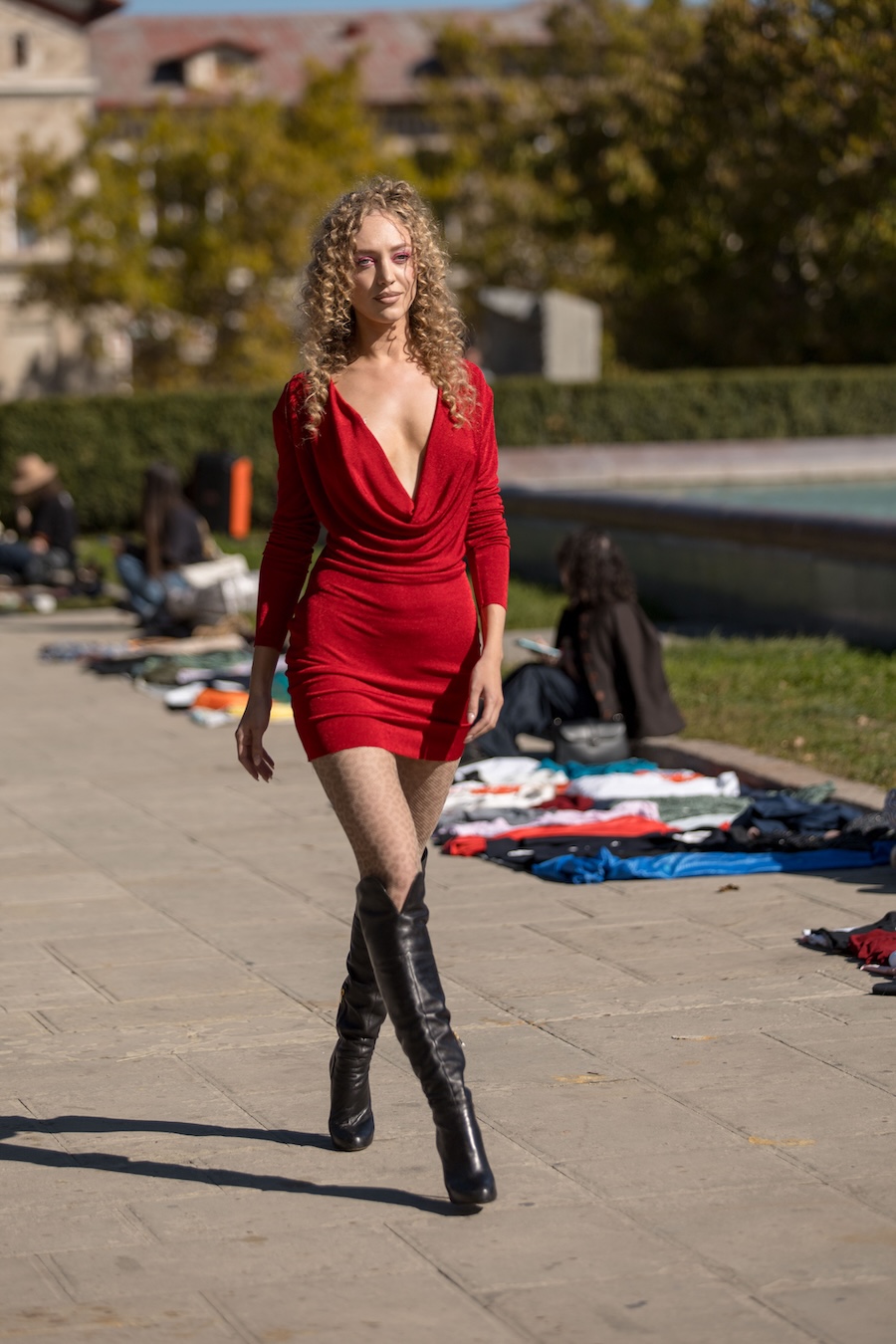
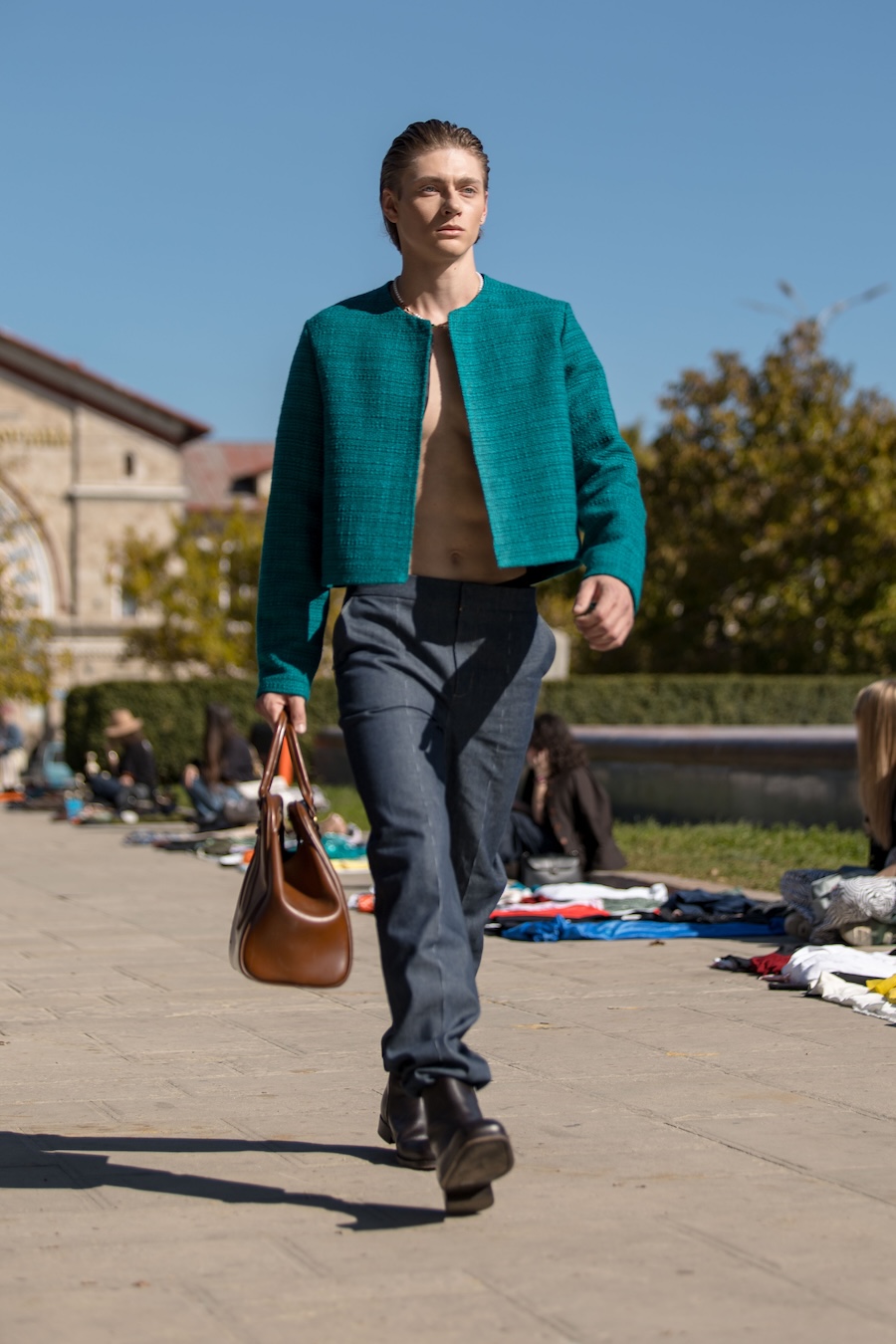
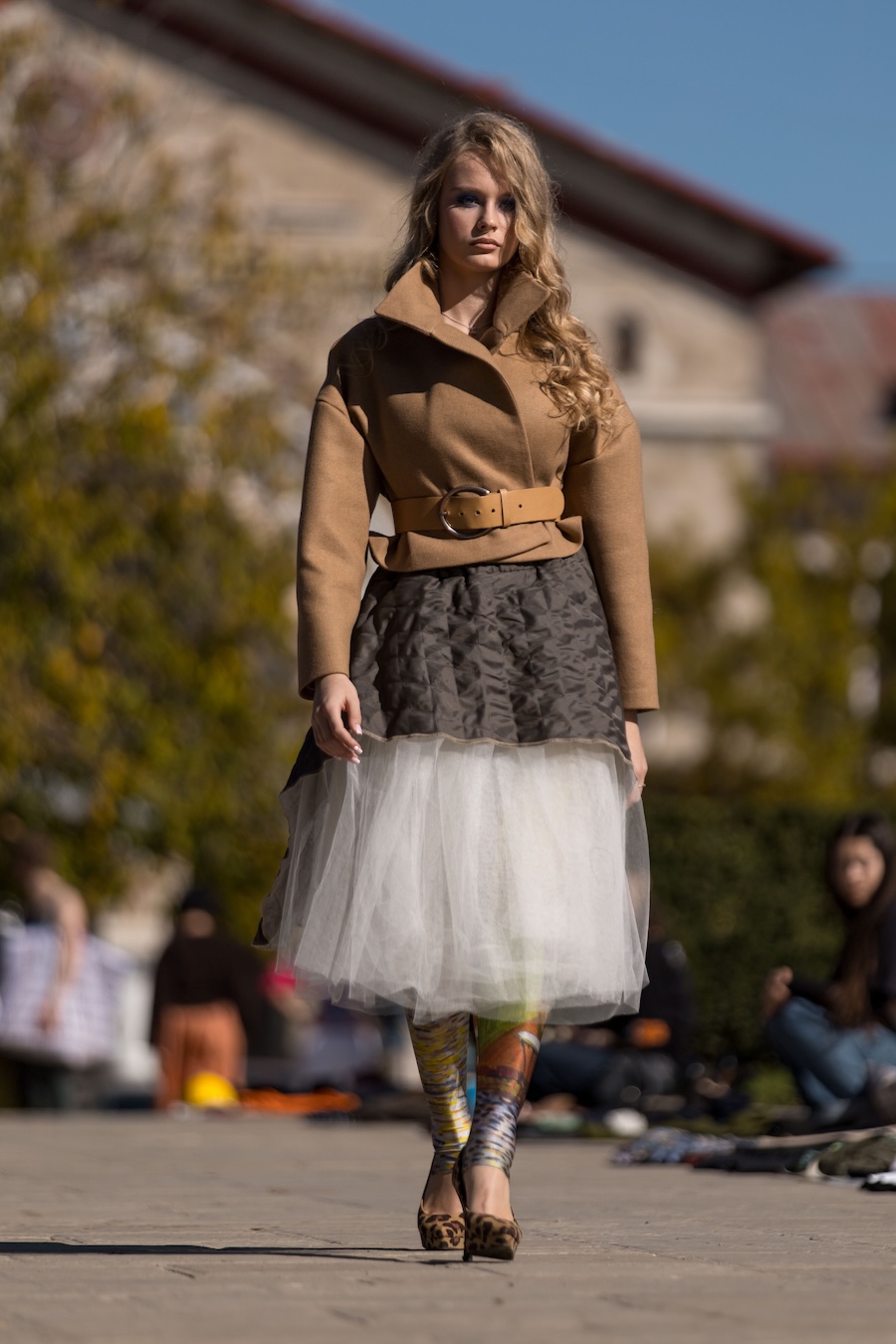
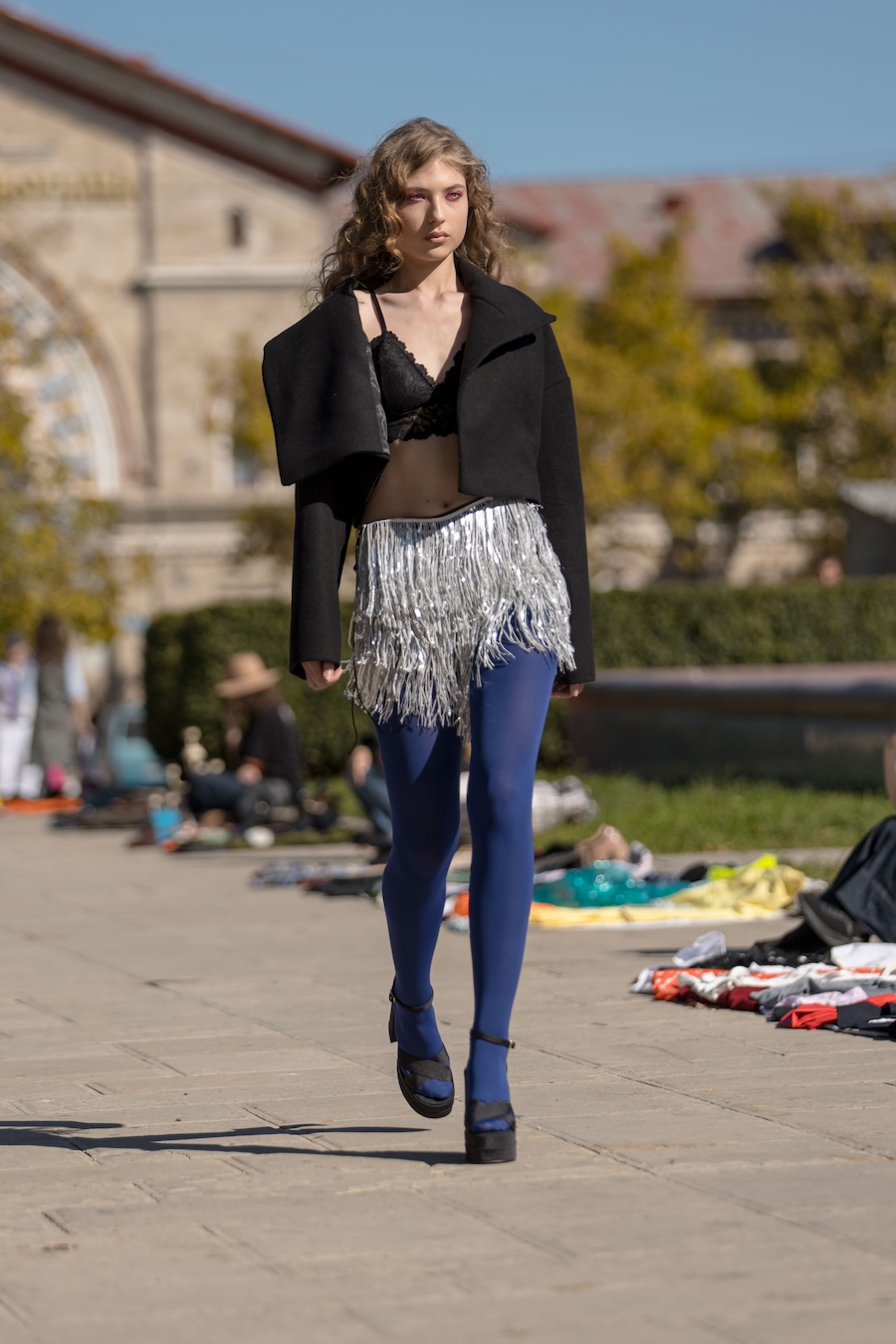
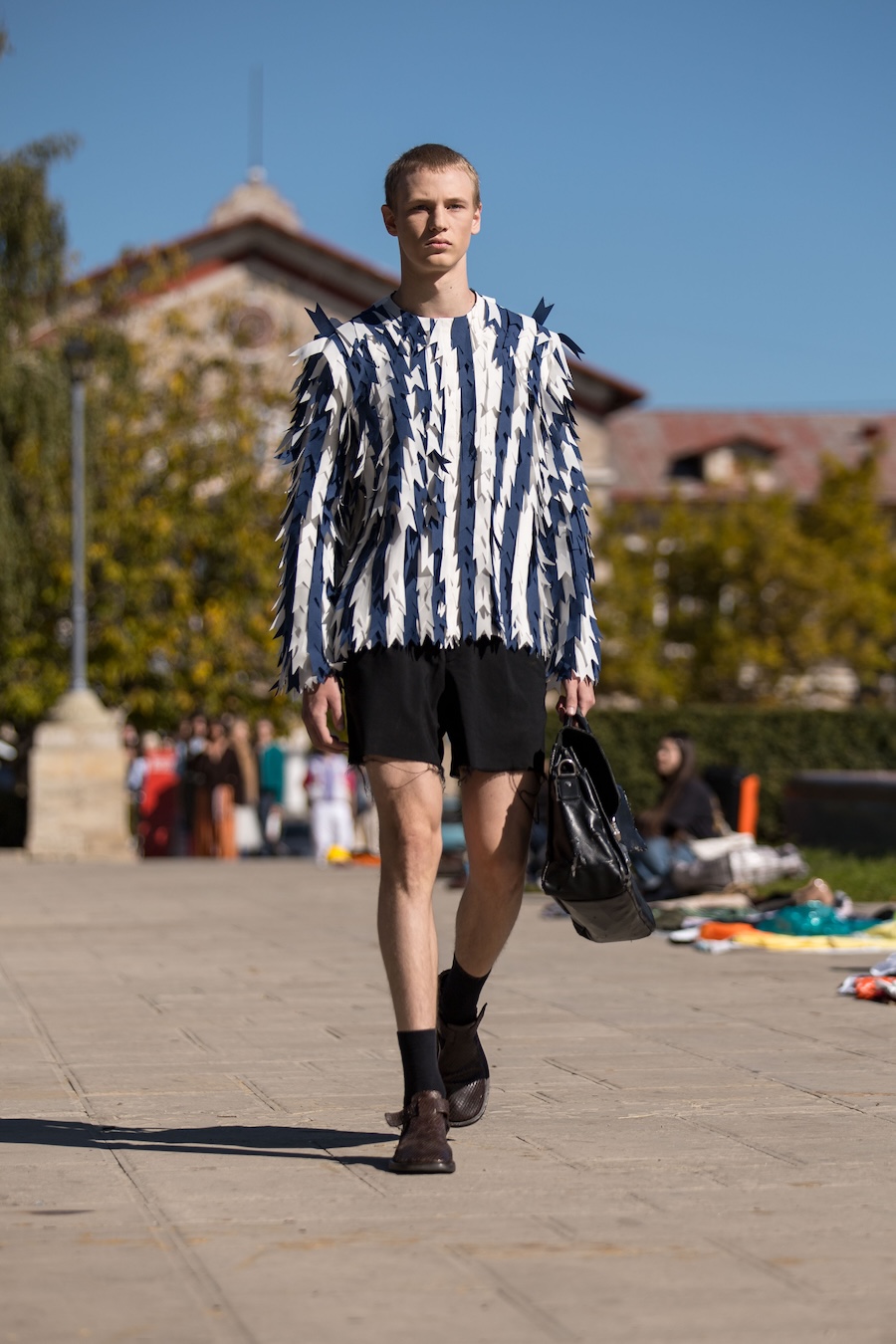
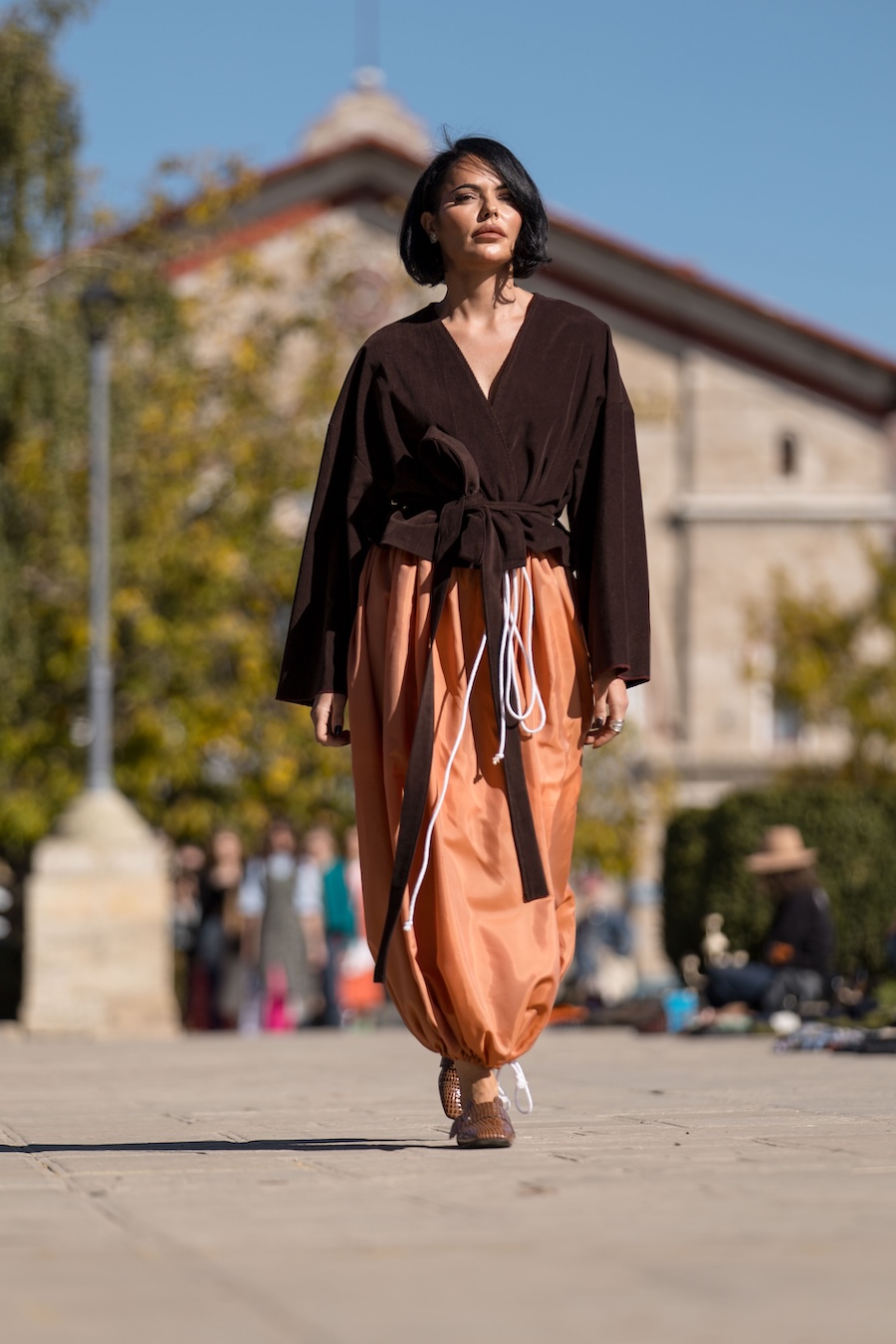
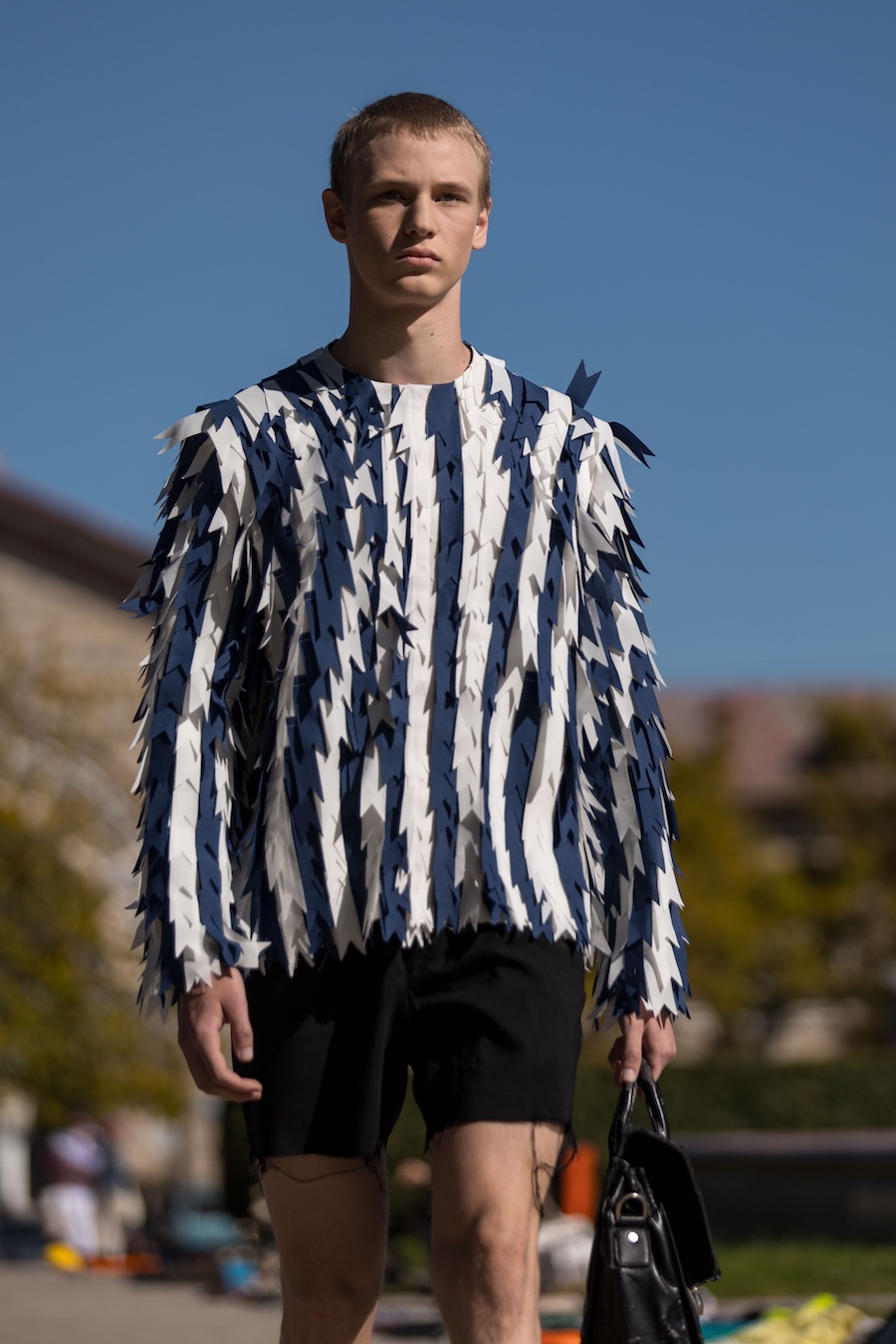
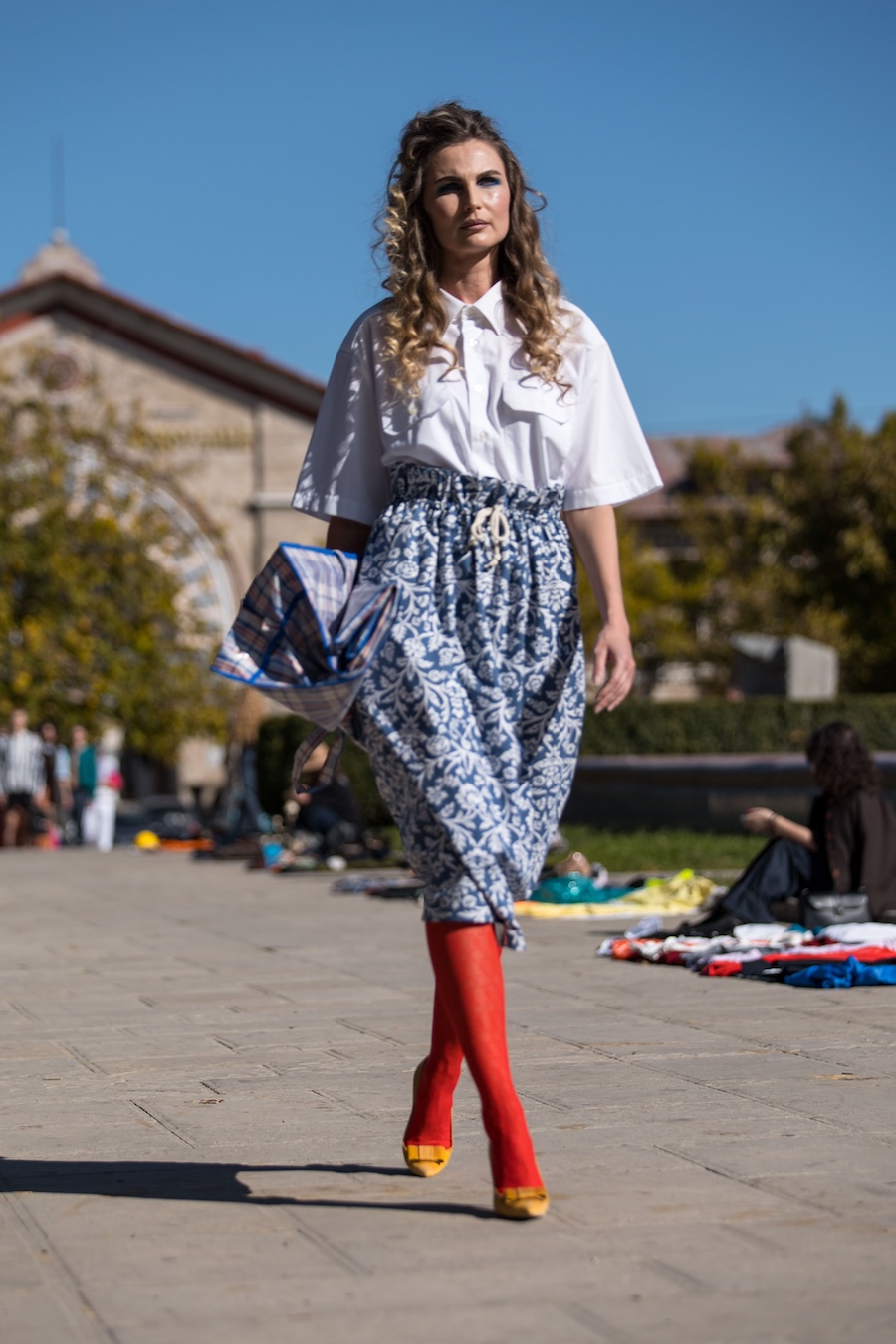
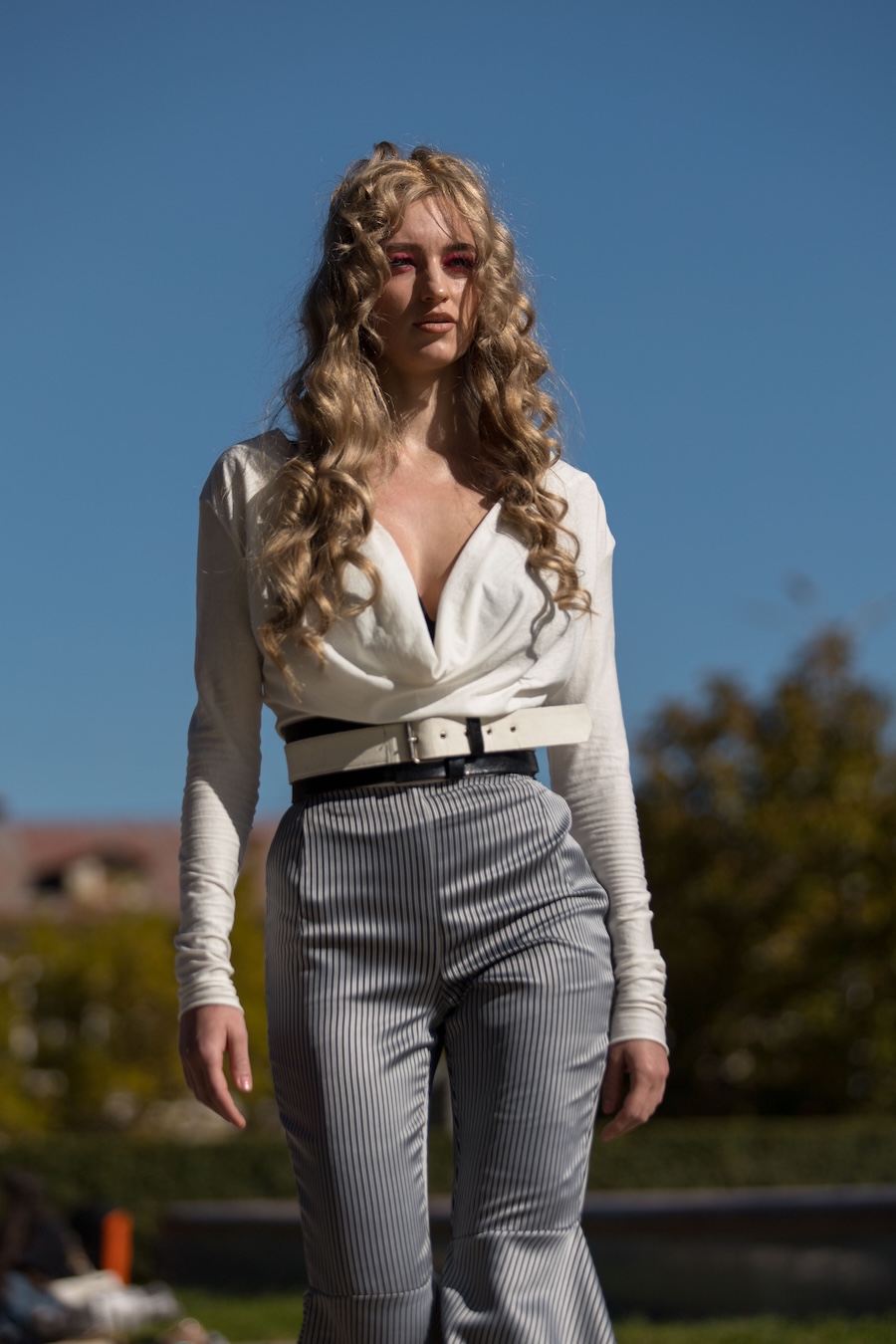
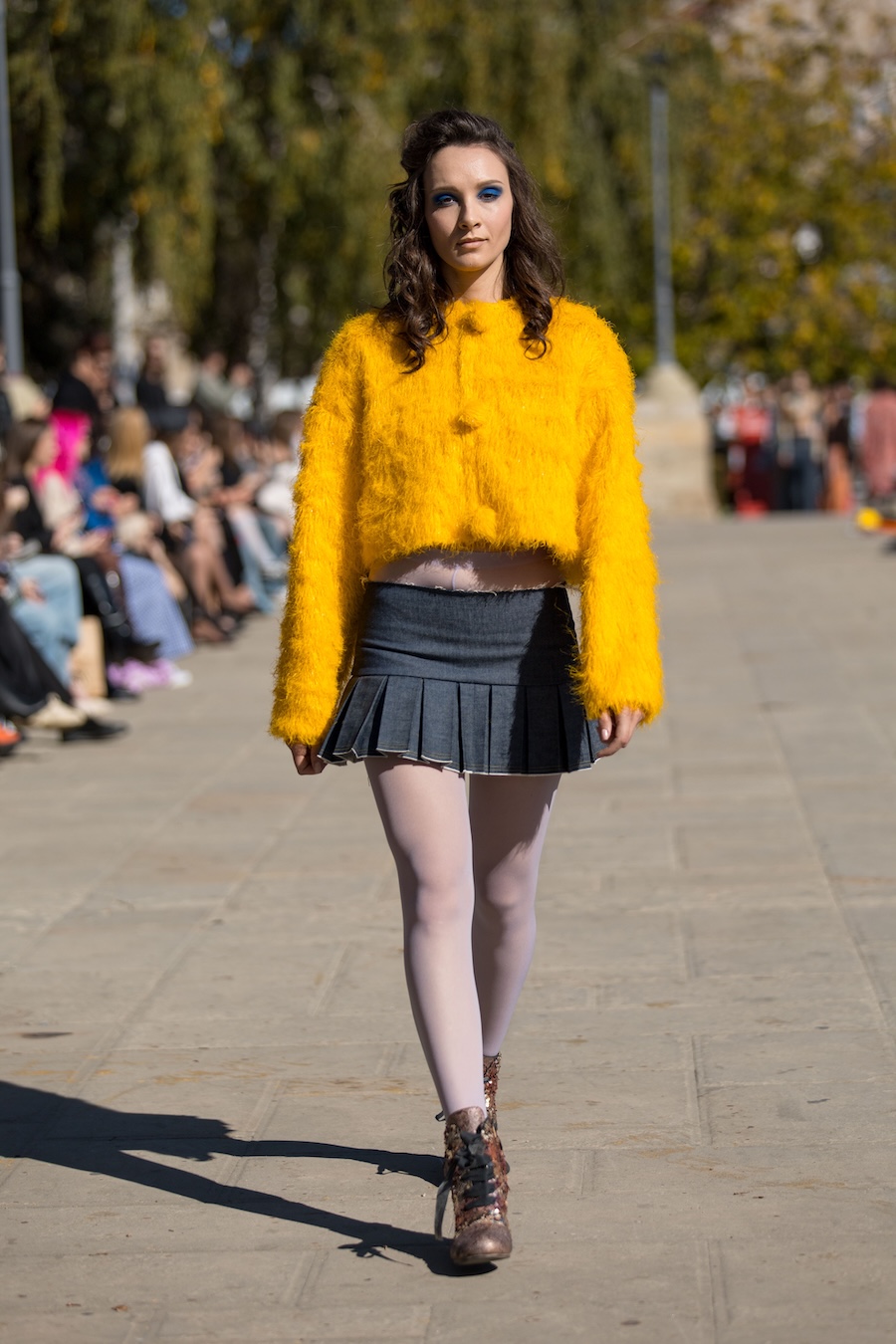
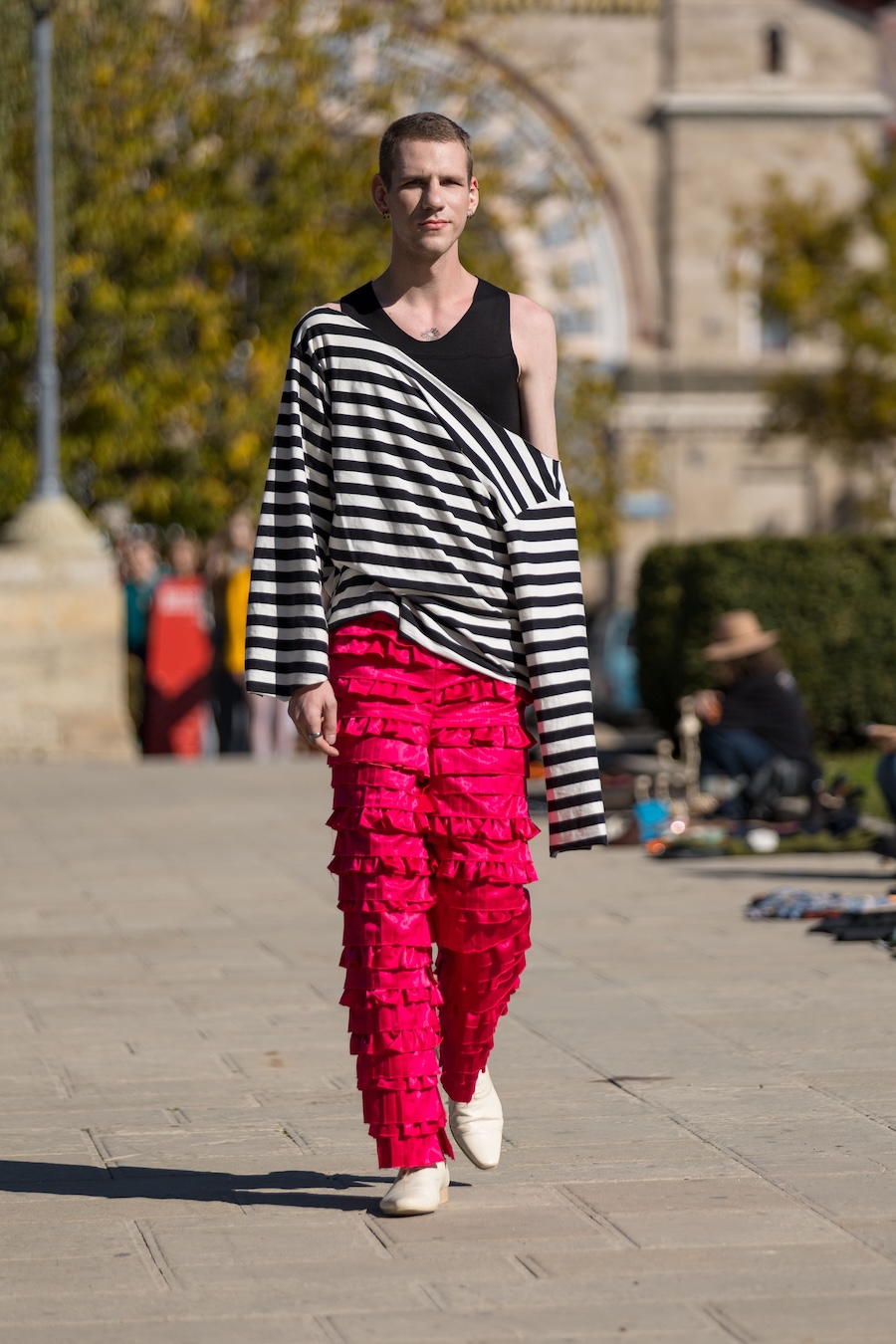
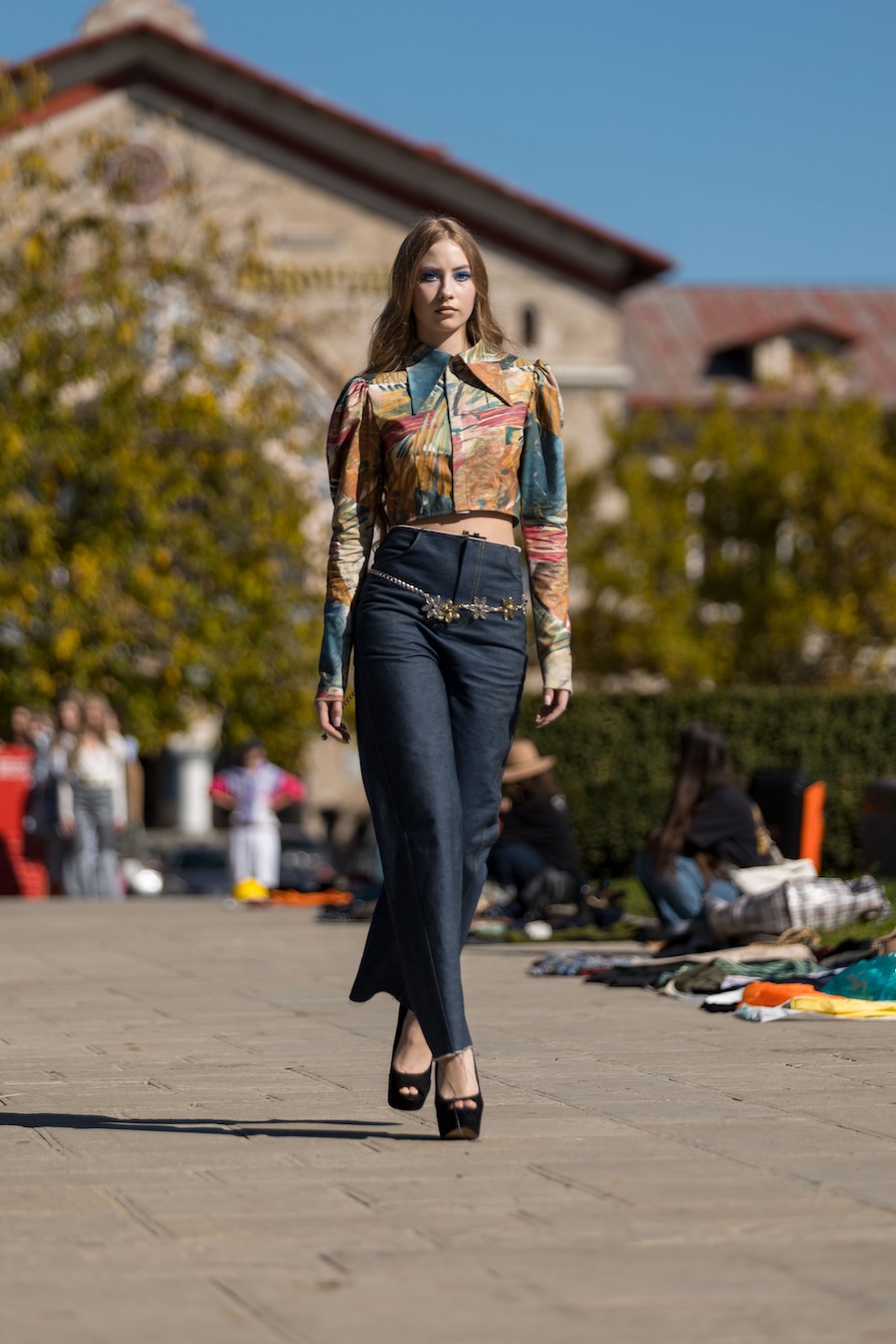
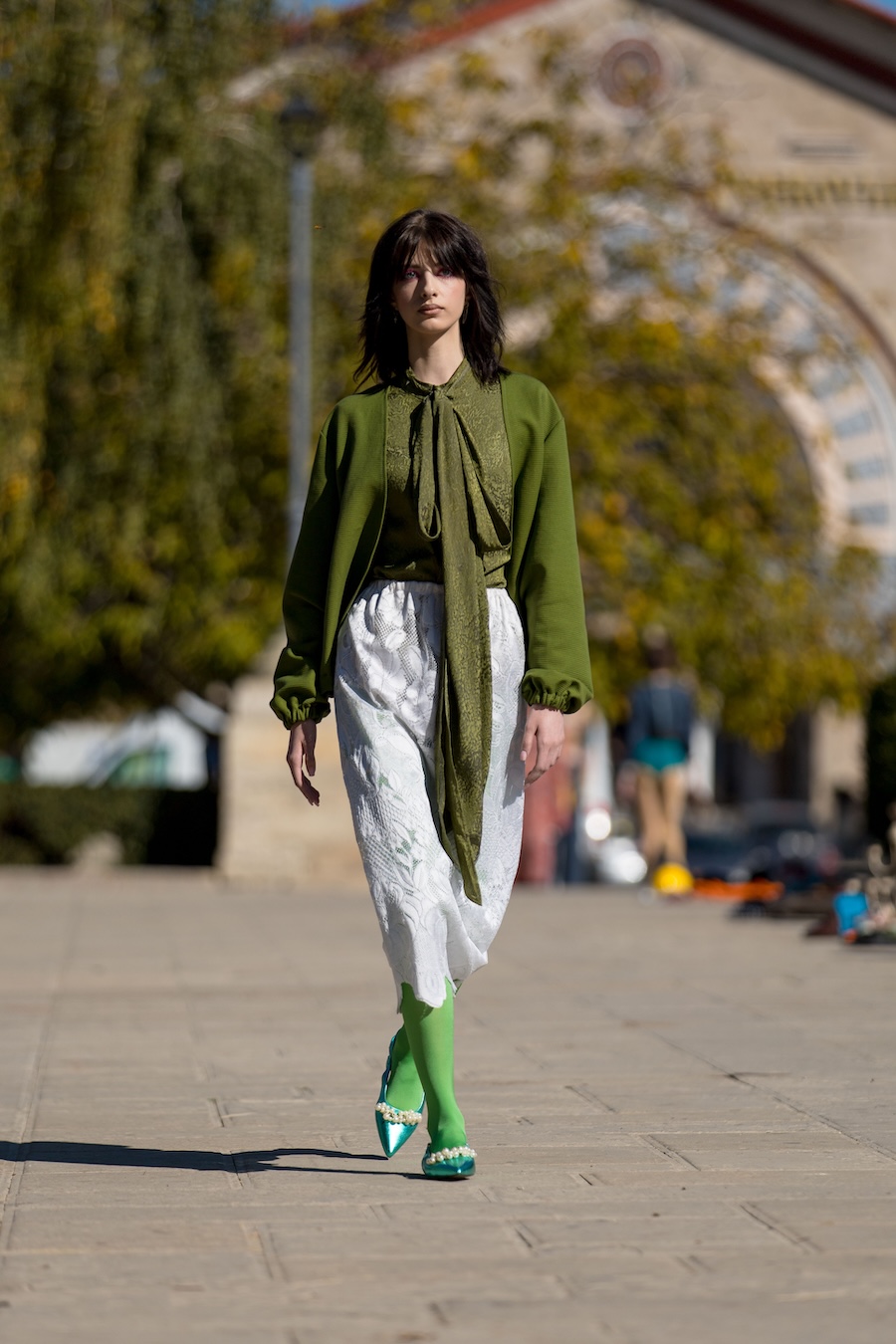
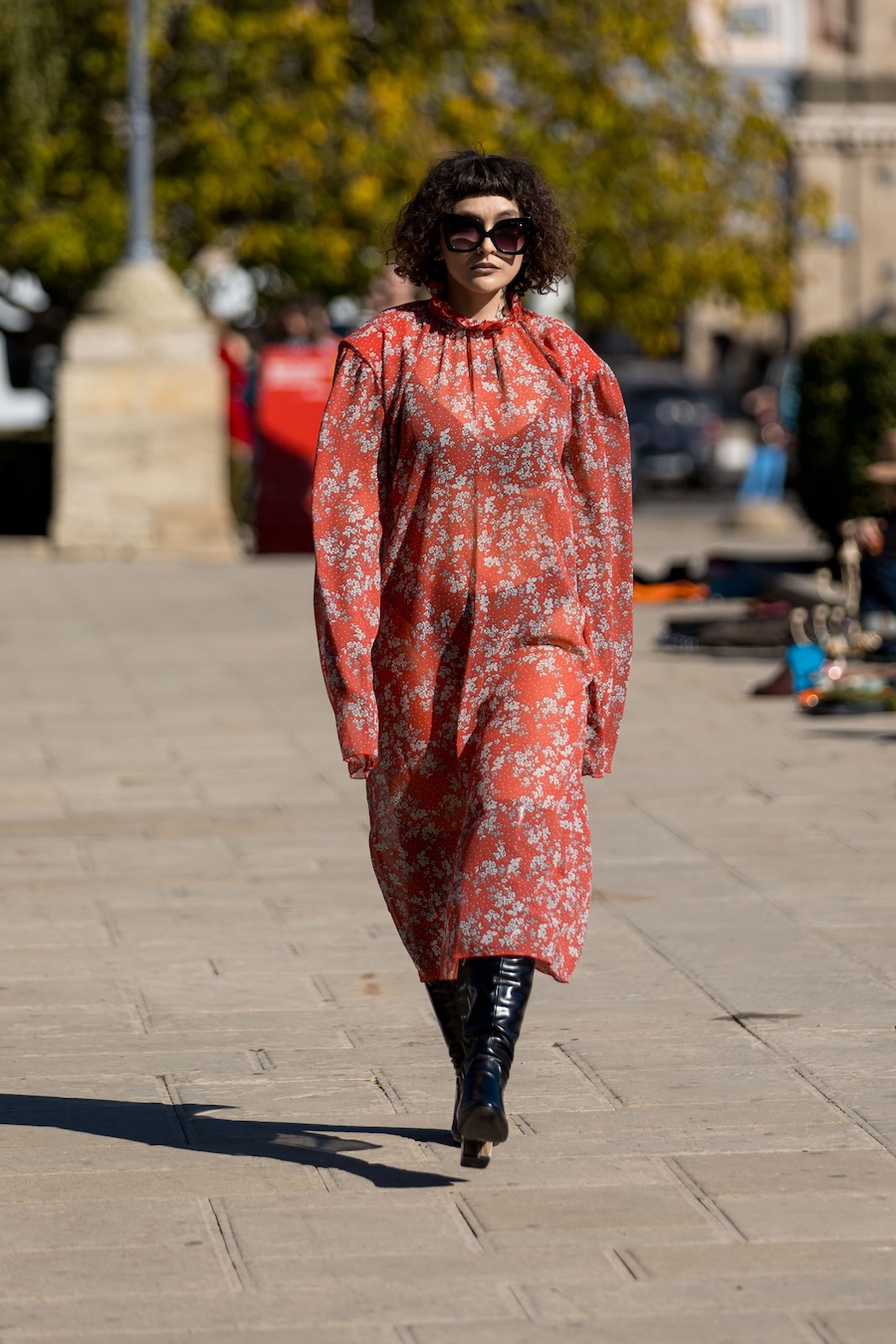
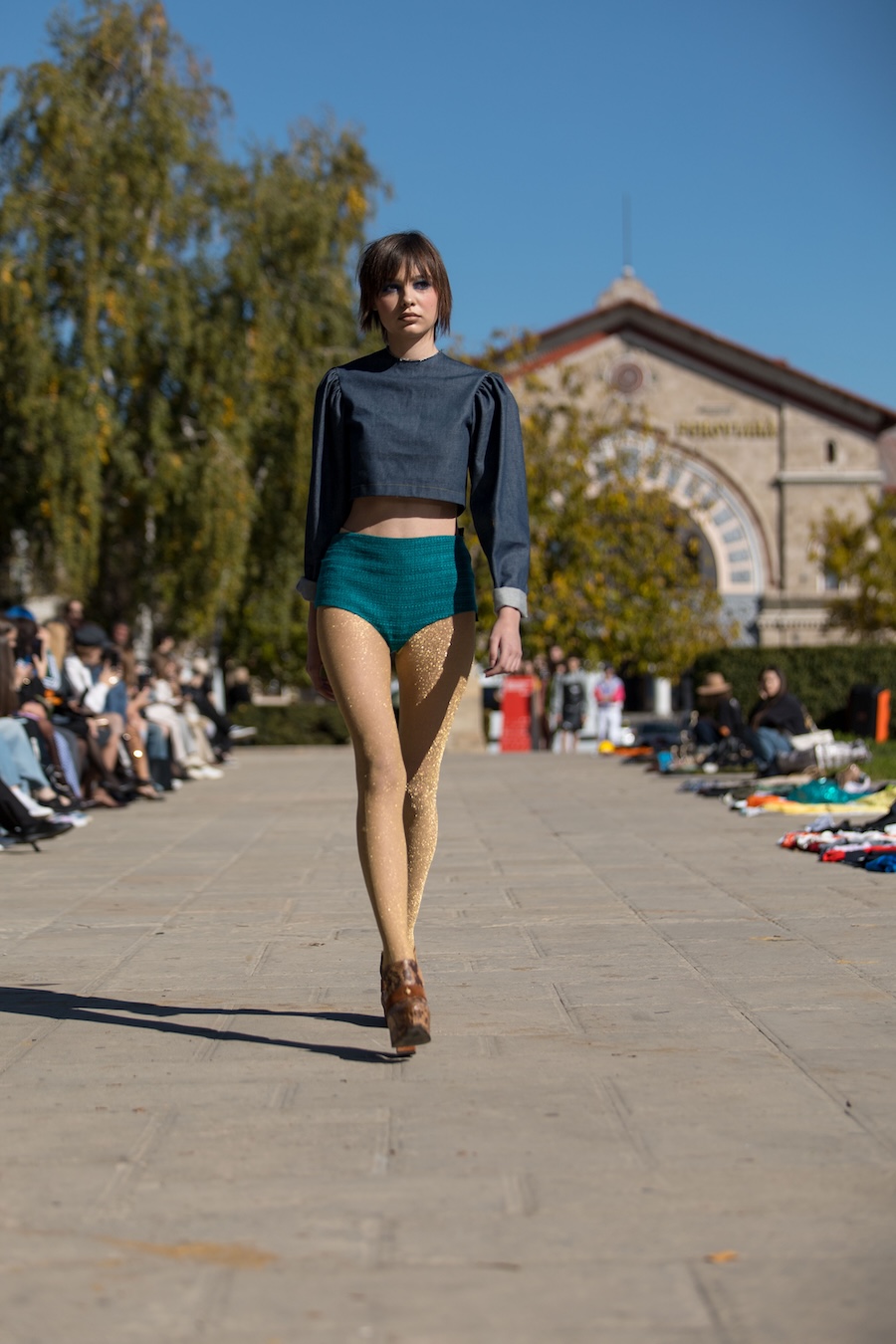
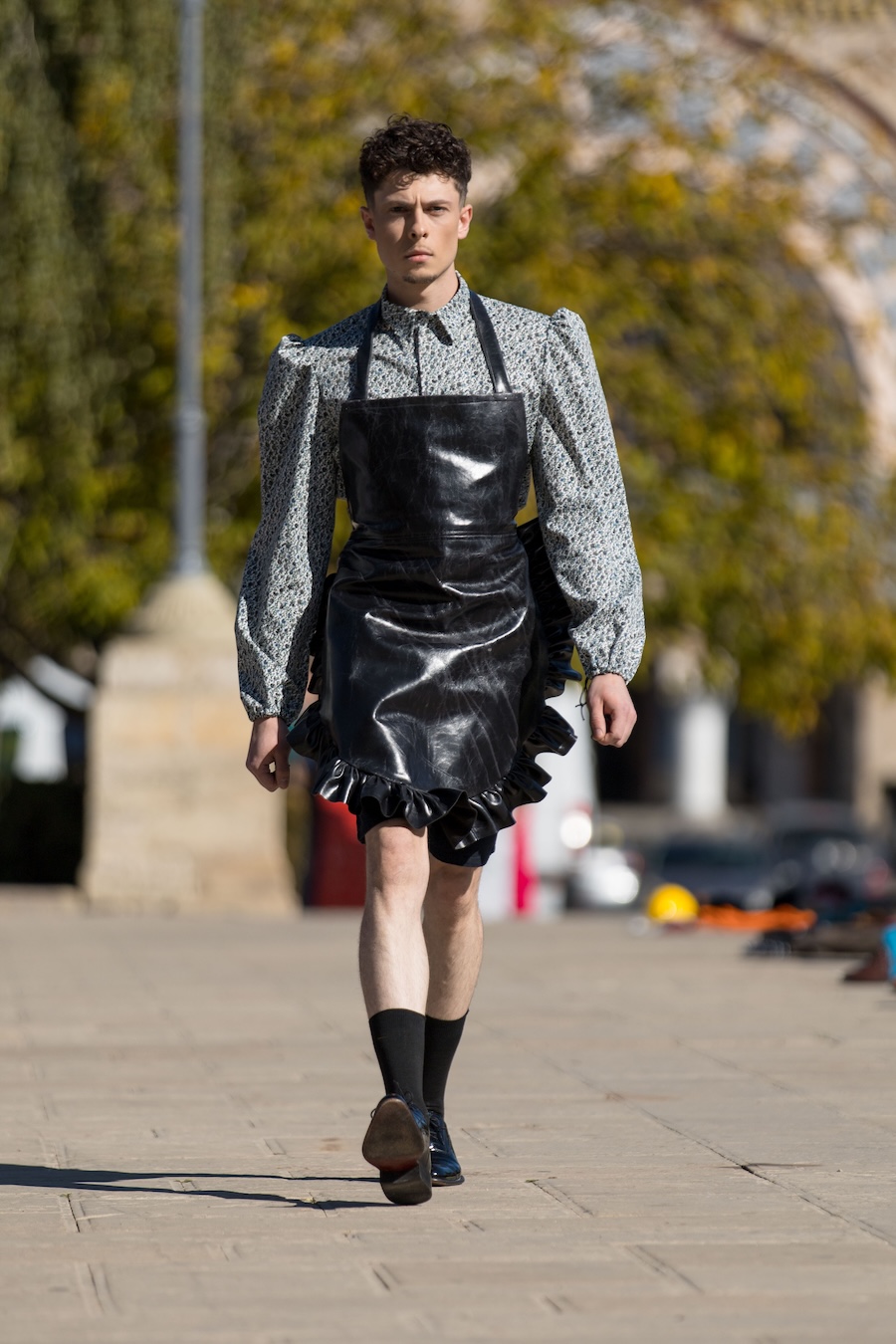
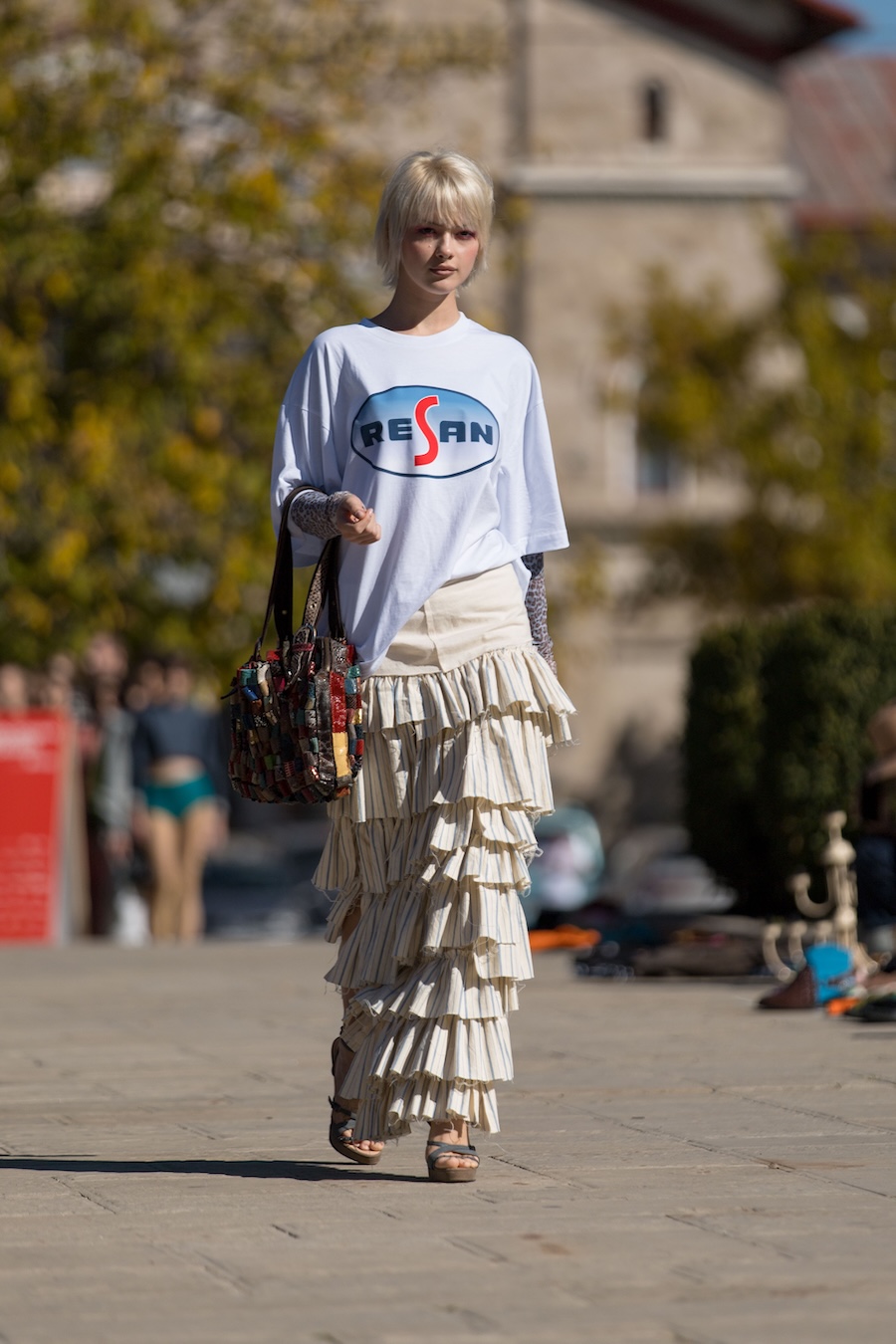
Few designers captured that spirit more powerfully than Alexei Sorokin @alexei___sorokin. Rather than staging his collection inside a sterile white box, Sorokin brought us straight into a landmark deeply woven into Moldova’s social history: the local flea market. Once an underground, illicit space for buying and selling in the post-Soviet era, the market became both the source material and the living runway for his latest collection. Every fabric was hunted down on those very stalls and reconstructed into one-of-a-kind silhouettes that collide minimalist elegance with subcultural rebellion.
A classically trained cellist who found his way into garment construction through his family’s roots in factory quality control and a friend’s sewing school, Sorokin approaches fashion not as status symbol, but as emotional storytelling. Ahead of his next chapter, we sat down with him to talk about turning overlooked second-hand textiles into high-concept design, the tight-knit, female-led family atmosphere of Moldovan Brands Runway, and why fashion doesn’t need a massive budget to move people.
KALTBLUT: Tell me how you first became interested in fashion, and why you decided to become a fashion designer?
Alexei: To be honest, I’ve never been interested in fashion, since I’ve been involved in music since childhood, received a musical education, and have played the cello since I was 5, but my mom and grandmother were closely connected to the light manufacturing industry.
My mom and grandma work as senior quality control supervisors at a large garment factory. This job actually scared me a little, since it involves a lot of responsibility—if something was sewn poorly, my mom and grandma were the first to face the consequences, since they’re in charge of the sewing workshop.
A few years later, when I’d grown up, I realized that music alone wasn’t enough for me, so I decided to reach out to my best friend, who runs his own sewing school, and got a job there as an administrator; without even realizing it, I eventually started sewing myself, and I absolutely loved it. That’s how my career in sewing began.
KALTBLUT: Tell me a little bit about your journey that led to you releasing your new collection?
Alexei: The idea for this collection came from my own personal experience. I used to visit thrift stores myself, looking for unusual items and fabrics that might inspire me with new ideas. Over time, I wanted to return there with a different perspective—not just to seek inspiration, but to transform that place into a space for presenting my own collection.
All the fabrics for the collection were found and purchased right there. For me, this is a story about how something familiar and underappreciated can take on a new life and a completely different meaning. Each piece turned out to be one of a kind, and the collection itself became a reflection of my journey, my perspective on fashion, and my desire to go beyond conventional notions of it.
KALTBLUT: How would you describe your style and fashion?
Alexei: I would describe my vision of fashion as a combination of elegance, minimalism, and rebelliousness. I enjoy working with silhouettes, volumes, and textures, and finding a balance between restraint and expressiveness.
KALTBLUT: How did the experience of showcasing at Moldova Fashion Week influence your design philosophy?
Alexei: Participating in the Moldovan Brands Runway helped me take a fresh look at how I present my collections. I realized that a fashion show isn’t just a display of clothing, but an opportunity to tell a story and create a certain mood.
This experience has inspired me to experiment more—not only with silhouettes and materials, but also with the spaces where I showcase my work. I’m interested in going beyond the traditional runway and finding ways to bring fashion closer to real life. Today, it’s important to me that each collection has its own concept and atmosphere, and that clothing remains the primary way to express my vision.
KALTBLUT: Can you detail any specific challenges you faced while creating your collection for this event?
Alexei: To be honest, there are challenges practically at every turn: the fabric for the dress isn’t quite right, the collar on the coat doesn’t sit quite right—you start thinking about what the weather will be like on the day of the show.
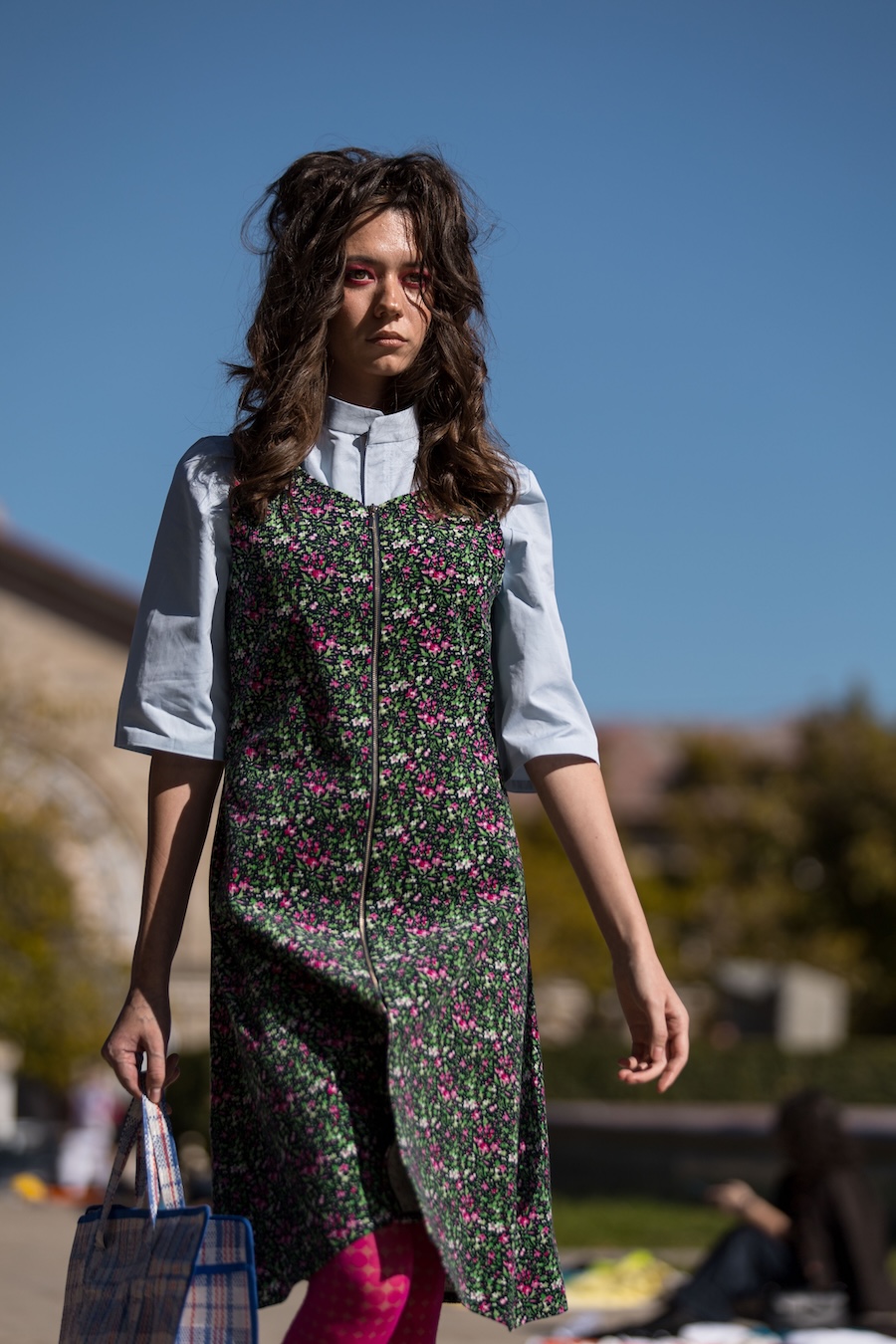
But then I start to unravel the concept of my collection in my head and realize that it’s about the lives of people in Chișinău—their destinies, their moods—so I realized that everything has to be natural, just like in real life. Even if the collar doesn’t sit right the first time, even if there’s that silly print on the dress, and even if it rains—I’m confident that every audience member will see themselves reflected in this collection.
KALTBLUT: What feedback have you received about your collection at Moldova Fashion Week, and how will it impact your future work?
Alexei: A great many audience members thanked me for the mood I evoked in them, for the nostalgia, for the vibrant colors, for the legendary venue where the show took place, and for the music I selected specifically for that venue. I realized that in my future collections, it’s important for me to evoke an emotion in people—and it doesn’t even matter what that emotion ends up being.
KALTBLUT: How do you feel your collection reflects the current trends in fashion in Moldova and Moldova Fashion Week compared with other fashion weeks?
Alexei: I think Moldovan fashion is currently going through an interesting phase of development, where young designers are searching for their own voice and new ways of self-expression. It’s important to me to be part of this process, but without following trends to the letter.
In my collection, I used fabrics I found at thrift stores and presented them in a completely new context. I wanted to show that fashion doesn’t always require expensive materials or a traditional runway to evoke emotions and attract attention. Unlike the more traditional format of major international fashion weeks, I sought to make the show part of the everyday urban environment. I think that’s exactly where my stance lies: to experiment, rethink familiar things, and prove that a strong idea can be just as important as the budget or the scale of production.
KALTBLUT: Were there any specific materials or techniques you experimented with in your collection for the Moldovan Brands Runway and how important is the history of your home country? I saw a lot of, as I would call it, “hidden heritage” in the collections, where the designers translated traditional motifs into modern fashion—is this also part of your design process?
Alexei: I think the history of my country is an important part of my identity, but my relationship with it changes from collection to collection. My previous collection, RAM, was dedicated to Moldovan traditions. I explored how elements of our cultural heritage could be translated into contemporary fashion without reproducing traditional costumes literally. I experimented with fabric origami, using texture and volume to create subtle references to traditional Moldovan embroidery.
For my latest collection presented at Moldovan Brands Runway, I took a different approach. All the fabrics were sourced from the same second-hand market where I once went looking for inspiration. I wanted to give these materials a new life and show that something overlooked or considered ordinary can become meaningful through a different perspective. Every piece is one of a kind because of the fabrics I found.
For me, hidden heritage is not always about traditional motifs or national symbols. Sometimes, it is about the places we visit, the objects we surround ourselves with, and the memories we carry. I believe my cultural background will always influence my work, but I don’t want to limit myself to one narrative. I’m interested in exploring different sides of my identity and finding new ways to express them through fashion.
KALTBLUT: What message or story do you aim to convey with the collection you presented?
Alexei: The main message behind this collection is that beauty and inspiration can be found in unexpected places. I wanted to take something familiar, something we often overlook, and present it from a completely different perspective.
I also wanted to challenge the idea that fashion needs an expensive setting or a traditional runway to be meaningful. For me, it is about emotion, individuality, and the way we see the world around us. Sometimes, all it takes is a different perspective to give something a new life.
KALTBLUT: Are there any fashion icons who inspire your design and for whom would you like to design something, dead or alive?
Alexei: One of my main sources of inspiration is Yves Saint Laurent. I’ve always admired how he combined elegance, freedom, and a certain boldness, redefining what a woman could look like in fashion.
If I had the opportunity to create something for a person—whether living or deceased—I would choose Yves Saint Laurent himself. I would be curious to see how my vision of elegance and volume might interact with his aesthetic. At the same time, it’s important to me not to copy those I admire, but to learn from them the courage to think for myself. I hope that, over time, my work, too, can become a source of inspiration for others.
KALTBLUT: What would you say makes your design stand out against other brands?
Alexei: I think the main thing that sets my work apart is the combination of elegance and rebelliousness. I like working with contrasts, experimenting with volumes and silhouettes, and finding the unusual in everyday things. I don’t want to limit myself to certain materials or follow trends just because they’re popular. For me, what’s much more important is the idea behind each collection and how it can be expressed through clothing, materials, and space.
KALTBLUT: Where do you find your inspiration for your work?
Alexei: I draw inspiration from everyday life, people, architecture, and unexpected details that many people overlook. I’m drawn to the contrast between elegance and imperfection, and sometimes a chance discovery becomes the starting point for an entire collection.
KALTBLUT: What advice would you give to people who want to experiment more with the clothes they wear?
Alexei: My main piece of advice is: don’t be afraid to step outside your comfort zone, and don’t dress just to meet other people’s expectations. Experiment with different styles, mix and match unexpected pieces, and look for inspiration all around you. Fashion should be fun and help you express yourself—not hold you back.
KALTBLUT: Hard question, but what are your favourite pieces from your collection?
Alexei: I liked the very first look, which I almost threw out just two days before the show because I had my doubts about it.
KALTBLUT: How would you describe the local fashion scene and industry in Moldova? I had the feeling it is a very family-like atmosphere.
Alexei: Yes, that’s absolutely right! I can say that moral support is very important to us, and we appreciate every bit of help. As for me, I don’t see any competition between us; on the contrary, we try to support each other and help each other succeed.
My support starts with my team and the school where I work. I am immensely grateful to them for being there for me throughout the entire process of designing and sewing my collection. I love them dearly and thank them for everything.
I’d also like to add that MBR’s Creative Director, Nata Mitereva, does things for us that no creative director in any other country would dare to do. She might show up in the middle of the night to support you and help come up with a concept for a new collection, as well as find a location, help with props, and so on.
KALTBLUT: Compared to other fashion weeks, as I already mentioned before, it has a very family-like atmosphere, and it is also a very female-dominated event. Would you say, while others talk about equality and feminism, you simply put it into practice—at least when it comes to fashion, a field that is otherwise shaped to an above-average degree by men?
Alexei: I think that’s exactly what makes Moldova Fashion Week so special—the atmosphere of support, collaboration, and the feeling that we’re all part of one community. For me, as a man in the fashion industry, it’s very important to work in an environment where women hold such significant positions and can freely express their ideas. I believe that equality should be reflected not only in words, but also in real opportunities, mutual respect, and support.
I like that there’s less of a sense of distance between people here. Ultimately, fashion should bring us together, give different voices a chance to be heard, and create a space where talent matters more than gender.
KALTBLUT: What does being an independent designer mean to you?
Alexei: For me, being an independent designer means having the freedom to follow my own vision, even if it doesn’t always align with what’s happening in the industry. It’s an opportunity to experiment, make mistakes, change direction, and not be afraid to step outside my comfort zone. Of course, independence also means greater responsibility: you make your own decisions and are accountable for every step of your journey.
But the most important thing for me is not to lose my own voice and not to compromise my ideas for the sake of commercial expectations. I want to develop my brand gradually, while maintaining my freedom of self-expression.
KALTBLUT: Paris or Moldova Fashion Week?
Alexei: Of course Moldova Fashion Week!
KALTBLUT: If your brand was ice cream, what flavours would it be?
Alexei: In the post-Soviet space, there is still a dessert called a “rogalik”—a traditional homemade pastry filled with rose jam. When I think about my collection, it’s precisely this distinctive aroma of baked goods that comes to mind.
KALTBLUT: What was the last music track you listened to?
Alexei: Tchaikovsky—Adagio from the ballet The Nutcracker.
KALTBLUT: What is your hot take on fashion?
Alexei: I believe that today’s fashion world too often strives to be trendy, while forgetting to be interesting. Everyone follows trends, but sometimes it’s precisely the desire to conform to them that prevents us from experimenting and finding our own style.
For me, fashion shouldn’t be too “proper,” expensive, or inaccessible. It should provoke, evoke emotions, and make you look at familiar things in a different way. I believe that sometimes the most interesting fashion isn’t born in luxurious design studios, but on the streets, in thrift stores, and in completely unexpected places.
Follow: @alexei___sorokin // @moldovanbrandsrunway
All photos by @egor_tet
Interview by @nico_sutor_
