


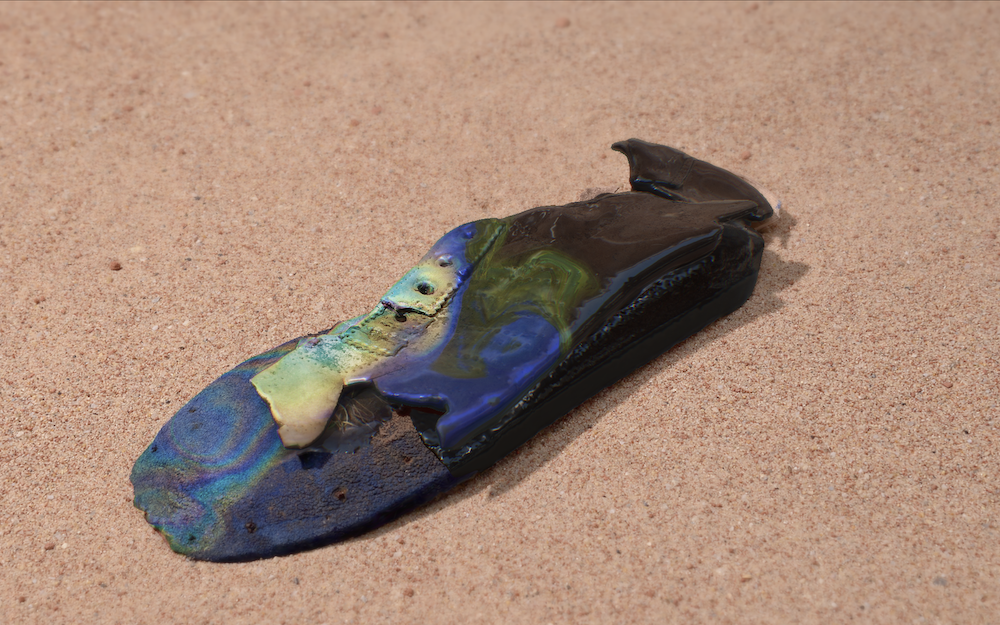
Imagine walking down a pristine tropical beach and spotting a crumpled ethylene-vinyl acetate sandal resting on the sand. Maybe it is an authentic Croc, or perhaps just a lower-quality imitation composed of softened polyvinyl chloride. Part of the damage comes from heavy usage, while the rest reflects exposure to intense sunlight and marine travel. Someone might have thrown it into the water without considering the damage it could cause, or the foam clog might have traveled down the Buriganga River in Bangladesh, navigating currents and storms before washing up on your path, as unassuming as the day a factory molded it.
Left alone, the ocean will eventually lap it back up, feeding degraded chunks to marine life and feeding the microplastic cycle. You bend down to pick up the gross-looking trash, but the second your hand touches the surface, the rubber begins refracting light, spreading a vivid petroleum sheen across its weathered shape. This is how one could best describe John Gerrard’s SPIRITS.
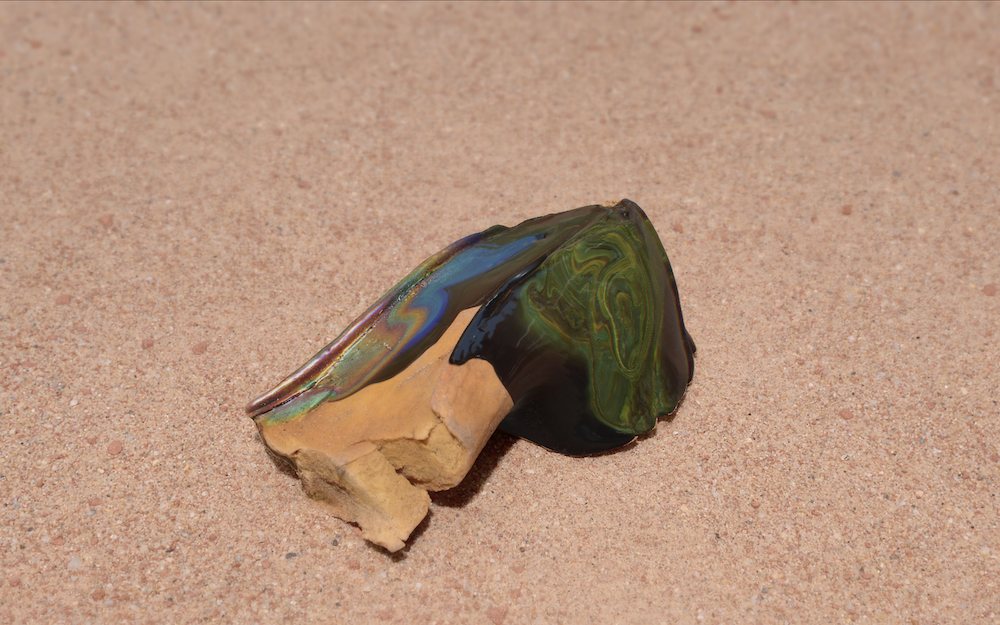
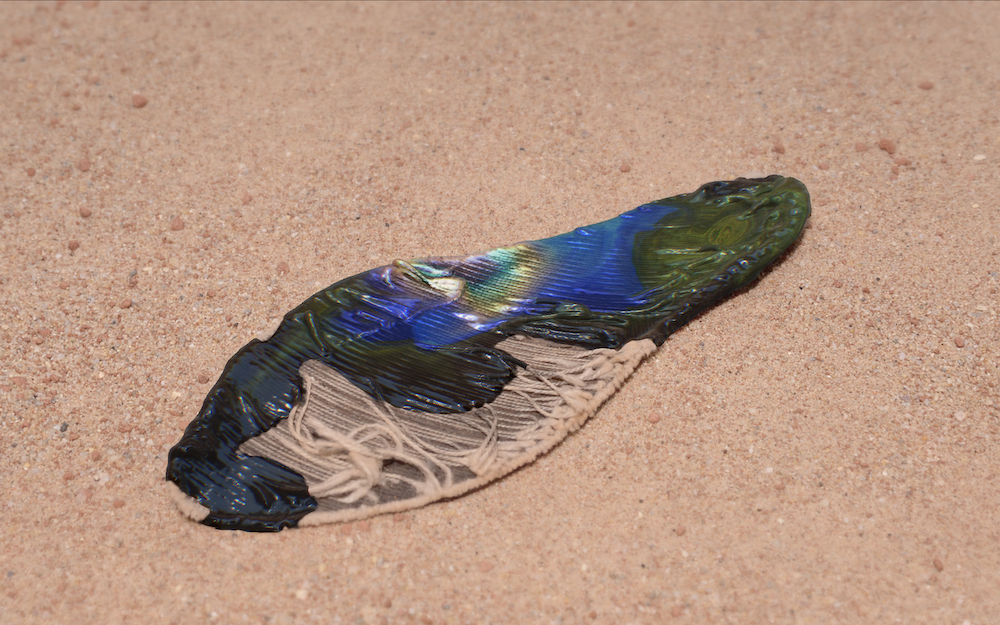
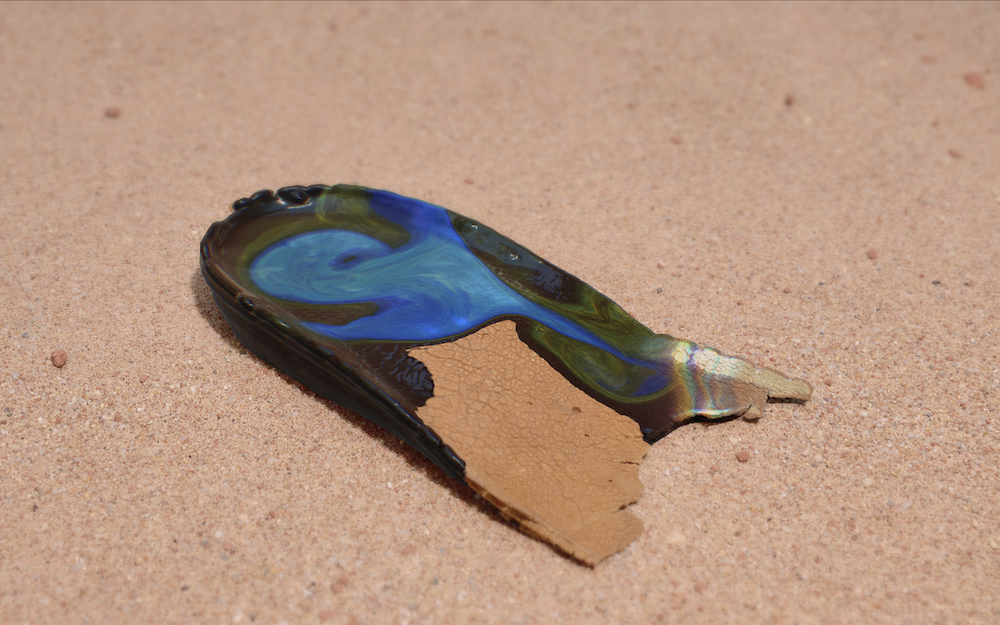
Commissioned by LACMA’s Art + Technology Lab, the year-long project reaches its completed form with its fourth and final chapter, Autumn Equinox (Atlantic Ocean), bringing the full 365-day solar wheel to a close on the museum’s homepage.
SPIRITS approaches digital art through a browser-based work that transforms discarded footwear into interactive, dimensional sculptures. Built with real-time rendering technology, the project uses touch, sound, and movement to connect these objects to the environmental cost of petroleum and plastic, turning everyday waste into a changing digital experience.
Gerrard, a pioneering figure in simulation who spent decades refining game-engine technology to map industrial power structures, takes 96 discarded plastic sandals and shoes swept up from shores across four major seas and transforms them into luminous 3D virtual sculptures. Using Gaussian splatting, an advanced technique that reconstructs scenes from high-resolution photo data into cloud-like points rather than fixed video playback, it’s as virtual as virtual can get.
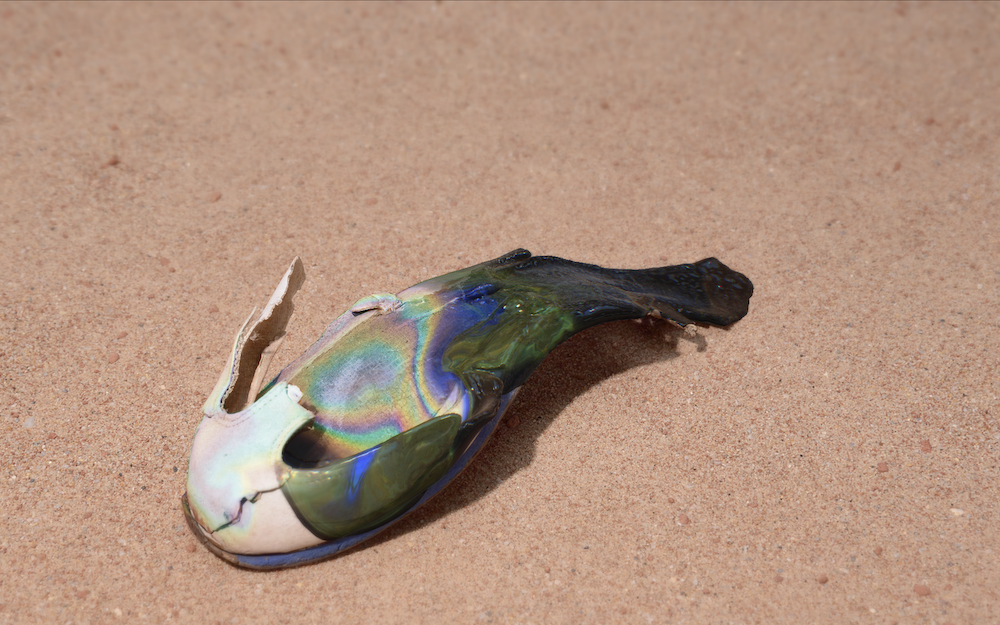
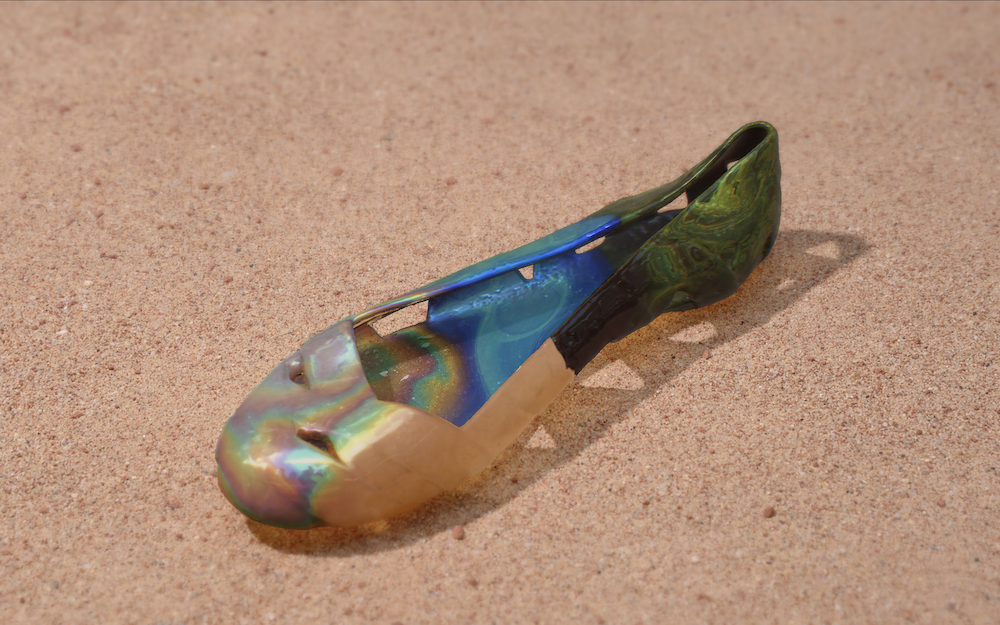
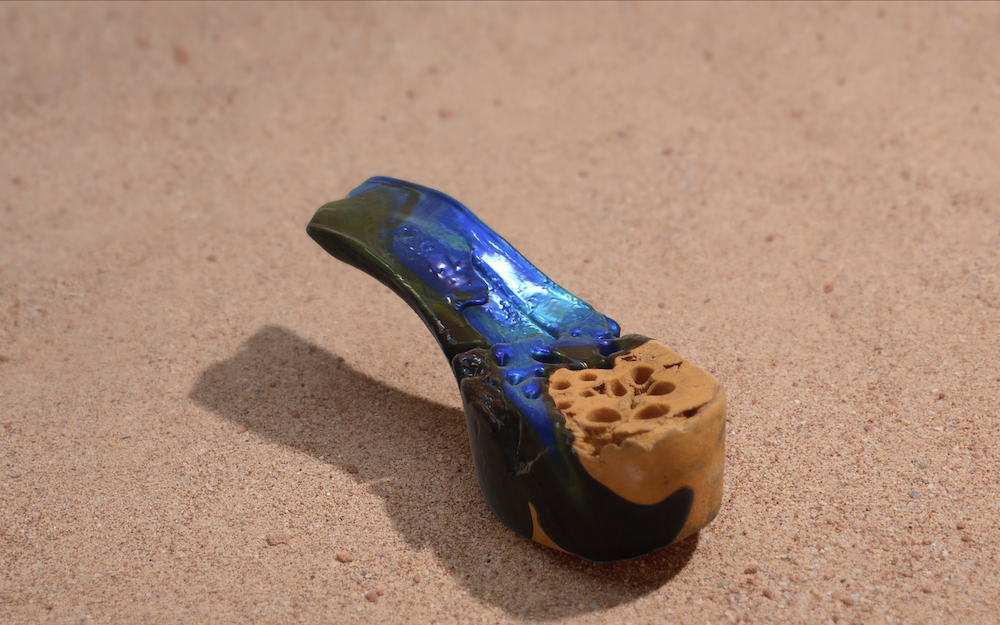
In a world where digital representations increasingly stand in for physical reality, transforming human waste into dimensional, reactive image-objects becomes a necessary way of confronting the problem. It exposes the abject logistical failure of plastic waste, closing the gap between the floating garbage islands of our own doing and the engagement bait we are fed so that we might look the other way.
Interactivity sits right at the center of the experience. Watching the emerging oil-slick patterns drift across the worn, weathered textures of the sandals feels grandly intuitive, like a tactile dialogue. Playing around with the Gaussian toy form in tandem with the generative score makes the interface engaging and surprisingly meditative.
The experience becomes more contemplative as you manipulate the objects and trigger layers of petroleum sheen, ocean currents, and charred industrial tones. What begins as an engaging interaction gradually invites you to consider not just the environmental issue, but also the nature of meditation, play, leisure, rhythm, and reflection.
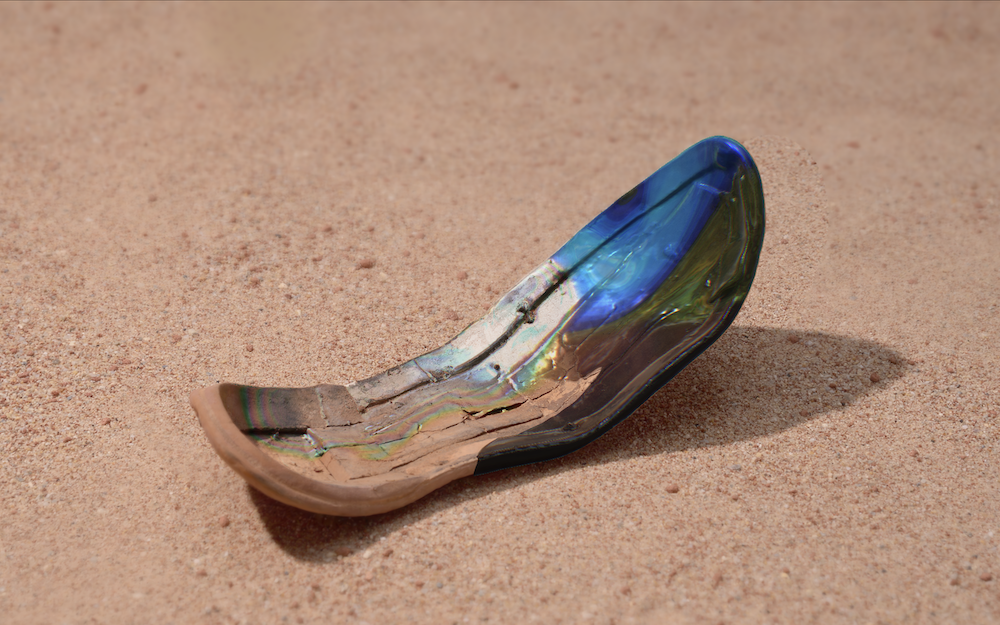
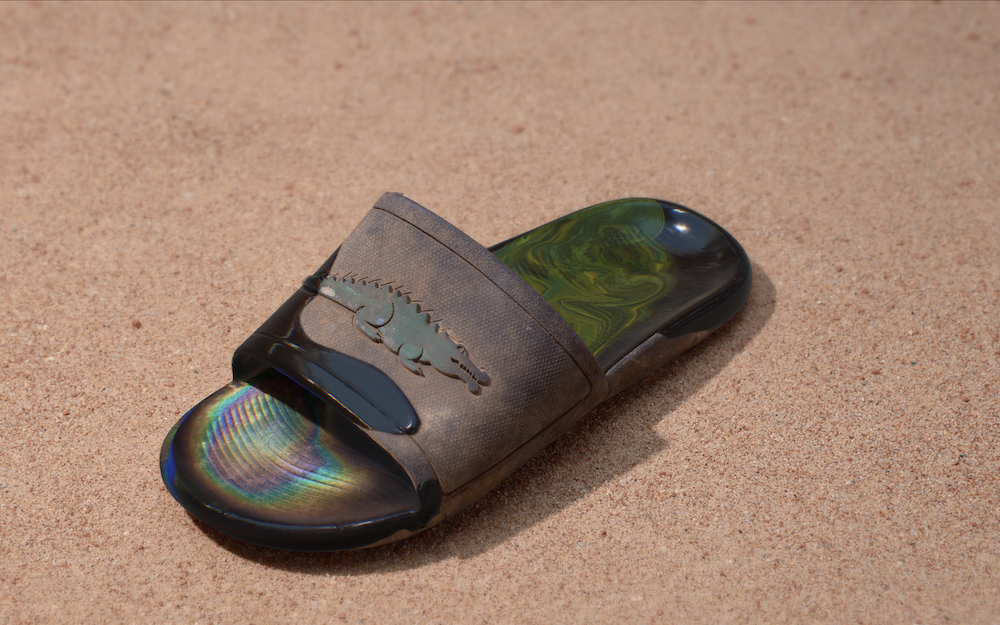
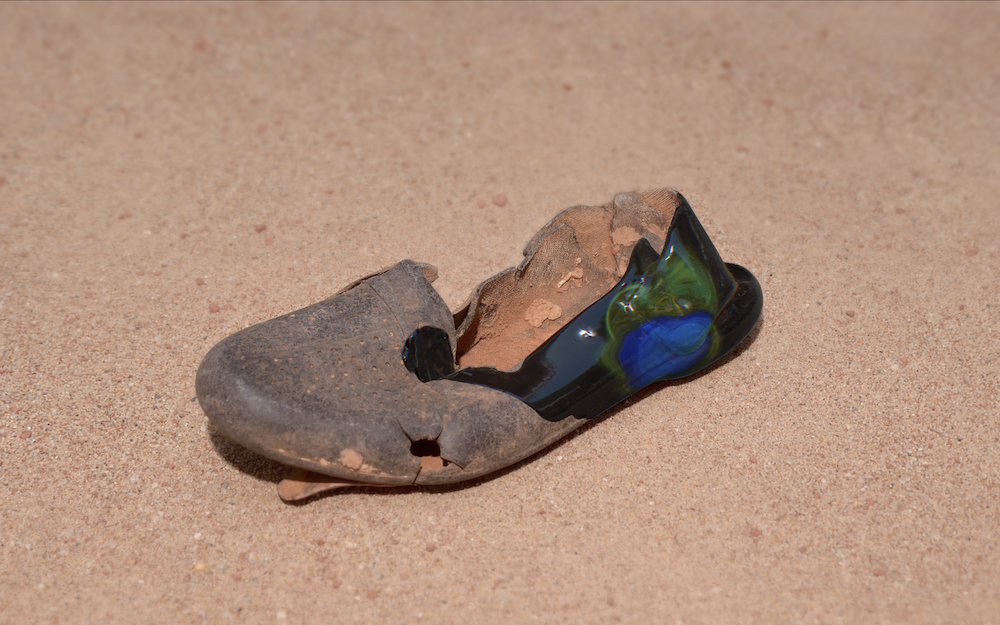
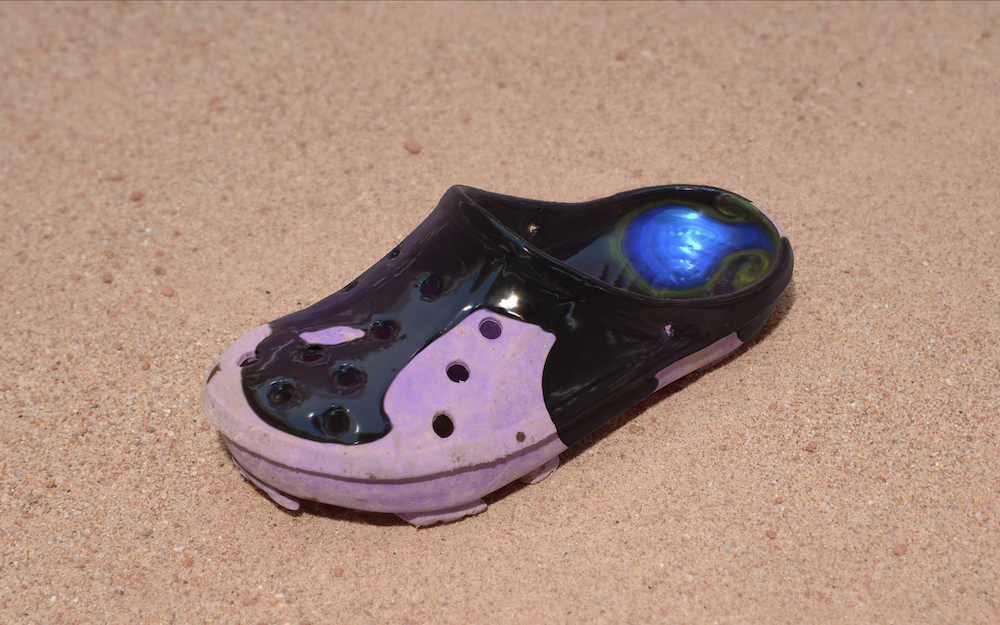
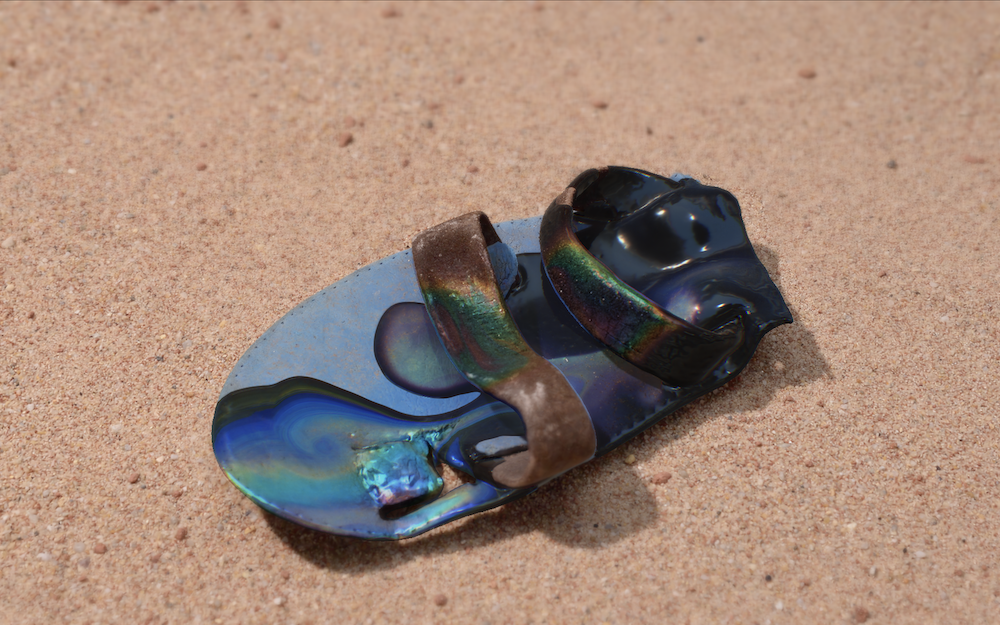
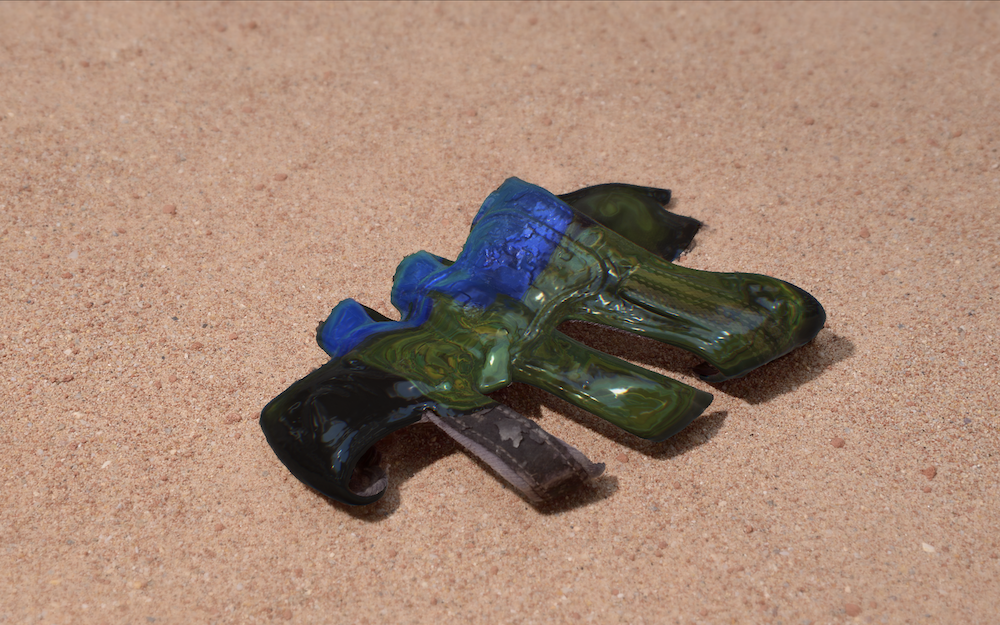
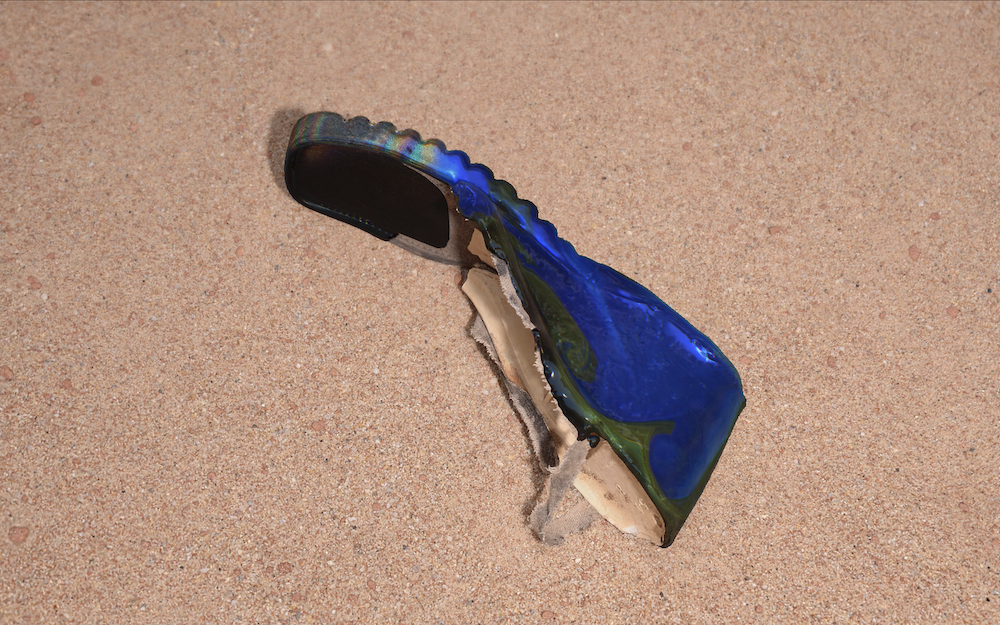
The four-part structure traces an entire ecological arc across the calendar year. Starting with the quiet, iridescent chill of Winter Solstice (Pacific Ocean) and building into the acid-house references and fire-damaged tones of Spring Equinox (Indian Ocean), the project hit its peak energy with the hyper-glossed, maximum-darkness release of Summer Solstice (Mediterranean Sea). The newly launched Autumn Equinox (Atlantic Ocean) chapter cools the wheel, using worn, monochromatic sandals gathered along Moroccan shores to deliver a heavier, quieter electronic lament before the cycle closes on the winter solstice.
CONNECT WITH JOHN GERRARD
@johngerrard.inst – WEBSITE
