Looking at my GoFundMe page, I realised how easily I had condensed a lifetime of survival into a few brief lines. For years, my default setting was keeping everything contained in my head: struggling to understand how I actually felt, or lacking the words to express it. I was convinced that showing vulnerability or asking for help was simply “too much,” terrified of putting my life into someone else’s hands. My response to stress was rigid routine and constant pushing, surviving on a loop of work, routine, and exhaustion until my body simply couldn’t keep up.
It took severe burnout, deep personal loss, and navigating a late-in-life autism diagnosis to realise that forcing my body to constantly perform was never going to save me. But the real shift happened in November 2025, when a hormone-receptive breast cancer diagnosis stripped away any lingering illusion of control.
I didn’t have a choice about needing surgery or undergoing six months of chemotherapy. At 39, my biggest act of trust was putting my life entirely into someone else’s hands for my mastectomy. I did my breathing exercises, trusted the medical experts here in Berlin, and let go. In learning to recover, I had to learn how to inhabit my physical self again, not as a machine to be pushed, but as a home to be cared for.
While my personal experience with healthcare professionals here has been marked by speed, expertise, and rapid treatment, witnessing the struggles within my own circle makes it clear that this safety net is not extended to everyone. Living in Berlin since 2014 and working alongside the queer community, I have watched the environment evolve. Berlin likes to sell itself as a sanctuary, but protection is fraying. Across the city, trans people, people of colour, and migrants are facing heightened barriers to basic care, making community-led spaces a matter of literal survival.
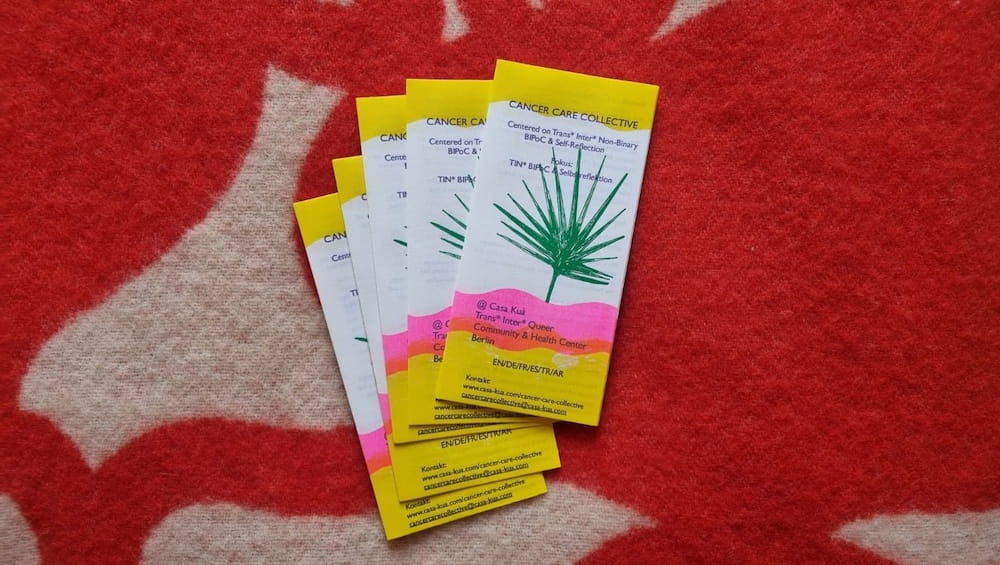
I had chosen to raise funds for Casa Kuà’s Cancer Care Collective long before a recent police raid on their health centre. Casa Kuà is a self-organised community space run by and for trans*, inter, non-binary, and queer BIPoC, created specifically to address the institutional, patriarchal, and racist barriers within healthcare. The irony of the recent police action only underscores why supporting grassroots health initiatives like theirs is non-negotiable. Everyone deserves access to compassionate, competent care. My body received it; theirs deserve it just as much.
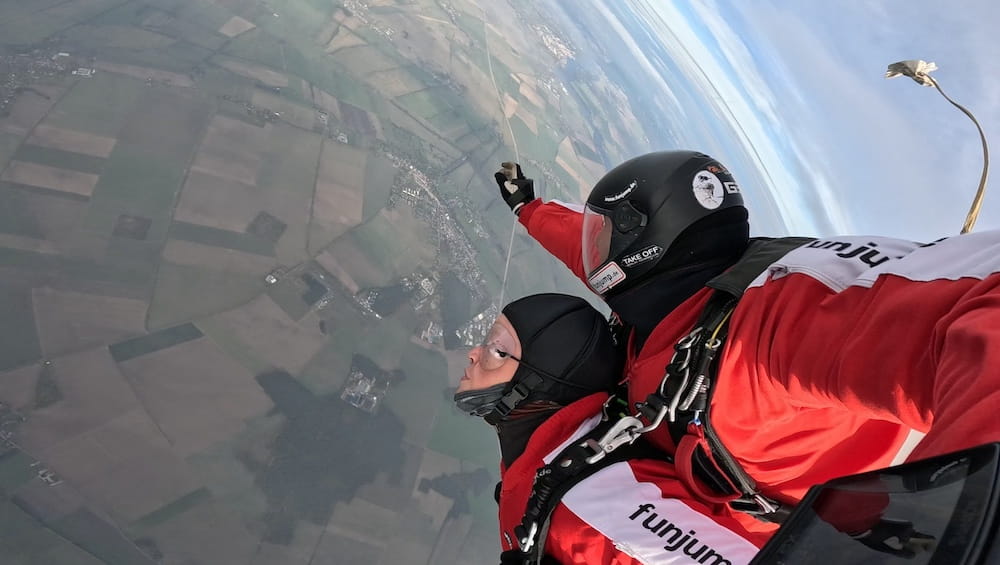
Which brings me to throwing myself out of an aeroplane at 13,000 feet.
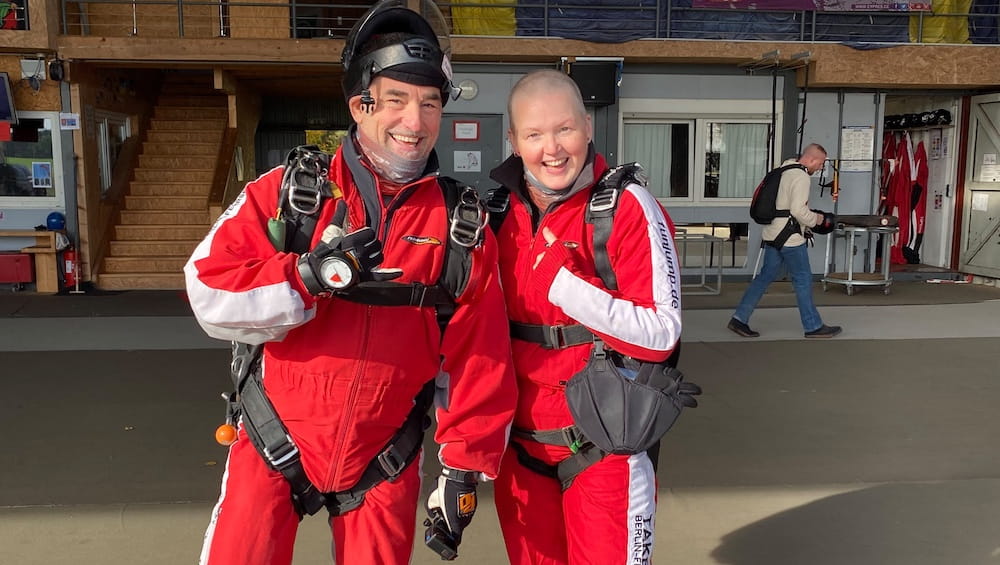
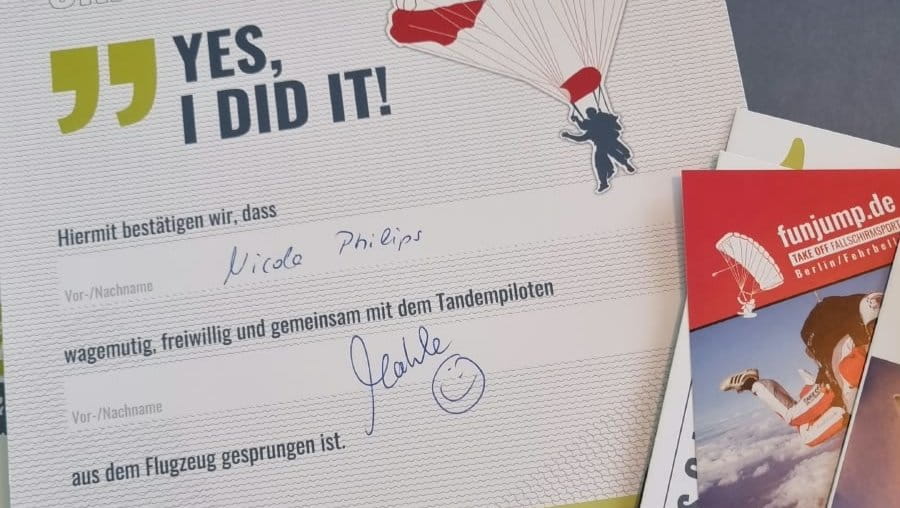
To cap off my treatment, coinciding with Breast Cancer Awareness Month on the final weekend of the jump season, I decided to put my trust into a higher power once again. I reached out to TAKE OFF Fallschirmsport, a team known for supporting adaptive jumpers with mobility challenges. They generously sponsored the jump and covered operational costs, ensuring every single euro raised could go directly to Casa Kuà.
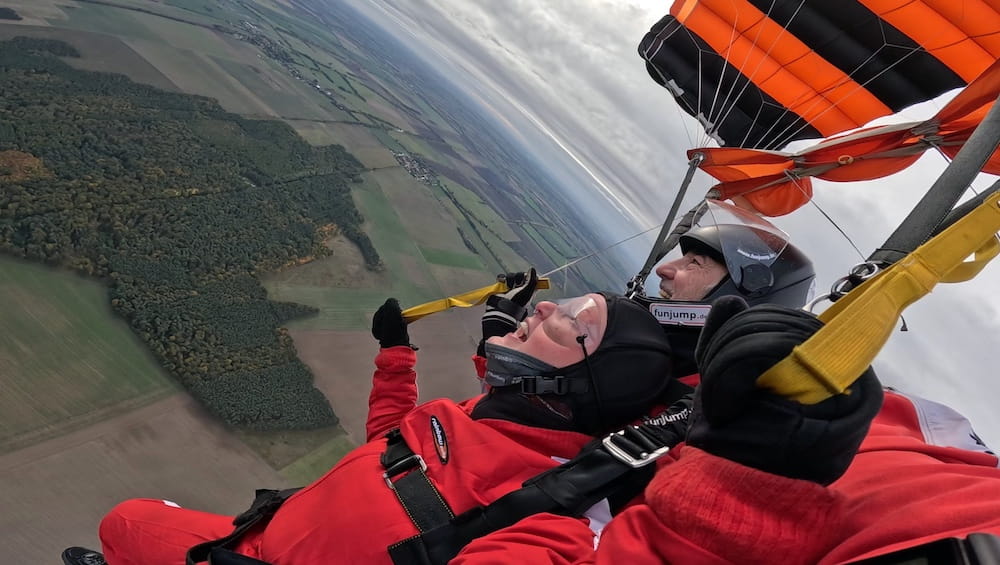
Tandem pilot Mahle and the crew provided an environment of absolute safety, quiet reassurance, and grounding energy. After a thorough briefing, we suited up, strapped in, and climbed to 4,000 metres.
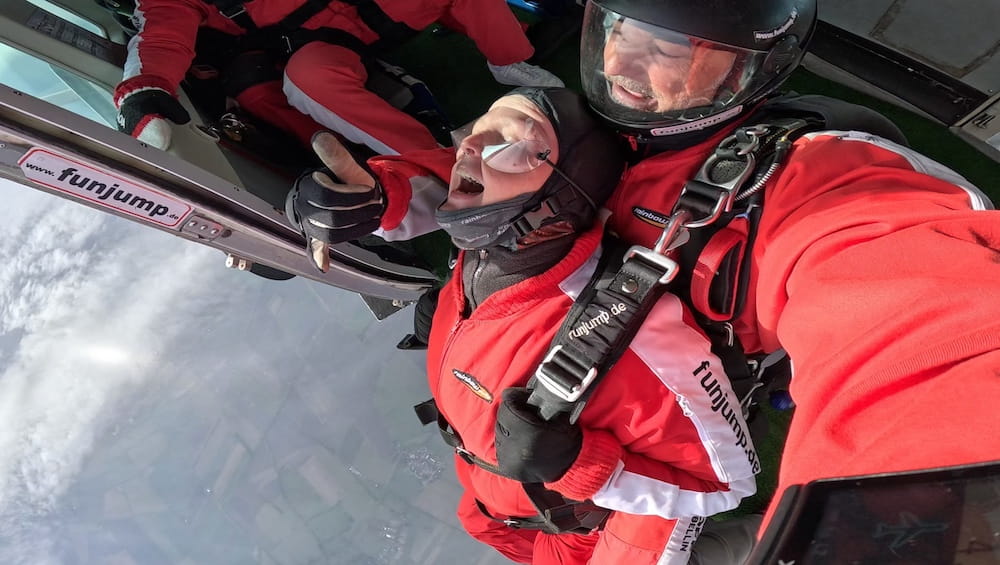
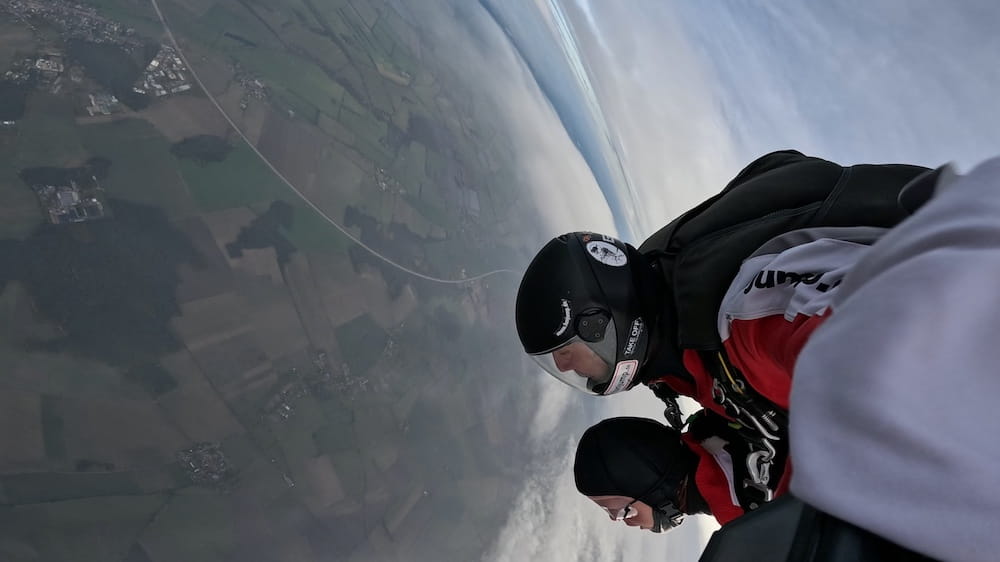
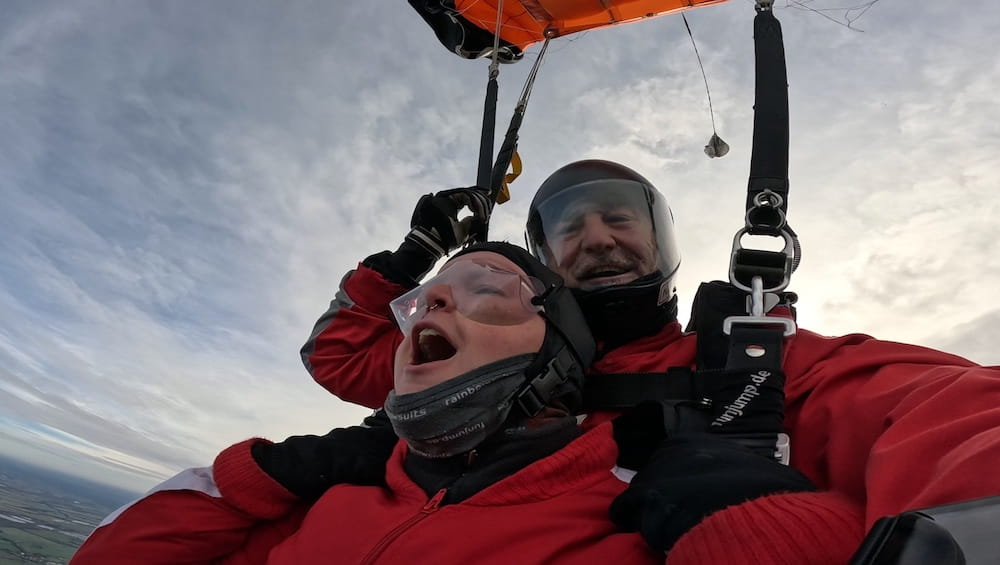
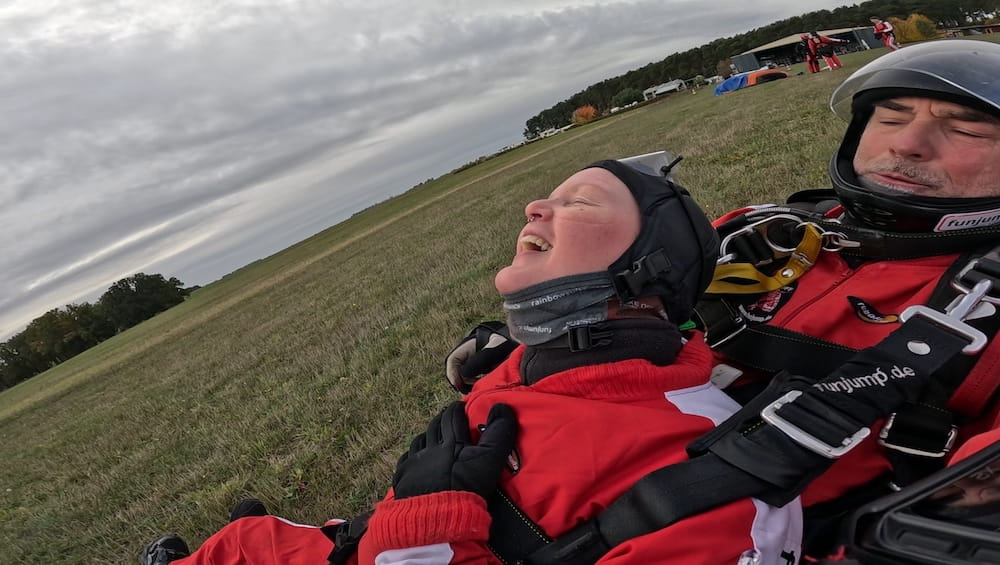
Stepping out of that open door into a freefall at over 200 km/h was the most absolute blank my mind has been in years. Watching the ground rush towards me, the constant internal noise and external expectations simply vanished into the wind. It wasn’t about proving anything anymore; it was pure, unadulterated surrender, a shattering of artificial limits, and a moment of total, thrilling joy. Floating down under the parachute at 1,500 metres back to the dropzone, I felt a weightlessness in my own body that is almost impossible to put into words.
Thanks to the jump and the generosity of everyone who shared and donated, we have officially raised over €1,600 for Casa Kuà’s Cancer Care Collective. Which leaves the most common question I have been asked throughout this whole process: Why the jump?
Honestly? After everything my body and mind have been through, why the hell not?
While seeing the support on my own page has been deeply moving, the real work happens on the ground at Casa Kuà every day. You can support them directly on their official GoFundMe page or follow them on Instagram.
Life is far too short not to choose joy, not to trust your body when you can, and not to stand up for the collective survival of our communities.