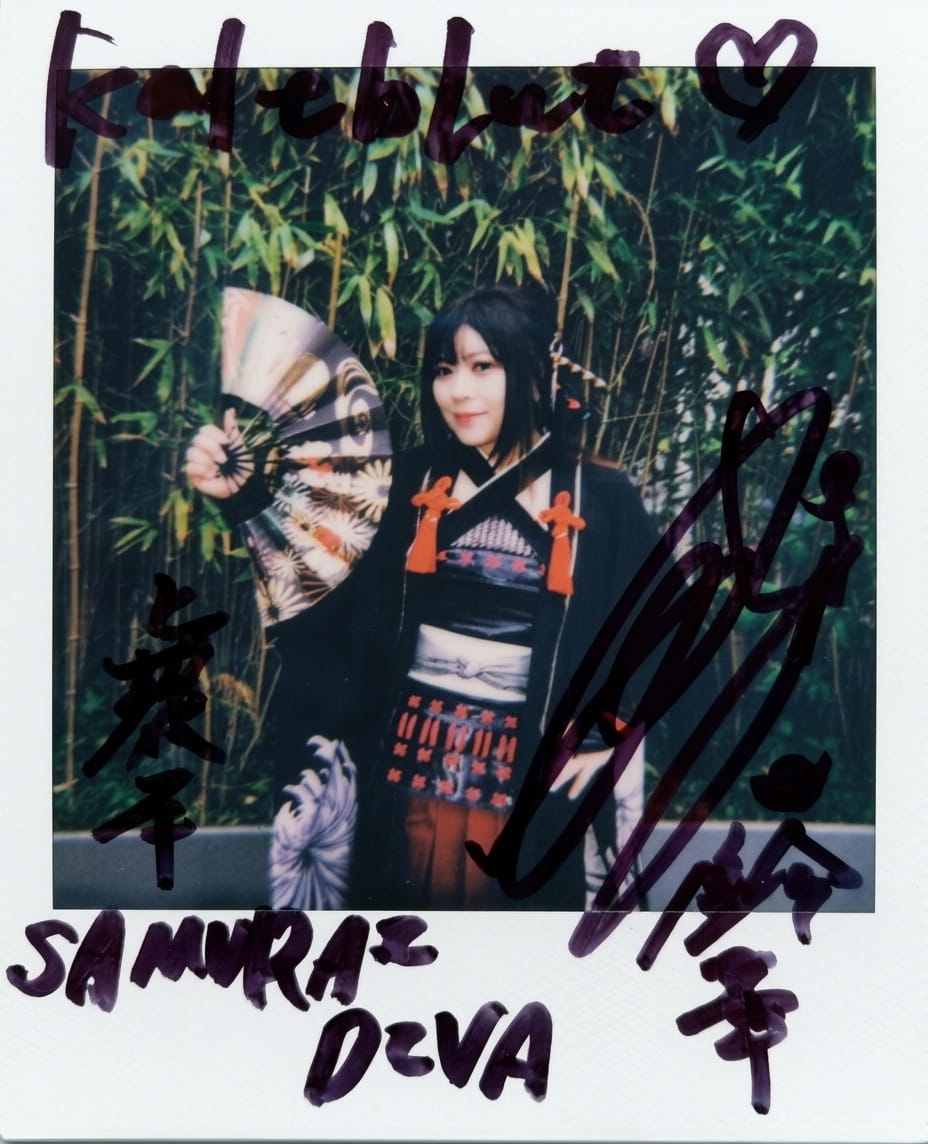
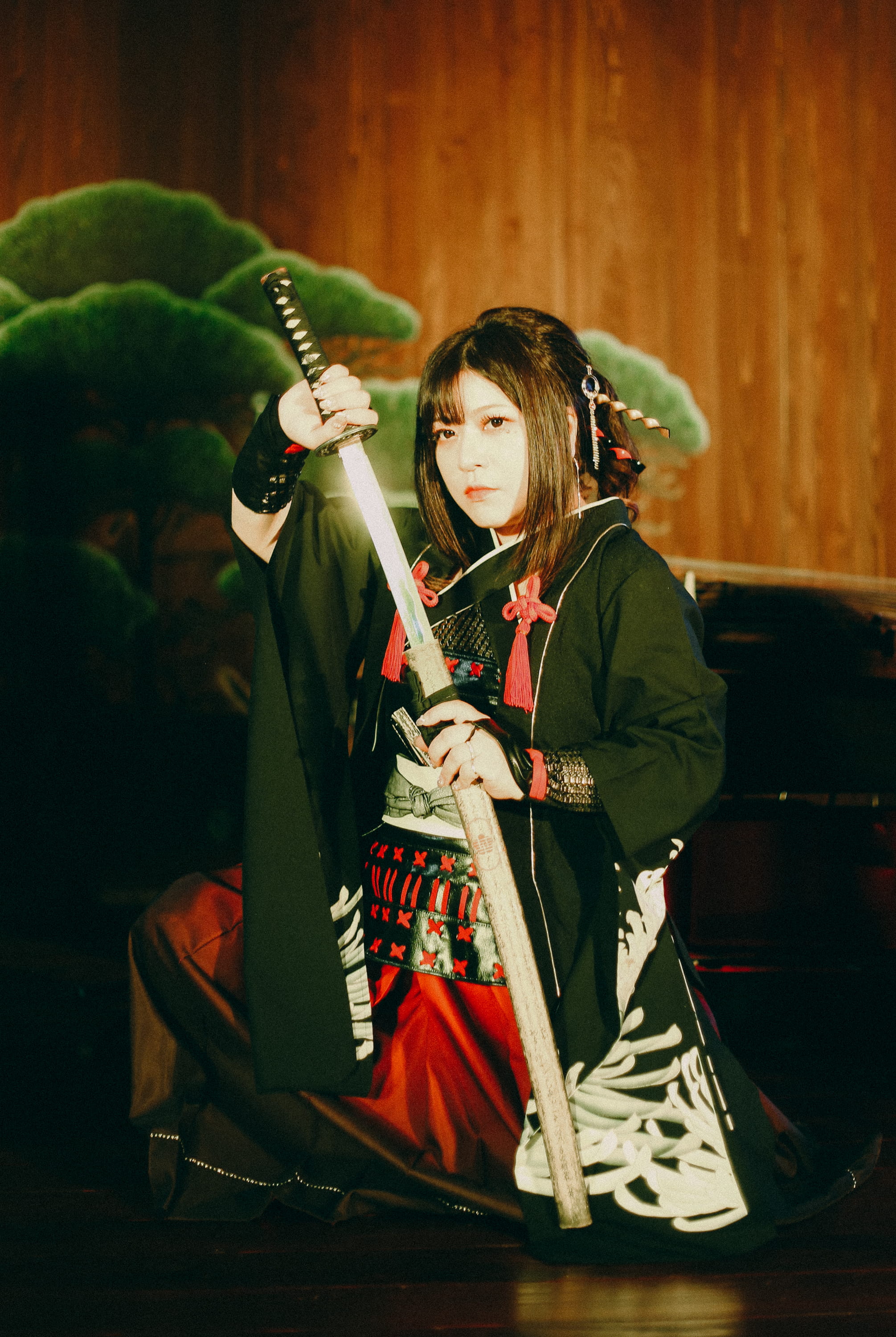
Marking her official Berlin debut with the “Samurai Diva” show, Yuko Suzuhana brought a powerful, cross-cultural experience to an intimate Noh stage nestled within the Samurai Museum Berlin at a recent performance this past August. Following almost a decade as the lead vocalist of the internationally acclaimed Wagakki Band, Suzuhana’s solo chapter reflects a deeper personal evolution, blending her lifelong mastery of Shigin (classical poetic chanting) and Kenbu (traditional sword dance) with her background in classical piano, rock, and modern electronic production. In this interview, she reflects on honouring ancient Japanese roots while embracing the history of European spaces, the artistic freedom of her solo journey, and her vision for connecting world cultures through music.
This performance marks your official Berlin debut. How does it feel to bring your music to Berlin?
I’m truly delighted to have the opportunity to present the Samurai Diva show in Berlin. Throughout my career, I have continued to create music that brings together Japanese traditional culture—something I deeply value as part of my own roots—with contemporary sounds such as rock, pop, and orchestral music.
To bring this music to Berlin, a city where history and art coexist so powerfully, and so far away from Japan, feels especially meaningful to me. Even if the audience does not understand every word of the lyrics, I would be very happy if they could feel the beauty and spirit of Japan through my voice, the music, and the physical expression of the performance.
You will be performing on an authentic Noh stage surrounded by centuries of samurai history. How does performing in such an intimate, historically charged space influence your performance approach compared to a large arena or traditional concert hall?
Large arenas have their own unique appeal—the incredible energy that comes from sharing a powerful moment with thousands of people and allowing that energy to explode together.
A space such as a Noh stage is very different. Every movement, every breath, every sound of the voice, and even silence itself becomes part of the expression.
I have studied shigin, the traditional Japanese art of poetic chanting, as well as traditional sword and dance performance from an early age. Because of that, when I stand in a traditional Japanese space like this, my physical awareness naturally changes as well.
Rather than focusing on making everything visually spectacular, I become more conscious of ma—the meaningful space and timing between moments—and the contrast between stillness and movement.
For this performance, I carefully considered a program that would be appropriate for this particular space. Because the audience is so close, I want them to experience the world of Samurai Diva not only through the music itself, but also through the subtle nuances of my voice and even the sound of my breathing.
Looking back on your decade-long journey leading Wagakki Band prior to the band’s decision to enter an indefinite hiatus, how has stepping into this solo chapter reshaped your creative perspective?
The approximately ten years I spent with Wagakki Band were an incredibly important chapter in my life. I was fortunate enough to perform around the world and experience firsthand how music that combines traditional Japanese instruments with rock can travel beyond borders and reach people from different cultures.
What changed most when I began working as a solo artist was that I started asking myself more deeply: What is it that I truly want to express?
In the band, there was music that could only exist because there were eight of us. As a solo artist, however, I am free to move beyond the boundaries of genre or instrumentation and combine the many different musical roots within me—shigin, piano, rock, orchestral music, gagaku, electronic music, and more.
With that greater freedom of expression, another feeling began to grow within me. I no longer simply want to bring Japanese music to the world. I also want to absorb the music and cultures of different countries and bring those influences together within my own music.
Through my performances overseas, I have felt again and again that music has the power to connect people beyond language and national borders.
That is why, today, while continuing to share Japanese culture with the world, I also want to connect with cultures from around the world through music and create something new together.
And with that desire to connect the world through music, my wish for peace has also grown stronger than ever.
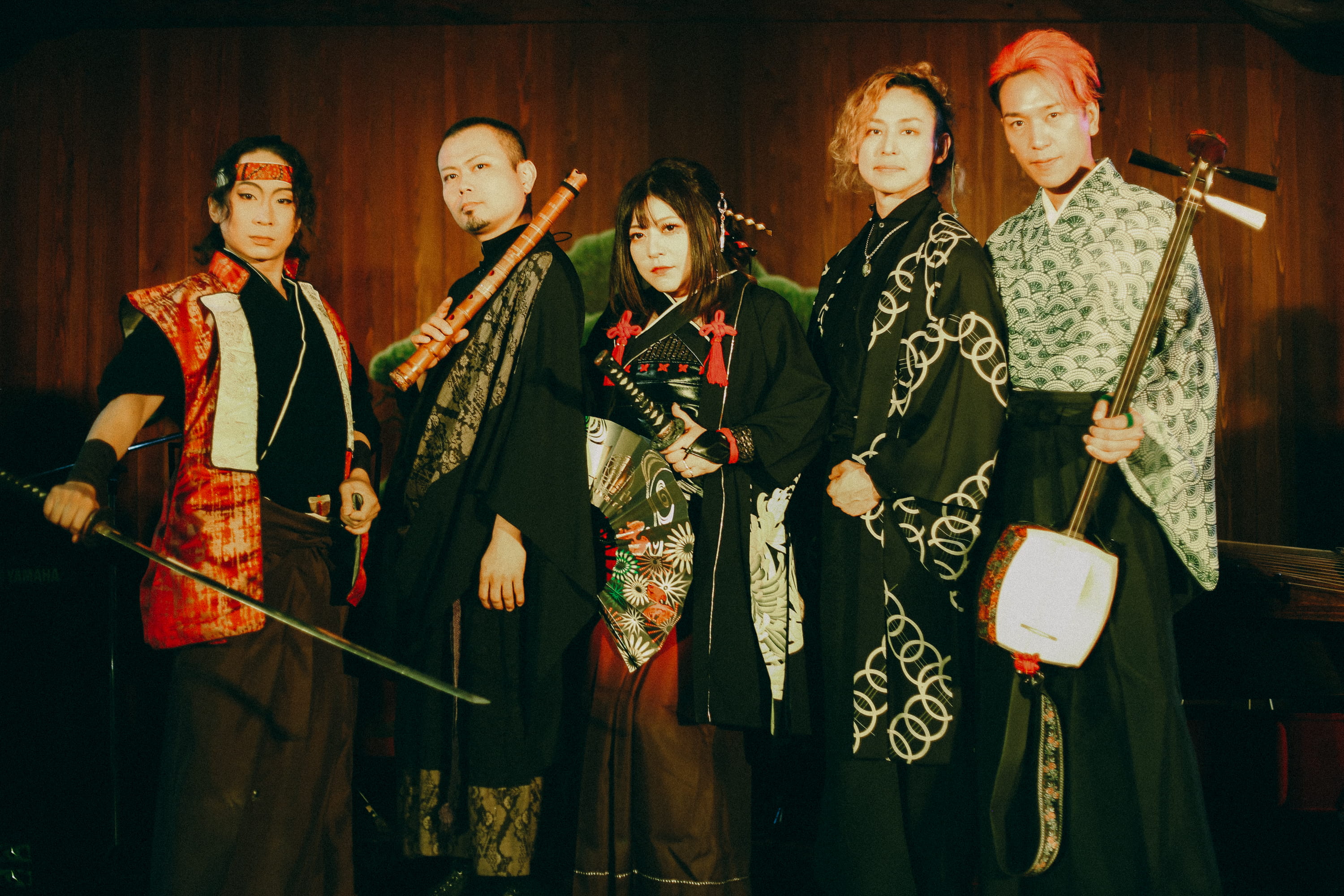
Photo by Nicola Phillips
For readers who may be discovering this traditional vocal style for the first time, how would you describe the feeling of performing Shigin, and how do you navigate transitioning between these classical vocal ornaments and modern Western pop or rock singing during a live set?
For me, shigin is not simply about singing. It is closer to the feeling of an actor using the voice to bring the emotions and imagery contained within words to life.
Shigin developed from the tradition of reciting poetry in a powerful and expressive way. Even in Chinese and Japanese poems written hundreds of years ago, there are deeply human emotions—joy, sorrow, loneliness, determination—and vivid landscapes and imagery. Through deep breathing and distinctive melodic phrasing, I try to bring the entire world of the poem to life.
One of the distinctive elements of shigin is a style of melodic phrasing known as setsuchō. It involves extending the vowels of words while adding subtle melodic movements based on traditional Japanese scales.
If I were to explain it in terms of Western music, it might be somewhat comparable to combining vocal ornaments that catch or accent the voice very briefly, broad and spacious vibrato, finer vibrato, and subtle fluctuations in pitch.
What is important to me is that this style of phrasing is not simply a habit that appears unconsciously in my voice. I use it intentionally and control it as part of my expression.
That is why, in my live performances, I consciously move between contemporary pop and rock vocal styles and the distinctive vocal techniques of shigin. Even within a single phrase, I may begin with a more conventional singing style, move into shigin phrasing, and then return to a contemporary vocal expression.
I believe that the ability to move freely between these two different vocal worlds is one of the defining characteristics of my singing style today.
Alongside your vocal training, you have practised Kenbu since early childhood. How did your training with the sword begin, and how has mastering those martial movements shaped your presence on stage?
I began studying shigin and traditional Japanese sword and dance performance when I was five years old.
If shigin is about expressing the world of poetry through the voice, then sword dance and traditional poetic dance are about expressing the story through the body.
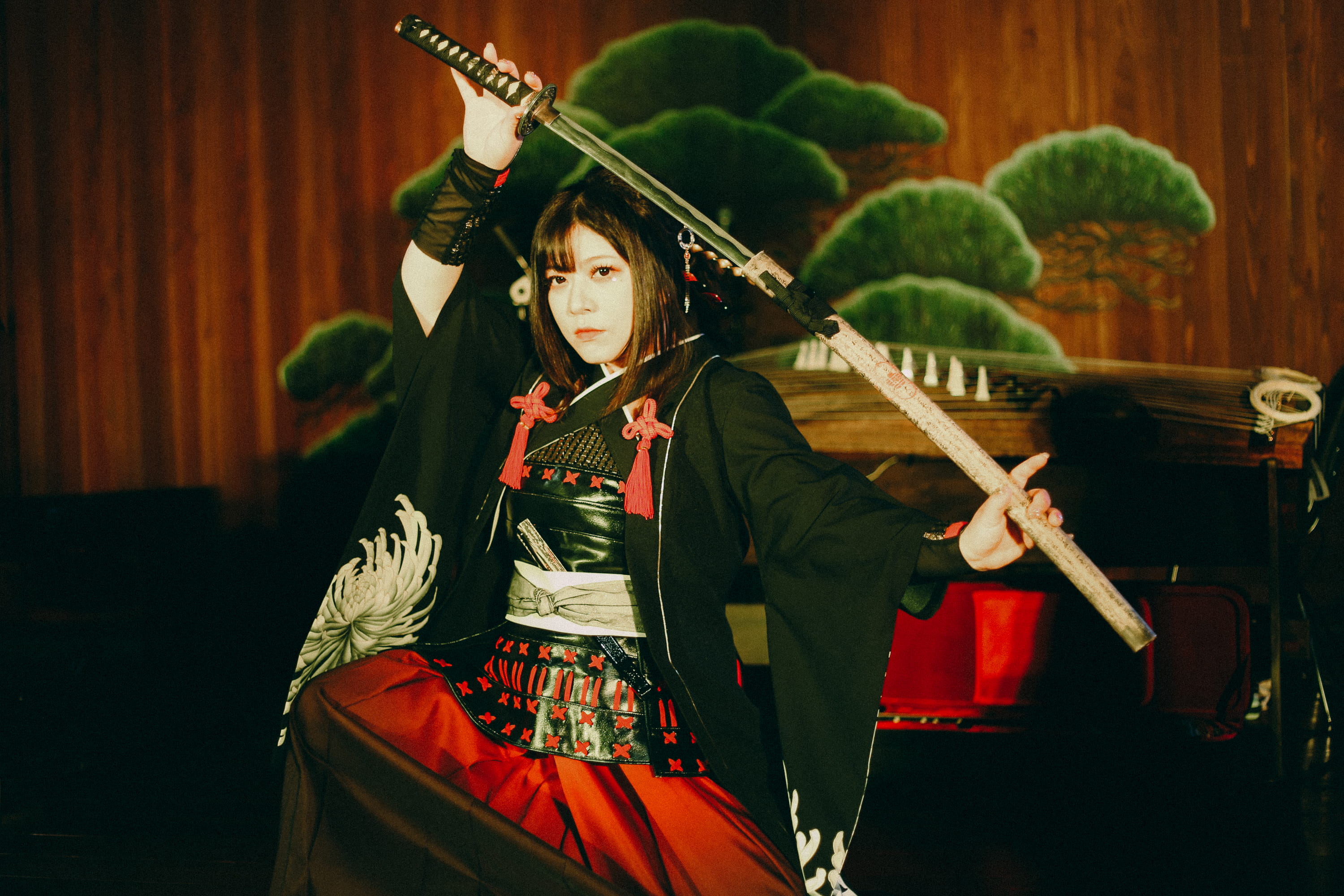
When holding a sword or a fan, it is not simply a matter of moving it. Everything has meaning—the way you stand, the placement of your centre of gravity, your gaze, your breathing, even the movement of your fingertips.
Those experiences have had a tremendous influence on my work as an artist today. The way I stand on stage, the way I use my eyes, and even the way I present myself in moments of complete stillness all come naturally from the traditional sword and dance training I received from childhood.
In my live performances, I do not simply sing. I sometimes incorporate sword dance and other traditional forms of movement. Even within rock music, I may use a Japanese fan and traditional gestures.
By bringing these elements together, I believe I can create a distinctive form of expression that is uniquely my own.
What is it like bringing Kenbu specifically to a space like the Samurai Museum Berlin, where historical swords and armour are displayed all around you?
It feels both mysterious and incredibly special. Being so far away from Japan, it is deeply moving to see so many Japanese swords and pieces of armour carefully preserved in Berlin, and to know that there are so many people here who have such a strong interest in and respect for Japanese culture.
A Japanese sword is not simply a weapon. It is also a symbol of Japanese history, aesthetics, craftsmanship, and spirituality.
To perform kenbu, a traditional Japanese performing art that incorporates the sword, in a place like this feels like a very meaningful connection.
It almost feels as though I am standing before swords that have traveled from Japan, bringing the culture connected to them back to life through live expression.
How does your identity as a cultural advocate influence how you curate your shows for audiences outside of Japan?
Since I began performing internationally, I have actually become more aware of my own identity as a Japanese person than ever before.
I was born in Mito City in Ibaraki Prefecture, and as an Ibaraki Ambassador, I am also involved in sharing the culture and attractions of my home region.
There are so many wonderful traditions, arts, foods, crafts, and landscapes throughout Japan that are still not widely known around the world.
When I think about performing overseas, it is important to me not simply to present something that looks Japanese. I want my work to be rooted in the culture I have genuinely grown up with and the traditions I have studied and practised for many years.
At the same time, I believe that Japanese culture has always had the ability to embrace new influences from outside, interpret them in its own way, and transform them into something uniquely Japanese.
That is why, in my shows, I value moments where the original beauty and spirit of traditional performing arts can be experienced in their own form. At the same time, I also combine tradition with contemporary music, fashion, and visual expression to create something new through my own perspective as an artist living in the present.
I want to create shows that can be enjoyed both by people who are deeply familiar with Japanese traditional culture and by those experiencing it for the very first time—across generations and nationalities.
And for people outside Japan who have never encountered Japanese traditional culture before, I hope to create a doorway that makes them think, “Japan is fascinating. I want to know more.”
If my music can inspire people to explore Japanese culture more deeply, as well as the unique traditions and attractions of different regions throughout Japan, that would make me very happy.
Do you find that European audiences engage with the cultural and historical storytelling behind your performance differently than fans back home?
Yes, I definitely feel a difference. In Japan, many people are familiar with things such as shigin, traditional Japanese instruments, and kimono because they have existed as part of our culture for generations. In Europe, however, these same elements can sometimes be experienced as something completely new and fresh. Seeing those reactions allows me to rediscover the beauty of Japanese culture myself.
During this visit to Germany, I was particularly impressed by the love and respect that so many people have for Japanese culture, especially at events such as Main Matsuri in Offenbach.
Another unforgettable experience was travelling from Frankfurt to Berlin by train and spending time walking through the city and encountering its history. It gave me a great deal of inspiration—not only as a musician, but as an artist and a person who creates through expression.
I originally studied classical piano at music college, so visiting Germany and experiencing its musical and cultural history firsthand was something I had been especially interested in for a long time.
Have you had the chance to do any sightseeing, discover local food, or experience German culture outside of your venue soundchecks and performances?
Even during a busy performance schedule, I try to walk around the cities as much as possible and experience the atmosphere of each place.
This was my first time visiting Berlin, and I was particularly struck by how history remains present throughout the city. I was able to visit places such as the Berlin Wall, the Reichstag Building, and the Brandenburg Gate.
I was fascinated by the way the city preserves its history while allowing contemporary art and new culture to exist alongside it. In some ways, that reminded me of what I try to do through my own music—the fusion of tradition and the present.
Whenever I travel abroad, I believe it is important not only to visit famous landmarks, but also to experience everyday life—the food, the streets, and the people.
All of those experiences become inspiration for whatever I create next.
Having blended Japanese traditional arts with rock, pop, and classical piano, are there new musical genres, production styles, or instruments that you are eager to experiment with in your solo work next?
I originally studied classical piano professionally, while also continuing shigin and traditional sword and dance performance from a very young age. Today, my music moves across many different genres, including rock, pop, orchestral music, gagaku, and electronic music.
Because of that, rather than saying, “This is the genre I want to explore next,” I am more interested in bringing together things that might initially seem completely unrelated.
I would like to experiment even more boldly with combinations of Japanese traditional music and European classical music, heavy rock, electronic music, and other styles.
I am also interested not only in traditional Japanese instruments, but in traditional and folk instruments from cultures around the world.
Irish music and jazz are also two genres that I especially love.
While respecting the individuality and history of each culture, I would like to explore what kind of new music can emerge when Japanese sounds meet traditional music from other parts of the world.
Looking forward, are there any dream international artists, producers, or collaborators you would love to work with?
I am very interested in collaborations that go beyond both national and genre boundaries.
For example, I would love to collaborate with rappers, male vocalists, and artists who play traditional instruments from cultures outside Japan.
I am fascinated by the possibilities that emerge when artists with completely different musical backgrounds come together. When different voices, instruments, languages, and cultural perspectives meet, it can create something that neither artist could have created alone.
That kind of encounter is something I would very much like to continue exploring through my music.
Follow
@yuko.suzuhana
Samurai Diva is out now: https://suzuhanayuko.lnk.to/SAMURAI_DIVA