

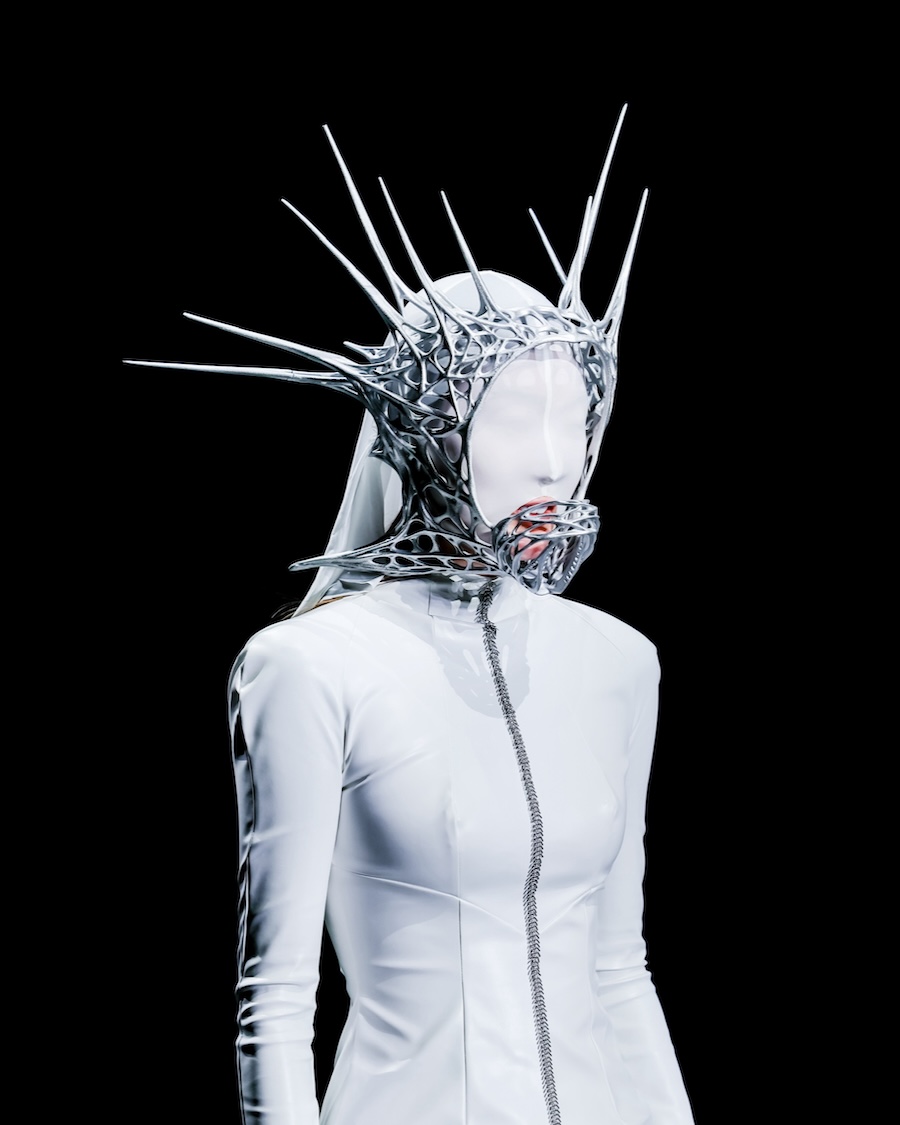
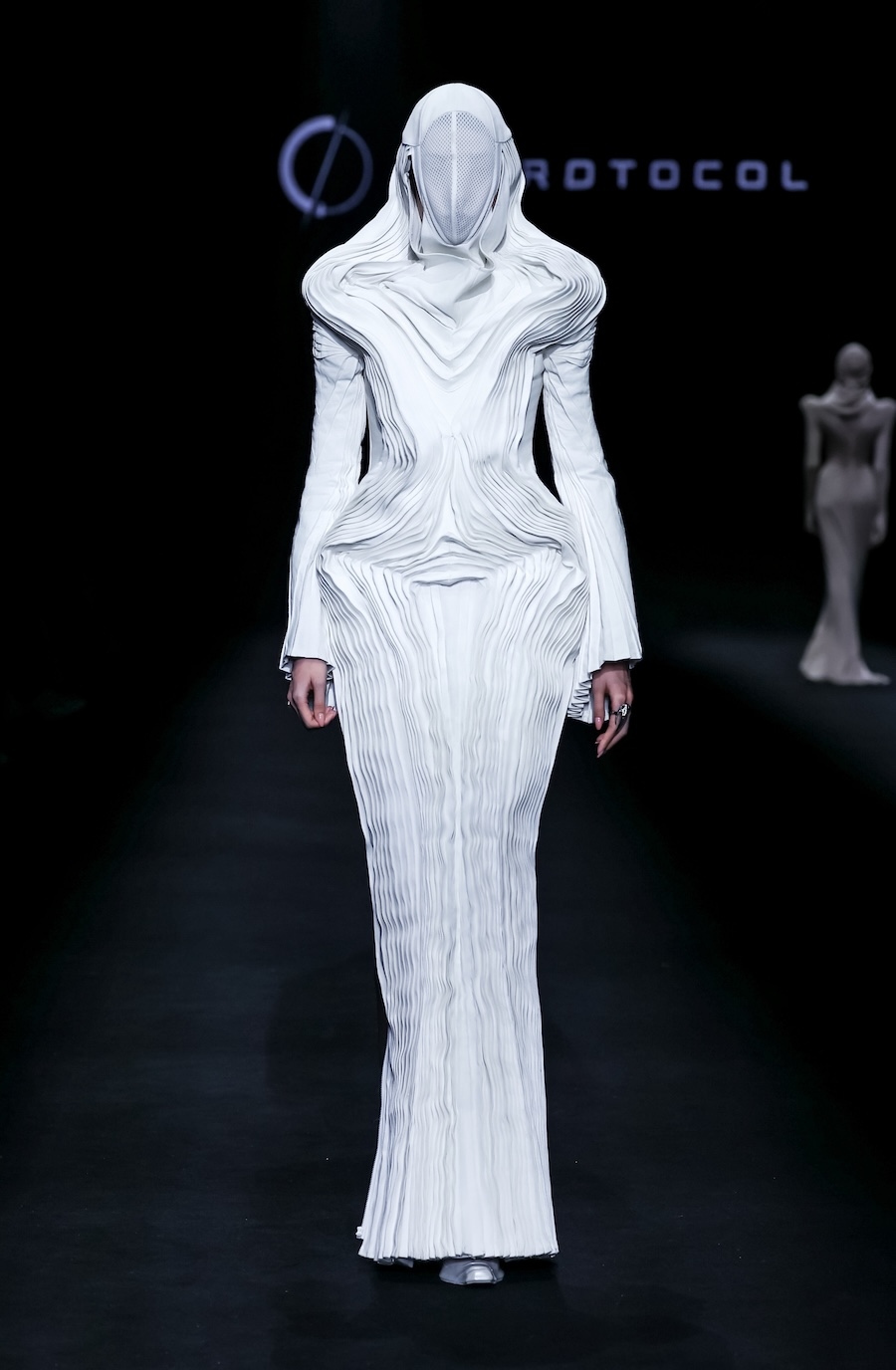
In one look from C.PROTOCOL’s Spring/Summer 2027 collection, the wearer’s eyes are completely concealed. An eye-shaped opening appears instead at the abdomen. There is something unsettling about the displacement, particularly when you learn that the idea came from the designers’ interest in iris recognition and the vulnerability of personal data.
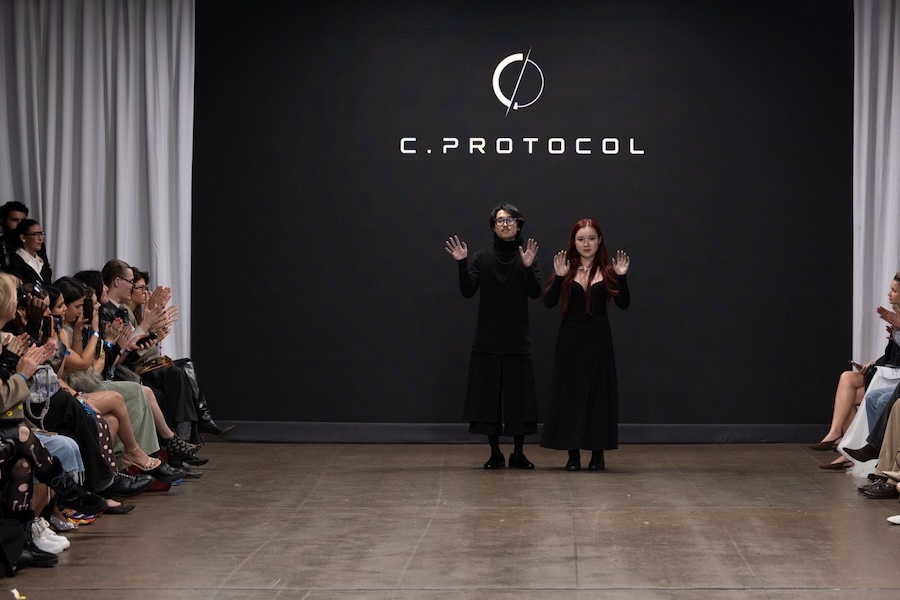
For founders Jinmin Chen and Cenyi Wang, the collection, titled Civilisation to Come, grew out of a frustration with fashion’s established image of the future. The design duo aren’t interested in making clothes that simply look futuristic, they’re asking a harder question: what might clothing actually become?
“We can’t predict the future, yet we can immediately recognise when an outfit looks ‘futuristic’,” they say.
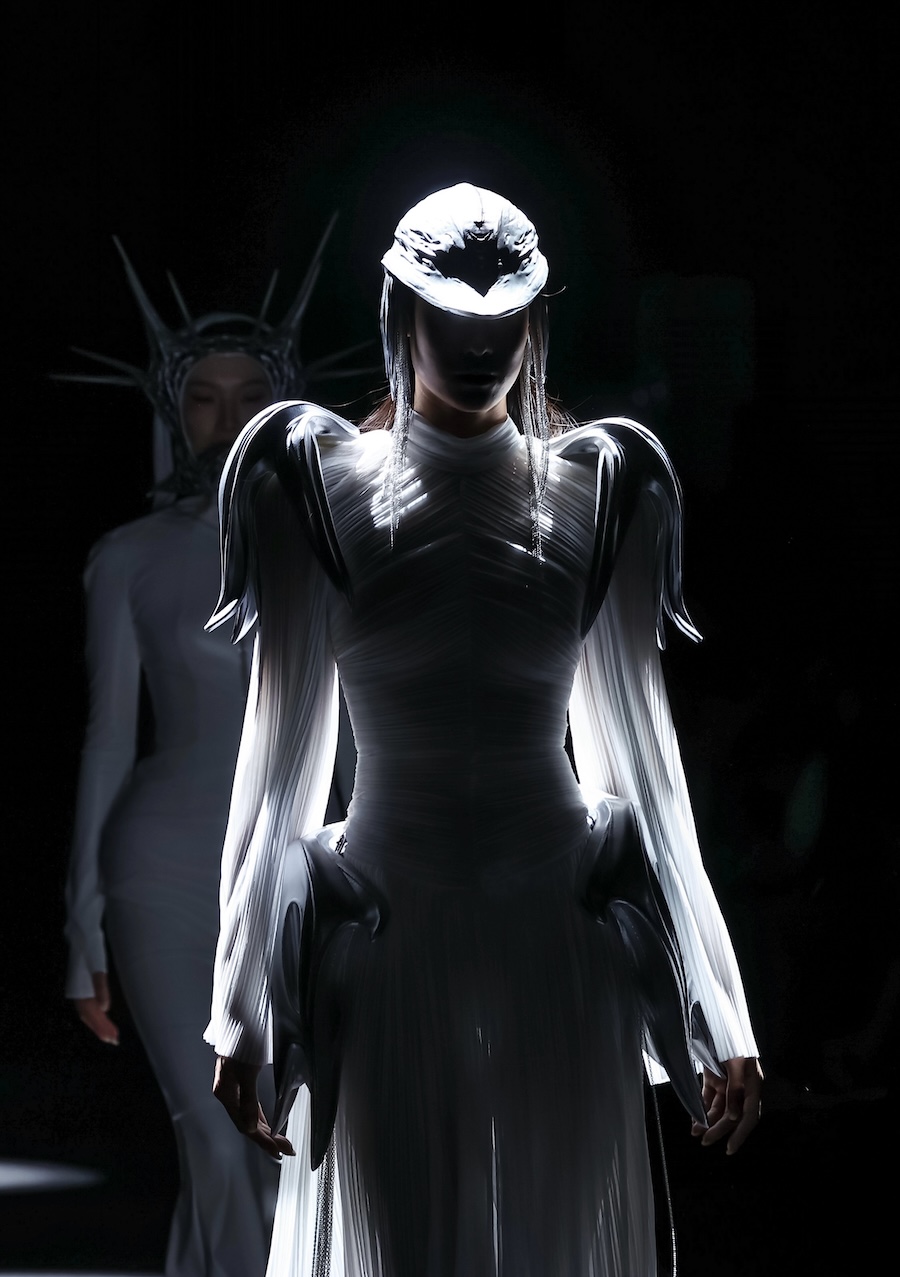
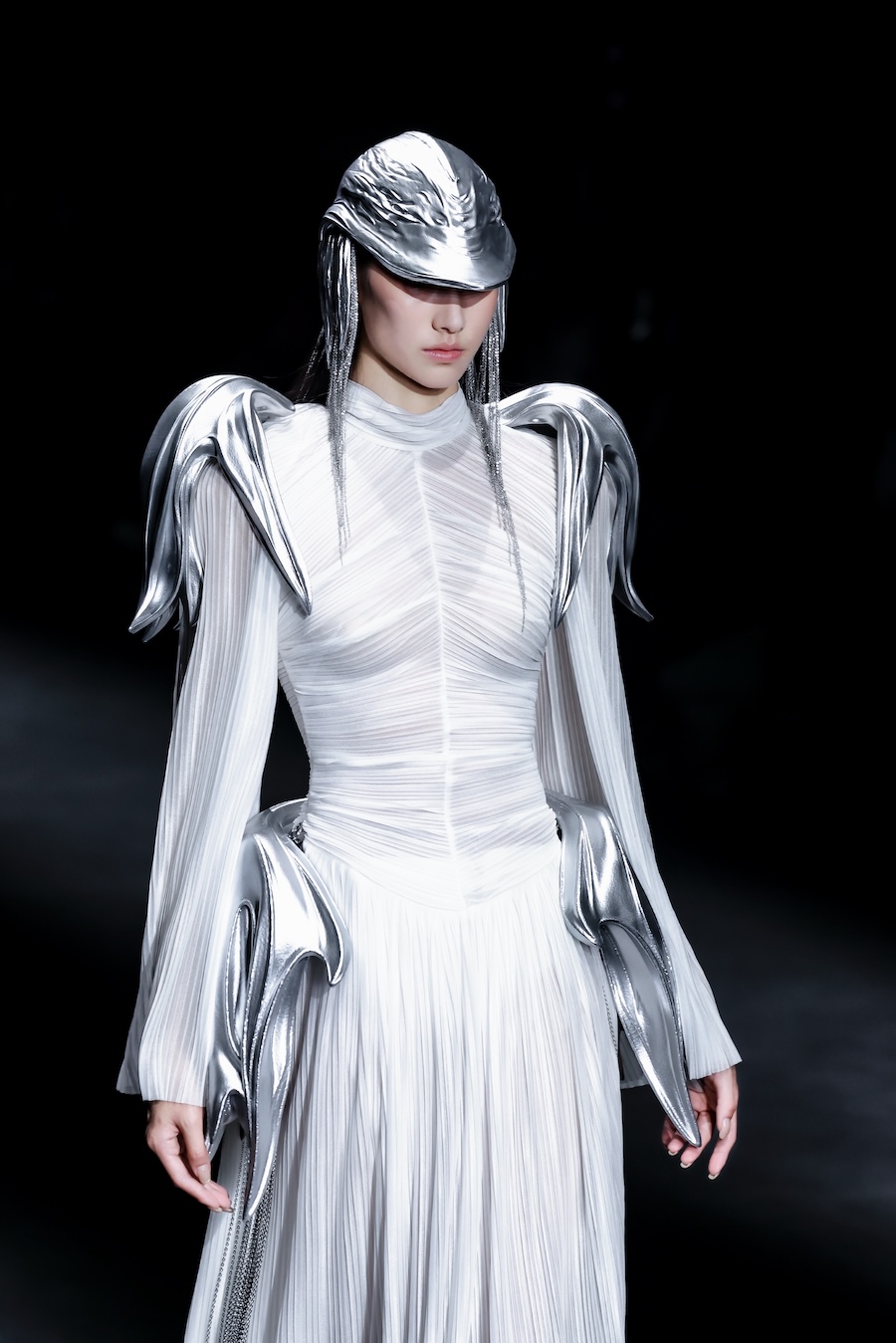
“That says a lot about how much of today’s futuristic aesthetic is simply a set of visual codes being used over and over again.”
The pair met while studying at the Royal College of Art, where their shared interest in experimental fashion and futurism eventually led to the formation of C.PROTOCOL.
“The future is inherently unpredictable, and we think there’s something dishonest about using today’s imagination to declare what the future will be.”
In developing the collection, Chen and Wang considered how humans might respond to unfamiliar environments, drawing on instinctive behaviours such as seeking shelter and the ways organisms adapt to their surroundings.
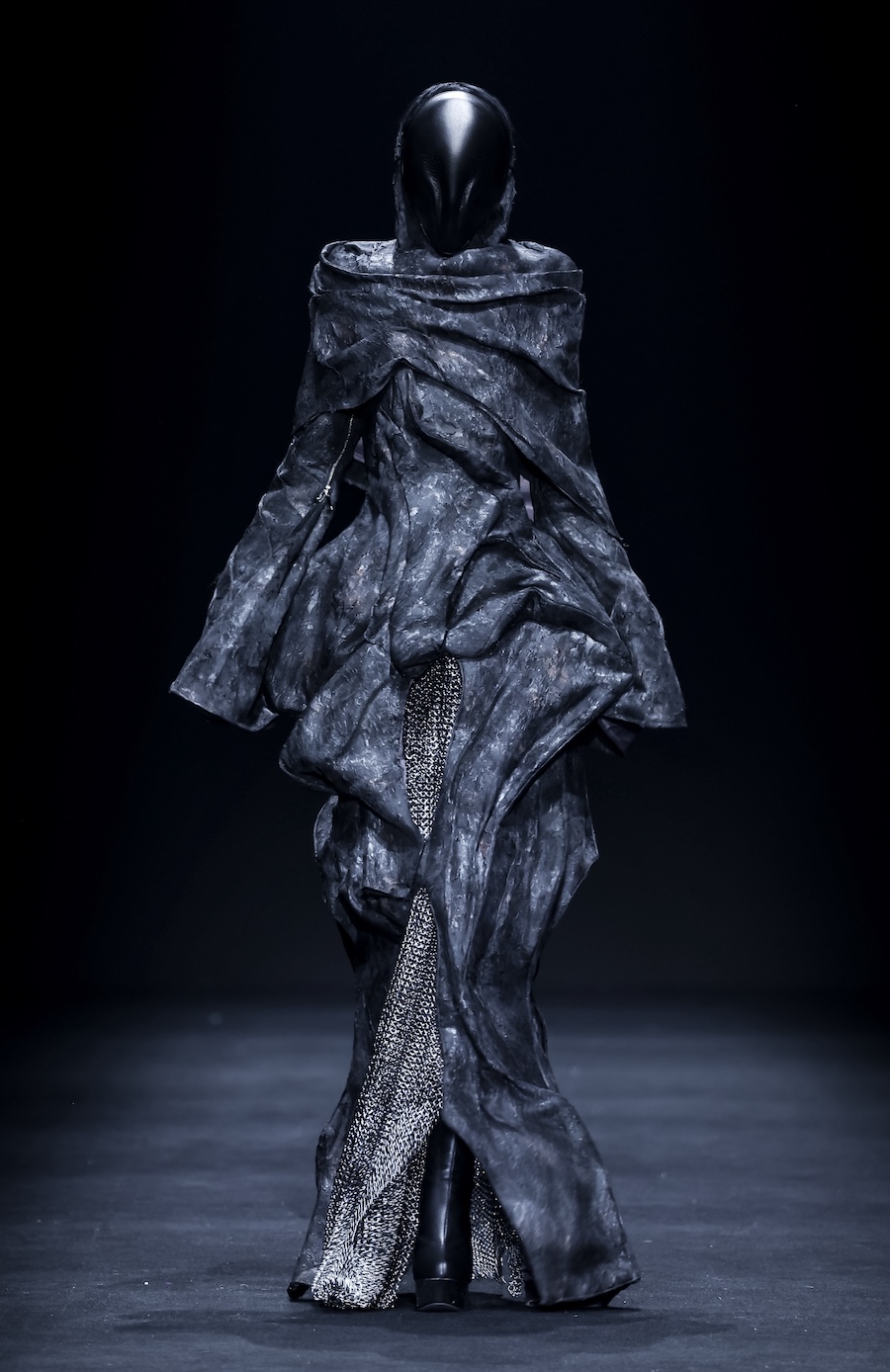
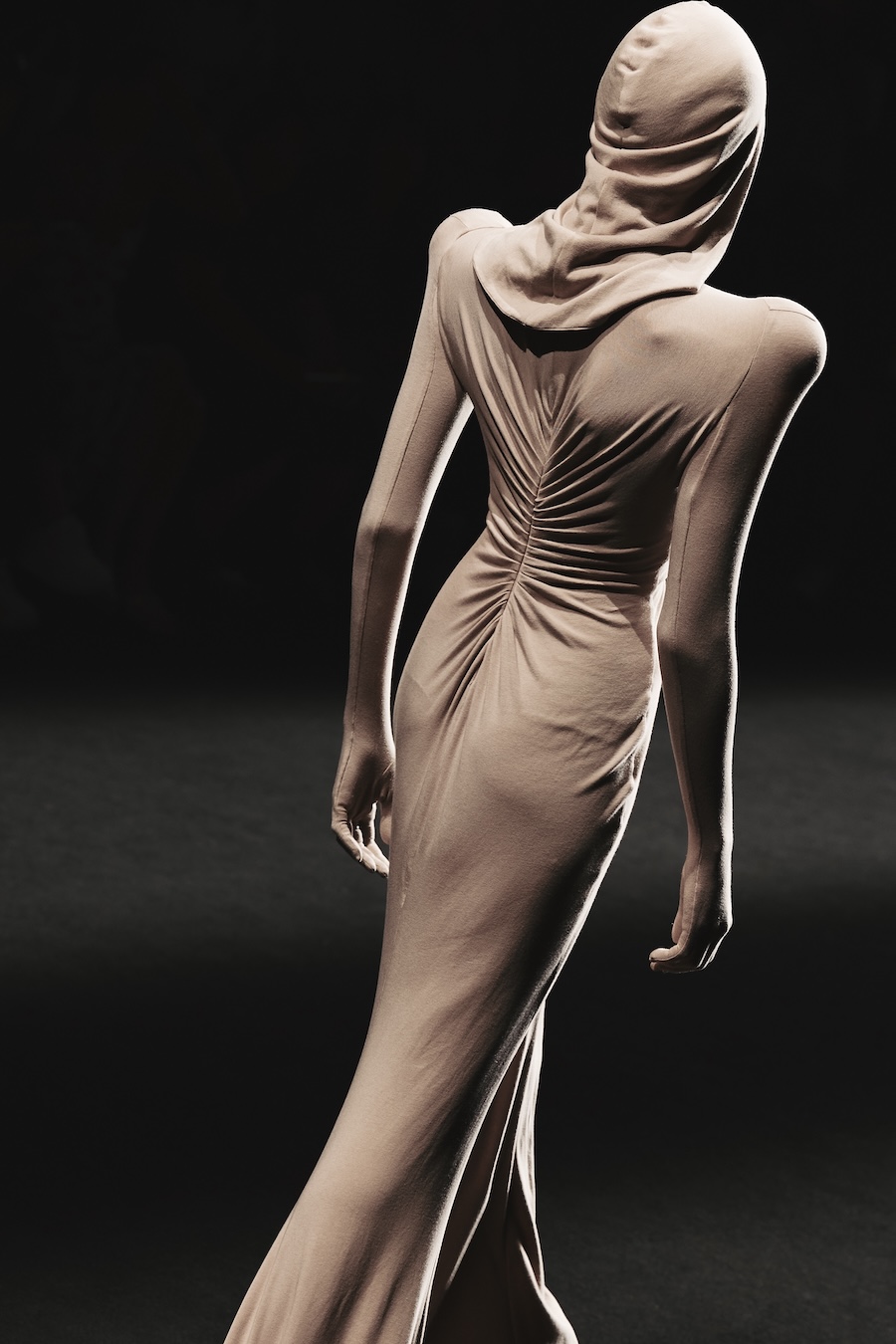
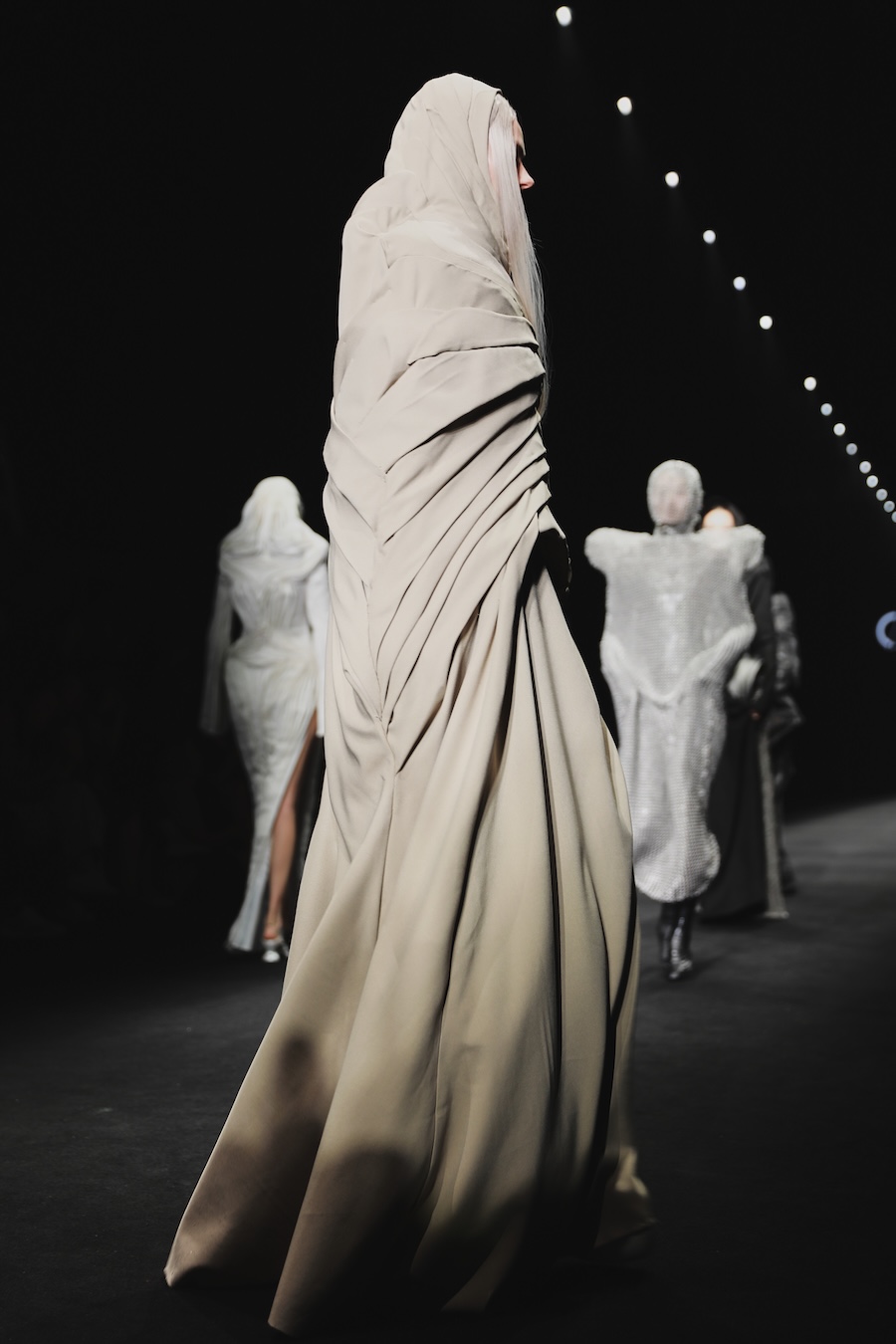
The resulting silhouettes are imposing. Faces are obscured, the proportions of the body are distorted, and rigid structures occupy the space around the wearer. There is an architectural quality to much of the collection, although some pieces have more in common with ceremonial dress.
Chen is particularly interested in how the protective function of clothing might evolve alongside technology.
“In the past, clothing responded mainly to the physical environment,” Jinmin says. “Today, information technology is extending that vulnerability into identity and data.”
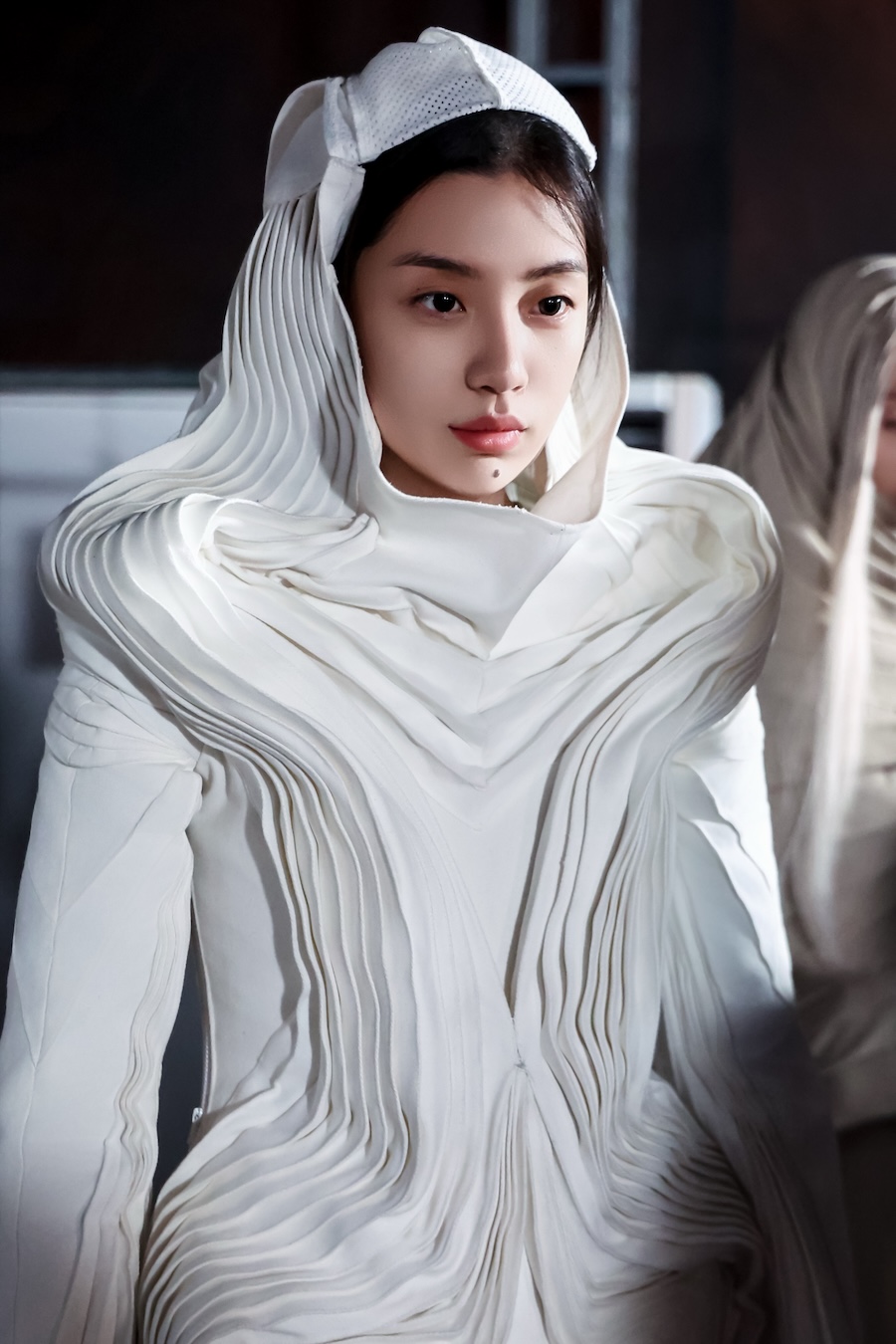
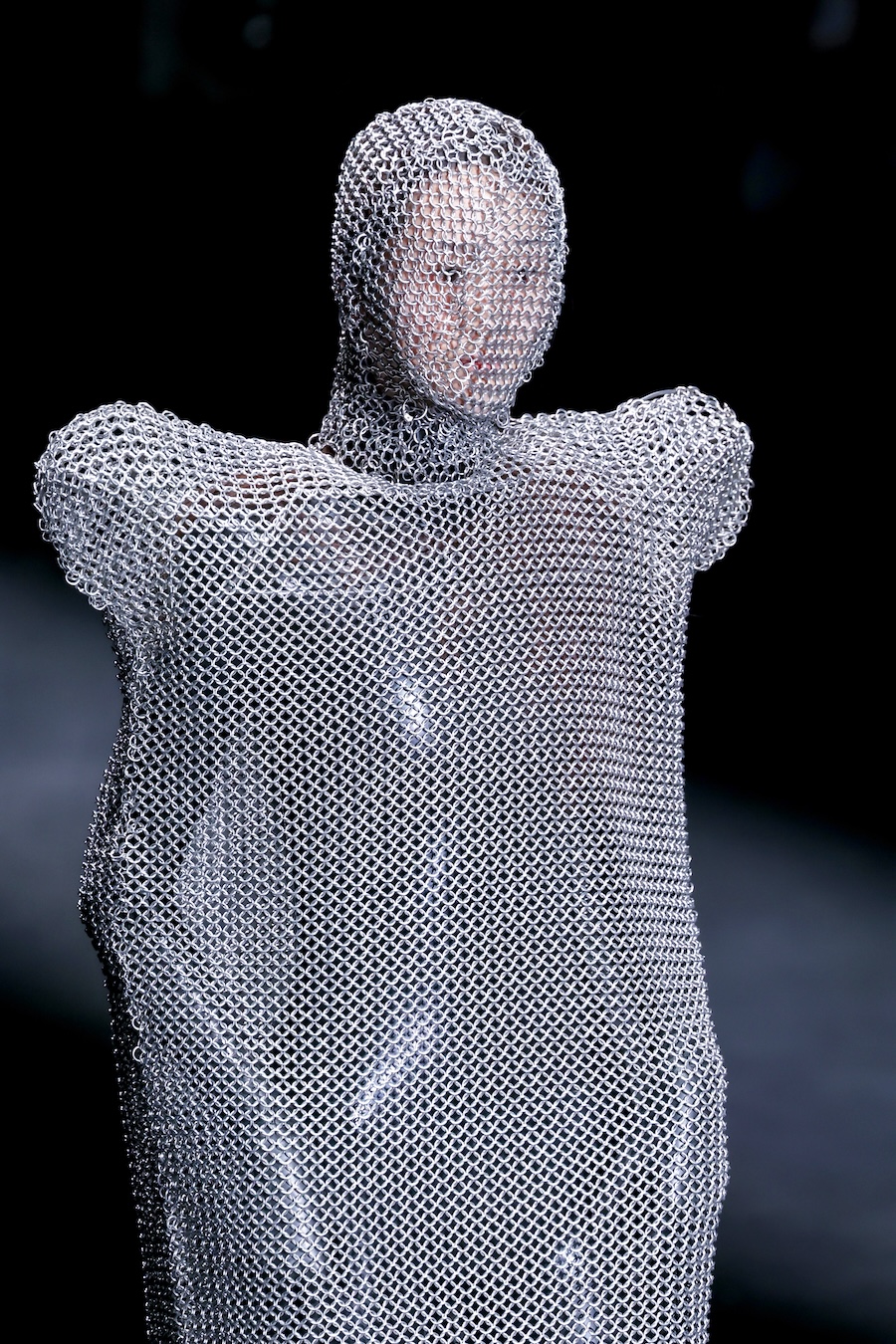
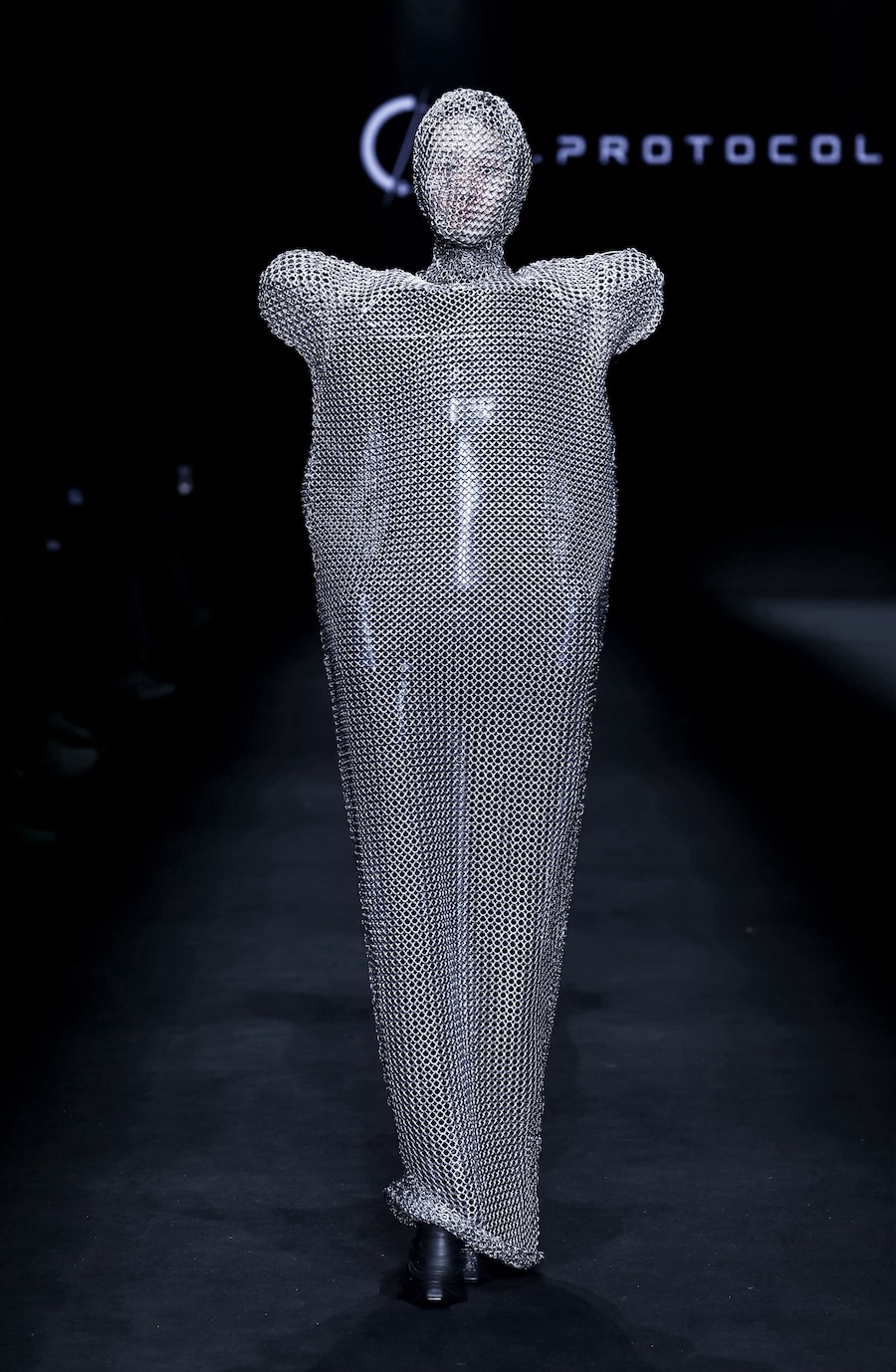
The eyes, traditionally left exposed in protective clothing, have become a means of identifying an individual through biometric technology. Several of the collection’s masks conceal them entirely.
Wearing some of these garments, however, comes with its own difficulties. Rigid structures restrict posture, while layers of metal mesh place considerable weight on the body. Wang sees this physical restriction as part of the work.
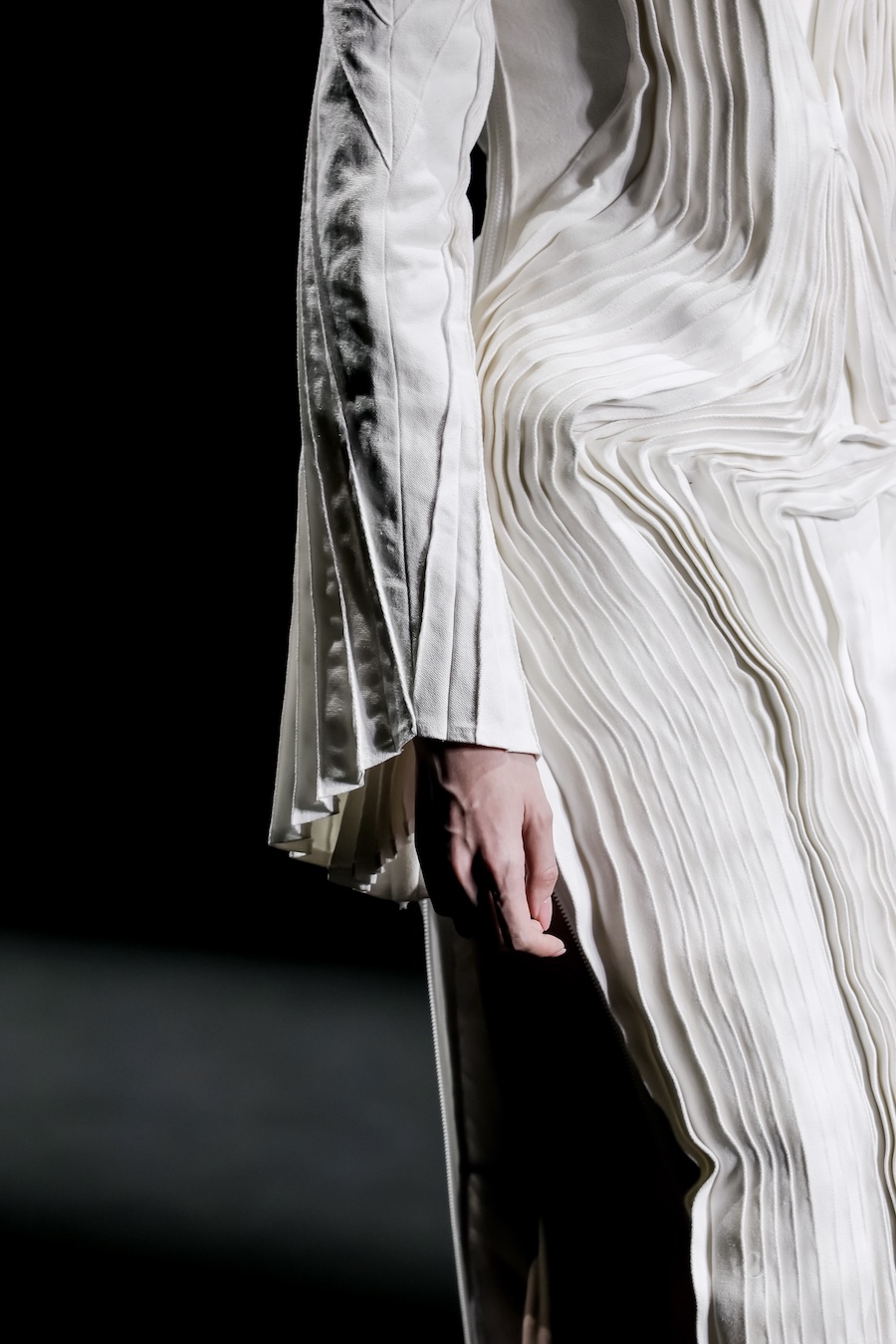
“We don’t see protection and restraint as opposites. They’re two sides of the same thing.”
“Real strength isn’t always about expanding without limits,” he adds. “It can be restrained, grand and powerful.”
Weight was a persistent problem during the development of the collection’s chain-mail piece. An early version in stainless steel proved too heavy, prompting the designers to switch to aluminium. They also experimented with 3D printing, although the printed components could not withstand the weight of the garment. The finished piece consists of individual aluminium plates joined by rings, with an internal frame providing structural support.
“To be frank, it’s uncomfortable to wear, even restrictive,” they admit.
Asked which piece they would leave in a time capsule to be opened in 200 years, they chose this one.
Among Wang’s references is Dune. He is particularly interested in the relationship between the fictional planet of Arrakis and the objects its inhabitants have developed to survive there. The scarcity of water informs everything from clothing to social customs.
“The visuals, technology and culture reinforce one another, making the whole world believable.”
Chen, meanwhile, has a fascination with Japanese Metabolist architecture and the movement’s ambitious proposals for future cities.
“What really attracts me is that people of that time were willing to devote so much creative energy to trying to realise a world that didn’t yet exist.”
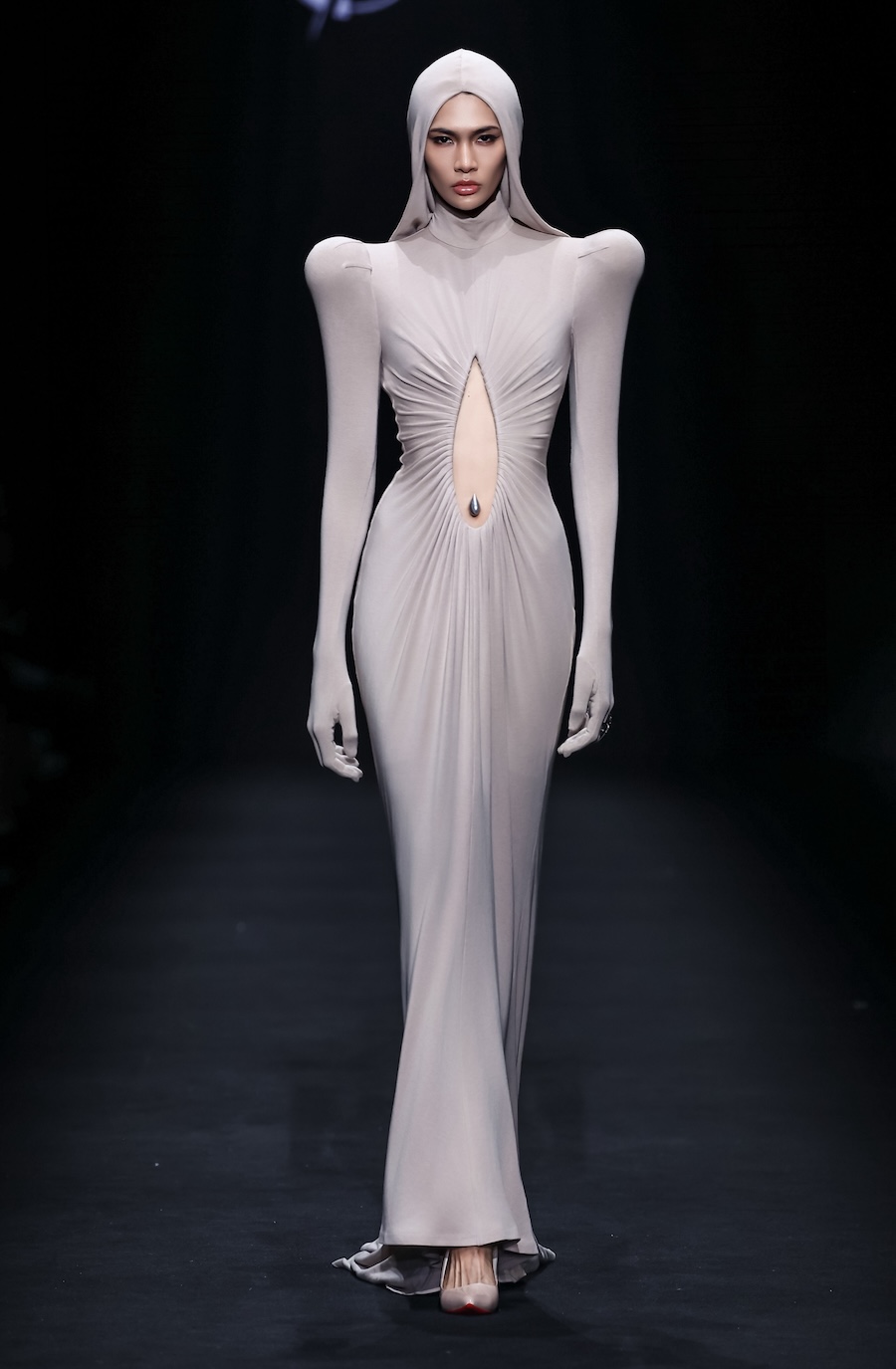
Their individual aesthetic preferences are quite distinct. Chen gravitates towards the symmetry of Art Deco and has a more idealistic vision of the future.
“I want the clothing to have an almost sacred beauty,” she says.
Wang favours the scale and physical weight of Brutalist architecture. These differences can become surprisingly contentious in the studio. During the development of a 3D-printed headpiece, the pair spent a considerable amount of time debating which direction its pointed elements should face. Angled backwards, they appeared threatening; extending outwards, they resembled rays of light.
Both ideas eventually made their way into the work. Someone later described the collection as a combination of sacred ceremony and Brutalist monumentality, a description that seems particularly apt given the disagreement.
“I think that’s what makes our partnership interesting,” Cenyi says. “Both sensibilities ended up in the work.”
Having presented at Beijing and London Fashion Weeks, the designers are now considering how to sustain a practice that involves such extensive material and technical experimentation.
The familiar business model of producing experimental runway pieces alongside a separate, more commercial collection holds little appeal for them. They are exploring the possibilities of digital fashion, artificial intelligence, wearable technology and alternative fabrication processes, with the hope that their research might eventually become commercially viable in its own right.
There is also the question of time. The designers describe the pressure of fashion’s seasonal calendar through the Chinese concept of neijuan (内卷), a term commonly used to describe increasingly exhausting and ultimately unproductive competition.
“We wish everyone could slow down a little, give designers real time to create, and give people some room to breathe.”
For all the technological research that goes into C.PROTOCOL, Chen entertains a rather amusing possibility when asked what people might wear a century from now.
“Maybe in a hundred years they’ll pay a fortune for today’s clothes, just as we’re obsessed with vintage now. The most fashionable thing in the future might turn out to be the past.”
For the time being, there are materials to test, technologies to work with and garments whose practical applications remain uncertain. The designers seem comfortable with that uncertainty.
As they put it, “the future won’t arrive just because we can imagine it. Someone has to try to make it.”
Words by Lewis Robert Cameron
Designer @c.protocol_official / cprotocol.uk
PR @i.deapr
Images courtesy of I.DEA PR & C.PROTOCOL
