
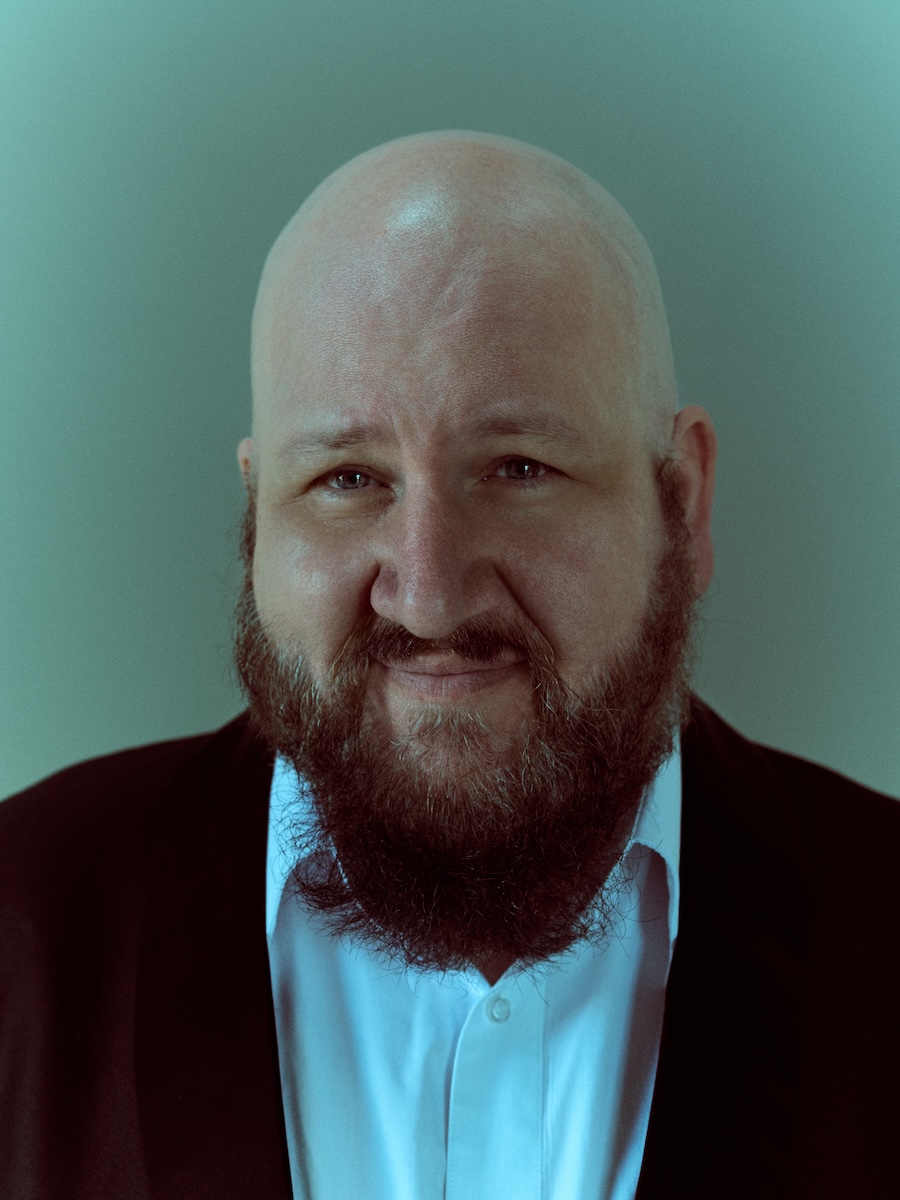
What began as a way to keep creating during a period of uncertainty led Stephen Kramer Glickman to stages and experiences he never imagined, especially since he was known for years as Gustavo Rocque on Nickelodeon’s Big Time Rush. Although his career also included comedy, animation, and other areas of entertainment, music gradually took on an increasingly important role in his life. Along the way, he also discovered what it meant to be recognised for his own voice.
His upcoming album, “Rhinestone Monster,” scheduled for release in December, brings together covers of songs by Peter Gabriel, Olivia Rodrigo, Britney Spears, and My Chemical Romance, among other artists. The tracklist has a particular story behind it, connected to his performances during Big Time Rush’s international tour, and reflects his interest in exploring new possibilities within familiar compositions. “Sledgehammer,” his recent cover of Peter Gabriel’s classic, is one such example. With a blend of funk, soul, and pop-rock, the song takes on an energy that also carries over into its 80s-inspired music video.
What many people don’t know is that these reinterpretations reflect decisions that go beyond musical arrangements. While creating the album, Glickman had to reconsider his approach to work, and some songs took on new meanings through personal experiences. In this conversation, the artist discusses the journey that led him to “Rhinestone Monster,” the collaborations that shaped the project, and what he has learned from performing other artists’ music. It is a story that began when his career took an unexpected turn.
For many years, the public has known you primarily for your work as an actor and comedian. When did music start to take on a bigger role in your career?
When the pandemic hit, the entertainment industry in Los Angeles shut down. No acting work, no writing work, no stand-up, no live theatre… just sitting alone at home, staring into the void. I needed an outlet, and singing in a recording studio seemed like a safe choice. But it wasn’t until my cover of Gnarls Barkley’s “Crazy” was a viral hit in 2021 that my career started to change. People were using my song, and for the first time in a long time, it wasn’t because I was Gustavo from Big Time Rush. It was because TikTok had randomly chosen the song to be part of a trend. A trend where people share their most embarrassing relationship stories while my cover of “Crazy” plays in the background. Who knows why things like this happen… but my song got a couple of million plays, and people seemed to really enjoy my little performances when I would get the opportunity at nightclubs, houses, parties, and colleges. Then in 2024, the song went viral again, this time because Diplo used it. The trend reignited, but this time it was so much bigger than before. Within the first month of it trending again, the song did 3 billion streams and landed me on the Billboard Top 50 at number six, where I charted for five weeks. The rest is history. My music career took off and has allowed me to achieve things I never would’ve dared to dream of.
Your new album, “Rhinestone Monster,” brings together covers of songs by a wide variety of artists and genres. How did you select these tracks, and what did they need to mean to you to make the cut?
These are all songs that I performed on the Big Time Rush In Real Life Worldwide Tour produced by Live Nation, which finished just a few months ago. For these songs to make the cut, they had to be interesting arrangements of the original. I didn’t want anything to feel like a carbon copy of the original song.
You’ve said these songs helped you express yourself in ways only music could. What did working on the album teach you about yourself?
Working on this album taught me to take my time and work on something until it feels right instead of just putting it out because of an optimal release date. We spent 5 months making this album, literally taking week-long breaks in between editing sessions to feel out every last measure. I think I’ve been so rushed in the past that letting myself and our team have time to make this album gave me something I’m really proud of from start to finish.
Let’s talk about Peter Gabriel’s “Sledgehammer.” Why did you include it on the album, and what aspect of the song did you want to explore most?
I love the original so much, but our version is so much fun; I absolutely loved performing it on the road. We opened with this song for more than half of the tour. I really wanted to explore how wild this song can get.
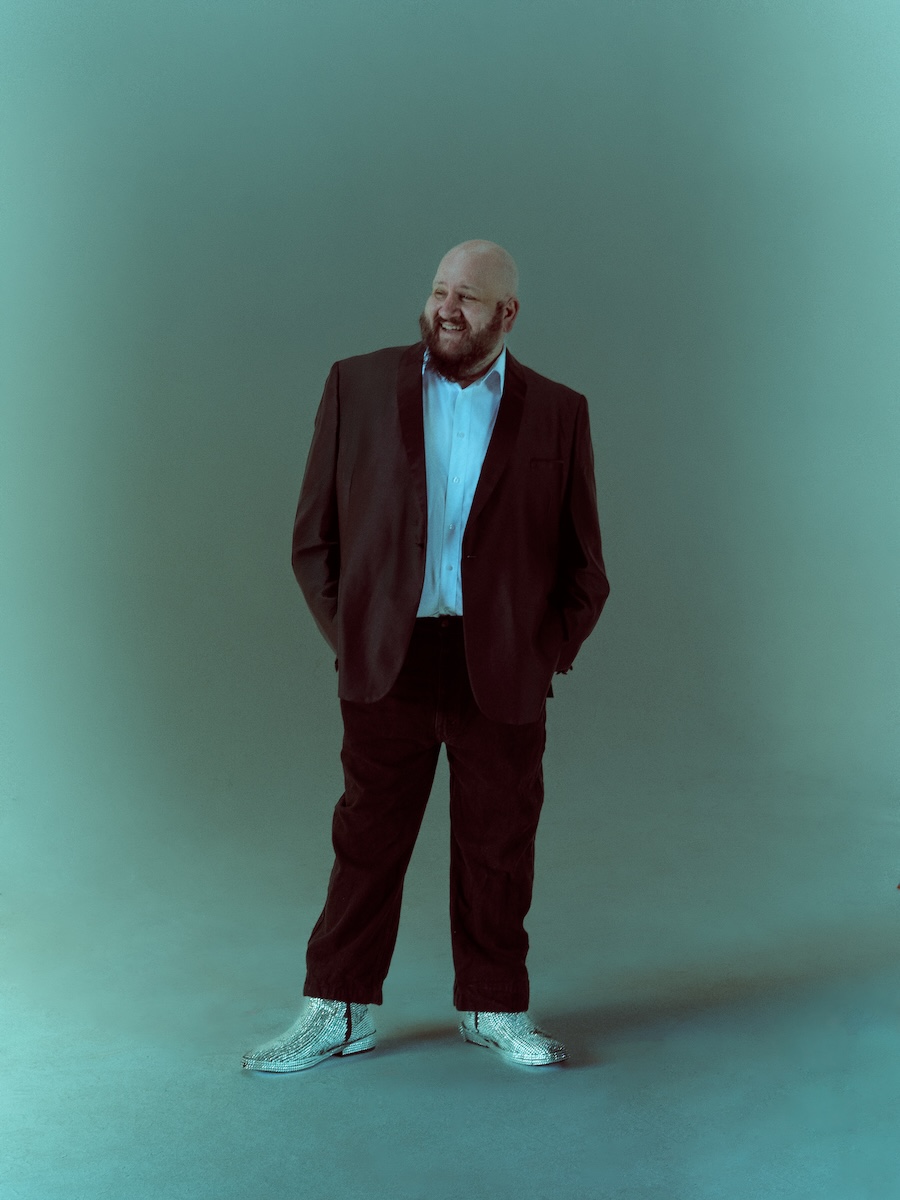
Your version of “Sledgehammer” retains elements of funk and soul, while the instrumentation also incorporates pop-rock and dance-rock. How did you approach the arrangements, and what choices did you make to give it your own unique sound?
For real, this was my guitarist Soren Crisell’s idea to do it like this. He knows I love the song, and he is very aware of my vocal range, so when he brought it to me, I couldn’t believe how much I loved it. I feel like it deserves to be the opening theme song for the next season of Peacemaker. It just has that raw energy.
The music video for “Sledgehammer” features an 80s-inspired aesthetic, with intense red lighting and a distinctive wardrobe. How did this visual concept come about, and what did you want to convey through these images?
I wanted to depict people in their normal work environments getting swept up into the sexual, freaky nature of the song. It was just a matter of figuring out who would do what, but the vision was there from the jump.
The music video features appearances by Deep Roy, Lucas Grabeel, Flattop, and several digital creators. How did you bring this cast together?
This was a dream cast. As they agreed, one at a time, to be in it, the vision became clearer. Deep Roy is one of my absolute favourites, though. Calling him on the phone and asking him to dress up as a Jedi and climb a mountain with me to film in the middle of summer was nerve-racking, to say the least. The man is an absolute icon, and he did incredibly well in that 112-degree heat.
In October, you released a cover of Olivia Rodrigo’s “Drivers License” with Edwin McCain. How did this collaboration come to be, and how did you decide to steer the Olivia Rodrigo track toward an alternative pop-rock sound?
I think lyrically, “Drivers License” is one of the best breakup songs ever written. It was always a shock to audiences when we would play it on the road; they would giggle a bit when I started the song, but by the chorus, they would all be singing along. I loved that feeling of showing them how the song made me feel and bringing them over to my side of the table. I think Edwin McCain is a genius and his vocals on this cover are unbelievable.
You’ve shared that performing “Welcome to the Black Parade” in Kraków, after visiting Auschwitz, changed your relationship with the song. What did that experience mean to you, and how did it influence the version you recorded with Adam Pascal?
When lyrics and music are strong enough, they can carry all the emotional weight you can drop on them. That is what this song deserves. If you’re not singing Welcome to the Black Parade with a heavy heart, I feel like it’s a missed opportunity. This is not a song you can sing casually. It needs to feel epic in every way. For me, that was bringing in the sounds of an orchestra, the power of a choir, and turning it into a duet with one of the most iconic voices in Broadway history, Adam Pascal.
You have performed songs by Billie Eilish, Radiohead, Britney Spears, My Chemical Romance, and various other artists with vastly different styles. What do you aim to preserve from an original song, and what aspects do you consider important to transform when creating a cover version?
A cover can be done in one of two ways: an exact recreation of the original or something unique and different. But you can’t just be different for difference’s sake. It has to be intentional. Slowing down the song so the lyrics can achieve something new. Changing the time signature to explore how else the song can make you feel. Putting your own emotional intentions on a song to give it a unique twist. These are the things I try to accomplish when doing a cover. Sometimes, though, a song needs to sound like the original, and you have to respect that too. “Mr. Brightside” by The Killers was a fan favourite on the road, but we had to do it like the original because that’s just the way it was supposed to sound. So although I love that song, we went with Sienna Spiro’s “Die on this Hill” because it’s a very unique version of the song and, to me, the lyrics felt like they fell out of my journal. I can’t wait for people to hear this album. I’ve never been so passionate about any musical thing I’ve ever worked on as much as I feel about this album.
There is an audience on the other side of these songs that has followed Glickman from television screens to concert stages. As “Rhinestone Monster” approaches its December release, those listeners will have another opportunity to discover a familiar voice through music they may already know, this time from a different perspective.
Explore more of Stephen Kramer Glickman’s music, his latest projects, and upcoming performances on Instagram and TikTok.
