


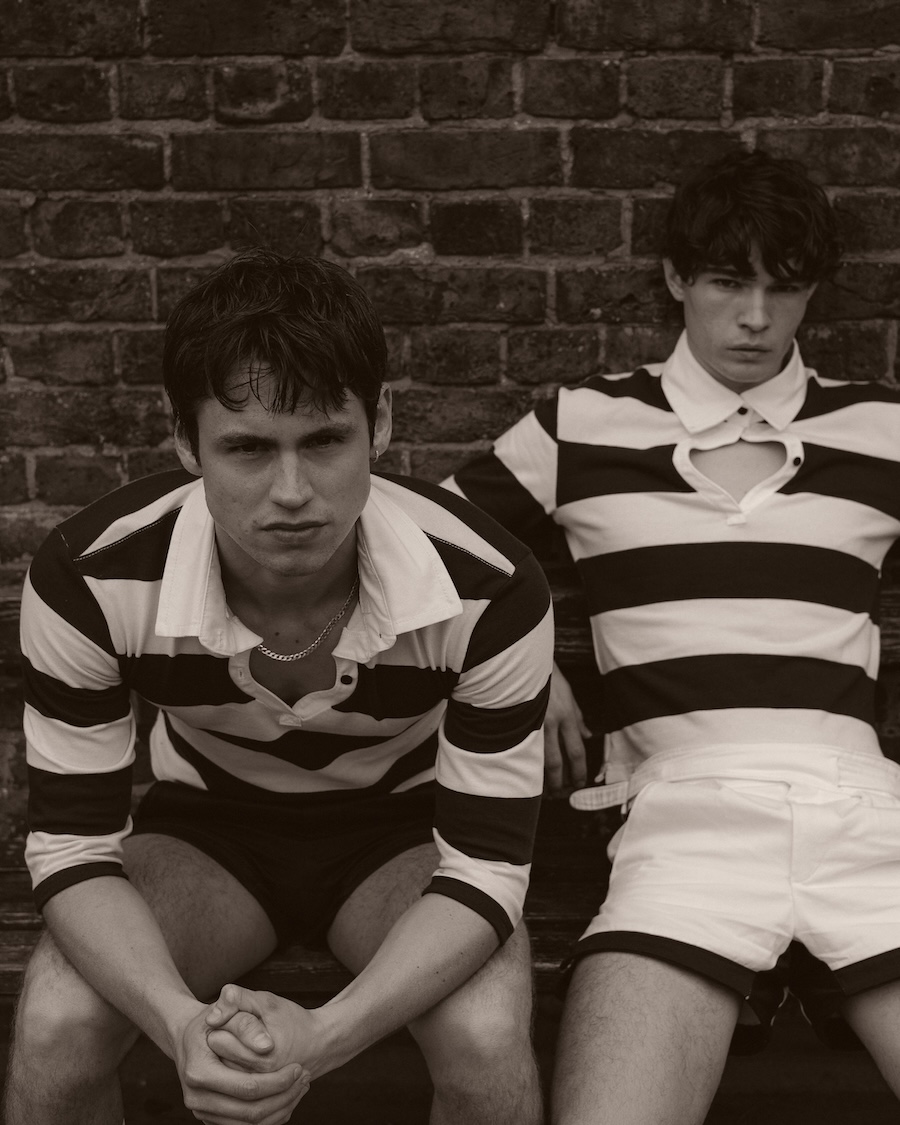
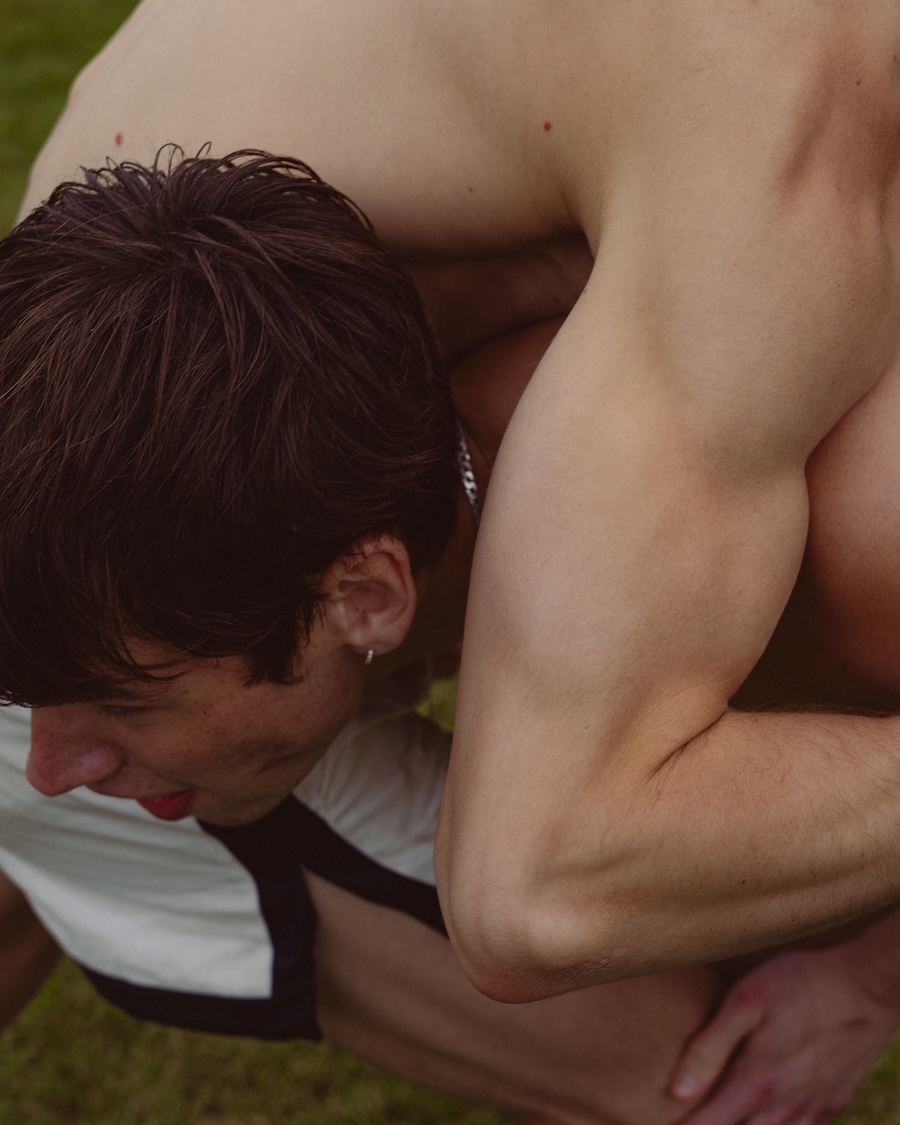
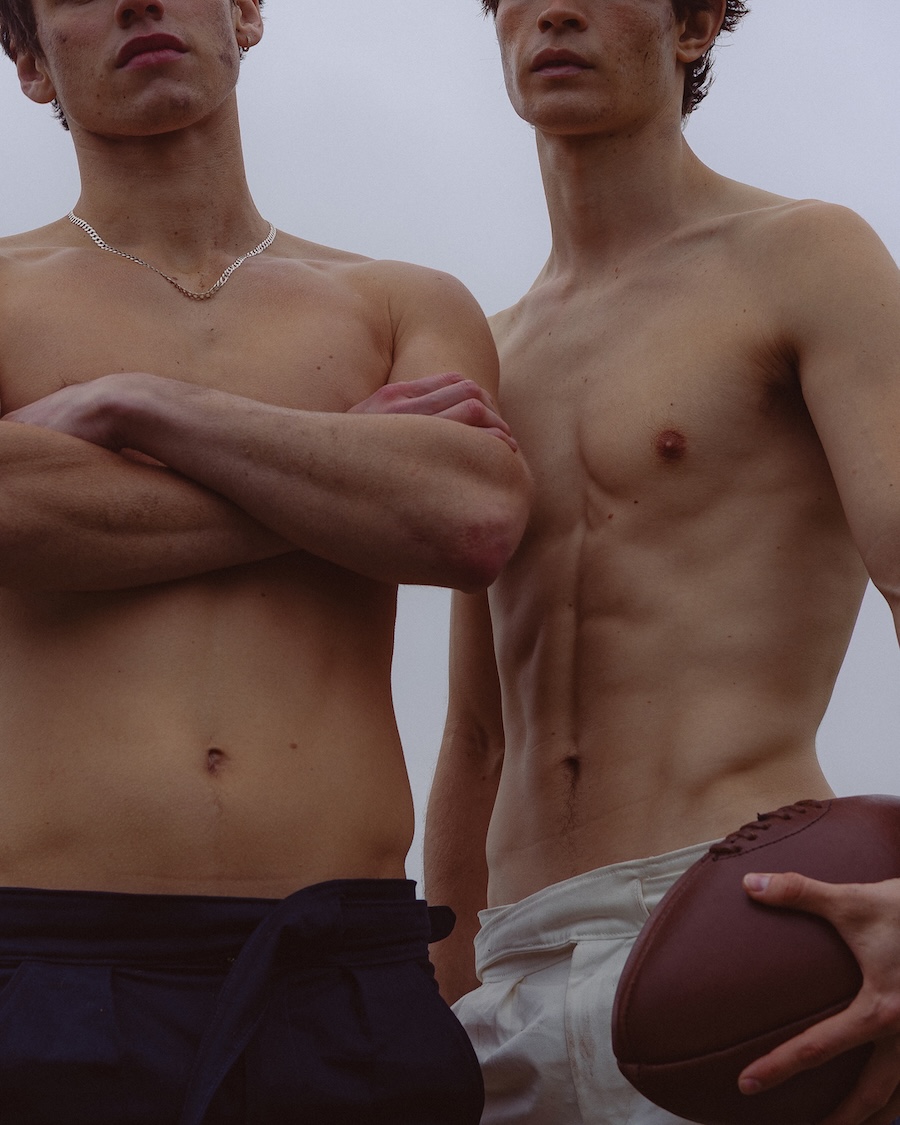
There is a moment in every rugby match when bodies become indistinguishable from one another. Arms lock. Hands grip fabric. Faces press into shoulders. The scrum collapses into a dense knot of flesh, breath and force. It is a moment built on contact, trust and proximity, yet one so familiar within the rituals of sport that its intimacy often goes unnoticed.
For Benjamin Robin, it became impossible to ignore. The designer’s new drop Collection.05, Ritual Touch, begins here. Not with rugby itself, but with the contradictions that sit beneath it.
Rugby remains one of the most enduring symbols of traditional masculinity; a sport synonymous with toughness, discipline and physical strength. Yet it is also a world structured around touch. Men hold one another. Men carry one another. Men collide, embrace and depend upon one another in ways that would seem unusual outside the boundaries of the game.
The contradiction fascinated him.
“I became interested in the tensions within it,” Robin says. “It’s often seen as a symbol of toughness and traditional masculinity, but at its core it’s also a sport built around physical closeness, trust and touch.”
The collection arrives as the latest chapter in Robin’s ongoing examination of masculinity. Not as a fixed identity, but as a series of performances, rituals and inherited behaviours. Throughout his work, there has always been an interest in the moments where certainty begins to fracture; where the supposedly rigid structures of masculinity reveal something softer beneath.
A quote by Barbara Kruger became a guiding thread during the development of the collection: “You construct intricate rituals to allow you to touch the skin of another man.”
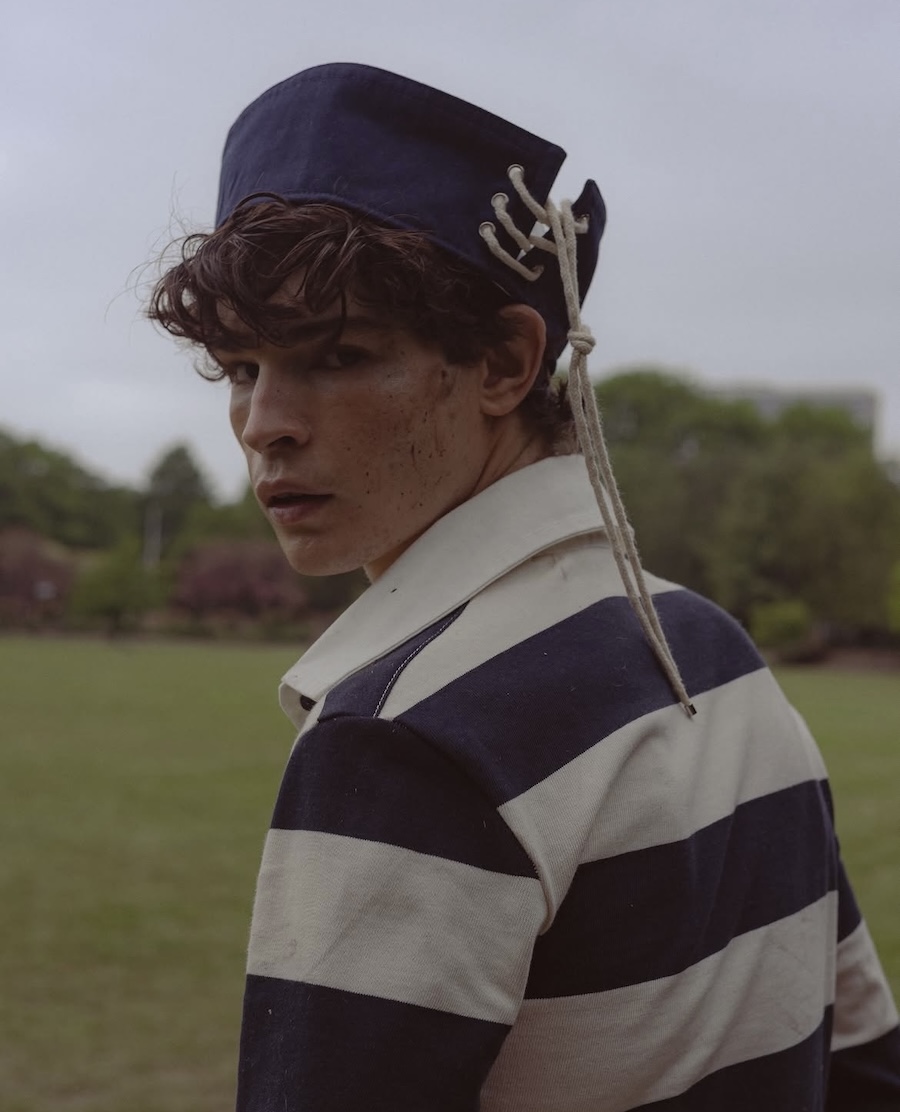

The sentence lingers over Ritual Touch like a refrain.
“The rugby player is such a widely accepted archetype of heterosexual masculinity despite the sport being built around constant physical contact between men,” Robin explains. “It made me think about how masculinity often permits intimacy, but only within very specific frameworks.”
What happens when those frameworks begin to loosen?
The question feels particularly resonant within Robin’s growing mythology of the “Small Town Boy”. A character who has quietly existed within the BENJAMIN ROBIN universe from the beginning but who comes sharply into focus here.
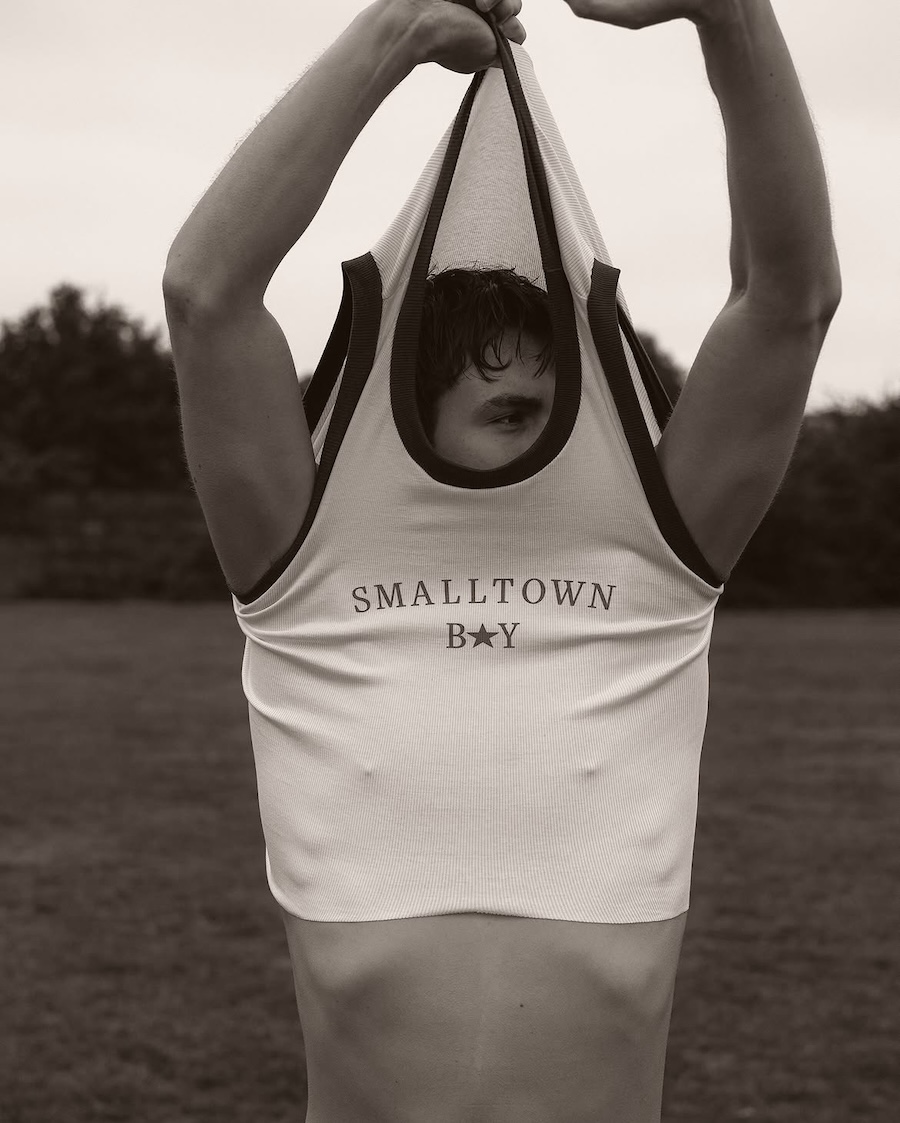
Part autobiography, part fiction, part cultural memory, he is a figure suspended between expectation and desire. He is shaped by the places he comes from, by the boys around him, by the rules he has inherited about what a man should be. Yet beneath those expectations exists another current entirely: curiosity, longing, uncertainty and the first stirrings of queerness.
Robin speaks about him with remarkable clarity, as though describing someone he knows intimately.
“There are parts of myself in him, parts of the boys I grew up around and parts borrowed from films and popular culture,” he says. “He’s weighed down by expectation and ideas of what a man should be, while also trying to make sense of this burgeoning queerness within him.”
Rugby became the perfect setting through which to understand him.
Not because it exists outside of masculinity, but because it exists so completely within it.
Its rituals are inherited. Its uniforms are symbolic. Its codes are rarely questioned. Yet beneath all of that structure lies something unexpectedly tender: a culture of physical dependence and touch disguised as competition.
This tension runs quietly through the collection.
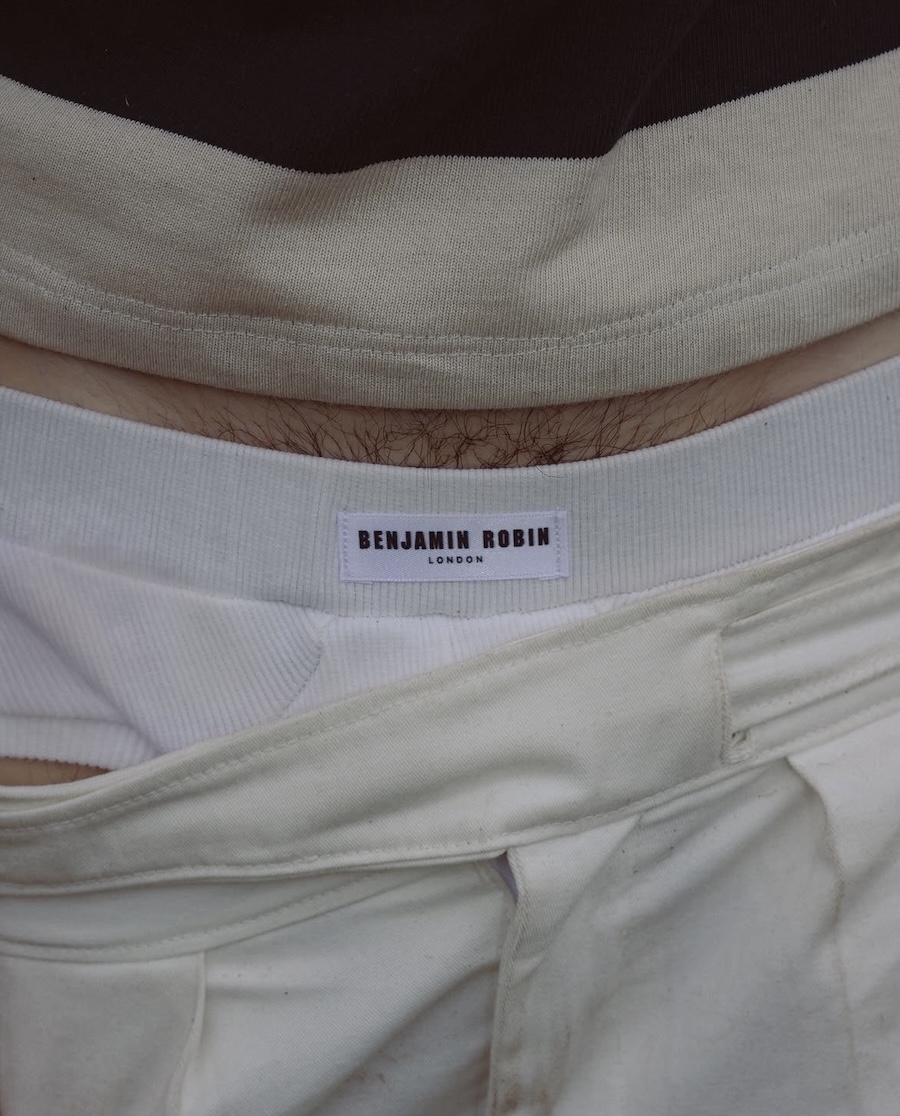
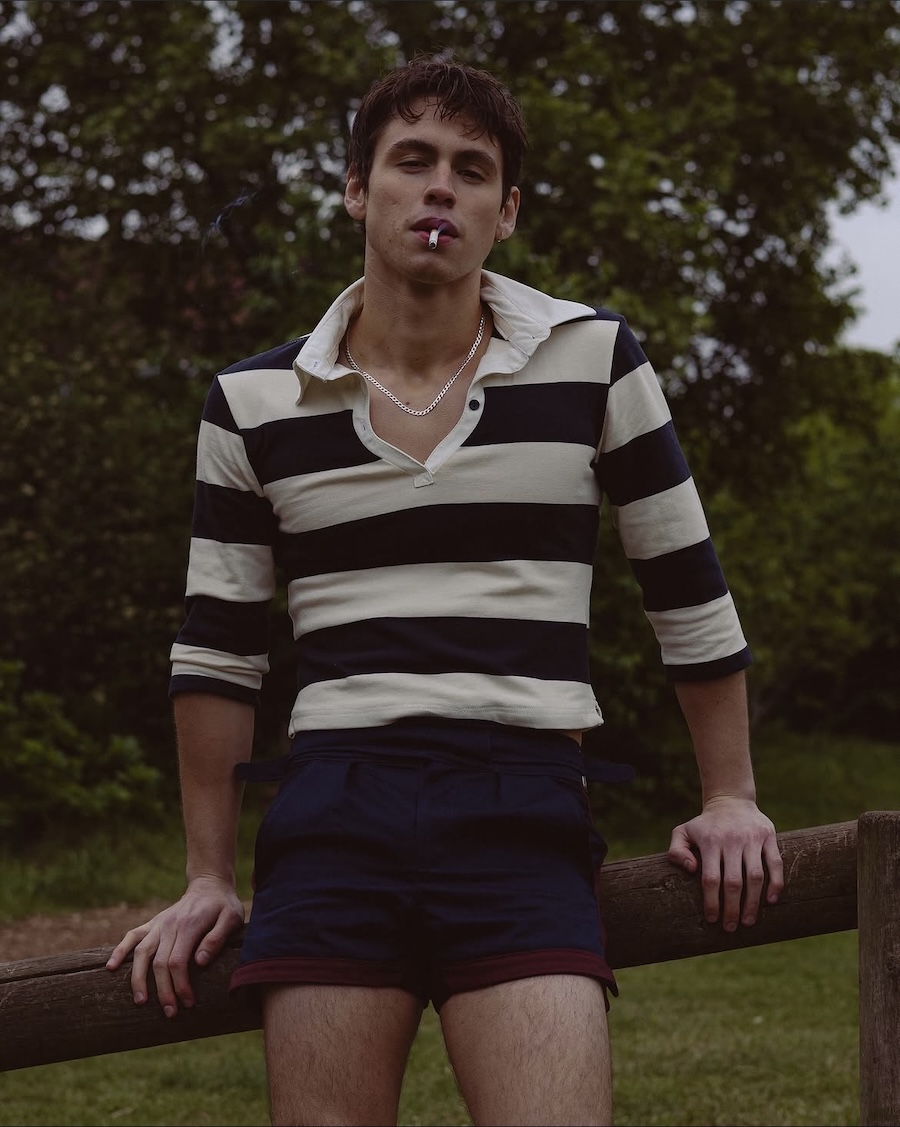
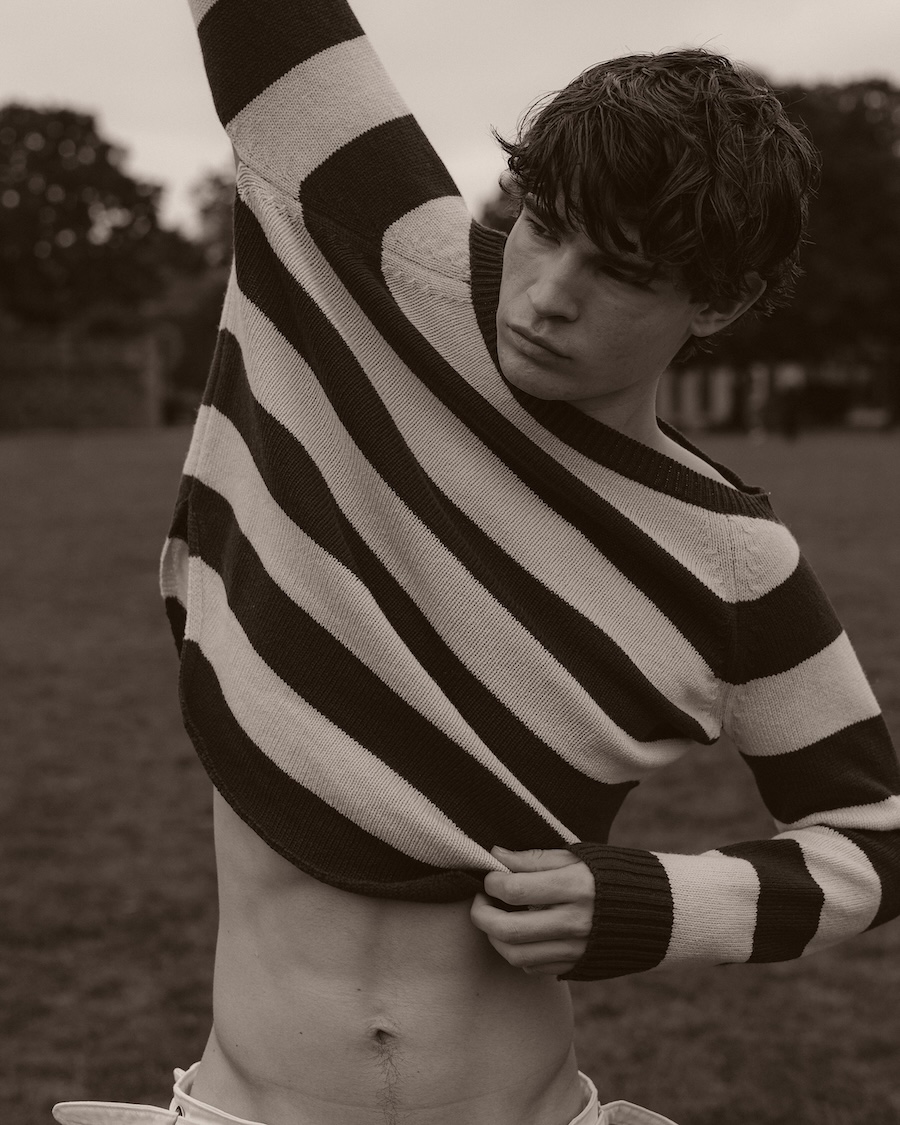
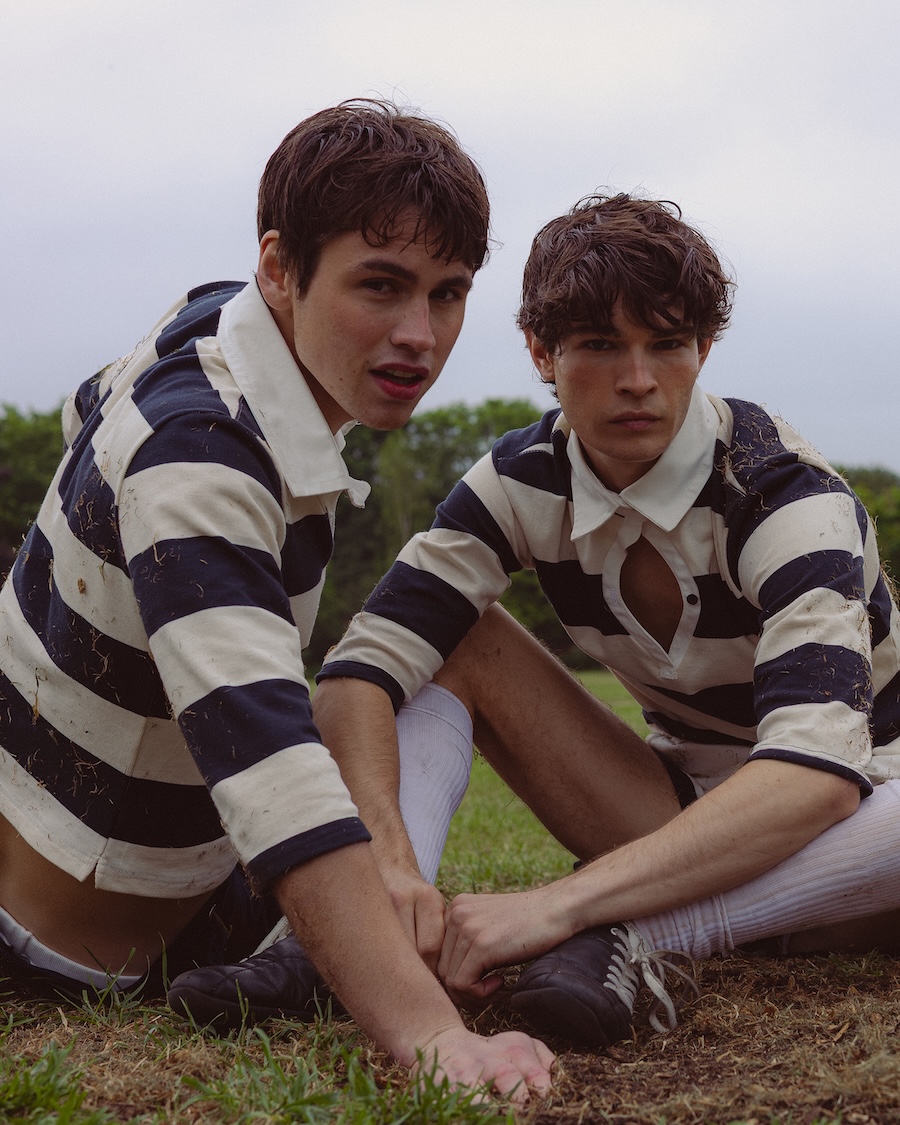
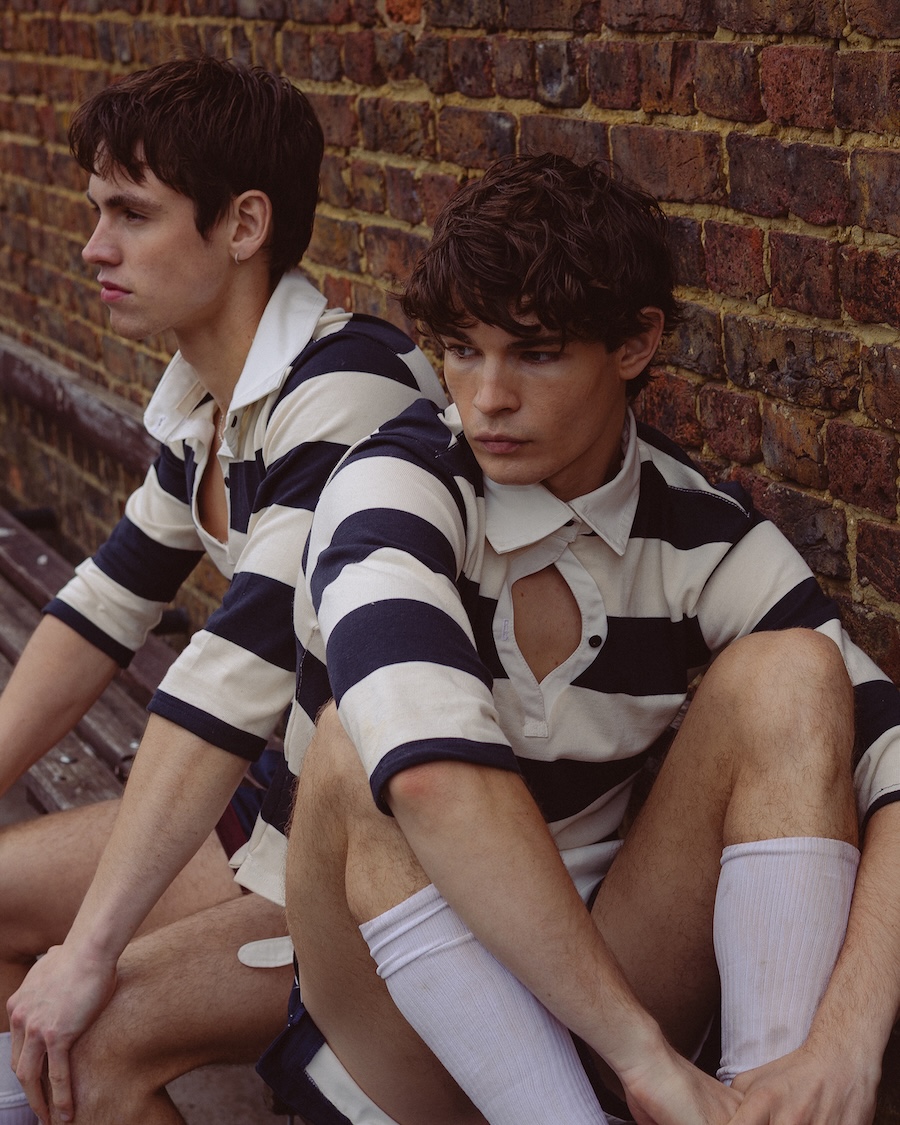
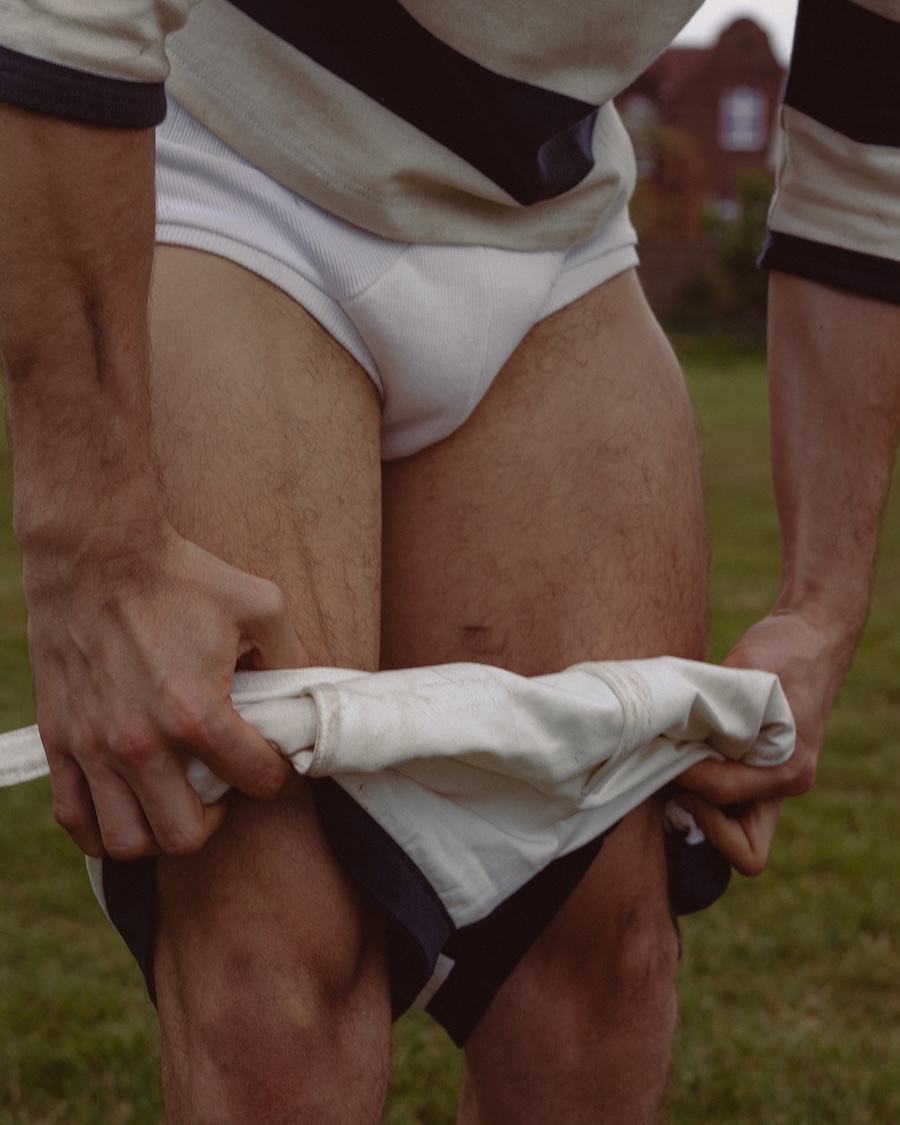
Rather than dramatise intimacy, Robin builds it into the garments themselves. A rugby shirt opens through a curved placket, appearing as though it has been stretched apart by unseen hands. Knits lift away from the body. Hems pull subtly upwards. Fabric appears caught in moments of movement, tension or release.
The gestures are restrained but deliberate.
Touch has always been embedded within the language of BENJAMIN ROBIN, but here it becomes less literal and more psychological. The clothes do not simply depict touch; they create an awareness of it.
“The garments always need to have this feeling of tactility,” Robin says. “Whether that’s tension across a waistband, fabric stretching across the torso or a slight pulling at the hem. I’m interested in creating an awareness of touch rather than always representing it directly.”
What is striking about Ritual Touch is its refusal to separate vulnerability from strength.
Much contemporary discourse still frames masculinity through oppositions: hard and soft, dominant and vulnerable, masculine and feminine. Robin is interested in the spaces where those distinctions dissolve.
“I don’t really think vulnerability and power are opposites,” he says. “Something that once felt powerful can later feel tender or intimate. I’m interested in that space where both can exist at once.”

The clothes reflect this ambiguity beautifully.
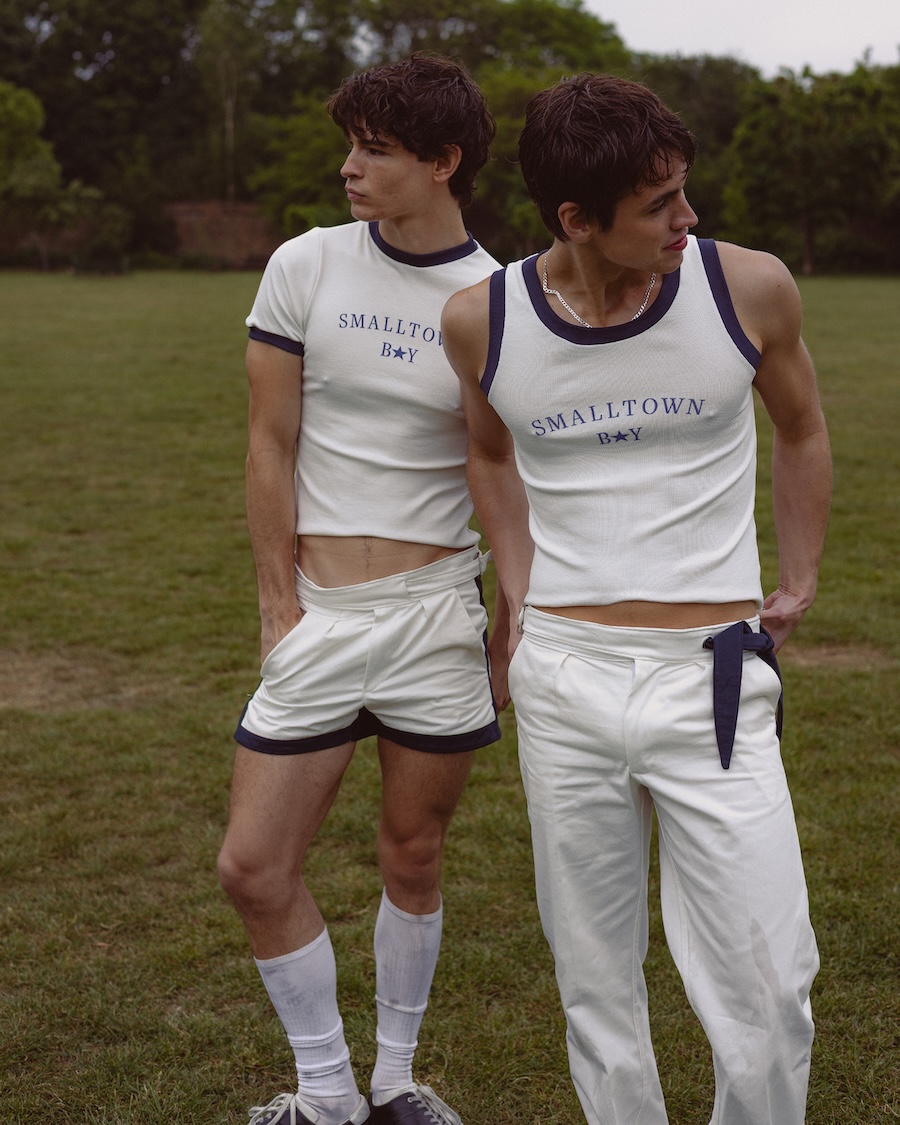
Drawing from rugby uniforms of the 1920s and 1930s, as well as military dress, the collection carries an inherent sense of structure and discipline. Yet that structure is constantly interrupted. Shorts sit lower on the waist. Openings expose unexpected areas of the body. One knit features an open armpit—a small detail that introduces a subtle sensuality while simultaneously referencing movement and athletic performance.
The effect is not overtly sexual. Instead, it feels human.
Robin’s interest has gradually shifted over the years. Where he once explored masculinity primarily through queer perspectives, he now finds himself drawn towards something more complex: the latent queerness embedded within masculinity itself.
The sports field. The parade ground. The changing room. Spaces where queerness is presumed absent despite being haunted by forms of intimacy, desire, performance and physicality.
These are the contradictions that continue to pull him back.
“There is a stifling level of control enforced where queerness seems impossible,” he says. “Those are the areas that feel most intriguing to me.”
Perhaps that is why Ritual Touch feels less like a collection about rugby than a meditation on permission.
Permission to touch. Permission to feel. Permission to occupy forms of masculinity that make space for softness rather than fear it.
The collection’s emotional power comes from its familiarity. Almost everyone remembers adolescence as a period of negotiation—learning how to inhabit a body, how to perform an identity, how to navigate intimacy while pretending not to need it. Robin understands that these experiences are rarely unique. They belong to entire generations.
“I wanted it to feel familiar,” he says. “Even though the collection comes from a very personal place, I wanted it to feel shared.”
That sense of collective memory sits at the heart of the work.
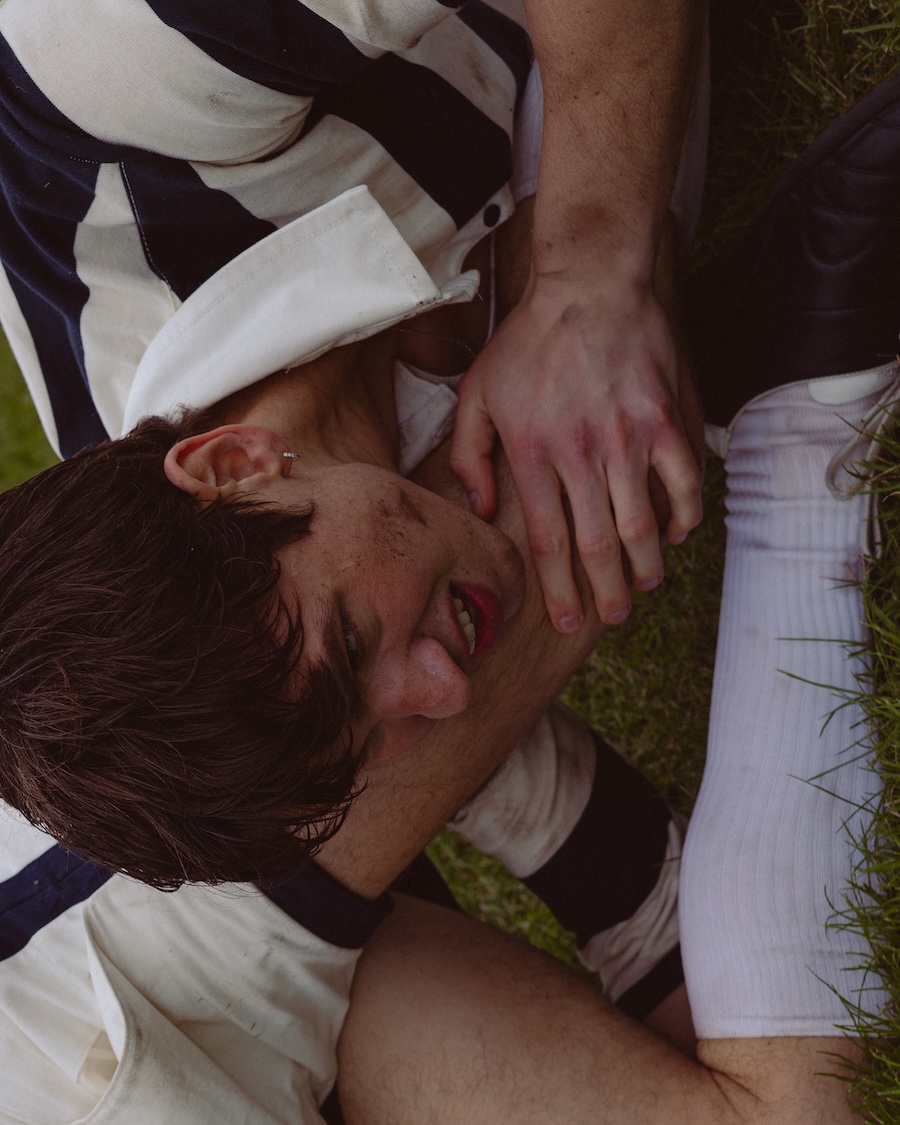
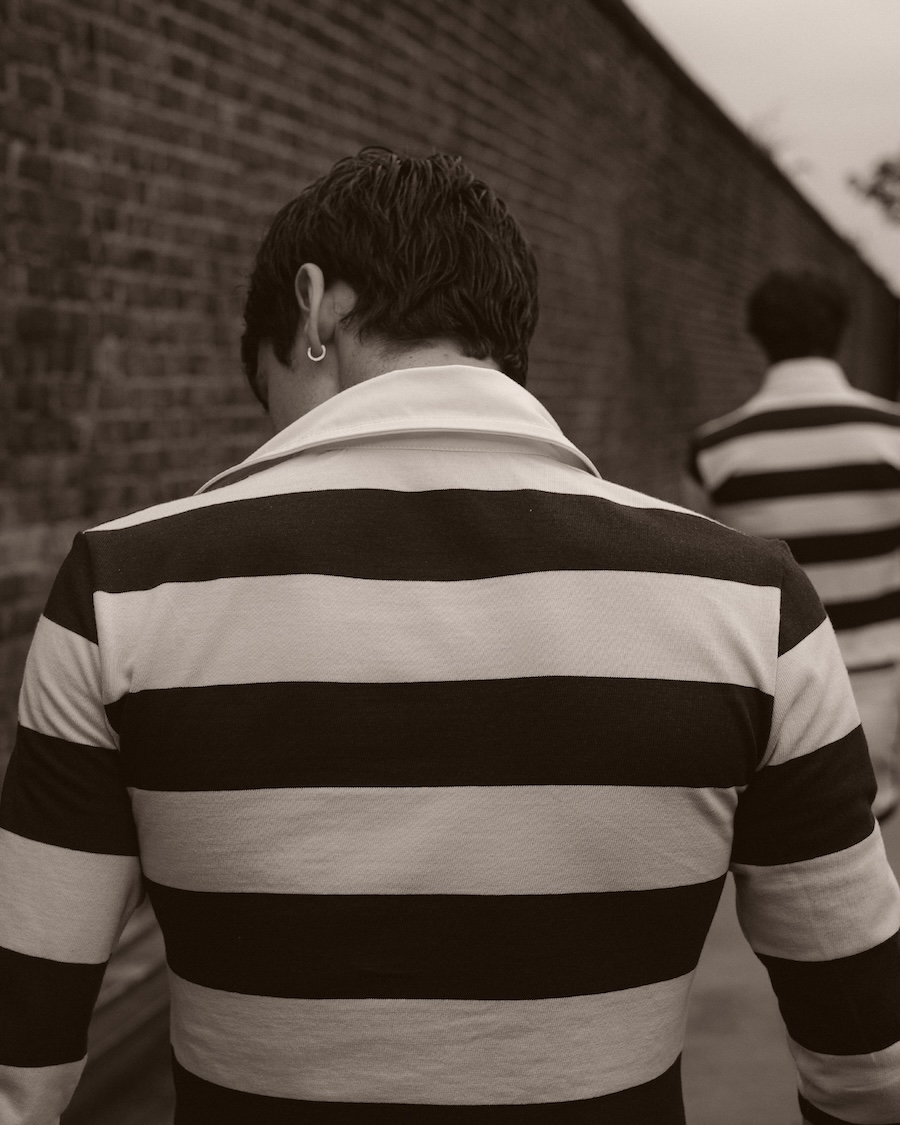
The British lambswool knits, the vintage sporting references, the uniforms and teamwear all evoke a particular vision of boyhood. Not an idealised one, but a remembered one. A world of muddy pitches, changing rooms, small towns and unspoken feelings.
For Robin, however, Ritual Touch is less a conclusion than an introduction.
Over the course of developing the collection, he found himself writing extensively about the Small Town Boy, building his world beyond the garments and imagining the narratives that might surround him. By the time the final looks came together, the character felt more real than ever before.
“Collection.05 brought him into sharper focus,” Robin says. “I know now exactly how I’d expand that world.”
And perhaps that is the collection’s greatest achievement.
Not simply that it examines masculinity, but that it treats masculinity as something unfinished. Something fluid. Something is still being written.
Ritual Touch is the first glimpse of a larger story, one that understands tenderness not as the opposite of masculinity, but as something that has always existed within it, quietly waiting to be recognised.
Check out Benjamin Robin’s Ritual Touch/Collection.05 now at www.benjamin-robin.com
Words by Lewis Robert Cameron
Designer @_benjamin_robin
Photographer & Director- Michael Morton @mike.w.morton
Brand Director- Benjamin Ingham @ben.r.ingham
Models- Finny @finnytapp, Cas @casterhw at @omega.mgmt
Groomer- Cat @catisbooked
BTS- Todd Lamming @toddlamming
BENJAMIN ROBIN TEAM
Production Assistant- Dan Marston @dan_Om
Design Intern- James Clark @james.clarko
Social Media- Todd Lamming @toddlamming
