


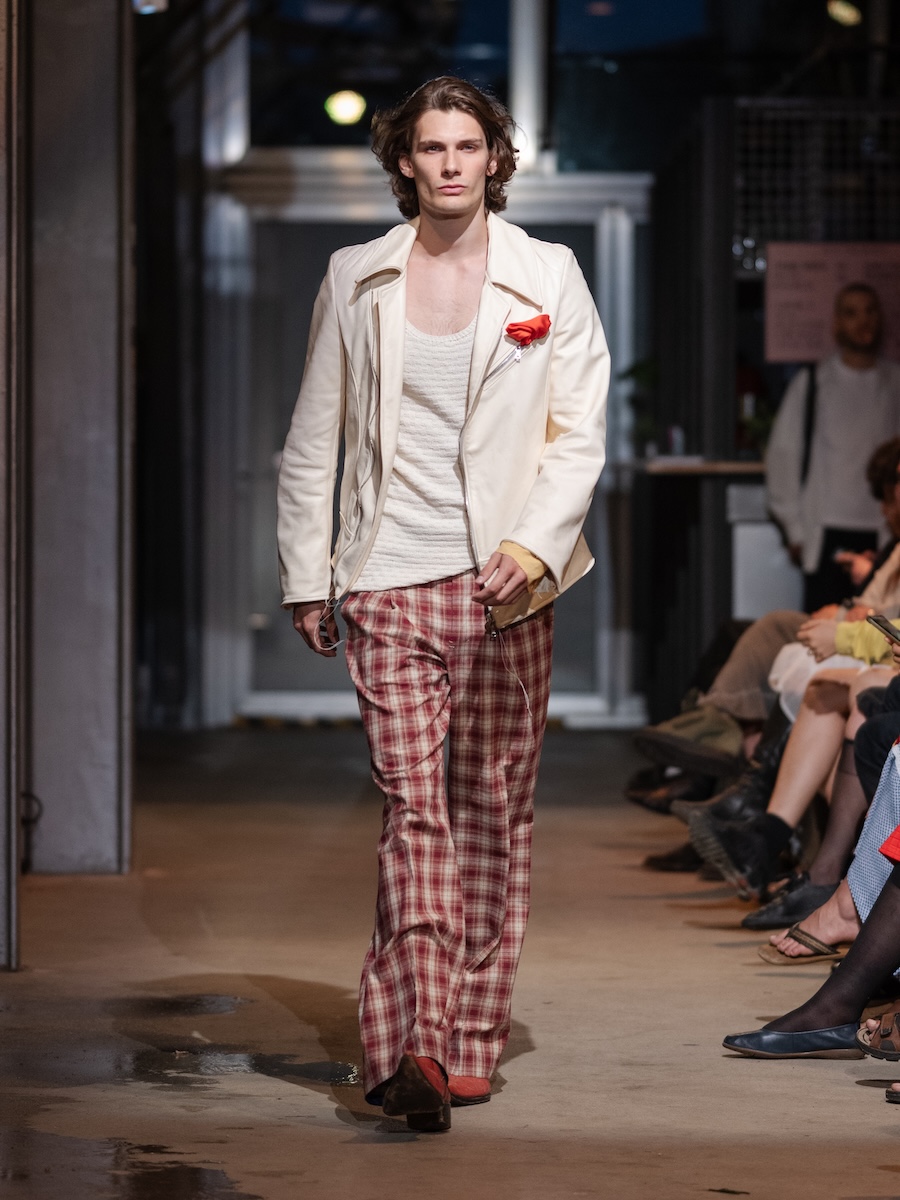
Perfection in tailoring is often an illusion, a pristine surface engineered to hide the sheer weight of labour, time, and structural anatomy underneath. For bespoke tailor and designer Simon Büge, his graduate collection ‘UNSURFACED’ tears down that illusion to celebrate the raw, honest poetry of making.
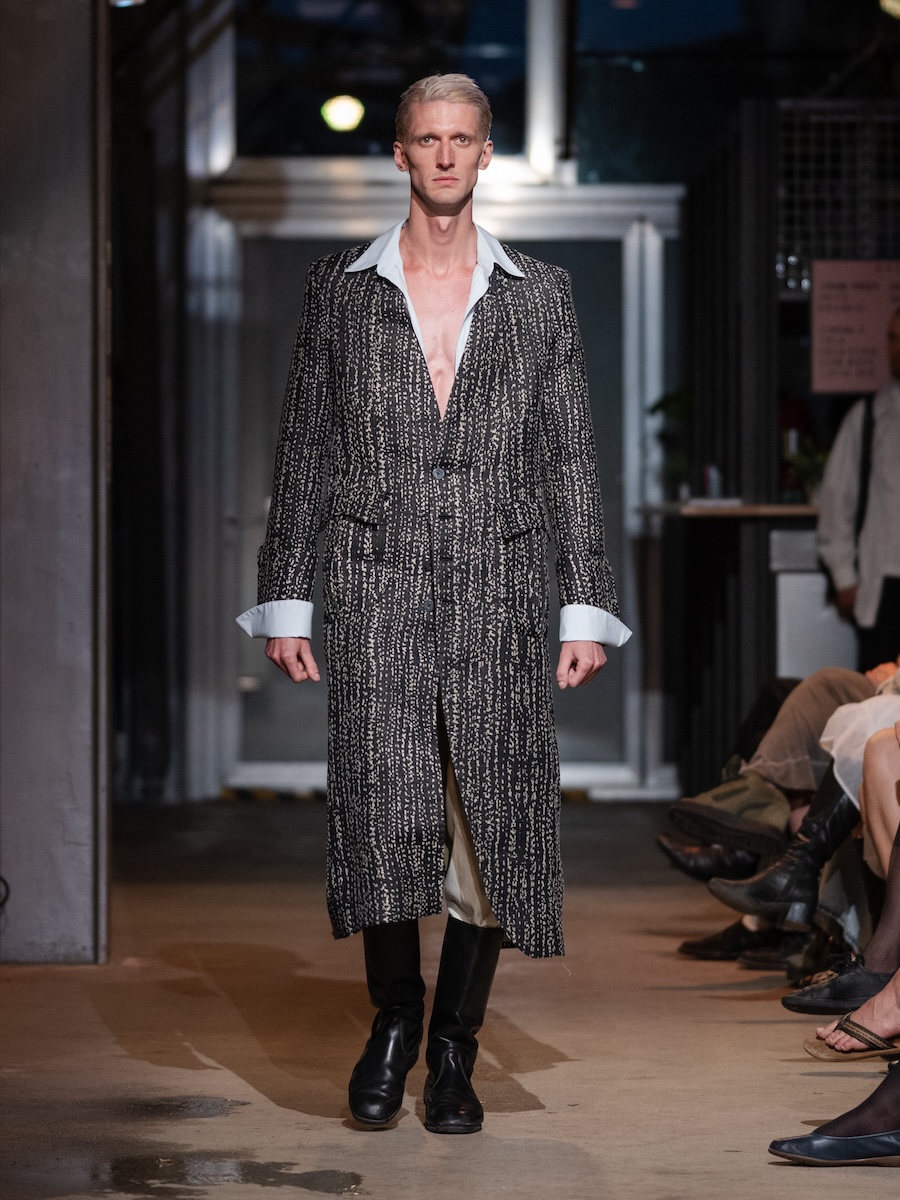
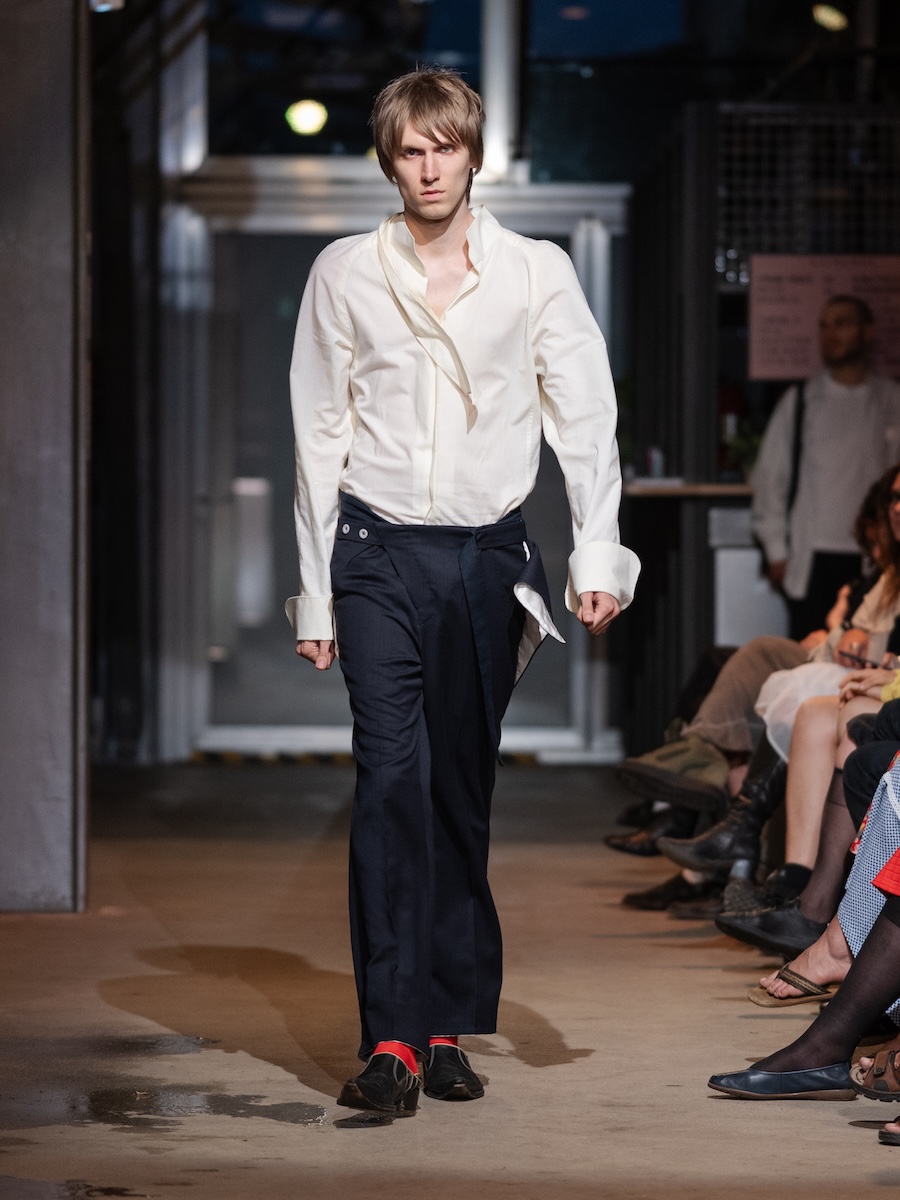
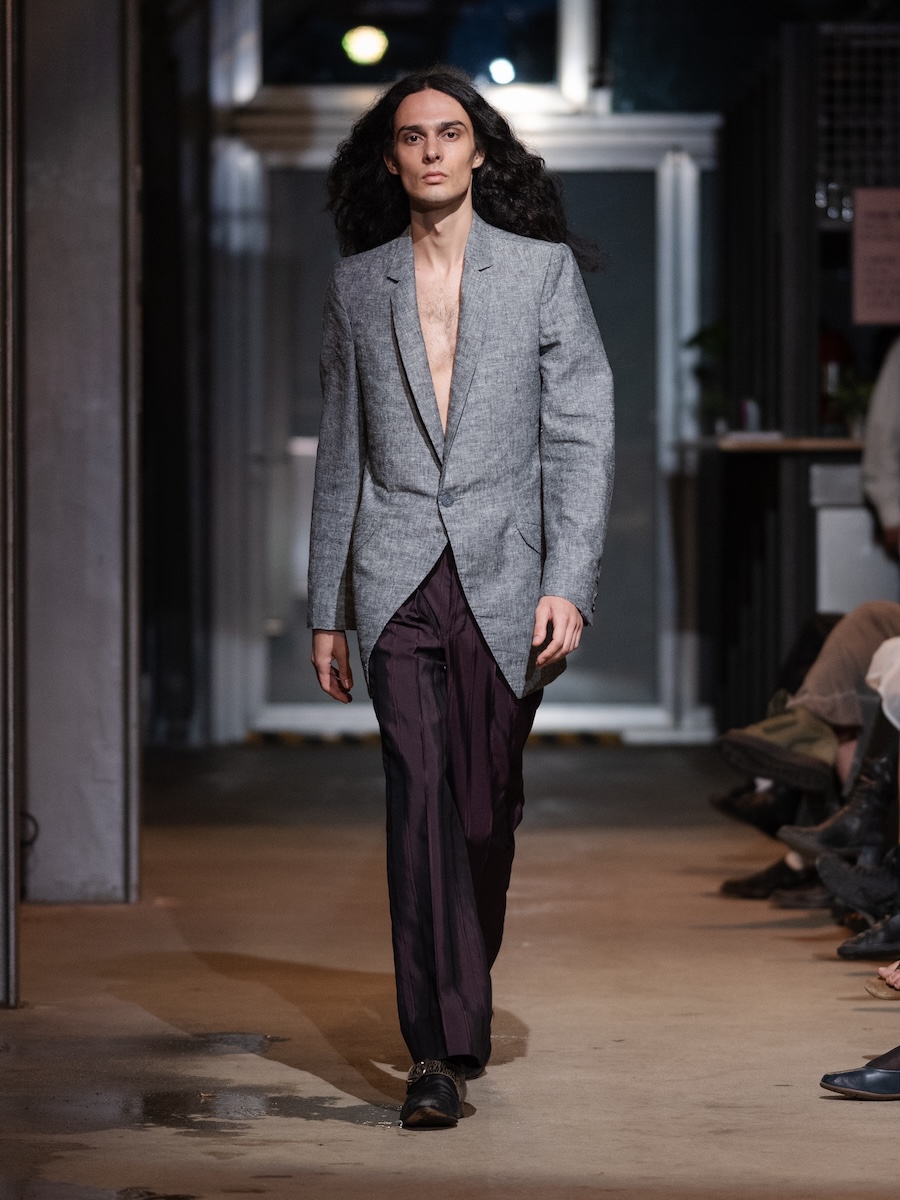
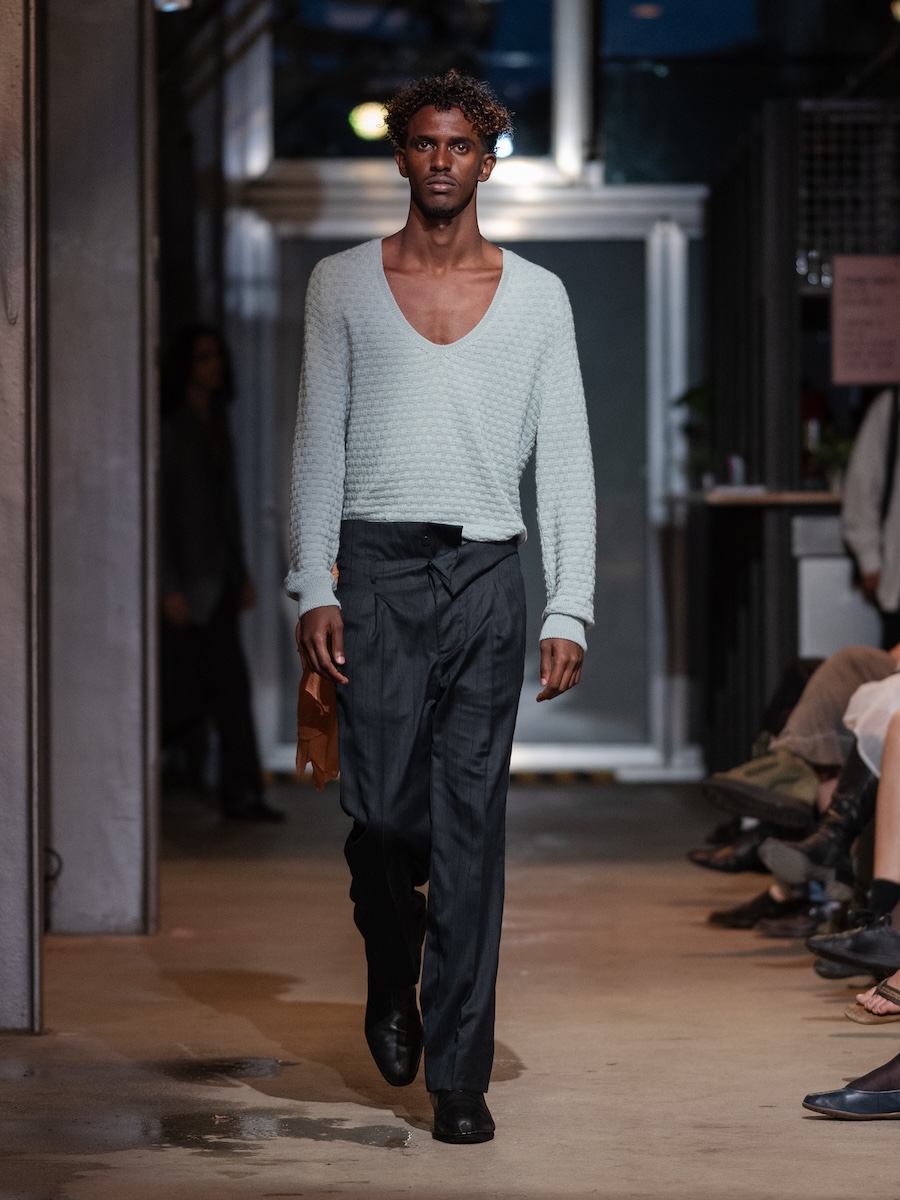
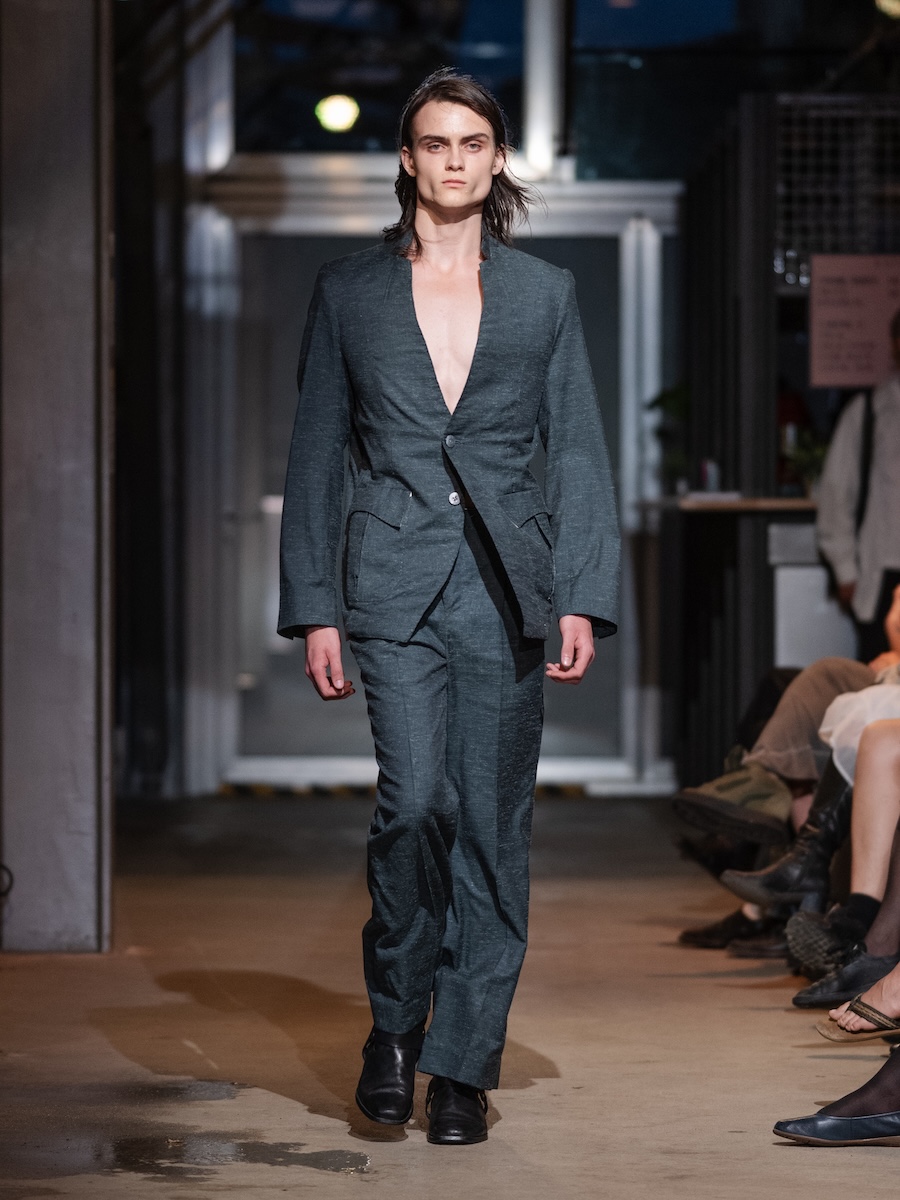
Rooted in traditional suiting fabrics and classic tailoring techniques, Simon’s work flips sartorial authority on its head. Instead of concealing the guts of a garment, ‘UNSURFACED’ exposes canvas paddings, interfacings, loose basting threads, and unrefined edges, transforming internal construction into a living narrative. For Simon, tailoring is not a nostalgic relic, but an ongoing, radical dialogue defined by trial, error, and radical transparency. Making the invisible visible becomes a political statement against an industry obsessed with hyper-speed and disposable perfection.
Drawing on Berlin’s subcultural freedom to challenge established systems of luxury, Simon treats technical execution as a form of research. When his deconstructed silhouettes moved across the industrial floor of ZK/U, the exposed seams created an immediate tension, inviting the audience to slow down, look closer, and question what we truly value in fashion.
Black Sesame & Exposed Anatomy: Step Into the Universe of Simon Büge
Read on as we talk to Simon about radical honesty in design, trusting the messy process over polished results, and why his aesthetic universe translates into a scoop of black sesame ice cream—seemingly minimal at first glance, but deeply complex and textured the closer you get.
What was your approach to choosing your materials, and how did working with those specific textiles or textures impact your design process?
The material selection was closely connected to the idea of tailoring as a process rather than a finished image. I mainly worked with traditional suiting fabrics because they carry a strong cultural association with precision, craftsmanship and permanence. At the same time, I wanted to challenge these expectations. By exposing canvases, interfacing, basting threads and unfinished edges, the materials reveal their own construction. They become evidence of the making process rather than hiding it. The fabrics therefore weren’t just a surface; they became a way of communicating how a garment is built and how it evolves.
How do your personal background, heritage, or the environments you’ve lived in manifest in the details of your designs?
My work is less autobiographical than it is shaped by my relationship to making. My background in tailoring has taught me to appreciate precision, patience and repetition. At the same time, I’m interested in questioning the values traditionally attached to tailoring— ideas like perfection, authority and permanence. Rather than celebrating craftsmanship as something nostalgic, I see it as a living practice that constantly involves correction, uncertainty and learning. That perspective is reflected throughout the collection.
Looking back at your time as a fashion student at Weissensee, what was the most valuable lesson—or perhaps the most unexpected challenge—that shaped your identity as a designer?
One of the most valuable lessons was learning to trust the process instead of focusing too early on the outcome. Especially in fashion, there’s often pressure to present polished results. During my studies, I realised that experimentation, failure and revision are not interruptions of the design process—they are the design process. That understanding has fundamentally shaped how I work today.
Berlin has a very distinct subcultural and creative energy. In what ways, if any, did the city’s landscape or community influence your graduate work?
Berlin offers a certain freedom to question established systems and conventions. That attitude definitely influenced me. Rather than following existing ideas of luxury or perfection, I felt encouraged to critically examine them. The city values experimentation and diverse perspectives, and I think that openness gave me the confidence to develop a project that is more reflective than purely trend-driven.
Many collections today engage with contemporary cultural, political, or ecological themes. How do you view your role and responsibility as a designer entering the industry right now?
I think responsibility begins with honesty about how garments are made. My collection doesn’t offer direct solutions, but it asks viewers to reconsider the value of labour, craftsmanship and time. In an industry driven by speed and polished images, making the process visible becomes a political gesture in itself. I believe designers have the responsibility not only to create products but also to question the systems and narratives that surround them.
Your collection showcases a balance between conceptual thinking and technical craftsmanship. How did you navigate the space between free experimentation and practical execution?
For me, concept and craftsmanship are inseparable. The concept only becomes convincing when it is technically precise. Many decisions in the collection came directly from working on the mannequin, testing constructions, adjusting patterns and observing how materials behaved. Experimentation wasn’t separate from craftsmanship—it happened through craftsmanship. The technical process became a form of research.
Seeing your work transition from the studio into the specific architecture and energy of the show at ZK/U, how did that moment feel, and did it change how you view your own pieces?
It was a very emotional moment because the garments finally entered a different context. In the studio, you’re focused on details and technical decisions. On the runway, the collection became about movement, rhythm and the relationship between the garments, the models and the space. Seeing people experience the work confirmed that the exposed construction communicated more than just a visual language—it created a certain tension and curiosity, which was exactly what I had hoped for.
What kind of dialogue or emotional reaction do you hope to trigger in the person viewing or wearing your garments?
I don’t necessarily want people to immediately understand everything intellectually. I hope they first become curious. Maybe they notice a construction detail that seems unfamiliar or wonder why something usually hidden has become visible. Ideally, the garments encourage a slower way of looking and invite questions about value, craftsmanship and our relationship with clothing. If someone leaves with a heightened awareness of how garments are made, then the collection has achieved something meaningful.
Now that the graduate show is behind you, what aspects of your creative practice or design philosophy are you most excited to explore next?
This collection feels like the beginning of a longer investigation rather than the end of a project. I’m interested in continuing to explore tailoring as a language of process, and in expanding the dialogue between traditional craftsmanship and contemporary technology.
I’m also curious about working more collaboratively with other disciplines and finding new ways of communicating the invisible knowledge that exists within making.
If your collection or creative identity could be translated into an ice cream flavour, what would it be and why?
I think it would be black sesame.
At first, it seems quite minimal and familiar, but the more time you spend with it, the more complex it becomes. It has layers of bitterness, sweetness and a slightly unexpected texture that challenge your expectations. I think that’s similar to my work. From a distance, the garments might look like classic tailoring, but when you come closer, you discover the exposed construction, the unfinished details and the questions they raise about craftsmanship, process and value.
I’m interested in creating work that doesn’t reveal itself immediately but invites people to look again.
follow @simonbuege
Anita Schulte-Bunert – Runway Photography @nit.sb
CREATIVE & MOVEMENT DIRECTORS
Sarah Ama Duah @sarah_ama_duah
Madlen Schmid
PRODUCTION DIRECTORS
Doreen Schulz
Madeleine Madej
CASTING DIRECTOR
Madlen Schmid
STYLIST
Tabassom Charaf @tabicharaf
MAKE-UP ARTISTS
Head of Make-Up Artists: Feride Uslu @feride_uslu11 für airbeauty.com @ferideairbeauty
Dominika Obacz @dominica_obacz
Mert Kenger @mertkenger
Sarah Elisa Fischer
Sarah Ort
HAIR ARTISTS
Nicole Puzalowski
Béanne Da Costa @hairtouchedby
Jennifer Ohia @mmynd.irl @5.minah
Special thanks to our partners
Bezirksamt Mitte
ZK/U Zentrum für Kunst und Urbanistik @zku.berlin
Objets Trouvés Möbelmanufaktur @objets.trouves.berlin
uns* Model Agency @wirsinduns
VIVA Model Agency @vivamodelsberlin
The event is supported by the Economic Development Office of Berlin’s Mitte District Council in cooperation with PLATTE.Berlin, which is responsible for guest management and PR @platte.berlin
