


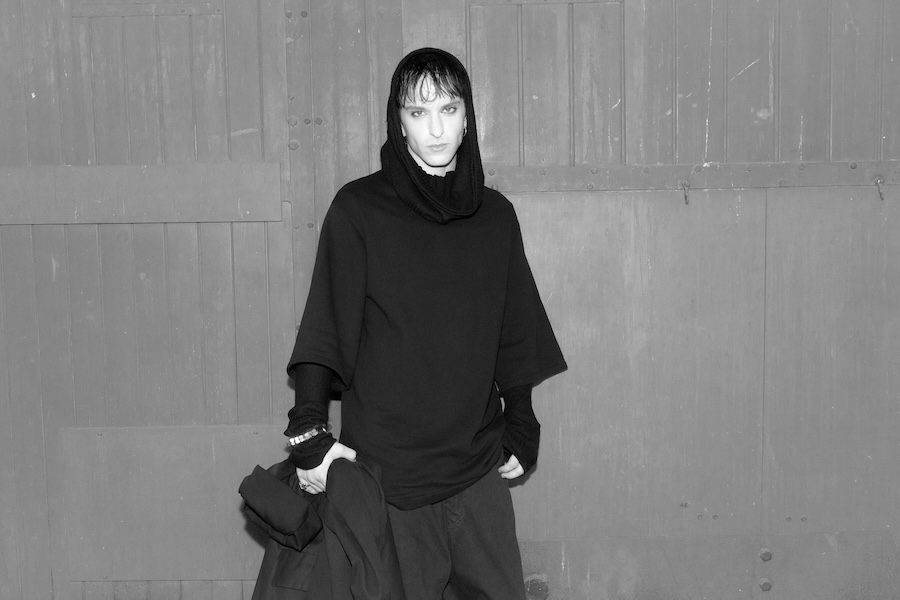
 ©PaulaReschke
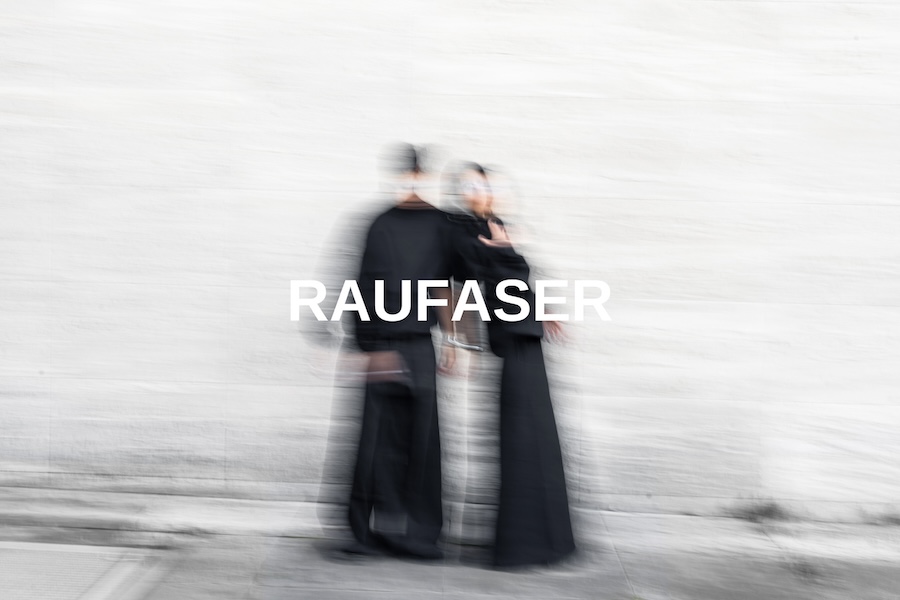
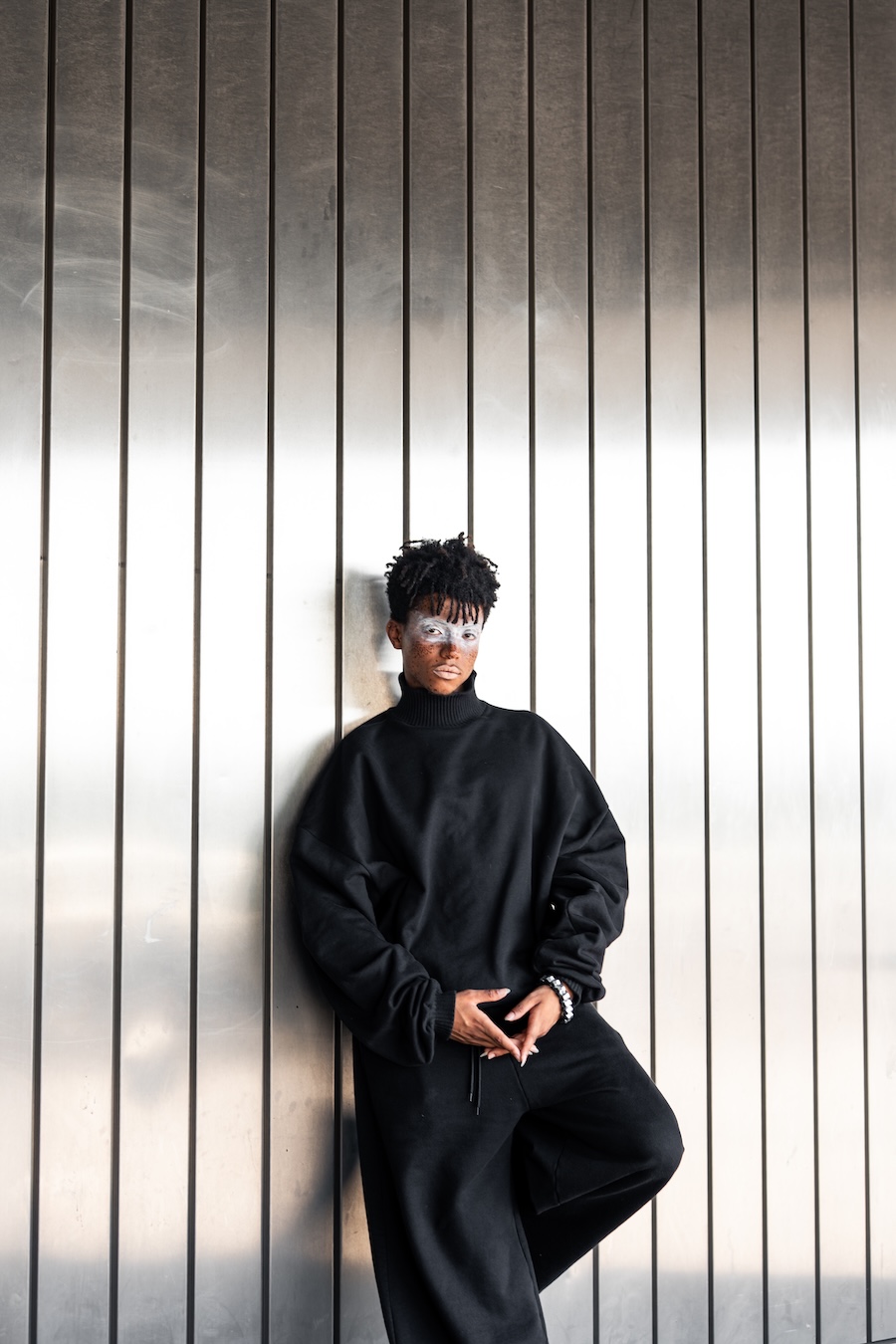
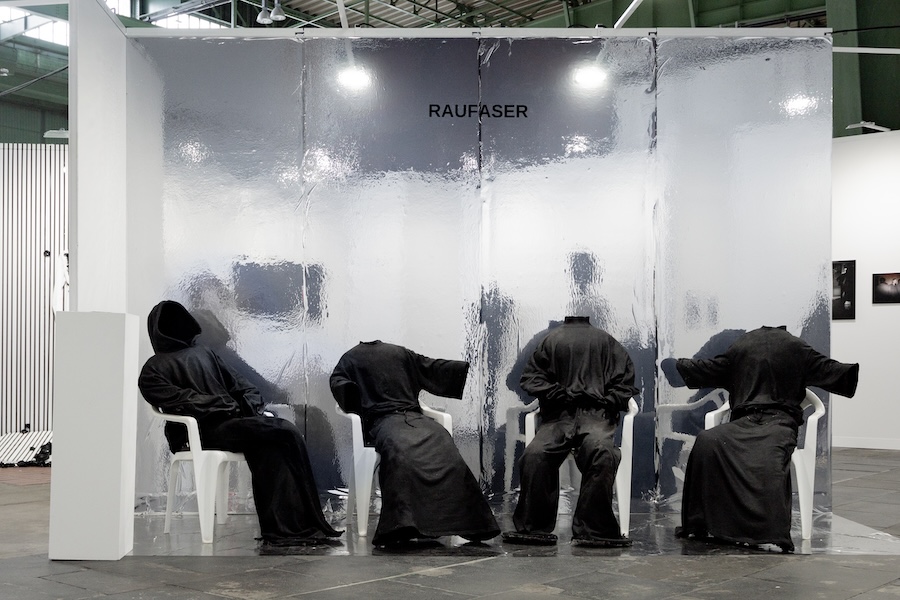
The newest addition to the PLATTE community and store space is Lennart Kuss’s Raufaser Atelier. You might know them for their signature minimalist black silhouettes in organic cotton, which they presented at the most recent Berlin Art Week’s Fashion Positions in Hangar 7. The young designer, juggling a fashion business and a degree, speaks to us about cut, craft, and conscious consumption.
www.platte.berlin / @platte.berlin
Interview by Lynn Yin Dittel @https1ynn
PLATTE: You founded Raufaser last summer, and now the brand is already joining the PLATTE retail space. How did you first get into fashion?
LENNART KUSS: After school, I first did a Bachelor’s degree in business administration. During my studies, though, I realised that I’m a very creative person, and that the degree didn’t really leave any room for that. At the same time, I started teaching myself pattern cutting and sewing through courses at adult education centres. As soon as I finished my Bachelor’s, I started studying fashion design at HTW Berlin. I’m now in my fourth semester.
PLATTE: And has fashion school been everything you hoped it would be?
LK: Yes, it’s incredible. It’s my second degree, and I’m now at a point where it’s no longer about getting a job or whatever, but about what I really want to do. During my business studies, I knew it wasn’t the right thing for me, but I didn’t want to drop out. I worked towards finally being able to do fashion. That’s why I’m enjoying it so much now.
PLATTE You’re still a student, but you already have your own brand. How did that come about?
LK: The idea already started during my business studies. I knew I wanted to do fashion, and that I didn’t want to spend my life in business administration. At the same time, I had this knowledge from my degree, and fashion is a really difficult industry. I thought I’d like to do something creative and combine it with management skills. Then, in the summer, the launch event happened, and since then, everything has moved forward in a pretty crazy way.
PLATTE: Where does the name Raufaser come from?
LK: There’s a personal connection, and then there’s the word itself. Rau is my mother’s maiden name. I wanted to include that because my mother was my first point of reference when it came to fashion. She’s also someone I keep coming back to in my design process. I share prototypes with her and ask her what she thinks. She’s a supporter number one. And then there’s the combination of Rau and fibre, which points to textiles and to the fact that I deal a lot with fabric as a material. Of course, there’s also the reference to woodchip wallpaper. I find it interesting that everyone immediately has that surface and texture in mind. It’s a symbol of tactility, materiality and engaging with material.
PLATTE: Your series is made from 100 per cent black organic cotton. Why is cotton the material you want to work with?
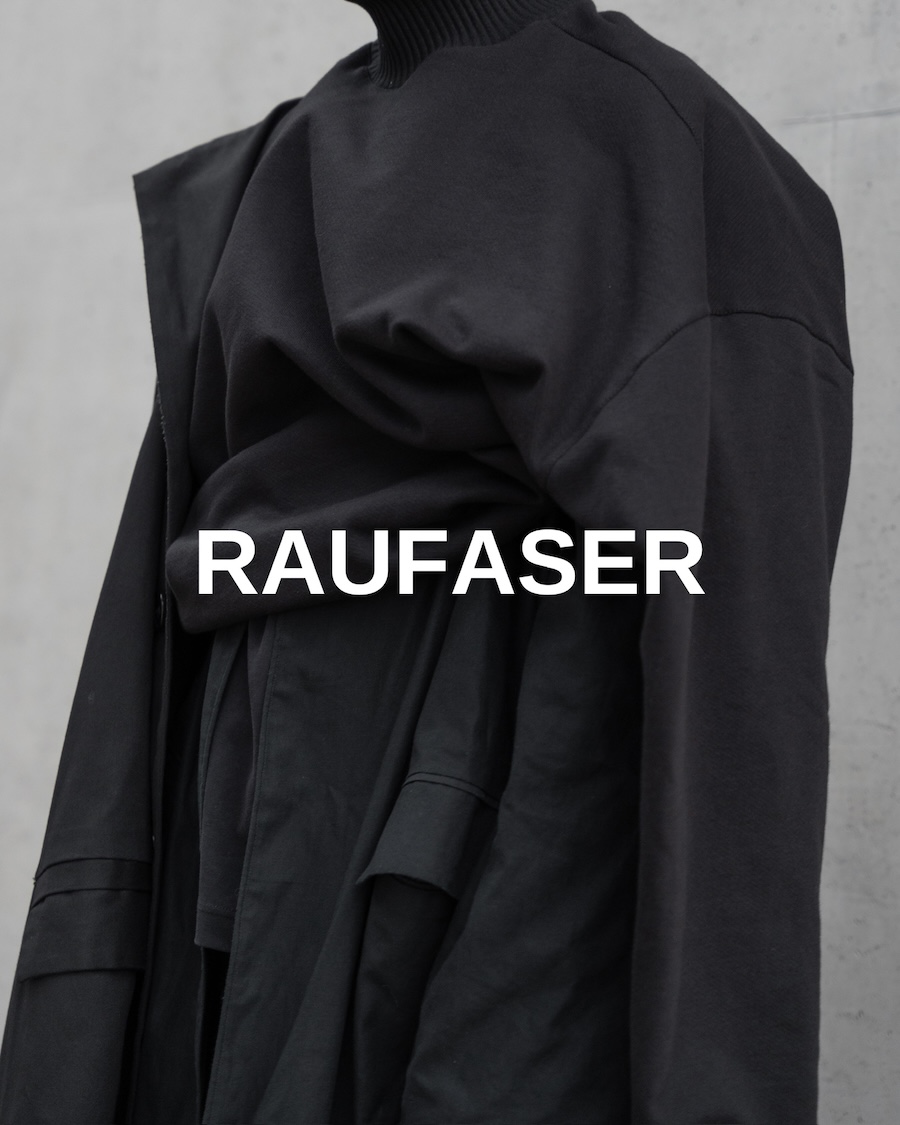
LK: That is the universe of the core collection, the permanently available collection. It was also the starting point for Raufaser. The pieces were developed over roughly two years, with different prototypes. Within this collection, the idea was to bring the codes of Raufaser into focus. It’s very much about consistency: everything is black, everything is made from the same fabric in different weights. And then it’s really about reducing things to form and material. Online, the pieces might look relatively simple. When you have them in front of you, they should still be simple, but also something different from just a T-shirt. Everything that comes as a small series is more about working experimentally in limited quantities, while still building on these codes. In my studies, I use my design process to push myself creatively, to test a lot and to play with materials.
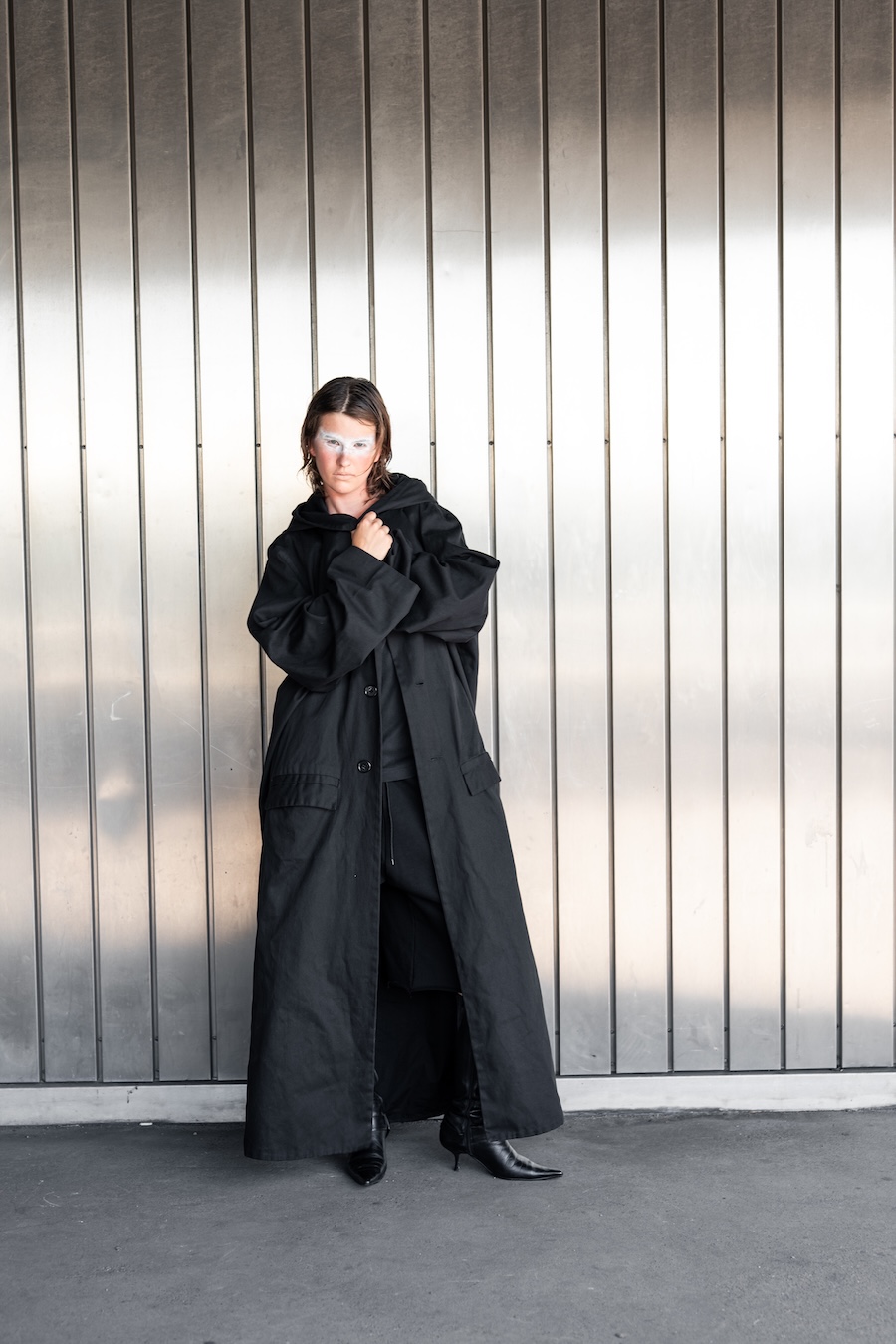
PLATTE: The core collection is very minimal, while the small series is different. Do you see yourself more as a minimal designer, or do you lean more towards sculptural, artistic work?
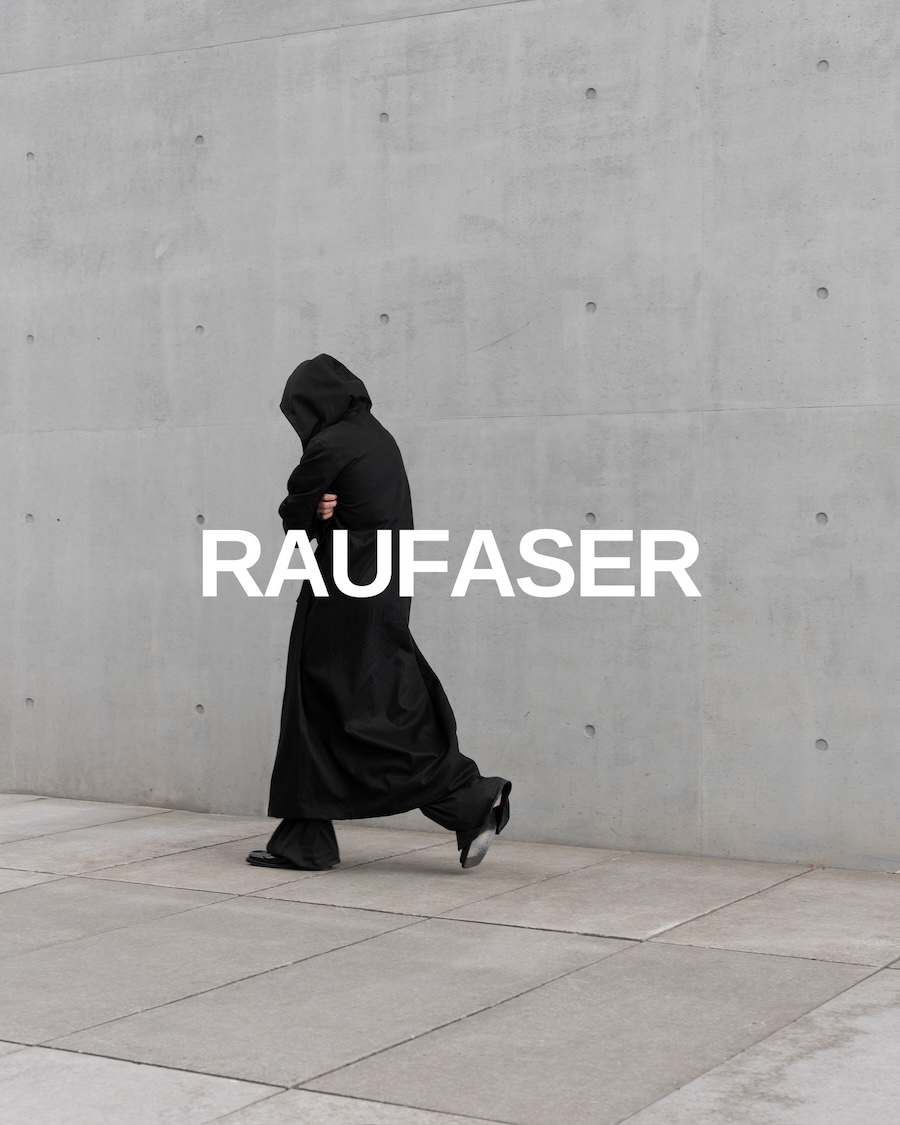
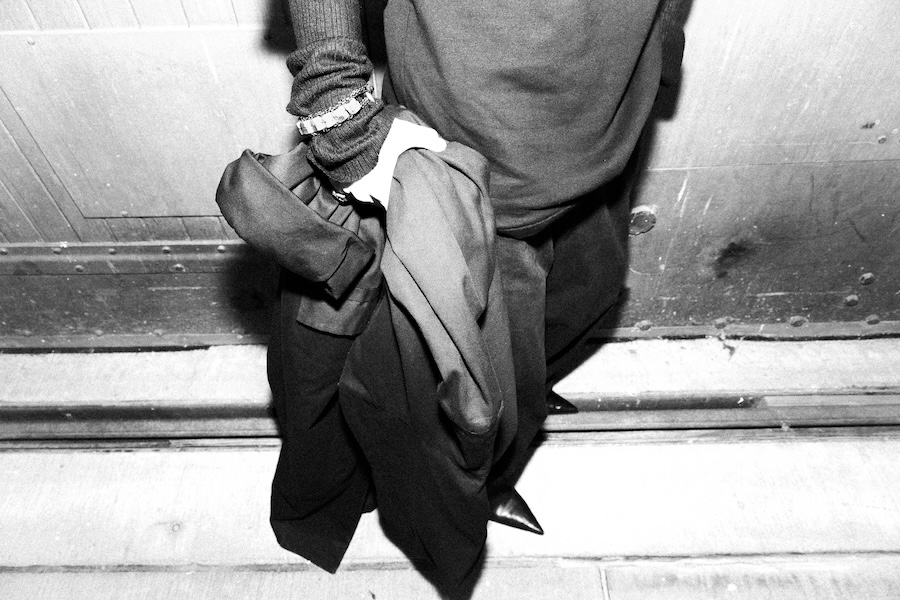
LK: What I do in the studio is very artistic and challenging. Still, I would say I work more within the spectrum of minimalism than maximalism. There will definitely never be a Raufaser piece with big branding or a logo on it. Everything is supposed to work through the silhouette, cut and tactility. For me, it’s not about someone walking around like an ad poster. I make things for people who really engage with it, who understand the craft behind it. There are also conscious choices in the cut, for example, the fact that the trousers are deliberately long. Over time, they develop with the person wearing them. Through wear, the trousers change individually and become part of the person.
PLATT: Do you also only use black because of this reduction?
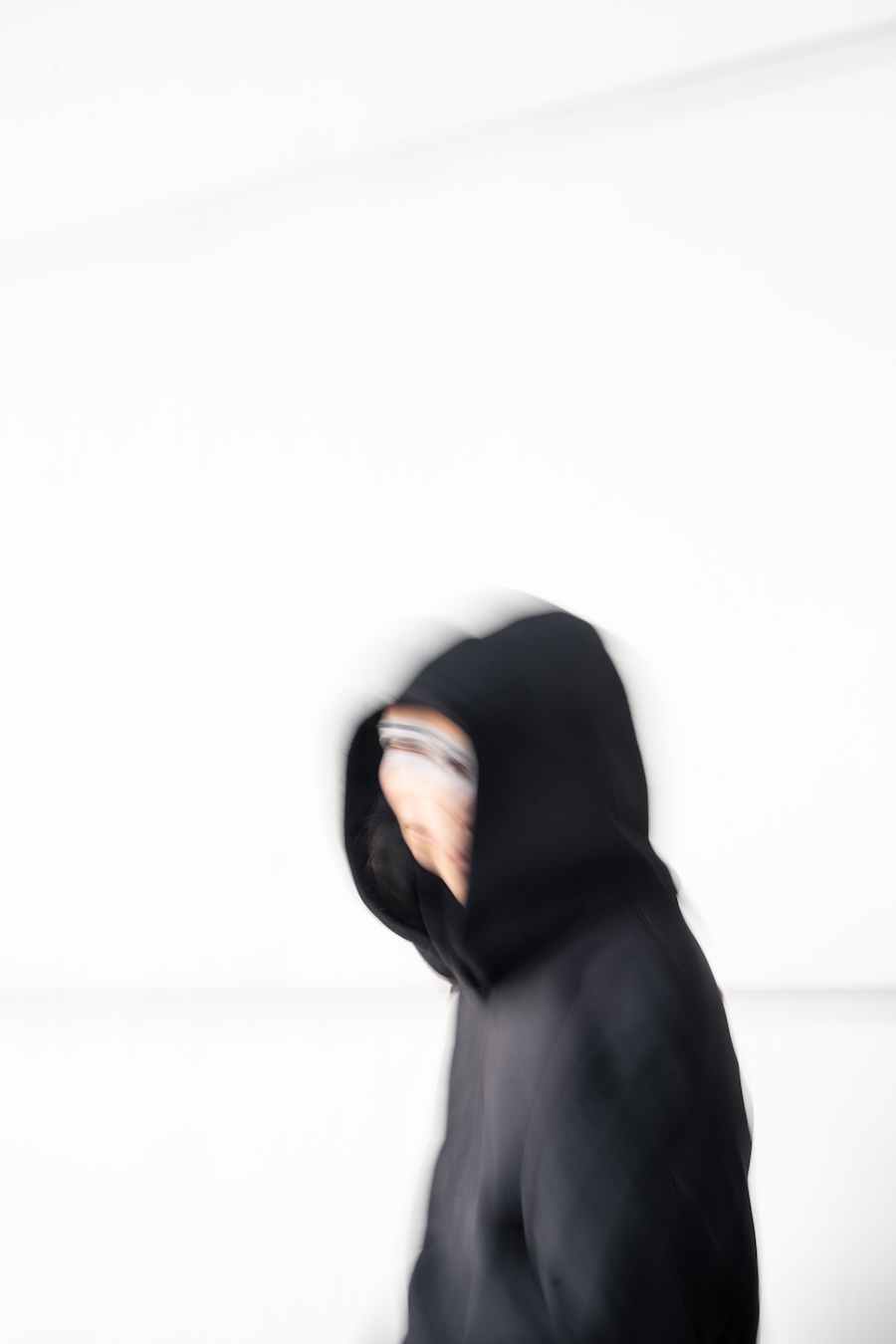
LK: Black mainly because of the reduction to silhouette, yes. But because everything is black, the face is also really emphasised. That’s the most interesting effect for me: seeing what the pieces do to people and how the face comes into the foreground. Black is also a very universal and expressive colour, with an incredible cultural and fashion history. That’s why Raufaser is set on black, and probably will stay that way.
PLATT: Is it your favourite colour?
LK: If it can be recognised as a colour, yes.
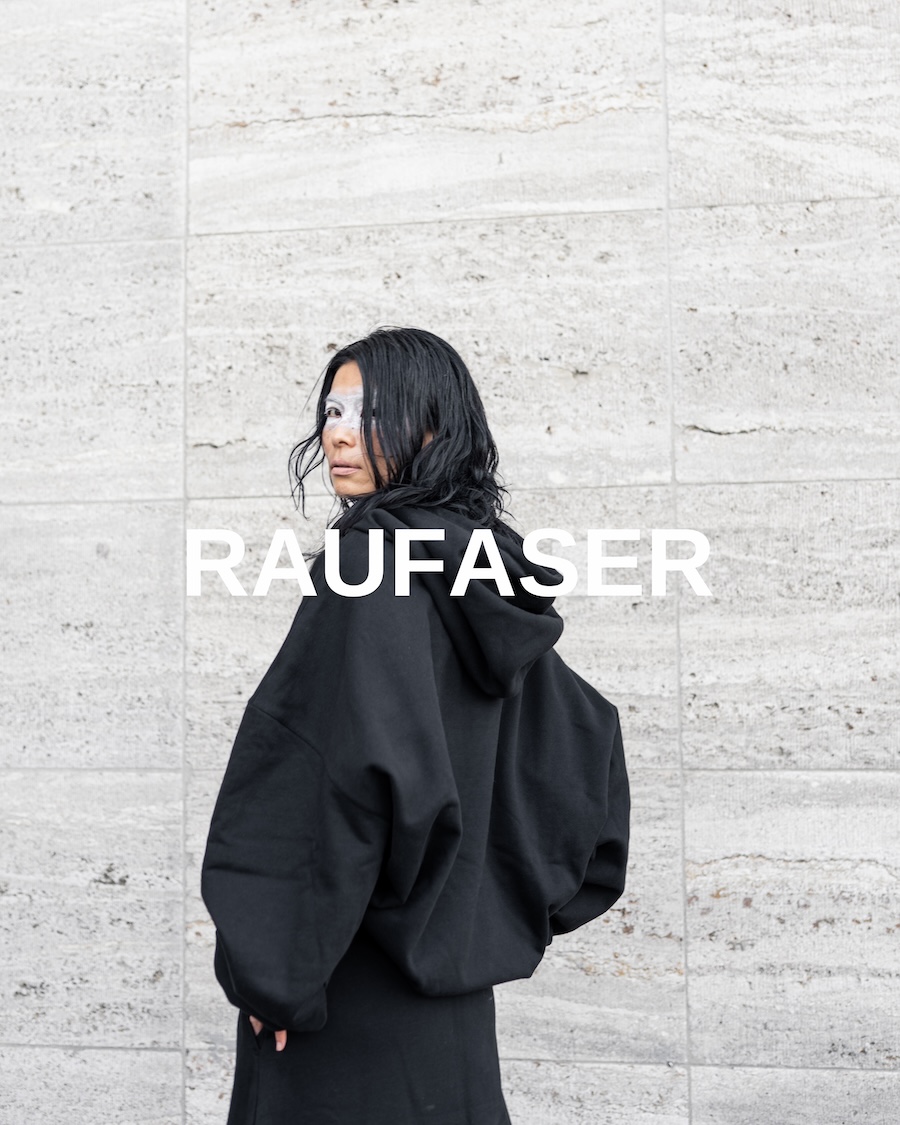
PLATTE: Sustainability is very important to you at Raufaser. What does sustainability mean to you?
LK: Basically, you have to say: if you work in fashion, you’ve already done something wrong, because the fashion industry plays such a huge part in what we’re doing to the environment. That’s why, for me, it’s very much about craft, and about returning to the question: what is clothing, actually? What can clothing do to you when you wear it? As soon as I manage to get people to consume more consciously again, and to engage with what they wear, why they wear it, what materials are used and what kind of work goes into it, that is sustainability for me in relation to fashion. From my perspective as a designer, it also means that everything is handmade and there is no overproduction. We do have a bit of stock, but basically, the idea is production on demand.
PLATTE: Can you remember when you realised that this should be central to your brand?
LK: First, I thought about it for myself as a consumer. At some point, I basically stopped buying new fashion. Then I started making things for myself, and only through that did I understand how a garment actually works and what goes into it. Then came the switch: I’m now on the other side, I make fashion. So how can I create that same shift in perspective for other people? So that it’s not about buying just another shirt, the ten-thousandth one you already basically have, but really asking yourself: does this give me something? Do I need this? Does it trigger something in me emotionally? Only then will I use it long-term.
PLATTE: Is that kind of consumption what bothers you most about the fashion industry?
LK: I would distinguish between the fashion industry and the clothing industry. This classic fast-fashion overconsumption is, in my opinion, not fashion as an art form or as an expression of anything, but clothing in the bluntest sense. And that is, of course, catastrophic. Basically, every garment we produce now is actually unnecessary. There are enough clothes for everyone in the world. So the question I have to keep asking myself is: does what I make have enough value for someone that it is worth making? As soon as people tell me that it triggers something in them, or that they feel really good in it, then I think it becomes a long-term investment in themselves. That’s what justifies it.
 ©PaulaReschke
PLATTE: How did the collaboration with PLATTE come about?
LK: For me, as someone who was born and raised in Berlin, PLATTE is an institution you can hardly get around. It’s more of a platform than a shop. It brings people together and represents Berlin, also beyond the city. I had been to PLATTE often, for all kinds of events. Last summer, when Raufaser was founded, different event formats started happening quite quickly, and you get to know a lot of people. I had applied for NextGen, which unfortunately didn’t work out, but I heard they still thought it was really cool. And now I’m being added to the store space.
PLATTE: What do you like about PLATTE? Do you think it reflects Raufaser well?
LK: From the perspective of a young designer who is still relatively at the beginning, PLATTE is a great support. A lot of us can’t, or maybe just don’t want to, go into huge retail concepts, especially because of this idea of conscious consumption. It’s about people really engaging with the work. I think PLATTE has a very good audience for that. That shared set of values, the curation and the opportunity to be part of it are just really great.
PLATTE: Is there anything you’re currently working on that you can already tell us about?
LK: In my studies, I’ve been working a lot with upcycling, very specifically with upcycling real fur. Something will be coming soon.
 ©PaulaReschke
FEIERABEND – WITH RAUFASER
On 18 June, we are bringing you another Feierabend. This time, in collaboration with Raufaser, a Berlin-based atelier, led by Lennart Kuss.
You can expect a blend of House and Techno by DJ JØRDY. The NRW-born DJ of Congolese heritage brings emotional, energetic sets, always tailored live for each crowd.
This project was funded as part of the Joint Task “Improvement of the Regional Economic Structure” (GRW) with federal and state funds.
