

Berlin is a city built on the friction of opposites, and nowhere does that friction spark more brilliantly than in the minds of its young design talent. This year, the Fashion Design Department at the Weißensee Kunsthochschule Berlin took over the industrial, raw architecture of ZK/U (Zentrum für Kunst und Urbanistik) in Moabit for seefashion26, unleashing 19 collections by Bachelor’s and Master’s graduates that refuse to stay quiet. Moving effortlessly between radical material experimentation and sharp societal critiques, these designers aren’t just entering the industry—they are questioning it, shifting it, and claiming their space within our chaotic modern reality.
At KALTBLUT, we believe the future of fashion is born in these subcultural hubs, far away from commercial compromise. To celebrate this new wave, we are launching an exclusive interview series that dives deep into the minds, struggles, and creative universes of all 19 graduates. Every day, we bring you a new voice defining the future of Berlin fashion.
Vanilla Haze & Grace Jones: Step Into the Universe of Aaron Schock
We kick off our series with Aaron Schock, a designer whose work beautifully navigates the emotional landscape of transition. Growing up as a pastor’s son with five siblings in the Black Forest before seeking sanctuary and self-evolution in the dark, liberating streets of Berlin, Aaron’s design language is an intimate reflection of living between two entirely different worlds.
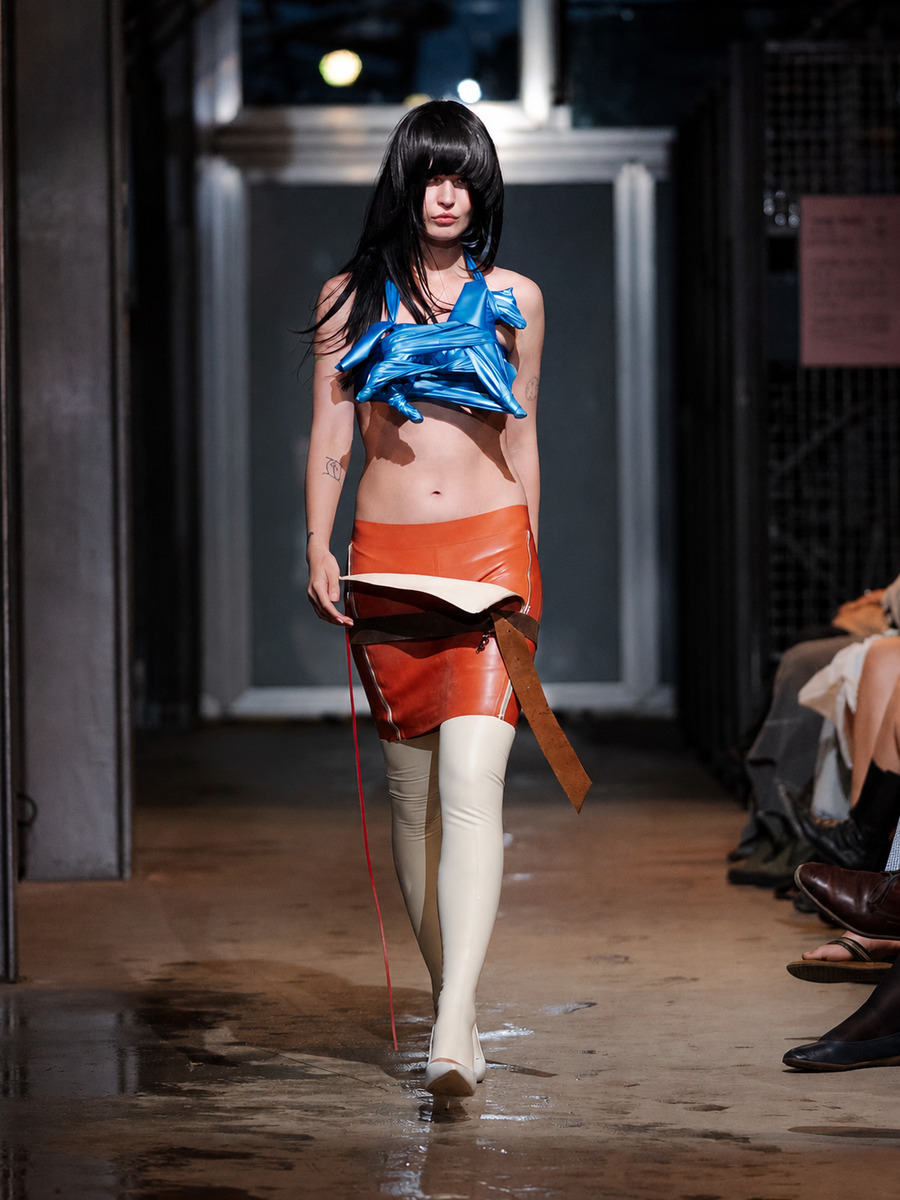
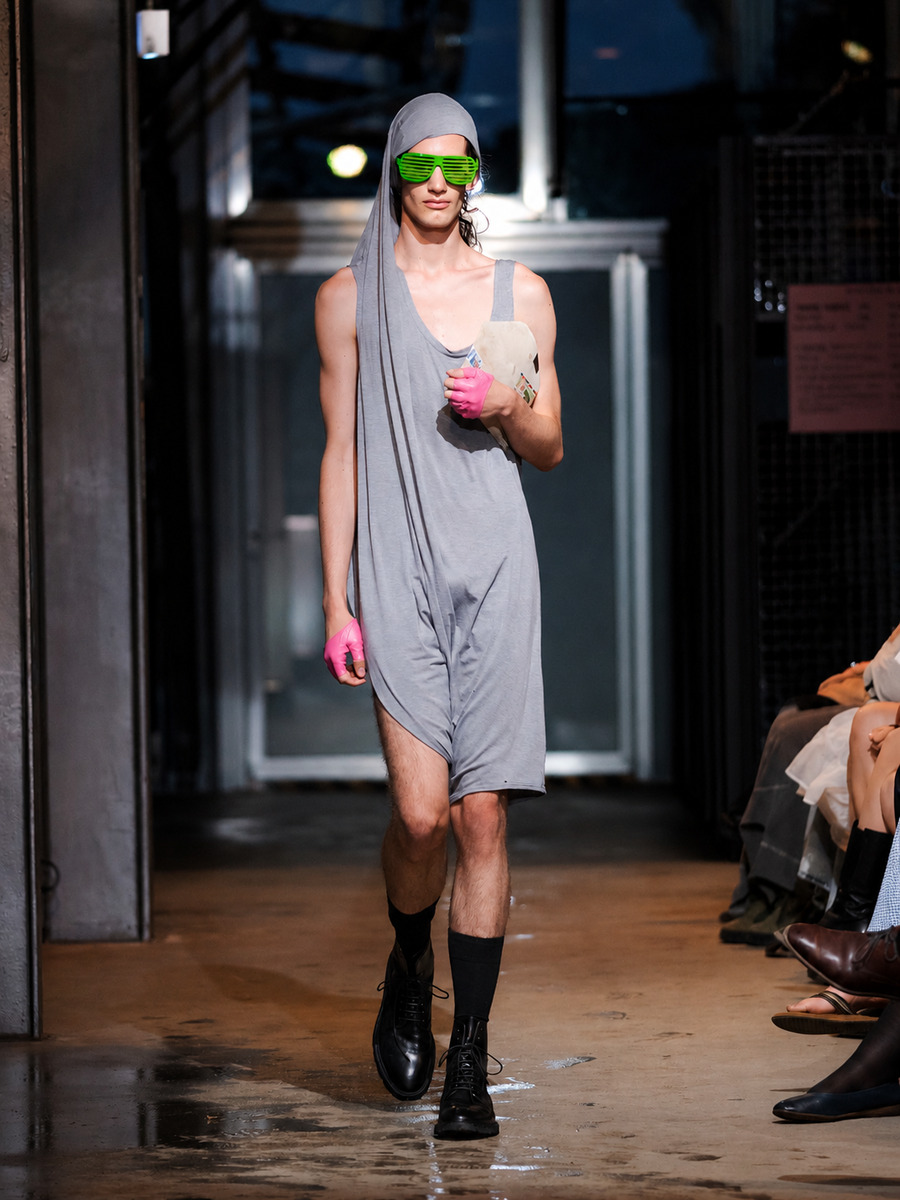
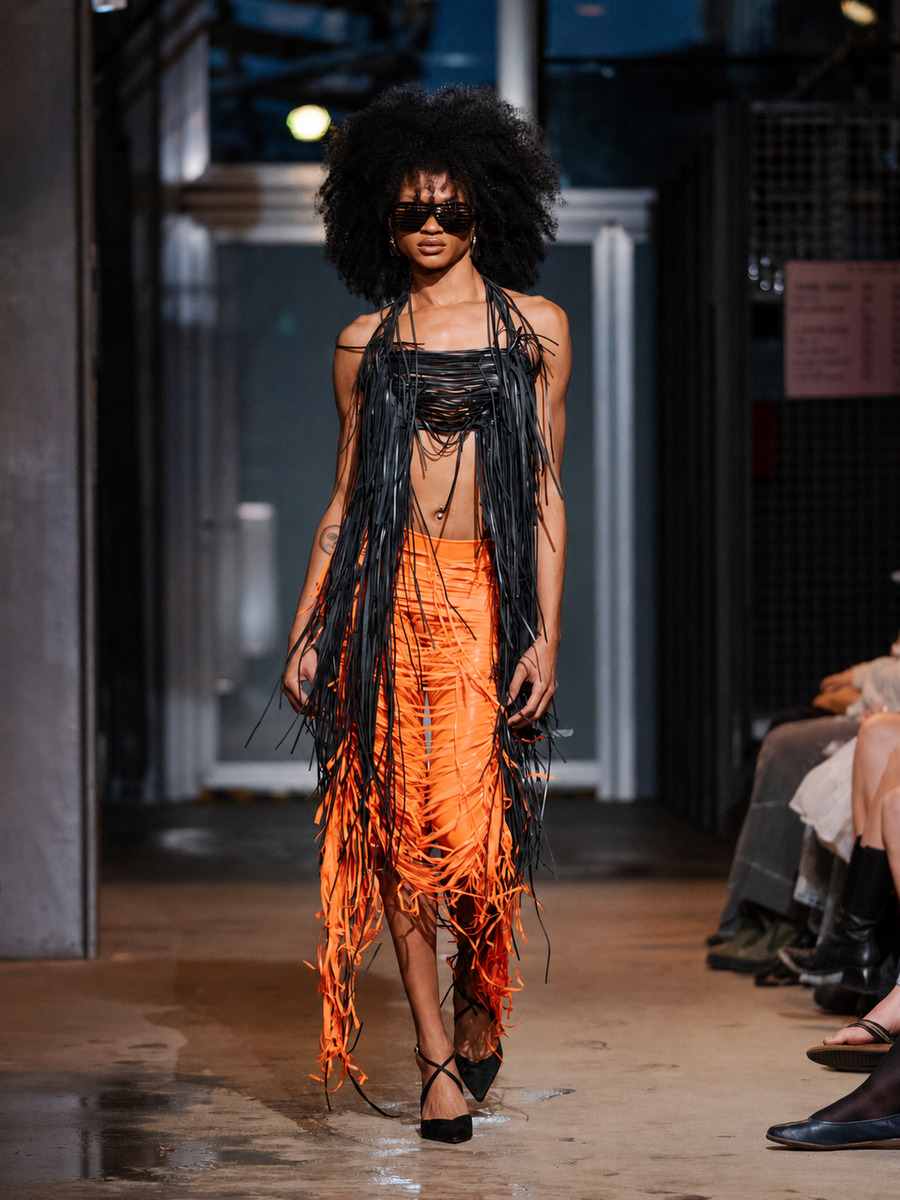
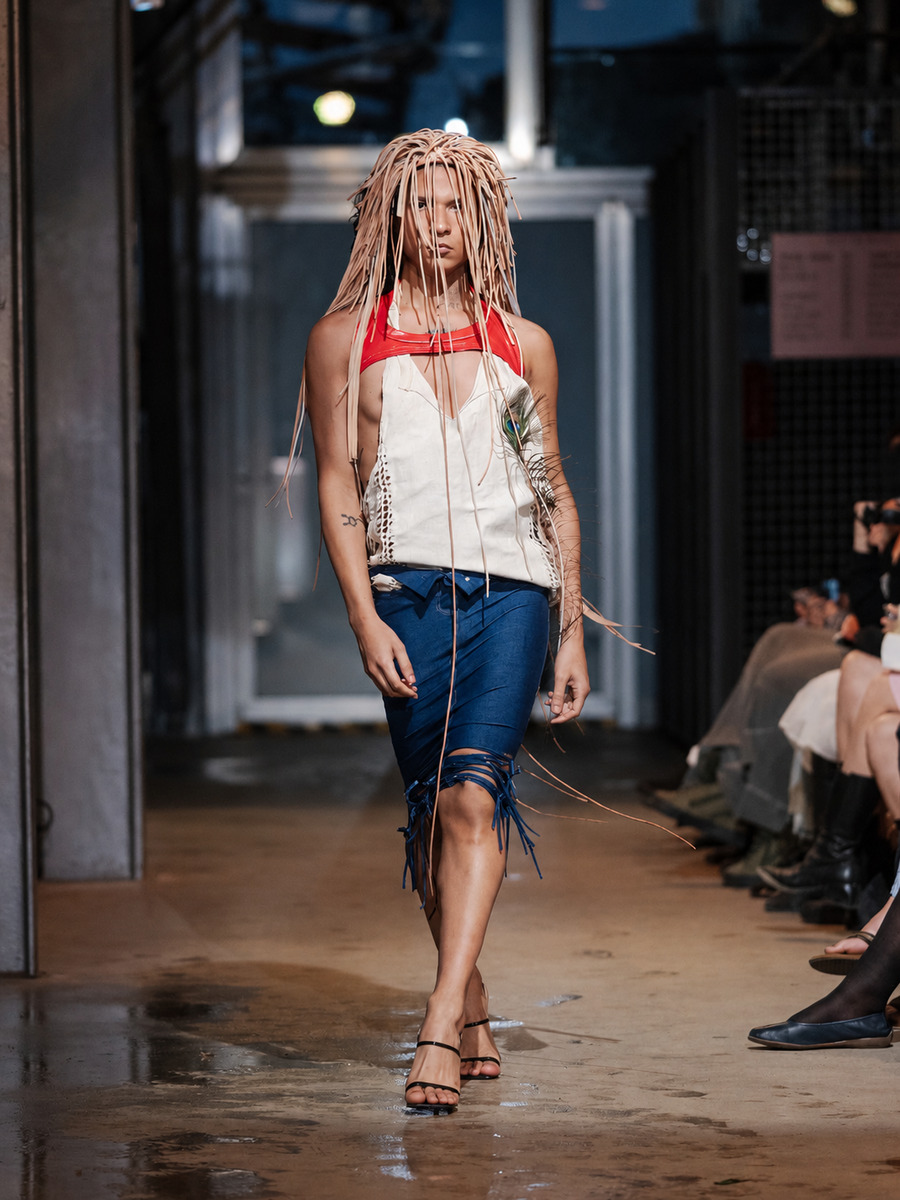
His collection is an intuitive, tactile explosion, driven by an obsession with stretch fabrics and a desire to subvert the rigid connotations of latex. For Aaron, fashion is a tool to outgrow shame, embrace the accidental magic of the studio, and conquer the feeling of powerlessness in an increasingly fragile cultural climate. When the skies opened up at ZK/U and paused the runway, it was Aaron’s collection that restarted the night under the heavy, iconic beat of Grace Jones’ “Walking in the Rain.”
Read on as we talk to Aaron about breaking patterns, finding a healthy balance in Berlin’s nightlife, and why the creative journey is the only destination that matters.
What was your approach to choosing your materials, and how did working with those specific textiles or textures impact your design process?
I like to obsess over certain materials. I’ve always loved stretch fabrics, and right now, latex excites me most. The fun part is changing the characteristics that people typically associate with latex.
How do your personal background, heritage, or the environments you’ve lived in manifest in the details of your designs?
My life is such a cliché; it’s almost embarrassing. I grew up in the Black Forest in Germany as the son of a pastor, along with five other siblings, and, like many others, I came to Berlin to find a place where I would be more accepted. I’m very happy to have found a home here, and I’m grateful to Berlin for helping me grow as a person and become the version of myself I recognise. Although I don’t feel I’ve reached my goal yet. I still feel a lot of shame and want to give myself enough space to outgrow that…I think my designs also reflect the experience of having lived in both worlds.
Looking back at your time as a fashion student at Weissensee, what was the most valuable lesson—or perhaps the most unexpected challenge—that shaped your identity as a designer?
I believe that things change when you take action. If you can, I strongly urge you to realise that you truly are the creator of your own universe. That you can change situations that don’t suit you. Standing up for yourself is wonderful and changes the way you think about hopeless situations. I hate the feeling of being powerless. That’s when you have to remind yourself that there really is only this one life.
Berlin has a very distinct subcultural and creative energy. In what ways, if any, did the city’s landscape or community influence your graduate work?
Before I moved here seven years ago, I’d been to Berlin many times. I’ve always loved the city. The feeling of strolling through the streets and seeing people who are just like you. The diversity, the coming together of people, the general acceptance (though we still have a long way to go there), the laid-back atmosphere. It’s very easy to fall in love with this city at first, but as they say, it also has its downsides. The fog lifts, and you see the very dark sides of life here. With the right approach, though, you learn to make Berlin your own, because when you think about it, there’s really nothing you can’t do here. You just have to figure out what kind of healthy balance works best for you.
Many collections today engage with contemporary cultural, political, or ecological themes. How do you view your role and responsibility as a designer entering the industry right now?
I feel that, in the face of rising fascism, declining funding and opportunities for art and culture, and rising prices, it’s easy to feel trapped in this loophole, and it’s demoralising to have to prove the value of your work over and over again…It’s so important not to give up but to fight back. How boring would a city be without artists, without clubs, without the people who make Berlin so vibrant? Berlin must remain a city of the arts and exchange! Fashion is an important part of that. It brings so many people together.
Your collection showcases a balance between conceptual thinking and technical craftsmanship. How did you navigate the space between free experimentation and practical execution?
I believe the best things often happen by chance, not by choice. I’ve often avoided creating patterns or working on other tasks that I know will quickly feel exhausting. Trust your ideas and your intuition! Your design language will develop on its own if you just work without overthinking the concept. You will recognise when you like something and when it feels right. It’s that little serotonin rush you need to follow! “The journey is truly the destination. I’ve cut about half of my collection and designed dozens of new pieces in the process. If I had counted all the pieces I didn’t use, I could have put together more than 10 outfits for the show.
Seeing your work transition from the studio into the specific architecture and energy of yesterday’s show at ZK/U, how did that moment feel, and did it change how you view your own pieces?
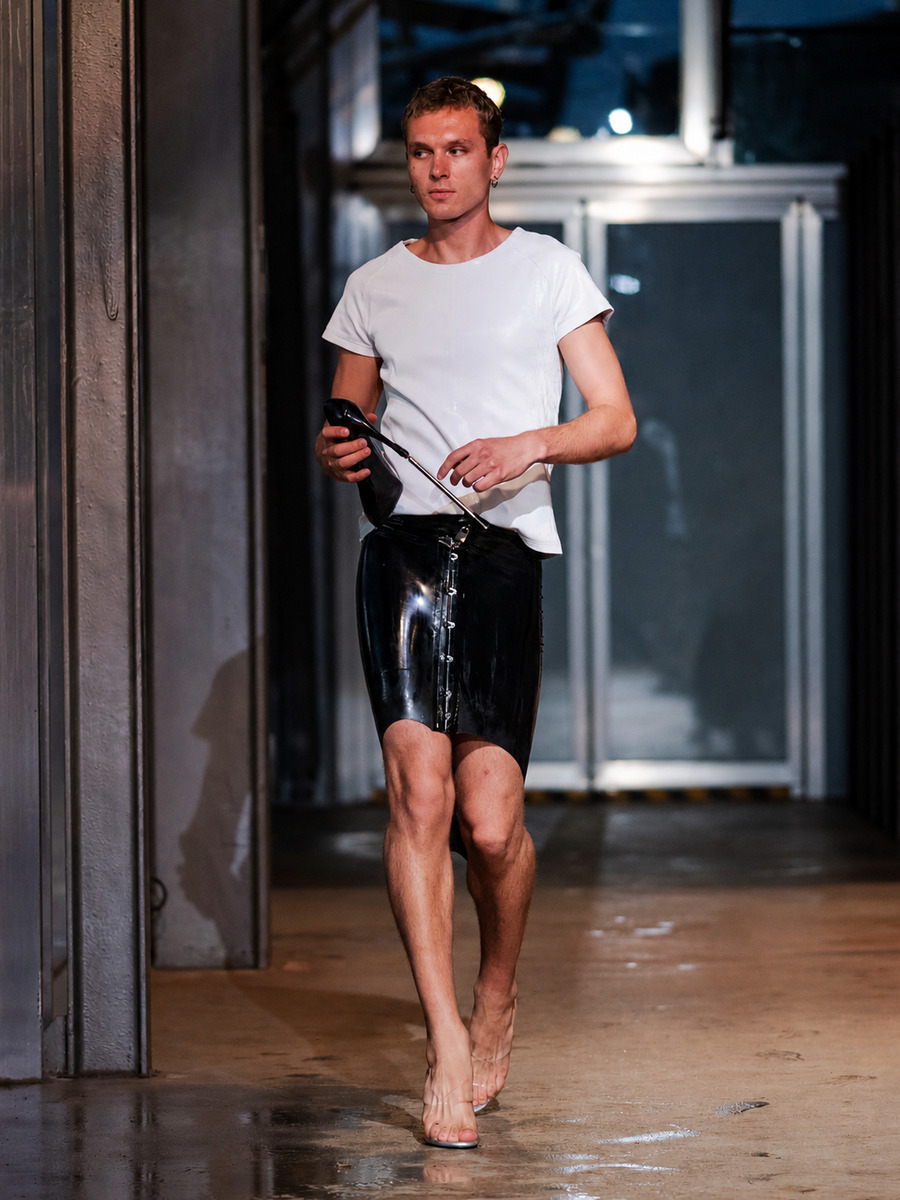
Oh, it’s so refreshing to see the clothes on real people. You know, we almost always work with 2D patterns that become 3D on the mannequins. But seeing people bring the clothes to life is a truly fulfilling feeling. When the clothes fit the model well and likes them, you can feel it throughout the entire room. Also, we had to pause the show briefly because of the rain. After the break, my collection was the first to be shown, and the show reopened with the song “Walking in the Rain” by Grace Jones. That was a very special moment for me and the models. I wish I could have seen the collection on the runway instead of having to stay backstage… Next time, we have to set up a live screen backstage!!!
What kind of dialogue or emotional reaction do you hope to trigger in the person viewing or wearing your garments?
I want to encourage people to try something new now and then. Why not discover a different side of yourself?
Now that the graduate show is behind you, what aspects of your creative practice or design philosophy are you most excited to explore next?
Good question. I’d like to find out if my work can hold its own outside the usual runway concept. Maybe in a staged presentation, maybe something interactive.
If your collection or creative identity could be translated into an ice cream flavour, what would it be and why?
Another great question! I’m a huge ice cream fan. I think something classic with a twist. Why not try “Vanilla Haze”? Sounds fun.
Photographer: Anita Schulte-Bunert @nit.sb
Graduates: Bachelor Aaron Schock @ronnichoc
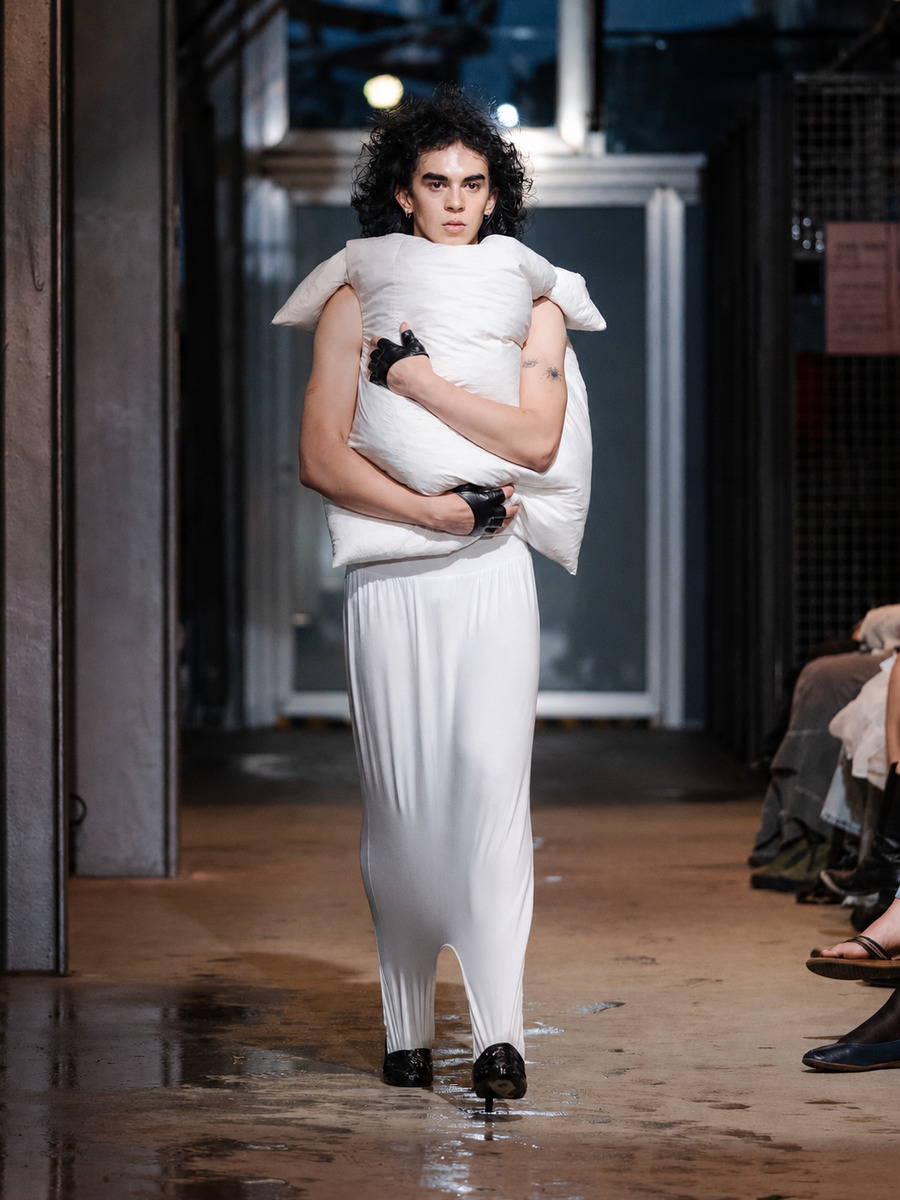
Look 1: Katya @kalera3000 Look 2: Grischa @grisshhaag Look 3: Giovanni @giovannibouzari Look 4: Dianna @jacksan_manzamussa Look 5: Andrei @glukharev_andrei Look 6: Samantha @samanthacalandrini Back print on the bedsheet skirt (Look 3), created in collaboration with Akın Akkuş @akakk.de Pillow top concept (Look 3) and white latex-dipped shirt (Look 6), developed in collaboration with Sayo Mogi @sayo.mogi
CREATIVE & MOVEMENT DIRECTORS
Sarah Ama Duah @sarah_ama_duah
Madlen Schmid
PRODUCTION DIRECTORS
Doreen Schulz
Madeleine Madej
CASTING DIRECTOR
Madlen Schmid
STYLIST
Tabassom Charaf @tabicharaf
MAKE-UP ARTISTS
Head of Make-Up Artists: Feride Uslu @feride_uslu11 für airbeauty.com @ferideairbeauty
Dominika Obacz @dominica_obacz
Mert Kenger @mertkenger
Sarah Elisa Fischer
Sarah Ort
HAIR ARTISTS
Nicole Puzalowski
Béanne Da Costa @hairtouchedby
Jennifer Ohia @mmynd.irl @5.minah
Special thanks to our partners
Bezirksamt Mitte
ZK/U Zentrum für Kunst und Urbanistik @zku.berlin
Objets Trouvés Möbelmanufaktur @objets.trouves.berlin
uns* Model Agency @wirsinduns
VIVA Model Agency @vivamodelsberlin
The event is supported by the Economic Development Office of Berlin’s Mitte District Council in cooperation with PLATTE.Berlin, which is responsible for guest management and PR @platte.berlin
