


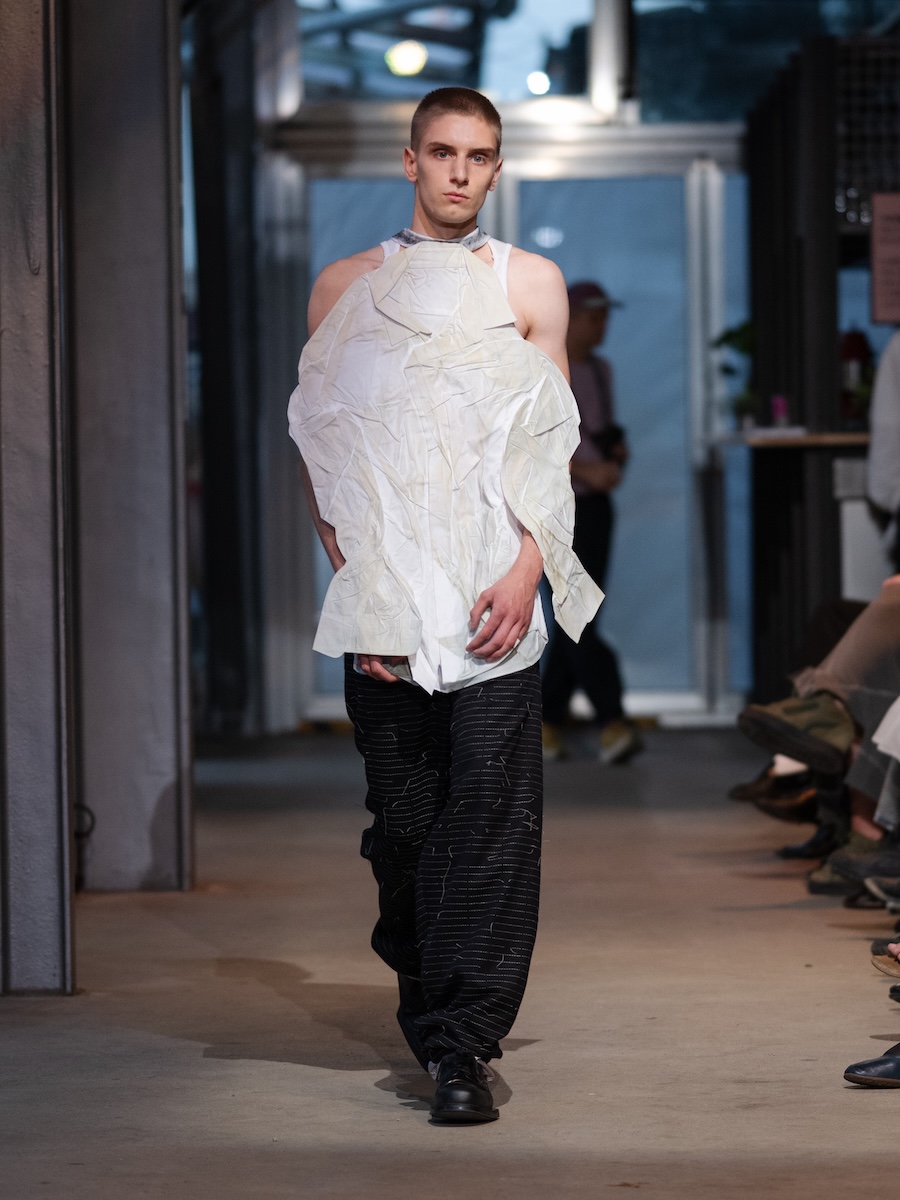
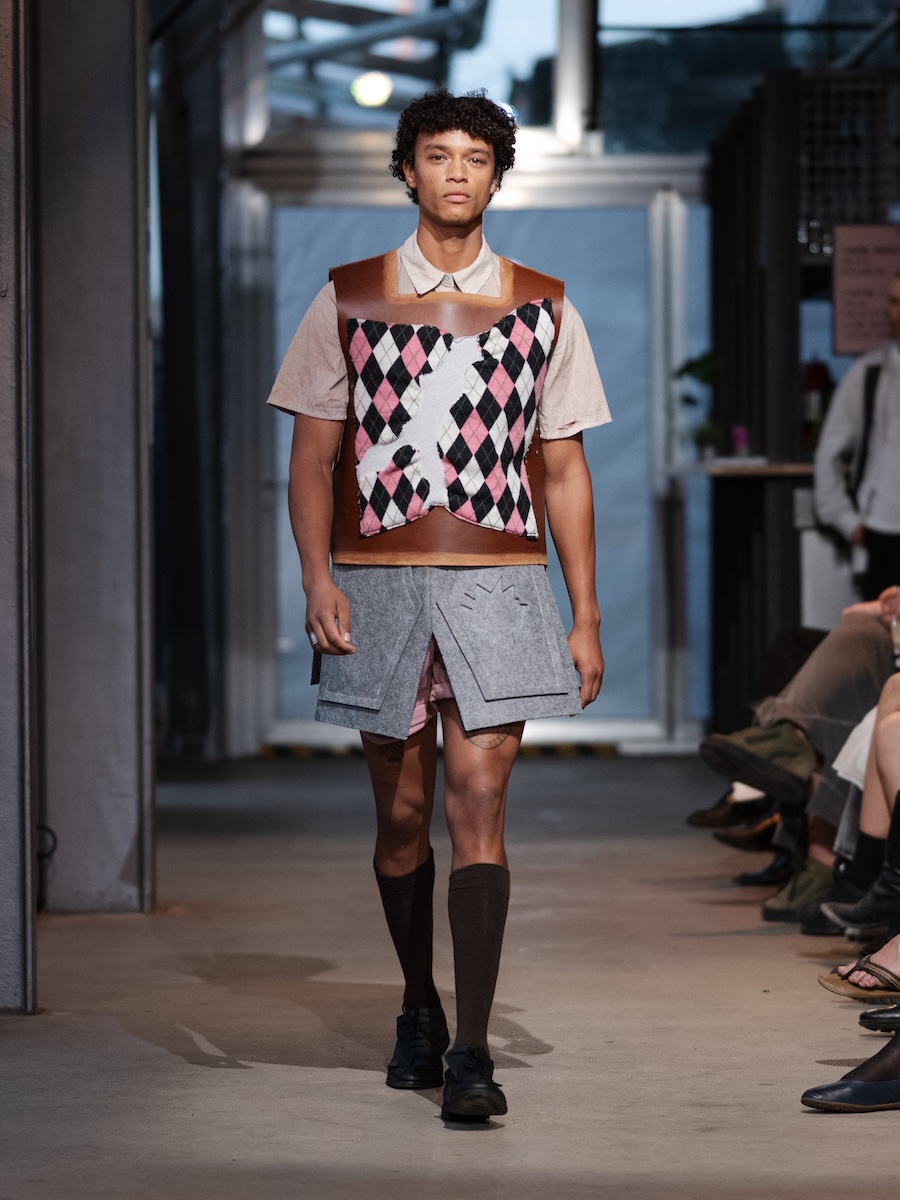
What does it mean to wear history? In a world obsessed with the pristine and the hyper-new, designer Jasper Reinsch is looking backwards to move forward. His graduate collection, ‘As Good As Worn’, is a brilliant, subversive critique of our relationship with clothing, injecting fresh garments with an artificial sense of history and a beautifully sharp dose of irony.
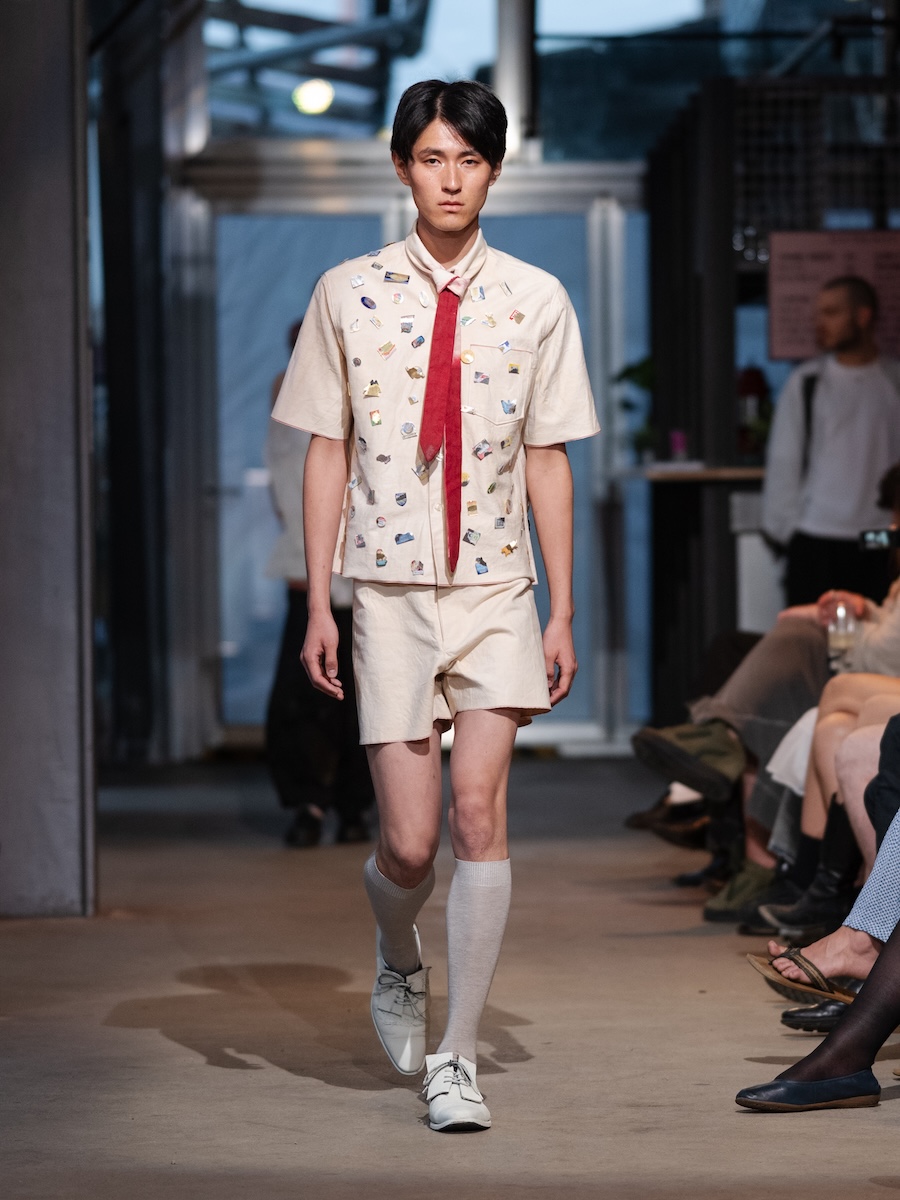
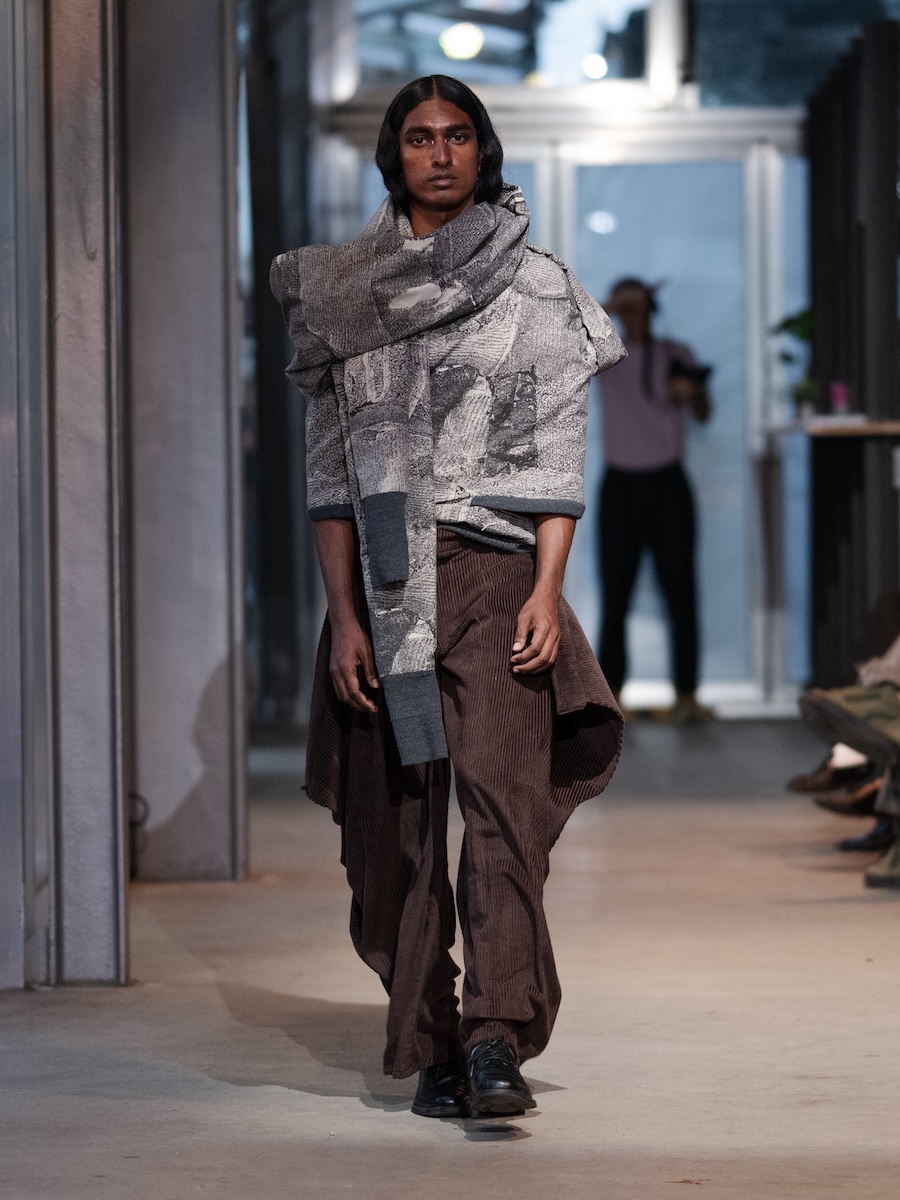
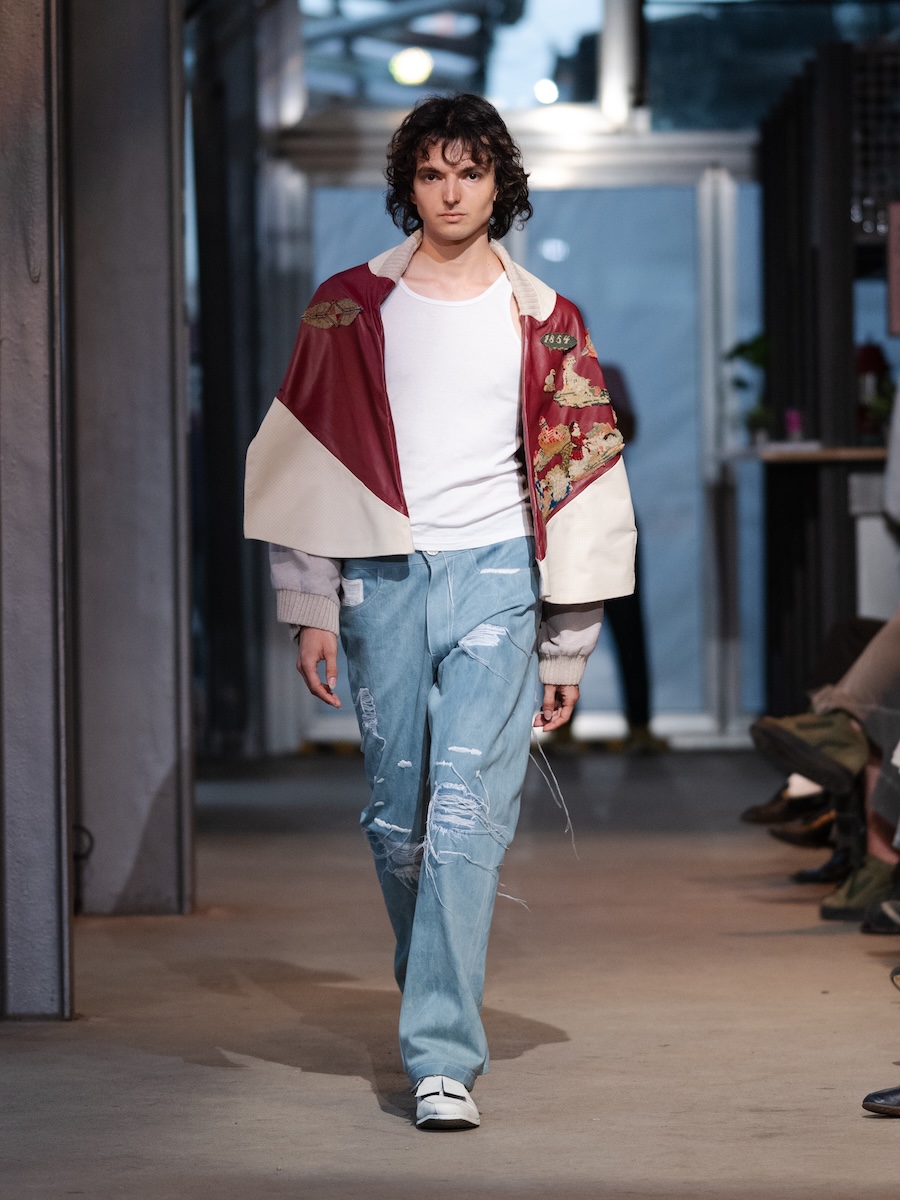
Growing up in a universe of flea markets and antique stores thanks to his collector mother, Jasper learned early on the art of taking old, forgotten narratives and recontextualising them for the modern world. Instead of using raw, unidentifiable textiles, he intentionally builds his silhouettes out of familiar colours and everyday fabrics, only to flip the script through complex ageing and weathering treatments. The result is a collection that looks deeply lived-in without actually being worn—a playground of visual trickery that forces the viewer to look twice and have a little laugh.
For Jasper, Berlin’s strength lies in its refusal to be easily commercialised or forced into a singular aesthetic box. It’s a city of fragmented, clashing subcultures, which perfectly mirrors his own design philosophy: navigating that awkward, exciting boundary between fine art and practical design. Seeing his models command the raw, industrial architecture of ZK/U gave Jasper the ultimate confidence that his ironic, thought-provoking garments could hold their own in even the most overpowering environments.
Stracciatella & Irony: Step Into the Universe of Jasper Reinsch
Read on as we talk to Jasper about accepting your strengths in a competitive studio, collective designer responsibility, and why his aesthetic universe tastes exactly like a classic scoop of stracciatella—deeply familiar, but always with a twist.
What was your approach to choosing your materials, and how did working with those specific textiles or textures impact your design process?
My collection is all about imbuing new clothing with an artificial sense of history, so I purposely used a lot of fabrics and colours that feel quite familiar and remind you of clothing you see daily. Then I came up with different processes to give every piece an almost ironic twist, to really get across this idea of something looking worn without actually being worn.
How do your personal background, heritage, or the environments you’ve lived in manifest in the details of your designs?
I grew up around a lot of flea markets and antique stores, since my mom is a huge collector. So I guess I was always super exposed to this idea of taking something old and putting it into a modern context, or repurposing an object to give it a completely new meaning.
Looking back at your time as a fashion student at Weissensee, what was the most valuable lesson—or perhaps the most unexpected challenge—that shaped your identity as a designer?
I feel like in the context of a fashion school, you’re bound to compare yourself to the people around you, and there’s real strength in accepting that you can’t be absolutely amazing at every single step of the process of creating fashion. There’s real beauty in accepting your strengths and really leaning into what you excel at and what’s fun for you. That’s usually when I’m most satisfied with the outcome.
Berlin has a very distinct subcultural and creative energy. In what ways, if any, did the city’s landscape or community influence your graduate work?
I think Berlin as a city really gave me the freedom to explore a lot of different ideas. There are so many parts of Berlin that feel like completely different cities from one another, and that reflects in the creative work of the people working here. It’s impossible to force the city into just one aesthetic, even though sadly people often try. I get that it would be easier to market the city as a whole if that were the case, but luckily, the city won’t be easily labelled. And for a designer like me, that’s a super fun environment to work in.
Many collections today engage with contemporary cultural, political, or ecological themes. How do you view your role and responsibility as a designer entering the industry right now?
I think there’s a huge responsibility for designers entering the industry right now. We’re all aware of the huge role fashion plays in negative environmental impact, the problems with ethical supply chains, and the list goes on. I think it’s really on us as young designers coming into the industry to come together and raise our voices about these issues, because at this point, we can be sure that change is definitely not coming from the top of the industry.
Your collection showcases a balance between conceptual thinking and technical craftsmanship. How did you navigate the space between free experimentation and practical execution?
To me, this is really what the practice of being a fashion designer is all about. Fashion design as a whole often operates in this seemingly awkward space between fine art and practical design, and I almost feel like it’s my job to find and claim that space. I try to use it as the basis for my design, so that those two aspects seamlessly come together in a way that’s true to myself.
Seeing your work transition from the studio into the specific architecture and energy of yesterday’s show at ZK/U, how did that moment feel, and did it change how you view your own pieces?
First, I think it’s an extremely satisfying moment when you finally see all your work together and on people. Obviously, we all have fittings and know how every outfit looks on a person, but having your collection there in one space, worn how it’s supposed to be worn, is an amazing feeling. It also gave me the confidence that my designs can work in an environment that might seem kind of overpowering at first glance.
What kind of dialogue or emotional reaction do you hope to trigger in the person viewing or wearing your garments?
I love the idea of people understanding the irony I try to get across in most of my designs, so if the person seeing my garment gets a little kick out of it without finding it completely ridiculous, I’m happy.
Now that the graduate show is behind you, what aspects of your creative practice or design philosophy are you most excited to explore next?
On a more emotional level, I’m really excited about how my creative process evolves once it’s detached from a school context. Not that I don’t appreciate everything I learned at fashion school, but I know a change of scenery will spawn different ideas. It’ll also be challenging in a different way, though. On a more practical note, I’m really excited to experiment more with accessories, since I think that actually matches well with how I like to design.
If your collection or creative identity could be translated into an ice cream flavour, what would it be and why?
Maybe stracciatella, something that seems very familiar but has a little twist to it, without taking itself too seriously.
Jasper Reinsch @jasper.reinsch
Photographer: Anita Schulte-Bunert @nit.sb
Knit Design: @three_forms_of_the_light
Latex Bag: Anna Stüdeli, @Anna.stuedeli
With Help from Sayo Mogi & Fabienne Peranovic
CREATIVE & MOVEMENT DIRECTORS
Sarah Ama Duah @sarah_ama_duah
Madlen Schmid
PRODUCTION DIRECTORS
Doreen Schulz
Madeleine Madej
CASTING DIRECTOR
Madlen Schmid
STYLIST
Tabassom Charaf @tabicharaf
MAKE-UP ARTISTS
Head of Make-Up Artists: Feride Uslu @feride_uslu11 für airbeauty.com @ferideairbeauty
Dominika Obacz @dominica_obacz
Mert Kenger @mertkenger
Sarah Elisa Fischer
Sarah Ort
HAIR ARTISTS
Nicole Puzalowski
Béanne Da Costa @hairtouchedby
Jennifer Ohia @mmynd.irl @5.minah
Special thanks to our partners
Bezirksamt Mitte
ZK/U Zentrum für Kunst und Urbanistik @zku.berlin
Objets Trouvés Möbelmanufaktur @objets.trouves.berlin
uns* Model Agency @wirsinduns
VIVA Model Agency @vivamodelsberlin
The event is supported by the Economic Development Office of Berlin’s Mitte District Council in cooperation with PLATTE.Berlin, which is responsible for guest management and PR @platte.berlin
