


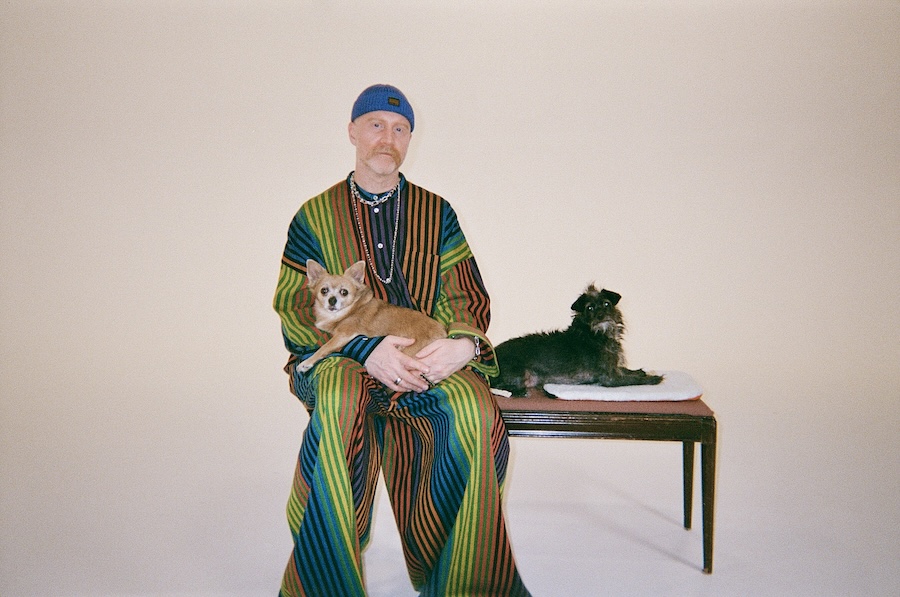
For nearly three decades, Portland artist, activist, and queer provocateur Logan Lynn has navigated the jagged intersections of religious trauma, addiction, and self-reinvention, alchemising his survival into uncompromising art. Now, Lynn is laying his history bare with “The Pain and The Power,” a visceral new documentary and accompanying soundtrack released via PortuGAY, the LGBTQ+ imprint of KNIK Records, founded by Portgual. The Man.
Far from a sanitised nostalgia trip, the project is an unflinching meditation on outliving the versions of yourself that were supposed to destroy you. Driven by confrontational lead singles like the politically charged “AMERIKKKA,” Lynn fiercely addresses the real-time threats facing queer and trans communities while simultaneously exploring the interior landscapes of isolation and grief that come with living on the margins.
Directed by Cai Indermaur, the award-winning film eschews traditional chronological storytelling, instead treating Lynn’s decades-spanning musical catalogue as a living, breathing narrator. It is a cinematic and sonic reckoning that bridges his forbidden fundamentalist roots to his hard-won present. The journey of the album itself became a surreal lesson in impermanence when a fire destroyed his recording studio midway through production, cementing the project’s core ethos of letting go.
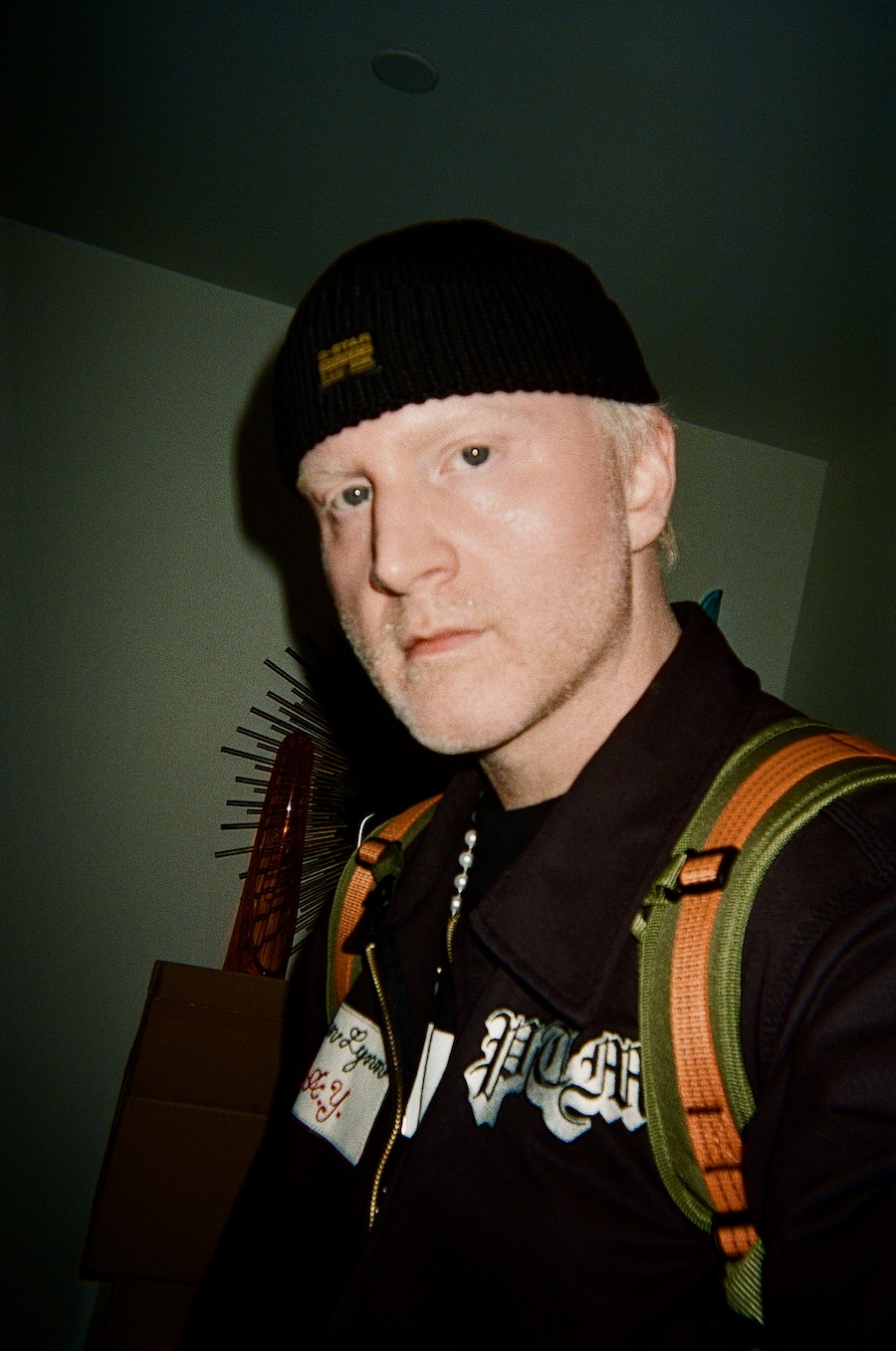
Ahead of his upcoming advance screenings and Q&As this September, we spoke with Lynn about bringing The Pain And The Power to audiences and opening up a conversation around the experiences at the heart of the film.
Your single “AMERIKKKA” confronts the political targets placed on queer and trans communities, while “Everything And Everyone You Have Ever Known” looks inward at isolation and survival. How do these two tracks work together to form the emotional core of the documentary?
They are really two sides of the same experience for me. AMERIKKKA is looking outward at this increasingly hostile world and saying, “I see what is happening. I see who is being targeted. I know where this kind of rhetoric leads, and I refuse to pretend that everything is fine.” There is a real urgency and anger in that song that I feel is shared with most of my community right now.
Everything And Everyone You Have Ever Known turns that lens inward. It’s about what happens inside of you when the world has told you, over and over again, that you are not safe or welcome. I spent a lot of my life building an internal world that I could disappear into, and that was absolutely a survival mechanism. One song is about the threat, and the other is about the emotional architecture I built to survive the threat. That tension is at the heart of the film, too.
Directed by Cai Indermaur, The Pain and the Power treats your music as a living character rather than background noise. How did you approach building the film’s narrative around your 30-year career and musical catalogue?
Cai knew very early on that they didn’t want to make a traditional music documentary where we just move chronologically through albums and career milestones. The songs have always been where I put the things I couldn’t say anywhere else, so it made sense for songs to help guide the story.
We had decades of archival footage to work with, and watching all of that back was wild. There are versions of me in this film that believe completely different things about me and the world. The music became this thread connecting all of those people I have been. Sometimes music explains something happening on screen better than I ever could in an interview. In that way, the soundtrack became almost like another narrator.
You grew up in a fundamentalist Christian environment where even musical instruments were not allowed. How did navigating that background shape your path toward becoming an artist and using music for survival?
Music was forbidden, which, of course, made it feel incredibly powerful. I grew up in an environment where there were very rigid ideas about who I was allowed to be, what I was allowed to feel, and certainly what kind of life was acceptable. I was a queer kid inside of that system before I even had language for what being queer meant.
When writing music finally found me, it gave me a place to put all of this stuff. Shame, fear, desire, anger, imagination—all of it could exist there without anyone permitting me. I think that is why I have never really experienced music as a career first. It was a survival tool long before anybody was paying me to do it. Making songs gave me a way out long before I actually found a way out.
The soundtrack features collaborations with Kyle Andrews, Brian Fortson, and Dale Hiscock. How did working with these artists contribute to an album centred on themes of loss, forgiveness, and letting go?
These songs came out of a period where I was letting go of so much at once: people, relationships, beliefs, identities, versions of myself, and even ideas I had about what my life and my country were supposed to be. I was experiencing grief on several different levels.
Kyle, Brian, and Dale each brought something completely different to that process, but there was a tremendous amount of trust between all of us. These are very vulnerable songs, and I needed collaborators who understood that the goal wasn’t to polish the feelings out of them.
I think collaboration also kept the record from becoming completely insular. These songs began inside of me, but other people helped give them shape and dimension. Something is fitting about making a record about loss and letting go while simultaneously allowing other people into the process.
A fire destroyed Burn Money Music Studio immediately after you completed the first half of the record. How did that event affect the recording process and the overall message of the album?
It was surreal. We had literally just finished the first half of the album, and then the studio burned down that same night. Suddenly this record that was already about impermanence, grief, and letting go had this enormous real-world event attached to it. There was something absurdly on-the-nose about it. Here I was making an album about accepting that everything changes and everything ends, and then the physical place where we had been creating it disappeared overnight.
Thankfully, the work survived, but the experience changed how I heard the record. It reinforced this idea that runs through the entire project: you cannot hold onto anything forever. Not people, not places, not identities, and not the version of your life you thought you were going to have. Eventually, you have to decide what you are carrying forward and what you are willing or able to release.
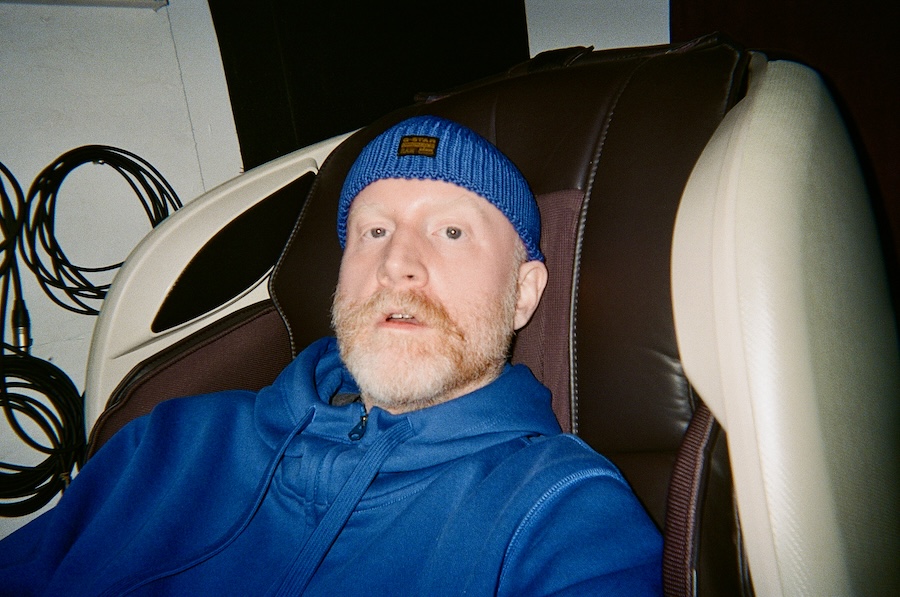
What made you decide to end an album that deals with grief and farewells with a cover of Paul Williams’ “Rainbow Connection”?
I’ve loved Rainbow Connection forever, but I hear it very differently now than I did when I was a kid. There is this beautiful longing inside of it, like, this belief that there must be something else out there and that maybe the people who feel that longing will eventually find each other. After an entire record about saying goodbye, I didn’t want the final statement to be despair. I wanted there to still be wonder.
For me, the song feels almost like returning to the child I was before all of this happened; before addiction, before the career, before heartbreak, before I knew all of the ways the world could hurt a person. That kid was looking for something. I think I’m still looking for it. Ending the album there felt like leaving the door open.
This project is being released through PortuGAY, the LGBTQ+ division of Portugal. What does it mean to platform this work through a label dedicated to supporting queer and trans artists?
It feels incredibly aligned with what this project is actually about. My work with Portugal. The Man over the years has expanded far beyond music, and so much of what we have built together has been about using whatever access or platform we have to create space for other people. PortuGAY comes out of that same philosophy. Queer and trans artists don’t need anyone to make our work more interesting or more culturally relevant. That work already exists. What is often missing is infrastructure, investment, access, and people willing to actually stand behind it.
So releasing The Pain and The Power in that ecosystem feels incredibly meaningful to me. This is an extremely queer body of work about survival, memory, identity, and becoming. I can’t imagine a better home for it, and I love John and the entire PTM team for championing this thing. It’s been really cool.
You are hosting advance film screenings with in-person Q&As across Oregon, Washington, and Idaho. What do you hope to share with audiences during these live discussions after they watch your story?
The film is obviously very personal, and there are parts of it that are difficult for me to watch, even now. But one of the things I’ve learned from releasing music for all these years is that, once you put your story into the world, it stops belonging only to you. People find themselves inside of it. That’s the part I’m most interested in talking about after these screenings.
Yes, the film is about my life, but it is also about addiction, recovery, queerness, family, faith, shame, survival, ambition, forgiveness, and what happens when you outlive versions of yourself you were certain would destroy you. Those experiences are much bigger than me.
I don’t want the Q&As to feel like lectures or victory laps. I want them to be community conversations. If somebody watches this film and recognises some part of their own story in mine, I want there to be space for that. That exchange is really the whole point of sharing any of this in the first place. I want to feel less alone in the universe, and my hope is that this work also makes other people feel less alone in the universe.
Follow The Pain and The Power:
Website | Instagram | TikTok | Bluesky | YouTube
Follow Logan Lynn:
Website | Instagram | TikTok | Bluesky | YouTube
